Immigration

Kamala vows to shoot intruders in Oprah town hall

From our US edition

To hear the New York Times tell it, you’d think Vice President Kamala Harris had finally started answering questions about the Biden administration’s accomplishments and her own policy positions. The Times claims Kamala “hit core campaign themes,” “spoke off the cuff” and “confronted a range of pressing issues” in a two-hour sit-down interview with Oprah Winfrey.But did she really?When asked about how she would secure the southern border — one of voters’ top concerns — Kamala said:So it’s a wonderful and important question. I, you know, my background was as a prosecutor, and I was also the elected attorney general for two terms of the border state. So this is not a theoretical issue for me. This is something I’ve actually worked on.

An election stuck in the trenches

From our US edition

Welcome to Thunderdome. In the space of four weeks, the incumbent president was dethroned from his nomination and replaced by his running mate in a behind-the-scenes coup led by the most powerful person in the party (who still insists on the absurd claim it was an “open primary”). Within that time, the nation witnessed the first of not one but two assassination attempts targeting his opponent, the former president who has faced a thermonuclear level of lawfare in an attempt to seize everything he owns and put him behind bars.

How to manage migration like the Swedish

In the end, the German state of Thuringia did not fall into the hands of the far-right Alternative für Deutschland (AfD). The party won the most votes in the recent election but was unable to form a coalition, meaning that Björn Höcke will not be the state’s minister-president. This is ideal for him: he can cry foul, claim to represent the true voice of Germany and point to a conspiracy to keep him out of power. His incendiary strain of politics proved more popular than the more moderate version of the AfD in Saxony, which held elections the same day. These will all be lessons taken into consideration ahead of Brandenburg’s state elections in two weeks’ time. The growing strength of the AfD has sent mainstream parties scurrying to respond to public concerns.

Kamala’s brand new, same old last-minute policy platform

From our US edition

After weeks of studious silence, Vice President Kamala Harris has been issuing a flurry of policy proposals that she’s touting as “A New Way Forward.” But is it really new? Or is it the old way forward? In the early hours of Monday morning, she unveiled a series of proposals for the first time on her website about the economy, immigration and foreign affairs. Harris is careful to contrast her proposals, again and again, with what she terms “Trump’s Project 2025 Agenda.” Poor Trump. He has repeatedly disavowed the Heritage Foundation tome calling for everything from banning IVF to purging the civil service. But it hasn’t helped as the Harris campaign presents it as his campaign platform.

kamala

Does Rachel Reeves need an ‘escape route’ on winter fuel?

14 min listen

Fraser Nelson and Katy Balls join James Heale to look ahead to a crucial week for Labour. On Tuesday, Parliament will hold a binding vote on the changes to winter fuel allowance - how are Labour expected to deal with this? Former shadow chancellor Ed Balls, and husband of the current home secretary Yvette Cooper, has argued that Labour need an 'escape route' from the policy. What can we read from this intervention? And how influenced are the government by the spectres of George Osborne and Liz Truss? Also on the podcast, Fraser talks about both the problems facing Germany, and the surprisingly successful measure that Sweden has introduced, to deal with net migration.

Never pour scorn on Croydon

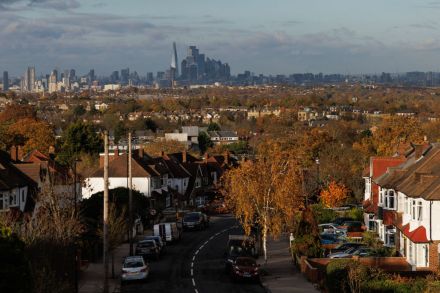
‘So f-ing Croydon,’ was the worst insult David Bowie could think of to describe a person or thing that revolted him. ‘Less of a place, more of a punchline,’ was a recent swipe by Sue Perkins, the Croydon-born comedian who grew up at the tail end of the town’s golden era of rampant employment, ambitious cultural venues and well-endowed private schools. London’s outermost, southernmost, most populous borough is an easy target for condescension: too brash, yet too poor; too try-hard, yet too lethargic; too ambitious, yet not ambitious enough. As the Croydonian author John Grindrod has written, locals are accustomed to Croydon’s ‘very existence – our existence – provoking outrage’. Croydon, neither London nor suburb, can’t win.

Kamala Harris and that new car smell

From our US edition

If you felt the ground shaking, it was Democrats jumping for joy after dumping Joe Biden and settling on a new, more energetic replacement. Joe was the old clunker. Kamala has that new car smell. The switcheroo raises three fundamental questions for the election. First: how long will Harris’s novelty last? Answer: until Labor Day, but probably not longer. Second: how does Harris deal with the Biden administration’s policy failures? Answer: by emphasizing a hopeful future with few details and avoiding talking about her role in the administration’s mistakes. Third: how does Harris deal with her record of very progressive positions, on tape from her last presidential run?

Vice President new car smell kamala harris

‘I came here to escape radical Islam’: the asylum seekers who understand the rioters’ fears

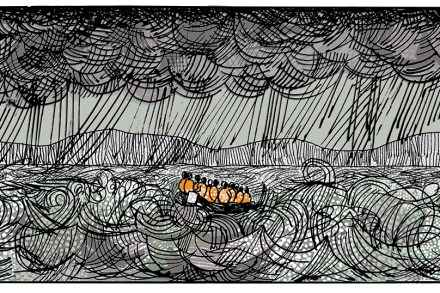
Sousou is a 24-year-old Syrian-Palestinian woman who arrived in Britain a few weeks ago in a rubber dinghy from Calais. Her husband was also on the boat, along with 70 other men and women. Sousou was (and is) pregnant and the passengers all nearly drowned – as her aunt had done on a previous crossing attempt. There were too many people on board and the overloaded dinghy began to take in water. Sousou and her husband were rescued by the British coastguard and for a while they felt safe – until the riots began. Now, after things seem to have quietened down, she talks to me from a hotel in south London. ‘I was scared. I was watching it all on the news,’ she says.

The global fertility crisis is worse than you think

For anyone tempted to try to predict humanity’s future, Paul Ehrlich’s 1968 book The Population Bomb is a cautionary tale. Feeding on the then popular Malthusian belief that the world was doomed by high birth rates, Ehrlich predicted: ‘In the 1970s hundreds of millions of people will starve to death.’ He came up with drastic solutions, including adding chemicals to drinking water to sterilise the population. Ehrlich, like many others, got it wrong. What he needed to worry about was declining birth rates and population collapse. Nearly 60 years on, many predict the world will soon reproduce at less than the replacement rate. But by my calculations, we’re already there. Largely unnoticed, last year was a landmark one in history.

The myth of a vibes election

From our US edition

I’ve seen it repeated numerous times, most recently by our friends over at the Free Press: 2024 is a “vibes election.” The definition of this is clumsily characterized, but essentially it means (as the FP says) that the personalities matter more than the policies. Who would you like to have a beer with, not who would you prefer to handle the very urgent need to pass Social Security Disability Insurance reform. This contention, made by many intelligent people, is absolute shite. The 2024 election has been one of the most stable elections of the modern era in terms of voter priorities, with the top three issues — the economy, immigration and security — locked in for more than a year.

vibes

After Rwanda: what will Labour do now?

Keir Starmer is advertising for someone to head his newly created Border Security Command. The salary is higher than his own: the person in charge of stopping the boats would earn between £140,000 and £200,000. According to the ad, the job of patrolling the English Channel can be done remotely from any one of 12 cities, including Edinburgh and Belfast. It will require coordination with the Home Office, parts of the navy and even MI5. Never mind that this goes on already, with no discernible effect. The key requirement for the job, it would seem, is to be the fall guy, someone ready to take the blame for a policy that is certain to fail. Rishi Sunak’s pledge to ‘stop the boats’ never stood a chance. This was resented by voters.

Don’t bother calling the doctor 

‘If you are calling about sinusitis, sore throat, earache in children, infected inset bite from the UK not overseas, impetigo, shingles, or female-only uncomplicated water infections, speak to your local pharmacist.’ That is how my parents’ GP surgery now answers the phone. A recorded message telling you to go away for almost every illness you might have is read out by a very stern male voice, unnecessarily loudly. He first tells you to dial 999 for life-threatening emergencies, or 111 for anything less serious, leaving you to decide which is which. Then he tells you there are no appointments even if you wait for an answer because so many of the doctors themselves are off sick.

The rewards of being the ‘asylum capital of the world’

They came on a small, crowded, leaky boat from Calais towards Dover in seas that could turn from placid to treacherous in an instant, around 30 people seeking sanctuary from persecution, unsure of the welcome they would receive. ‘We were seized by horrible vomitings and most of the party became so dreadfully ill they thought they were dying,’ one of the group, a young mother accompanied by her two children, wrote later. The year was 1620 and quite possibly among the refugees might have been a forebear of Nigel Farage. This small boat, one of many hundreds that crossed the Channel in the late 16th and early 17th centuries, was full of Huguenot asylum seekers fleeing Catholic France and the Lowlands.

The Venezuelafication of American streets

From our US edition

My grandma loves to joke about how she got a tooth knocked out by a motorizado (biker) in the Venezuelan capital of Caracas. “¡Dame el aro!” (Gimme the hoop!) exclaimed what looked like an off-duty bodyguard. “My hoop? What the hell?” Grandma thought to herself, before realizing the man was talking about her wedding ring.  “I never wear it when we go to church; I must’ve forgotten that day,” she tells us, in what feels like a skit. “I don’t know what got into me, but after the man pointed at his pocket and said he had a revolver, I said, ‘I have one too!’” “Show me,” the motorizado inquired as my frozen grandpa thought to himself, “What the hell is she talking about?

venezuelafication

If only Britain knew how it was viewed abroad

A London-based foreign correspondent is probably not the target audience of Michael Peel’s latest book. Indeed, what Peel (himself a former Financial Times correspondent in Lagos, Abu Dhabi, Bangkok and Brussels) discusses in eight lively, well-researched chapters won’t come as a surprise to any of his UK-based foreign colleagues: how Britain is perceived abroad; and how little it seems to permeate the national consciousness. This blindness – or the British inability to realise how they appear to others, as opposed to the image they have of themselves – often has foreign correspondents pulling their hair in disbelief. If only Britain knew how it was seen! One senses that Peel’s return to London from Tokyo after 13 years of foreign postings must have felt like a crash landing.

Why Japan won’t repeat the West’s mistakes on immigration

From our US edition

Japan has become another piece of fodder for the West’s culture wars. After a recent visit with his family, talk-show host Jimmy Kimmel praised the country for its clean toilets and lack of litter, only to be lambasted by right-wing pundits such as Ben Shapiro, who accused the comedian of having leftist beliefs that are completely at odds with what makes Japanese society so safe and orderly. Namely, Shapiro argued, Japan is a closed-off nation, unpersuaded by arguments to allow mass migration, and its homogeneity and “unique culture,” along with a strict legal system, help sustain this “package deal.” During the height of the Syrian refugee crisis nearly a decade ago, amid intense international criticism, Japan refused to accept asylum seekers from the Middle East.

Japan

Meloni and her lieutenants plan their takeover of Europe

From our US edition

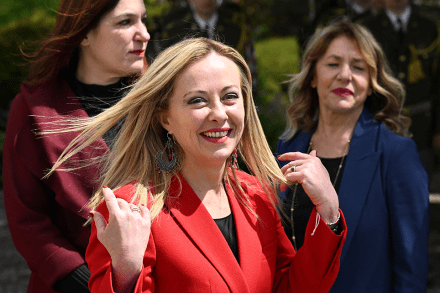
Cosenza, Italy On a dreary afternoon in May, hundreds of well-dressed Italians crowded into a regal government building in Cosenza, aptly named The Provincial Palace of the Hall of Mirrors. It was a campaign event for Fratelli D’Italia, Italy’s ruling political party. The supporters listened attentively for more than two hours. The mood was triumphant and the politicians spoke as if victory was inevitable. They spoke about a plan for when, not if, the right assumed greater power in Europe.  “This confidence is due to the fact that we, as Italy, have acquired centrality in a very important way,” said Giovanni Donzelli, the party’s national organization manager.  “This centrality is all thanks to the great work done by our leader Giorgia Meloni.

Meloni

No one knows how to sell the European project to the Irish any more

A few days after having Sunday lunch at the hotel where Michael Collins ate his last meal, we found ourselves on the road to Beal na Bla. We had gone to get hay and the hayman was out to lunch, so we followed the heritage signs to the site of the ambush where Collins was shot dead. The events of 22 August 1922 immortalised this picturesque valley in West Cork near to where the builder boyfriend and I have bought an old country house. Beal na Bla, or Blath, translates as ‘entrance to the good land’. The memorial by the curve in the road where Collins was murdered is surrounded by lush pastureland.

Why are the Tories playing Farage’s game?

How should Rishi Sunak respond to the unwelcome insertion of Nigel Farage into the election campaign? The Prime Minister called the election for 4 July in part because he hoped it would wrong-foot Reform, but that hasn’t worked, with Farage electrifying the challenger party and near-electrocuting many Tory MPs who were already terrified of losing their seats.  The response from the centre has been to move even further into Reform’s territory. Home Secretary James Cleverly was out and about this morning talking about immigration, and dropping hints that the Conservatives could make leaving the European Convention on Human Rights a manifesto commitment.

How many countries have conscription?

Halfway points Rishi Sunak told us we would have an election in the second half of the year, and we will have one on 4 July. When, exactly, is the halfway point of 2024? – There are 366 days in 2024, so we will be halfway through after 183 of them. That brings us to midnight at the end of 1 July, a day later than many might assume. – However, there is also the effect of daylight saving, which takes a hour away from March and puts it in October, shifting the halfway point of the year forwards by an hour to 1 a.m. on 2 July. Only two days of campaigning plus the voting itself will therefore fall in the second half of the year. – In 2019, 21% of people had a postal vote; if this is repeated a fifth of the population will be voting in the first half of 2024.