Housing

How to spot a looming house price crash

From the man down the pub/on Twitter to major lenders and think-tanks, homebuyers and sellers can barely move for so-called experts dishing out advice on the property market. Rising interest rates and increased mortgage costs have prompted fears of a house price slump, with Capital Economics predicting a 5 per cent drop over the next two years. Credit Suisse is forecasting that prices could fall by as much as 15 per cent if interest rates hit 6 per cent – making it more of crash than slowdown. Buyers don’t want to make a major purchase at the top of the market, and sellers may be hesitant to list if they aren’t going to get what they feel is the best price.

Flat broke: my Help to Buy disaster

‘Do you want a cup of tea?’ The surveyor shook his head. It would take me longer to boil the kettle than for him to do a valuation of my 400 sq ft, one-bedroom flat. I paced awkwardly around. A minute later, he gave me the thumbs-up. Valuation complete, he left. I boiled the kettle anyway. Four years after the purchase of the flat, via the ‘Help to Buy: Equity Loan’ scheme, I couldn’t be more desperate to sell. Would I make a profit? I just want to escape its clutches and avoid a loss. Why sell? Let’s start at the beginning. Why buy? Perhaps it was an early midlife crisis. At nearly 30 years old, I thought it time to leave the familial roost. It was unfair on my parents to have me, the resident ghost daughter, living at home for ever.

It’s time for some home truths, Rishi

I wonder how many people in the country are bitterly disappointed that Liz Truss pulled out of her exciting one-to-one interview with Nick Robinson? I can think of only two. First, of course, Nick Robinson. Nick was very much looking forward to it. His ideal assignment would be to interview himself for an entire afternoon, but failing that, Liz Truss would do just fine. The other, of course, is Rishi Sunak, who must have been hoping that Liz would dig herself another hole and carry on digging until she emerged somewhere near Maruia Springs, say, in New Zealand’s Southern Alps.

Britain’s crippling lack of infrastructure

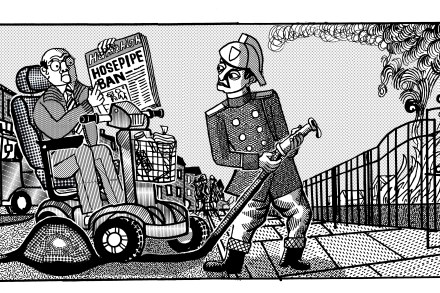
England is in the grip of its most widespread drought in 20 years. Water companies are implementing hosepipe bans. Half the country’s potato crop is expected to fail. Photographs of reservoirs show them drained, dry banks open to the sky. Another heatwave is here, bringing little prospect of imminent relief. Britain hasn’t built a reservoir since 1991. The population has grown. Hot weather has become more frequent. Water use has become more strained. The barriers to actually doing something about it remain in place. Take Layla Moran, Liberal Democrat MP for Oxford West. As late as March, she was doing the media rounds vigorously opposing the construction of a new reservoir in Abingdon; it would be unsightly, the population projections might be wrong, she said.

NIMBYs to the left of me, YIMBYs to the left

From our US edition

First disclosure: I do not appear in this book. I say that only because — second disclosure — I consider myself a YIMBY, and I am familiar, at least online, with many of the characters and figures quoted or interviewed. However, I learned a lot about this loose movement and found it fascinating to read a book on a phenomenon that I would have trouble viewing with a detached, scholarly distance. Yes to the City, by the cultural sociologist and urban policy scholar Max Holleran, must have been a difficult book to write, not least because YIMBY (“Yes in my backyard”) is as much a rallying cry or a slogan as it is a movement, let alone an organization. The YIMBY nemesis, NIMBY (“Not in my backyard”), is equally amorphous.

yimby

The Building Safety Bill betrays the victims of the cladding scandal

Monday promised to be a significant day for those living in high rises across England. The Building Safety Bill, which has been sold by the government as the biggest change to building safety in a generation, was published in its final form before it goes through parliament. Introduced more than four years after the Grenfell fire killed 72 people, the Bill is aimed at ensuring a similar catastrophe never happens again. But will it succeed? The 208-page document includes wide-ranging measures that will overhaul building safety regulation exposed as wholly inadequate by Grenfell, as well as significantly change the way in which high-rise buildings are designed, built, managed and lived in.

Michael Shellenberger interview: ‘We need to enforce laws’

From our US edition

Michael Shellenberger is an unusual political candidate. He’s also arguably the only person with a chance of stopping Gavin Newsom from spending four more years as governor of California. A fifty-year-old environmentalist, Shellenberger is a former Democrat running for governor as an independent. And he has form when it comes to aiming leftwards. A self-styled ecomodernist, he has been a vociferous critic of the environmentalist movement, its insularity, economic illiteracy and fetish for scarcity. More recently, he has set his sights on the progressive approach to homelessness and addiction.

Fleeing dysfunctional America

From our US edition

America is sorting itself out by class and kind, back to blood and political pedigree. The demographic trend favors the so-called red states and the metro nodes inside these dominions. Austin, Reno, and Nashville beckon. Meanwhile, academic towns like Eugene, Chapel Hill, and Burlington draw gentry blues trying to escape crazy and crime but who are not in tune with Tulsa or Fargo. For big-city emigrants, fatigue with misgovernment, ill-spent government largesse, and racial disorder are part of the picture. As much as they are seeking uncrowded real estate, runaways are searching for courts, authorities, teachers, and stable neighbors whom they can trust.

When will the Tories do something about house prices?

Anyone who doubts that the fiscal response to the pandemic has stoked inflation needs to look at the latest figures from the Nationwide on the housing market. Yet again they confirm that the deepest recession in modern history has been accompanied by a boom in house prices. Moreover, the inflation does not seem to have been reined-in by the ending of the stamp duty holiday. The price of the average home, according to the building society, rose by a further 0.9 per cent in November to reach £252,687. This is ten per cent up on last November and 15 per cent up on March 2020, at the beginning of the pandemic. How can a global crisis which temporarily put several million people out of work in Britain have resulted in a housing boom?

It’s no wonder young people don’t understand levelling up

There are two ways Number 10 can look at new polling which shows only 14 per cent of Britons understand the slogan ‘levelling up’. The first: the government has utterly failed to communicate its signature policy. The second: at least they didn’t poll the Cabinet. The findings, which come in research by Redfield & Wilton Strategies for PoliticsHome, are interesting for what they tell us about now much the slogan has cut through (66 per cent have heard of it) versus how much it's been understood (one in three haven’t the foggiest what it refers to).

New York is up to you

From our US edition

There are two types of people in New York City: the ones who stayed and the ones who called it quits. Those who stayed wear it like a badge. With a sense of pride, they call themselves the ‘real New Yorkers’. They supported Our Lady of Liberty in her time of need. They consistently ordered delivery to help prevent restaurants from closing. They donated their time and money to the city’s hungry and homeless all while cheering on healthcare workers every night. Those that left bear a stain on their New York resumé. The old way to tell a real New Yorker was if they had lasted and hit the 10-year mark. The new way is faster: if you stayed during the pandemic. It’s like the vaccinated and unvaccinated: there is really no in-between. More than 320,000 NYC residents left in 2020.

new york

The Tories will pay a price for Boris’s housing strategy

One of the themes of Conservative conference was that the government has dropped plans for a radical reform of the planning system, which was designed to get more houses built in the south east. Both Boris Johnson and the new party chairman Oliver Dowden were keen to stress this point. But, I say in the Times today, this is a mistake. The Tories are the party of the property-owning democracy, and live and die by this The Tories have been spooked by the Chesham and Amersham by-election where the Liberal Democrats ran hard against planning reform and took the seat on a 25 per cent swing from the Tories. Boris Johnson will pay little immediate electoral price for this U-turn. Indeed, at the next general election he’ll probably benefit from it.

Letters: The lure of lorry driving

Driving force Sir: As a long-distance UK lorry driver I am very aware of the issues raised by Rodney Pittam (‘So long, truckers’, 18 September). However the job can provide an income of more than £40,000 to those with a practical rather than an academic bent. Yes, there is unpleasantness, discomfort and a combative attitude from other road users. But there is also a high degree of independence, a chance to see this country and others, and a sense of pride in the job. Better facilities are overdue in this country for drivers, and this may go some way — together with greater remuneration — to creating more respect for the work we do.

Why building more houses won’t bring prices down

Does the law of supply and demand apply to housing? In other words, will building more houses and flats bring down prices? There is a growing economic consensus that the surprising, and rather counterintuitive, answer is: not to any significant extent. It is a conclusion that has revolutionary implications for housing policy, and what we need to do to help people realise their dream of owning their own home. Ian Mulheirn, chief economist at the Tony Blair Institute, concluded in a recent paper for the UK Collaborative Centre for Housing Evidence:  'The large body of literature on the responsiveness of house prices to supply indicates that even building 300,000 houses per year for 20 years would do little to reverse the price growth of the recent past.

Roger Scruton’s campaign for beautiful buildings is finally being won

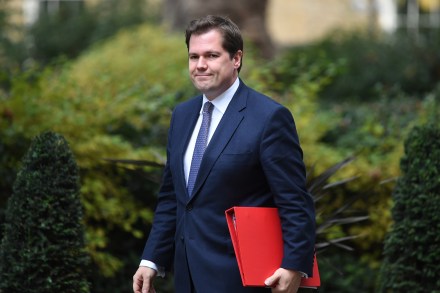
Travelling around Britain, one is given the sense that built up areas are mostly ugly, while the countryside is mostly beautiful. As a lover of the urban, this is distressing. For new buildings to be ugly feels as inevitable as death and taxes. But it does not have to be. Over almost a decade, a small group of activists have brought beauty into the heart of development policy. The Housing Secretary Robert Jenrick's speech at Policy Exchange this week signals that a revolution is well under way, even if there is still a long way to go. Given that almost everyone thinks that the appearance of the built environment matters, it is strange that there has not always been a strong ‘beauty movement’ in British planning.

Letters: Let the housing market collapse

Treading the boards Sir: As a teacher, I was sorry Lloyd Evans did not include school productions in his excellent assessment of the cultural devastation inflicted by Covid-19 (‘Staged’, 3 July). While cancellation of West End shows is a tragedy, far more damage will be done to the thousands of children whose one chance to watch or perform in a play or musical has been taken away. These humble, often cheerfully disastrous, amateur productions bring pupils together in a way nothing else can. W. Sydney Robinson Oundle, Northamptonshire Big bad builders Sir: I enjoyed Liam Halligan’s comprehensive assessment of the appalling state of the UK building industry and the dire quality of much of what they produce (‘The house mafia’, 26 June).

Letters: We can’t build our way out of the housing crisis

Excess demand Sir: Liam Halligan (‘The house mafia’, 26 June) treats us to an exposé of the shoddy products of the mass housebuilders. In the course of his article, however, he accepts as given that the solution to the housing crisis is to build more houses. The problem, however, is not one of deficient supply; it is a problem of excess demand, driven by ultra-low interest rates, kept so low for so long that the result has been an out-of-control housing boom. The young are being prevented from buying a house, not because housebuilders hoard land and refuse to build, but because buyers with access to eye-watering amounts of borrowed money have forced prices so high that they are now out of reach of most.

The political baggage of moving house

We are currently house-hunting — please let me know if you have one going spare. We are looking for a home in the north-east of England in any constituency which was once solidly Labour and is now in the talons of a brutally right-wing Conservative MP — this is my wife’s stipulation and I find it fair enough. However, we do not want to live too near the poor people. In truth we had been casually looking across a vast swath of Northumberland, Durham and North Yorkshire for a good half-dozen or more years, but until now there had been little urgency to the business. We marvelled at the property market up there: houses, grossly overpriced, would remain on sale for quite literally years.

How to end the housing cartel

It’s no surprise that house prices have risen faster over the last year than they have in almost the last twenty. After all, everyone has realised what a difference a home can make: the extra space for a home office, a garden for fresh air or even just a quiet corner to escape the reality of lockdown. Not to mention a stamp duty holiday encouraging people to buy quickly. But the luxury of homeownership is slipping away for many young people.  While these increased house prices are a boon for those lucky enough to be on the housing ladder, it spells further disaster for those of us waiting impatiently on the sidelines. House prices have reached an almost record high, growing 13.4 per cent in the year to June. It’s not all down to Covid either.

How much longer can the Treasury rig the housing market?

The past 15 months have produced a bizarre economic paradox. In 2020, the economy shrank at the fastest rate recorded in modern times: 9.9 per cent. Yet house prices have not merely weathered the storm, they have risen at the fastest rate since the height of the property boom in the 2000s. According to Nationwide, the average value of a UK home has risen by 13.9 percent in the past 12 months. Halifax puts it a little more modestly at a 9.5 percent annual rise. Yet there is a pretty clear picture of a rising market driven by a lack of stock and a desperation from many people to move home before the stamp duty holiday finishes — as it does tomorrow. How come? On the one hand we are witnessing the inevitable results of financial stimulus.