Housing

I’ll dare to say what Andy Haldane doesn’t 

A sandwich with Andy Haldane, the former Bank of England economist, now president of British Chambers of Commerce, is the intellectual equivalent of a lunchtime workout with an ultra-fit personal trainer – or so I imagine, having never submitted to the latter experience. When his BCC role was announced in February, Haldane spoke of ‘a fighting chance’ that UK growth would beat expectations for the coming year. But that was before the closure of the Strait and the resurgence of global demons. The purpose of the sandwich was to find out if he had tempered his upbeat tone. The Iran conflict is ‘the last thing anyone needed, least of all the UK’, he began.

Letters: what vegetarians get wrong

Flat broke Sir: John Power’s article on the property squeeze (‘Flatlined’, 18 April) identifies a symptom of a deeper problem, the overregulation of property. Buyers are deterred by spiralling service charges, which are themselves driven by layers of legislation, insurance premium hikes and rocketing labour costs. Those still willing to take the plunge are then hit by a tax system that actively discourages transactions. In the absence of buy-to-let demand, it is no surprise values are dropping. The solution is obvious. Stamp duty, with its crude cliff edges, freezes activity and distorts prices. A landlord or renovator can face £20,000 or more in tax on an entirely ordinary flat, a deterrent by design. This is not a plea for higher prices.

Flat out: the property squeeze crushing the young

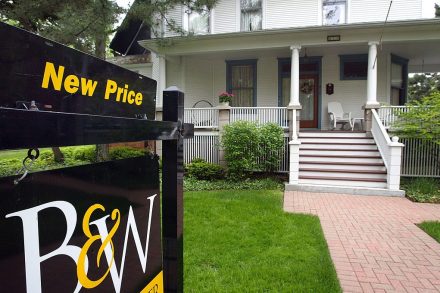
Last month, a new account called London Price Drop appeared on X. It has already gained more than 14,000 followers simply by posting screenshots from Rightmove, which illustrate how properties in the capital are falling sharply in value. One of these is a leasehold flat in Shepherd’s Bush purchased for £425,000 in 2017, before being re-listed for £395,000 in May 2024, and eventually sold for £325,000 last August. Adjusted for inflation, that represents a real terms loss of close to £250,000. The London Price Drop account is so popular because it contradicts an assumption that many in Britain hold dear. Young or old, owner or renter, almost all of us believe that buying property is the route to wealth, and that house prices, in the long run, always go up.

Don’t listen to those who tell you America is over

What has gone wrong for Americans? To listen to an increasing number of politicians and pundits on both sides, from Tucker Carlson to Alexandria Ocasio-Cortez, from Nick Fuentes to Zohran Mamdani, the answer seems to be: everything. Americans are unable to get a job; to afford the necessities of life; to get married or have children; to find religious meaning or form friendships. And all of this can be laid at the feet of corrupt institutions and a corrupt system. This conspiracy-tinged vitriolic take on the American system is a lie. Yet it contains a grain of truth. Our institutions have been led self-servingly by a coterie who disdain American values.

Why Britain needs more Yimbys

21 min listen

Chris Curtis and Maxwell Marlow may have different political ideologies, but they agree on one key diagnosis: Britain is broken. Their solution can be found on baseball caps and bucket hats across social media and SW1: ‘Build Baby Build’. Less than a week before the Budget, Chris – MP for Milton Keynes and chair of the Labour Growth Group – and Maxwell – policy fellow of the Yimby Initiative, alongside his day job at the Adam Smith Institute – join our economics editor Michael Simmons to talk about the pro-growth measures they champion to radically change Britain. Produced by Patrick Gibbons.

Labour’s war on heritage

Britain’s heritage is slowly going up in smoke. Medlock Mill was Manchester’s oldest standing textile mill until it burnt down in June. It joins Grade I-listed Woolton Hall – destroyed by a catastrophic fire in August. But it’s not just the buildings that are under threat, but the entire system designed to protect them. Prior to the disaster, the architect Stephen Hodder had proposed gutting the mill and converting it into a 37-storey block of student flats. A coalition of concerned citizens and conservation charities fought for a stay of execution by applying for the mill to be listed. After reviewing new archaeological evidence, Historic England concurred and recommended it for Grade II.

The problem with scrapping leasehold

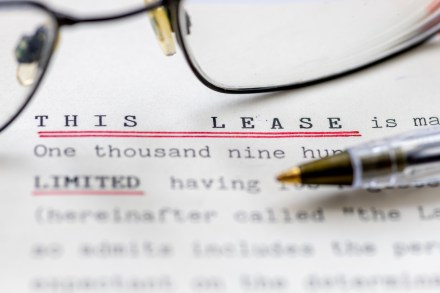
Like most non-renting flat-dwellers, I call myself a home-owner or owner-occupier, but that isn’t quite true. I don’t own my flat; I am a leaseholder. What I bought was the right to occupy it for however many years are left on the lease – and as the lease runs down, the flat is worth less and less. Conversely, this is why, if you were so minded, you could find a prime London flat for a (relative) pittance if the lease has only a few years to run, and why long leases generally come with a premium.

Should you leave the country? Other questions for 2025

I was intending to write one of those ‘Ten tips to change your life’ lists that fill so many column inches at this drab time of year. But I got no further than ‘Buy bigger trousers’. Instead, I’ll tackle some of the obvious questions you might be asking as you watch snow turn to slush and wait for the boiler repair bloke to answer his phone. Can I cheer you up? Let’s see. First, will 2025 be a good year to buy a new home (a decision that should always be taken on at least a five-year time horizon)? Pundits see house prices going up (and mortgage rates eventually coming down) in 2025, but not by much. More usefully, Savills predicts 23.

How can Ireland survive the seismic changes of the past three decades?

Historians in Ireland occupy a public role – unlike in Britain, where those with an inclination towards the commentariat usually migrate to America. This is perhaps not surprising in a country where public intellectuals are exemplified by Stephen Fry and philosophers by Alain de Botton. Ireland presents a more demanding prospect, where, ever since the days of Conor Cruise O’Brien, historians have colonised the public sphere with influential newspaper columns and regular debates on television. Indeed, when the national TV station began broadcasting in the early 1960s, it featured a discussion programme called The Professors, all of them historians (and one or two usually a bit the worse for wear).

How hot is too hot to work?

Gold standard The Paralympics were instigated in 1948 and first held alongside the Olympics in Rome in 1960. But disabled athletes were competing in the Olympics long before that – notably George Eyser, a German who settled in St Louis, USA. That he had lost a leg after being run over by a train and wore a wooden prosthetic did not stop him taking up athletics and gymnastics. When the Olympics came to his city in 1904 he won three golds: in the parallel bars, long horse vault and 25ft rope climb. He won three other medals, on the pommel horse, horizontal bars and in a team event. He also competed in the triathlon, which in those days consisted of a 100m run, the long jump and shot put – but came last. Ship shape How dangerous is it at sea?

How do Britons get their news?

SS-GB The car company Jaguar said it won’t make any new cars for a year as it re-invents itself as an electric-only car company. For a long time the automatic choice of stockbrokers in the ‘gin and Jag belt’, the company had beginnings that were less luxurious. It was founded in 1922 as the Swallow Sidecar Company to make sidecars for motorbikes. It produced its first car, a two-seat open tourer, in 1935, by which time the company was known as SS Cars. Remarkably, it retained this name almost entirely throughout the second world war until, to escape associations with the Nazis, it was renamed Jaguar – a brand name it had previously used on sidecars. Info wars Education Secretary Bridget Phillipson wants children to be taught how to spot misinformation online.

Letters: you can have a ‘good’ divorce

Splitting the difference Sir: Hannah Moore’s article ‘Split personalities’ (27 July) is brutal. ‘There’s no such thing as a kind divorce,’ she writes. Ms Moore cites Amicable, the company I co-founded after my own long, painful divorce, as promoting the impossible idea of a ‘successful divorce’. Unless you have been divorced, it is hard to understand the pain and soul-searching that ending a marriage entails. Emotionally, psychologically and financially, it tears you apart. Divorce can reduce unhappiness and remove unbearable pressure from families. In broken relationships, the only thing worse than breaking up can be staying together, especially for the children. Do you really want to role-model ‘put up or shut up’ to your kids?

Beware the bat police

My friend Andrew is angry. He has just had the bat people round to look at his building project in Swanage. There was no evidence of bats that they could find, but that didn’t mean there weren’t any. A full survey would be required. In total the non-existent bats in our village hall cost the parish more than £2,500 I advised him to pay up and not dwell on the madness, but his ire reminded me of my own recent experience with the bat fuzz. From 2018 until this June, I chaired the committee responsible for refurbishing a village hall deep in rural Somerset. As law-abiding and nature-loving people, we followed our surveyor’s stern instruction and did all the bat-friendly things we needed to do before starting the work.

Save our grey belt!

While working as a callow speechwriter for the Labour party in the mid-1980s, I suggested to a member of the then shadow cabinet that perhaps we should do something in support of the teachers, who were clamouring for more money. ‘Sod them, they’re all Tories,’ came the response. Well, how times change – and also how little. This supposedly marginal land is in danger of disappearing, and with it the wildlife that abounds These days there are just nine teachers in the country who vote Conservative and they keep their heads down in case a colleague dobs them in for the hate crime of existing. However, the principle of helping only those who voted for you seems to have been continued by Labour down the years.

What the Tories got wrong on housing

Sir Keir Starmer may be our first atheist prime minister, but his manner in parliament resembles that of what, in House of Lords terminology, is called a ‘Most Reverend prelate’. There is a lot of sonority about serving others, disagreeing well etc. These are good sentiments but, when trying to be good, ‘show, not tell’ is better. Adopting an archiepiscopal tone, a political leader is quickly tripped up. For example, Sir Keir wants to drive peers aged over 80 out of the Lords, thinking this conducive to the public good; and yet, as I write, he is having his first much-prized bilateral with Joe Biden, who is six years older than the Nato alliance whose 75th anniversary western leaders have gathered to celebrate.

How Elon Musk could solve the housing crisis

People sometimes ask me why I don’t go into politics. Why on earth would I do that? No, if you want to exercise power and imagination, the only remaining role which appeals is to be some kind of Bond villain. To anyone familiar with modern bureaucracy, there’s something hugely attractive about an organisation where the HR department is replaced by a pool full of sharks. I think this fantasy largely explains why electorates are now drawn to candidates who seem a tiny bit sinister or weird. ‘Who knows?’ they think. ‘They might actually do something different.’ Never mind Trump: my guess is that if Elon Musk were eligible to run for president, he’d get 60 per cent of the vote.

Unless the Treasury is tamed, there’s no solution to Britain’s problems

The Tory era is not (quite) over yet, but already the obituaries are in. In particular, two new books from Torsten Bell and Paul Collier seek to bury not just Rishi Sunak and his cabinet but the whole economic approach that the Conservatives have taken since 2010, or perhaps even 1979. Let’s start with Bell – until very recently head of the Resolution Foundation thinktank, and before that the man who, as Ed Miliband’s policy director, gave us the joy of the EdStone. Great Britain? sets out a comprehensive list of the ways in which we have become a ‘stagnation nation’: low investment, high inequality, insufficient house building, stingy benefits, low-paid labour and so on.

Live the high life… in a mid rise

How radically left-wing is Labour’s proposed ‘renationalisation’ of the railways? Though militant Mick Lynch of the RMT union ‘strongly welcomed these bold steps’, the real answer is: hardly at all. The revolutionary socialist group Counterfire agonised thus: ‘While it would be extremely obtuse to say that Labour’s policy is bad, it would be naive to say it was adequate, let alone particularly socialist.’ I’m struggling to disagree with that summary. The central idea of taking train operating franchises into public hands as they expire comes as no shock: LNER, Northern, Southeastern and the dreadful TransPennine Express have already met that fate, along with Scottish and Welsh trains, and those that remain private are largely despised by passengers.

Louis XIV would envy your life

Some things in life acquire an outsize popularity which defies all common sense. The outlandish appeal of such things cannot be explained except by reference to René Girard’s theory of mimetic desire – the idea that there are many things we value not for their intrinsic utility and enjoyment but because we see that other people want them. Examples of such positive feedback loops in excess fashionability would include sourdough bread, Miss Taylor Swift and houses in Clapham or Fulham. Property is simply a stupid, rivalrous, uninnovative, rent-seeking repository for people’s money Fulham, for instance, is so far west it should have its own time zone.