Hitler

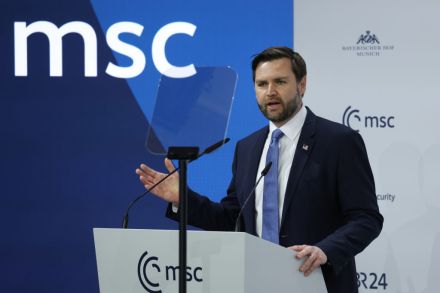
Vance Derangement Syndrome

From our US edition

Bret Stephens has come a long way in his estimation of Donald Trump. Back in 2016, when Trump was first running for the presidency, Stephens wrote in the Wall Street Journal that “the candidacy of Donald Trump is the open sewer of American conservatism.” As the election season progressed, Stephens mostly dropped the sewer talk, sliding into its place evocations of Trump’s “darker antipathies” and warnings that his “candidacy is manna to every Jew-hater.” A “Trump administration,” he explained,“would give respectability and power to the gutter voices of American politics.” At one point he giddily announced that Trump’s chances of victory were “next to nil.

Vance

Jew and non-Jew: Unity Mitford and aristocratic anti-Semitism

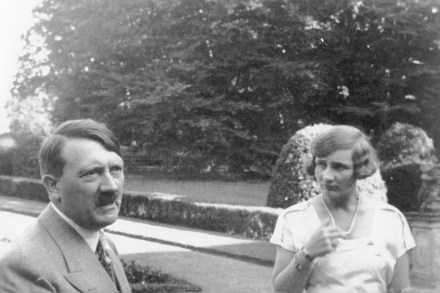
I was touched but not surprised that, despite his illness, the King attended the 80th anniversary of the ‘liberation’ of Auschwitz-Birkenau this week. His paternal grandmother, Princess Alice of Battenberg, was a rescuer. She hid the Cohen family in her house in Athens and is honoured as a ‘righteous’ gentile at Yad Vashem in Jerusalem, where she is buried on the Mount of Olives. A less friendly aristocrat was Unity Mitford, whose views were probably a more accurate reflection of her class. Her newly published diary describes her friendship with Adolf Hitler. Here is a typical entry: ‘Lunch Osteria 2.30. THE FüHRER comes 3.15 after I have finished lunch. After about ten minutes he sends the Wirt [owner] TO ASK ME TO GO TO HIS TABLE.’ She sounds like Bridget Jones.

The great Nazi moral panic

From our US edition

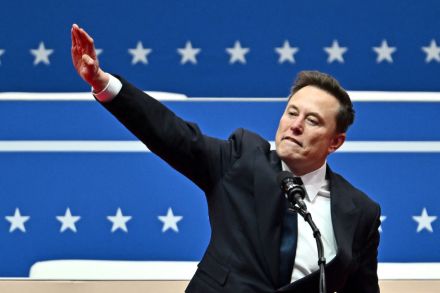
We’re in the throes of a full-blown moral panic, but this time it’s Nazis instead of Dungeons & Dragons. Nazis are everywhere in the United States. There are signs of them everywhere. Their influence is unmistakable, from beverages to hobbies to views on the nuclear family. It’s eleven o’clock. Do you know where your Nazis are? At least, that's the current state of America, according to the same industry that attempts every year to convince you that someone may sneak high-grade narcotics into your child’s Halloween candy. This week, our brilliant commentariat convinced itself that billionaire tech tycoon Elon Musk had performed two "Sieg Heils" during President Trump’s inauguration festivities.

The self-serving delusions of the ‘Swastika Kaiser’

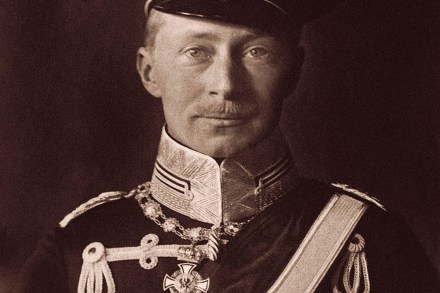
Whenever a new study of the Nazi regime appears, it is taken as a given that after Adolf Hitler seized power and became dictator of Germany in 1933 an egalitarian society emerged, very different to previous decadent, backward-looking generations. In this modern era, it is assumed, the concerns of the Kaiser and the German elite were at best ignored and at worst made another target of the Führer’s purges. In 1933, Wilhelm called Hitler a ‘torchbearer with unparalleled force of conviction and self-sacrifice’ It’s a tempting summation, but an over-simplistic one. As a biographer of the Duke of Windsor, I drew on documents that suggested that Hitler was in fact deeply impressed by the former Edward VIII.

Wagner’s Ring is a mythic mishmash

Wagner’s Ring is an ambitious cycle of four operas relating world history from Primal Swirl to End of Days. It took 26 years to write, takes 15 hours to perform, a double-size orchestra to play and a specially built opera house to stage. Michael Downes, the director of music at St Andrews University, places the fons et origo of the epic in Wagner’s frustration as a kapellmeister, when he wrote, unsolicited, to his boss the King of Saxony, proposing a total revamp of the royal music scene. No reply was forthcoming. A second proposal was also blanked. Furious, Wagner flung himself into the Dresden uprising of 1848, financing the manufacture of hand grenades and giving bloodthirsty speeches from the barricades.

The ambassador’s daughter bent on betrayal

In June 1933, the 24-year-old Martha Dodd, the daughter of the newly appointed American ambassador to Berlin, arrived in the German capital with her parents and older brother. She knew little and cared less about politics. To her, Adolf Hitler, who had just seized supreme power in Germany, was merely ‘a clown who looked like Charlie Chaplin’.            To all her friends in Berlin, Martha would show odd bits of information from her father’s office The Berlin in which the Dodds found themselves was a ferment of intrigue, uncertainty, plots, counterplots, sudden disappearances and febrile gaiety.

Were the Arctic convoy sacrifices worth it?

You need only mild interest in the second world war to be aware of the Arctic convoys of 1941-45, escorted by the Royal Navy through savage weather and unimaginable cold to deliver supplies to Russia. Their purpose was to keep Russia in the war; the conditions were such that storms could last nine days, blowing ships hundreds of miles apart and playing havoc with communications. That’s not to mention enemy action by submarine, air attack and large surface raiders such as the Tirpitz and Scharnhorst. Some 4.5 million tons of aid were delivered at the expense of 119 ships and 2,763 lives lost.  Was it worth it? Opinion at the time was divided.

The journalist’s journalist: the irrepressible Claud Cockburn

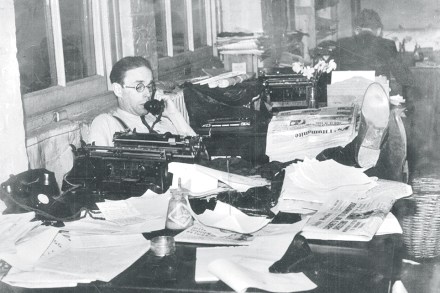
No one should be put off reading Patrick Cockburn’s remarkable biography of his father by its misleading subtitle. ‘Guerrilla journalism’ doesn’t do justice to its subject. The suggestion of irregular warfare from the left underrates Claud Cockburn’s great accomplishments in mainstream politics and journalism and doesn’t begin to embrace the romantic and daring complexity of his life and career. By late 1931, his eyewitness reporting at the start of the Great Depression convinced him that Marx was right Indeed, it is the journalist son’s signal achievement to have surmounted left-wing cliché and written a fascinating and subtle portrait of a paradoxical career.

What do we mean when we talk about freedom?

When the Yale historian and bestselling author Timothy Snyder was 14, his parents took him to Costa Rica, a country lauded for its conservation of natural resources that is rated freer and happier than the United States. He recalls feeling liberated and unfettered as he hiked in cloud forests with his brothers, seeing monkeys, sloths and spectacular birds. One day, a local friend led the boys on a mysterious quest to view something special; after walking for three hours through a maze of paths, they arrived at a cascade hiding a cave, where they could gaze out at the green world through curtains of falling water.

The futility of ever hoping to give peace a chance

‘War – what is it good for?’ asked Edwin Starr on his 1970 single of the same name, before answering his rhetorical question:   ‘Absolutely nothing.’ In this, Starr was not only excoriating America’s contemporary folly in Vietnam. He was implicitly endorsing the philosopher Immanuel Kant’s recommendation that humanity could and should trade up from endless war to perpetual peace, and the anthropologist Margaret Mead’s suggestion that war was not natural to our species.

The outlets blaming Trump for his own assassination attempt

From our US edition

Within twenty-four hours of the assassination attempt on former president Donald Trump, several outlets were calling on his fellow Republicans to tone down their violent rhetoric. On ABC’s morning show, Martha Raddatz and George Stephanopoulos cited what they called “conspiracy theories going forward” and stated that “President Trump and his supporters have contributed to this rhetoric as well.” On CBS, Margaret Brennan grilled Steve Scalise, who himself narrowly survived the Alexandria, Virginia softball field mass shooting by a Bernie Sanders campaign volunteer.

Trump versus the moderators

From our US edition

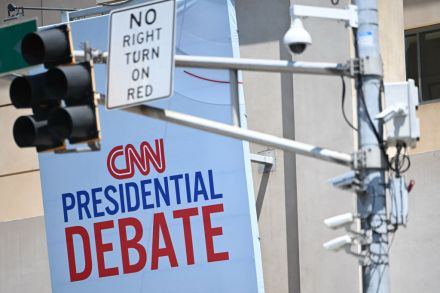
It’s almost here... the first presidential debate between President Joe Biden and former president Donald Trump will take place tomorrow night on CNN. It is quite early in the election cycle, which is by design to account for the fact that many voters now cast their ballots via mail or in an early voting period. Perhaps the biggest surprise is that Biden agreed to debate this early, which could signal his campaign’s uneasiness with polls showing the president trailing in most swing states, losing by double digits on the issues that matter most to voters and hemorrhaging support among various key voting blocs, despite what they may say in public (When First Lady Jill Biden was asked about polls showing Biden losing battleground states, she sharply replied, “No, he’s not!

When Stalin was the lesser of two evils

‘We are resolved to destroy Hitler and every vestige of the Nazi regime... Any man or state who fights against Nazism will have our aid.’ These words were spoken by Winston Churchill in a BBC radio broadcast to the nation from Chequers on the evening of 22 June 1941. Churchill detested Stalin – but he needed him to destroy Hitler That morning, Operation Barbarossa had begun, with Hitler’s armed forces launching the biggest invasion in modern history into the heart of a country whose very existence Churchill detested: the Soviet Union. This cataclysmic invasion by the Nazi regime, however, created an ally the British leader had never envisioned. For the previous 22 months, Great Britain’s war with Nazi Germany had not gone well.

The circus provides perfect cover for espionage

The hall was before me like a gigantic shell, packed with thousands and thousands of people. Even the arena was densely crowded. More than 5,600 tickets had been sold. Cyril Bertram Mills started his circus career accompanying his father to European horse fairs in the 1920s. The two of them were soon familiar faces on the German circus scene, travelling between shows to recruit acts for London. The Munich Circus was a particular draw; but sometimes they hired out their circular wooden building to other local acts. The opening quote of this review comes from Adolf Hitler. Mills was at first dismissive of the Munich Nazi party leader, pointing out that hippos, monkeys and pigs ‘also received enthusiastic receptions in the same circus arena’.

Will DeSantis make it to Iowa?

From our US edition

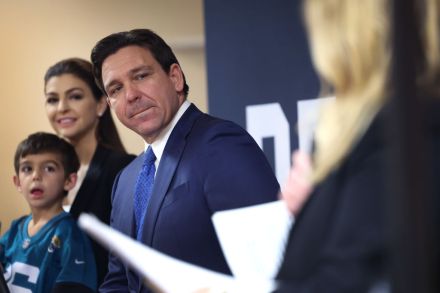
Florida governor Ron DeSantis’s 2024 presidential campaign is imploding spectacularly. His first mistake was waiting too long to announce his intention to run while traveling the country for a “book tour,” which allowed former president Donald Trump to sully his name unanswered for weeks. Then when he did jump in, he made his announcement on a glitchy, botched Twitter Space with Elon Musk. In the months that followed, DeSantis struggled to adopt a clear strategy and seemed uncomfortable with the basic prospect of running a national campaign, perhaps best exemplified by an anecdote from 2018 when an advisor told him to write “LIKABLE” at the top of his debate notepad.

Enemy of the Disaster: Selected Political Writings of Renaud Camus, reviewed

Everybody who knows nothing else about the French writer Renaud Camus knows that – as Wikipedia immediately asserts and as therefore is repeated every time he is mentioned in the press – he is ‘the inventor of the Great Replacement, a far-right conspiracy theory’. Until now, actually reading Camus has not been possible in English, so thoroughly has he been shunned by the mainstream media. Here, at last, are some of his core political essays in translation, published by a small press in America, that will make such dishonesty blatant in future. It is in that way, for good or ill, an essential publication, as few can genuinely be said to be. These are not the writings of Camus that I myself enjoy the most.

Set in a silver sea: the glory of Britain’s islands

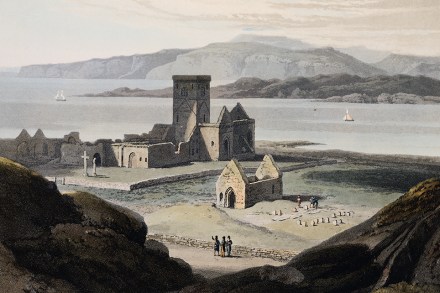
Islands always intrigue, hovering on the horizons of our imaginations – seen, according to your lights, as territories to be taken, ancient redoubts, repositories of secrets, even loci of lands of youth. Where there are no islands, we often imagine them – Plato’s Atlantis, the Celts’ Avalon, the Irish Hy-Brasil, Zeno’s Friseland, Columbus’s Antillia – and occasionally find them, like Terra Australis Incognita, postulated long before Europeans made landfall. Orkney was a trading station long before London, and Iona was the epicentre of Celtic Christianity Britain was once itself an imagined island – or rather islands plurally, called by Pliny Britanniae, one archipelago among others in the great geographer’s speculative world atlas.

Bill Stirling – the brains behind the wartime SAS

‘The boy Stirling is quite mad, quite, quite mad. However, in a war there is often a place for mad people.’ Field Marshal Bernard Montgomery was referring to David Stirling, the man largely credited with raising the Special Air Service (SAS) in the summer of 1941. Myth has always surrounded the formation of the SAS and one of the most abiding legends is that it was down to one man alone, David Stirling, whose L Detachment of six officers and 60 men grew into 1SAS. Gavin Mortimer’s vivid and meticulously researched book, 2SAS, does a good deal to redress the balance. It acknowledges the importance – too long overlooked – of David’s eldest brother, Bill Stirling, who was to command 2SAS, and other remarkable men who were among the SAS’s founding fathers.

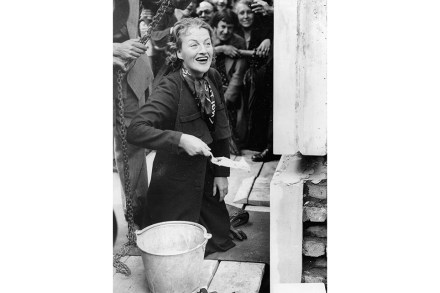
What Britain owed to Gracie Fields

Simon Heffer is the supreme Stakhanovite among British writers. Where the original Stakhanov moved 227 tonnes of coal in a single shift, within the past decade Heffer has produced four massive volumes of modern British history, each little less than 1,000 pages. Alongside them he has edited three equally voluminous diaries of the waspish socialite MP ‘Chips’ Channon, as well as writing regular reviews and columns. Hats off to the master!

Why did the Weimar Republic descend so rapidly into chaos?

‘Thirteen wasted years’ bellowed Adolf Hitler at receptive audiences in the spring of 1932. He was talking about the first full German democracy, the Weimar Republic. Proclaimed in November 1918, it was born out of a desire to do things better after the horrors of the first world war and was an ambitious attempt to establish one of the most progressive states in history. ‘Democratic chaos,’ sneered Hitler, ‘unmitigated political and economic chaos.’ Much of the electorate agreed. Less than a year later, Hitler became chancellor and immediately set about fulfilling his electoral promise to destroy democracy. The short and tumultuous story of the Weimar Republic continues to fascinate.