History

Living history

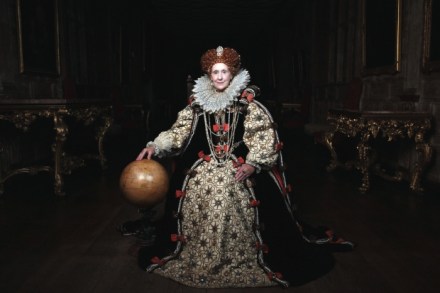
It has been a while since the BBC really pushed the boat out on the epic history documentary front. Perhaps to make amends it is treating us to possibly the most historian-studded, blue-screen-special-effects-enhanced, rare-documentastic, no-hyperbole-knowingly-under-employed series ever shown on television. Armada: 12 Days to Save England (Sundays, BBC2). Having clearly spent a lot of money here, the BBC is taking no chances with its demographic spread. For the laydeez, in the Ross Poldark role it has Dan Snow, captured somewhat gratuitously piloting his handsome yacht into the choppy waters of the English Channel. (Just like in 1588! Sort of.

Micro-managing the terror

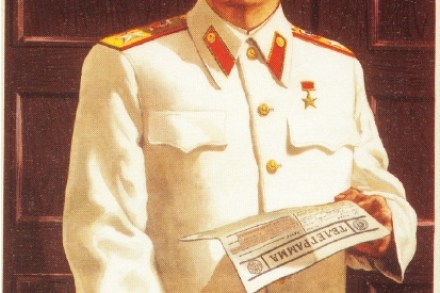
‘Lately, the paradoxical turns of recent Russian history… have given my research more than scholarly relevance,’ remarks Oleg Khlevniuk in his introduction. Indeed, in Putin’s Russia Stalin’s apologists and admirers seem daily to become more vocal. The language of the 1930s is used in televised tirades against ‘internal enemies’ and ‘foreign agents’. Stalin himself is upheld not only as a strong leader, but also as an ‘effective manager’ who, despite his mistakes, did what was necessary to modernise the Soviet Union; or, contrarily, as a benevolent dictator who was unaware of the corrupt actions of his officials.

Letters | 14 May 2015

Scotland’s silent majority Sir: Hugo Rifkind’s article (‘Scotland’s nasty party’, 9 May) is a first for the media. It expresses the dismay, disbelief and incomprehension felt at the rise of the SNP by least one — and I suspect many — of the silent majority in Scotland. When will the media confront Nicola Sturgeon’s claim to speak for Scotland, as opposed to allowing her to deliver an unchallenged party political broadcast? She can only speak for the SNP, who at best can speak for half of Scottish voters. Not in my name. I want no part of her strident, demanding, aggressive brand. The article did omit one issue. Thousands of young Scots work in England and abroad, developing and enhancing their expertise before returning home.

Demob unhappy

After all the carousing and flag-waving that followed VE day in 1945, millions of young men fortunate enough not to be still fighting the Japanese faced a problem. Having spent five or six years in uniform, they needed jobs. For those who lacked explicit civilian skills, which meant most, it was hard to persuade employers that a talent for flying a Spitfire, commanding a gun battery or navigating a destroyer qualified a man to run a factory or even sell socks. For years after the shooting stopped, newspapers bulged with small ads placed by demobilised officers. Many such entries exuded unconscious pathos. That quirkily brilliant writer Richard Usborne had the notion of investigating the responses received by such men, who had risked much and borne life-and-death responsibilities.

Children of Gomorrah

In the early hours of 25 July 1943, nearly 800 RAF Halifaxes and Lancasters launched a 50-minute bombing raid on the Third Reich’s second largest city, Hamburg. The pilots used the neo-Gothic spire of St Nikolai’s church in the city’s historic heart as a landmark and killed 1,500 people. Three nights later, just after midnight, the bombers returned. What was to follow was immeasurably worse. The RAF’s target was the city’s overcrowded working-class districts, Hammerbrook, Hamm and Borgfelde, to which many of those who had lost their homes in the previous bombardment had fled. Unusually warm weather and heavy loads of incendiaries combined to create a hurricane-like firestorm.

The devil’s devoted disciple

It is ironic that this weighty biography of Hitler’s evil genius of a propaganda minister is published on the day of a general election filled with Joseph Goebbels’s hallmarks: mendacity, media manipulation and the big lie. Seventy years after the spectacular suicide of Goebbels and his wife Magda, and their murder of their six children, in the Berlin bunker, the ‘little doctor’ is still a byword for the black arts of political spin and politicians regularly accuse each other of telling fibs ‘worthy of Goebbels’.

The British public is about to make a big mistake

On the weekend of 25 April 2015 I started to believe that the party I supported might not win an impending general election. I’m used to that. But I started to believe, too, that my fellow citizens might be about to make a stupid and unfathomable mistake. I’m not used to that at all. It has come as an awful shock. For the first time in my life I have understood how it must have felt to be a convinced socialist in Britain these past 36 years since 1979: to live in and love a country whose people had got it completely wrong. ‘Well, diddums,’ I can hear left-wing friends reply: ‘Welcome to our world.’ In the general election of 1979, as a parliamentary candidate, I knew the voters would return me and believed they would return a Conservative government led by Margaret Thatcher.

Letters | 23 April 2015

Enemies within Sir: I thought Matthew Parris was typically incisive in his last column, but perhaps not quite as much as the person who wrote its online headline, ‘Scotland knows the power of a common enemy. We English don’t’ (18 April). It is true that ‘the wish to be the underdog’ is a defining urge of our age, even in relatively prosperous polities such as Scotland and Catalonia. But Parris is wrong when he claims that the closest the English come to the ‘Braveheart feeling’ is in their collective memory of the second world war. If only that were true. Would any other country make so little of its crucial role in the defeat of the most evil ideology the world has known?

The boy David

I can claim a milligram of credit for David Cameron’s first star billing. In early 1991, standing in for the late John Junor on the Mail on Sunday and seeking a weekly instance of some Labour frontbencher making an eejit of himself, I inquired who was the best sniper in the Conservative Research Department. The answer was David Cameron. I phoned him and, for the next three weeks, one sheet of paper arrived with brief quotes, all of them firecrackers. Week four: the boy David is on leave, so his boss, Andrew Lansley, the then director of CRD, stands in. I receive 20 sheets of very damp squibs. Around that time, a couple of Prime Minster’s Questions did not go well for the new PM. I asked John Major if he had enough political help; he thought that he could do with more.

Remembering Raymond

I first heard of Raymond Carr, who wrote for this magazine for more than 40 years, when I was in Italy in the army at the end of the second world war, and I had a letter from my sister in London saying that she had met the most marvellous man who was not only very funny but immensely clever, and I must meet him when I got back. By the time I did, Raymond had moved from being a wartime schoolmaster at Wellington College to a being a resident fellow of All Souls, Oxford. He was, yes, both immensely funny and rather grand. Raymond Carr had been educated at Brockenhurst school, and then in 1941 won a history scholarship to Christ Church, Oxford, having continued his education (as he used to put it) by teaching himself the clarinet and supporting himself by performing in a jazz band.

Passionate pioneers

If Mary Wollstonecraft, as she once declared, ‘was not born to tred in the beaten track’, the same with even greater reason could be said of her daughter Mary Shelley. Not only was she the child of the author of A Vindication of the Rights of Woman, she was also the daughter of William Godwin, the radical political philosopher. Given this auspicious pedigree, it is perhaps not surprising that Shelley would lead a life every bit as daring as her mother, and in Frankenstein produce a masterpiece of equal fame. A joint biography of this most famous mother/daughter combination is, therefore, a good idea.

The same old song

T.S. Eliot liked to recall the time he was recognised by his London taxi driver. Surprised, he told the cabbie that poets weren’t often recognised. ‘I’ve an eye for celebrities,’ the driver replied. ‘I ’ad that Lord Russell in the back o’ the cab the other day. I said to ’im, “All right, then, Bertrand, so wossit all about?” And, you know what, ’e couldn’t tell me.’ I’ve always felt the story reflects well on the cabbie. While it may have been asking too much of Bertrand Russell to condense his philosophy into the length of a taxi journey, he surely ought to have been able to say something useful. George Steiner is a public intellectual almost of Russell’s stature.

A rum encounter

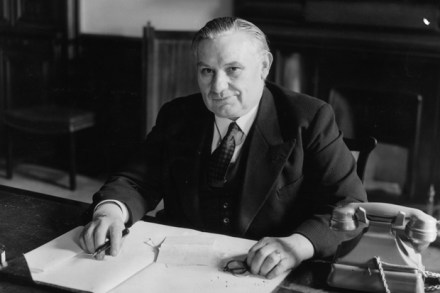
For many years, the Central American republic of Guatemala had a grievance against the United Kingdom. It claimed sovereignty over British Honduras, then a colony of ours. Eventually, all that died down. Calling itself Belize, British Honduras became independent and showed no desire to join Guatemala. Opposing colonialism could earn a plaudit from the sillier sort of states at the UN. It was harder to gainsay democracy. Back in the old days, there was an amusing exchange. In pursuit of his country’s ambitions, the then Guatemalan ambassador pressed for a meeting with the then Foreign Secretary, Ernest Bevin. Bevin is said to have left school at eight. His spoken English was on a par with John Prescott’s. But there was a difference. Ernie’s locution was free of self-pity.

Some watcher of the skies

We live in an age of astronomical marvels. Last year Europe’s Rosetta spacecraft made a daring rendezvous with the comet Churyumov-Gerasimenko, revealing a bizarre double-lobed mountain of ice and rock with landscapes of vertiginous crags and ashen scree slopes. In our image-saturated age it’s easy to forget that such views are only possible through the intermediary of sophisticated technology: cameras and computers and the spacecraft that carry them halfway across the solar system. And yet this is nothing new. Ever since the Italian mathematician Galileo Galilei first turned his telescope to the heavens in the autumn of 1609, advances in technology and great strides in knowledge have gone hand in hand.

‘You are always close to me’: Unity Mitford’s souvenirs of Hitler

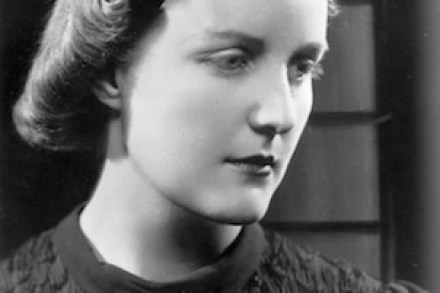
The English aristocracy has had its fair share of misfits, and one of the most far-fetched was Unity Mitford. No novelist would dare invent the story of a young woman of 19 who settles in Germany in 1933, determines to captivate Hitler, and succeeds. Eva Braun, the long-term mistress whom Hitler married in the last days of his life, gives way in her diary to jealousy and spite. There is evidence provided either by Unity herself or Nazi officials that Hitler held her hand, stroked her hair and called her ‘Kind’ (child). During his preparation for world war in the summer of 1939, he found time to arrange for a Jewish couple to be dispossessed from their apartment in Munich in order for Unity to have it. He also paid various expenses.

John Maynard Keynes: transforming global economy while reading Virginia Woolf

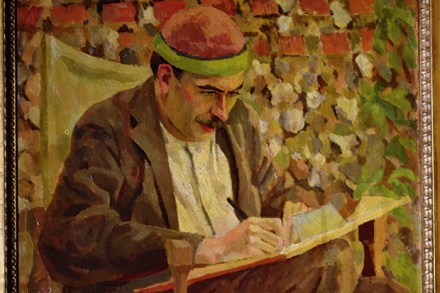
To the 21st-century right, especially in the United States, John Maynard Keynes has become a much-hated figure whose name is synonymous with bogus spending on public works, insouciance in the face of mounting debt and, of course, homosexual promiscuity. It’s a virtue of Richard Davenport-Hines’s new biography that it makes clear how much this under-reads him. So far from being the flippant old queer calumniated by Niall Ferguson, Keynes worried himself sick about inflation and was far more alarmed by budget deficits than George Osborne seems to be. He was essentially a Nonconformist Liberal for whom faith was impossible, and who saw liberalism as something needing saving from itself.

The lost words of John Aubrey, from apricate to scobberlotcher

Hilary Spurling found a certain blunting of the irregularities of John Aubrey’s language in Ruth Scurr’s vicarious autobiography of the amiable man (Books, 14 March). It is true that his vocabulary was adventurous, though I’m not convinced that his age (that of Thomas Browne too) was more neologistical than Chaucer’s, Shakespeare’s, Thackeray’s or our own. Reading Aubrey (1626–97), we can overlook the Latinate words that have survived, and notice only those that did not catch on. One regrettable casualty was Aubrey’s apricate, ‘to bask in the sun’, from Latin apricari.

Men behaving badly: Nero, Claudius and even Seneca could be intensely cruel to women — and fish

They lived in barrels, they camped on top of columns, or in caves: the lives of the sages are often inconceivable to the modern reader. Seneca, however, that rich, compromised sophisticate of the first century AD, is instantly kin, his voice weary with consumerism, his problems definitively first-world. ‘Being poor is not having too little,’ he observed. ‘It is wanting more.’ Those in need might disagree. But from where Seneca was sitting, in his personal banqueting suite with 500 ivory-legged tables (all matching, no less — matching furniture in Rome was considered staggeringly smart, due to the lack of means of mechanical reproduction) he was able to cultivate the elegant indifference to luxury that speaks to our age so vividly.

How (not) to poison a dog

Deadly to dogs An Irish setter was allegedly poisoned at Crufts, using beef containing slug pellets. Some other substances with which dog-show rivals could poison your pooch: — Chocolate contains theobromine, a stimulant which dogs cannot metabolise, and which causes the heart to race. It takes just 1 oz per pound of body weight of milk chocolate and a third of an ounce per pound of body weight of dark chocolate to kill a dog. — Grapes and raisins can cause kidney failure in two thirds of dogs. The link was discovered by America’s Animal Poison Control Center in 2004 after the fruit was linked to the deaths of 140 animals in one year, though the chemical involved is not known.

Anders Brievik: lonely computer-gamer on a killing spree

In 2011, Anders Breivik murdered 69 teenagers in a socialist summer camp outside the Norwegian capital of Oslo, and eight adults with a bomb attack. His hatred was directed at the children of Norwegian politicians who had allowed immigration to contaminate the sturdy bond (as he saw it) of Nordic race and nationhood. ‘You will all die today, Marxists!’ he hurrahed as he stalked and shot his way to infamy. Inflated with self-importance, Breivik was a self-styled ‘Justicious Knight Commander’ come to cauterise Norway of bloody foreigners. He advocated the racial rejuvenation of his homeland through the expulsion of Muslims, and to this end he photographed himself in masonic Crusader regalia, sumptuously gold-braided and primed for holy war. Was he mad?