History

He knew he was right

From our UK edition

A highlight of this year’s Dublin Theatre Festival was the Rough Magic Theatre Company’s production of The Train, a musical by Arthur Riordan and Bill Whelan. Political theatre at its wittiest and craziest, it told the story of the fledgling Irish Women’s Liberation Movement’s publicised trip in 1971 to Belfast to buy contraceptives, ostentatiously importing these banned Satanic devices back into the Republic, where the law obeyed the writ of the Catholic church. Watching it, one was reminded of the sheer extent of theocracy in Éamon de Valera’s Ireland (he remained president till 1973, having been Taoiseach for most of the period from 1932 to 1959), and the long journey from those days to this year’s equal marriage referendum.

Sic transit: the buildings we treasure most are often the ones we’ve never seen

From our UK edition

Here are two books which have almost nothing in common: form, function, source material, methodology, all utterly different. The surprise is that I should be surprised. Loss and rediscovery is at the core of what writers mostly deal with. We all experience loss (lovers, spectacles, innocence, our very existences) and that universality allows each of us to shape it as we will. James Crawford’s approach is structurally simple, but his narrative is beguiling. He considers the life-span of 20 buildings — including the Tower of Babel (5000 BC to 323 BC), the Library of Alexandria (300 BC to AD 650), the Berlin Wall (1961 to 1989) and, provocatively, the web ‘settlement’ of Geocities, born in 1994 and deliberately and utterly obliterated by its owners in 2009.

The Church of England’s shameful betrayal of bishop George Bell

From our UK edition

The Church of England has produced a lot of good men and women, but very few great ones. It is in its modest, cautious nature that it should be so. Greatness requires a lonely, single-minded strength that does not sit easily with Anglicanism’s gentle compromise. And I suspect the Church has always been hesitant and embarrassed about the one undeniably great figure it produced in the 20th century. To this day, George Bell, Bishop of Chichester from 1929 to 1958, is an uncomfortable, disturbing person, like a grim obelisk set in a bleak landscape. Many British people still disapprove of his lonely public denunciation of Winston Churchill’s deliberate bombing of German civilians in their homes.

Designing the swimming car, the Doodlebug and the Panzer tank was all in a day’s work for Ferdinand Porsche

From our UK edition

The aggressive character of the famous German sports car, in a sort of sympathetic magic, often transfers itself to owner-drivers. The joke goes: ‘When you get into a Porsche, you feel you want to invade Poland.’ In this fascinating and meticulously researched book, Karl Ludvigsen investigates the genetic spiral that gave Porsche cars the character of weaponry. All German manufacturers were forced to supply the Third Reich. The BMW-sponsored London Olympics 2012 were held on a site devastated by Luftwaffe planes powered by its engines.

The emperors of Brussels

From our UK edition

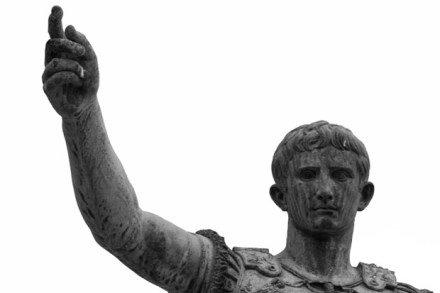
As both sides of the great EU debate line up their forces, it is worth reflecting on the implications of the collapse of the Roman republic in the 1st century bc and its transformation into an imperial system under the first emperor Augustus. Romans dated the start of the collapse to 133 bc. Up till then, they felt that relations between the senate, the traditional, if de facto, ruling authority, and the Plebeian assembly, with its tribunes who could veto senatorial proposals, had worked pretty well, without any serious clashes. This all changed when the ambitious aristocrat Tiberius Gracchus got himself elected tribune in order to use the Plebeian assembly to introduce legislation without senatorial agreement.

Once upon a time… history lessons weren’t so fragmented

From our UK edition

What might a bright working-class boy from south London have learnt in his school history lessons a hundred years ago? We know something of his curriculum from notes made by the poet and painter David Jones about his own Edwardian education – paternalist, imperialist, chauvinist – at Brockley Road School, a state-funded secondary from 1906-1909.

Can politicians say ‘crusade’ again? David Cameron thinks so

From our UK edition

One thing grabbed my attention from David Cameron’s speech, long ago in the middle of last week. ‘We need a national crusade to get homes built.’ I’m as interested in housing as the next mother with a practically homeless grown-up daughter, but it was the word crusade that astonished me. I did not think a politician could use it now. Just after the atrocities of 11 September 2001, George Bush said: ‘This crusade, this war on terrorism, is going to take a while.’ Some listeners feared this was confirmation of a ‘clash of civilisations’. But, from the Muslim side, some objections were ill-founded historically. English-speaking warriors who set off in the 11th and 12th centuries to free the Holy Places did not call themselves crusaders.

Notes from a very small island: wonderful, eccentric Ascension

From our UK edition

‘This is one of the strangest places on the face of the earth,’ wrote a Victorian naval officer. Another early visitor called it ‘the abomination of desolation’ — and to this day, on the 200th anniversary of the British occupation, Ascension remains decidedly odd. The summit of an extinct volcano, it pokes up out of the Atlantic eight degrees south of the Equator, and although the latest eruption is thought to have taken place 70,000 years ago, most of it still looks raw. Vegetation cloaks the summit and shoulders of the 2,800-foot Green Mountain, but steep ravines and petrified lava-flows — jet-black, grey, brown and white — plunge away towards the coast.

Sri Lanka makes me yearn to be a pre-war tea planter

From our UK edition

Sri Lanka In my next life, I’m going back in time to become a tea planter in pre-war Ceylon. I half knew this even before I’d ever set foot in Sri Lanka. After a blissful couple of days at Rosyth, an estate house in old tea- growing country about an hour from Kandy, I understood exactly why: the climate, the views, the staff, the sundowners… Which are the same reasons the colonial British took so particularly well to tea-growing, whether in Assam, Darjeeling, Kenya or Ceylon. It thrives in just the conditions British people tend to find most congenial: pleasantly warm but not boiling; plenty of rain to keep the foliage all lush and green; a bit of height, for the attractive vistas.

Barometer | 8 October 2015

From our UK edition

The death of Diesel The Volkswagen scandal has brought into question the future of the diesel engine. A century ago its inventor, Rudolf Diesel, was himself the subject of scandal. On 29 September 1913 he disappeared from the steamship Dresden on its way from Antwerp to Harwich. He had retired to his cabin after dinner but had not changed into his bedclothes. His body was found off Norway ten days later. He was apparently on his way to discuss selling diesel engines to the Royal Navy for submarines, leading to suspicions that he had been murdered to prevent the technology falling into British hands. His financial situation, however, pointed to possible suicide. The Royal Navy went into the first world war with steam-powered submarines.

Proof that the British hardly ever had a stiff upper lip

From our UK edition

The last time I cried was September 1989. That was my first week at public school. The reason I cried was that my allocated room-mate, a malevolent pixie named Toby Cox who later became one of my closest friends, had informed me that he ‘knew a lot of people’ at Harrow and he was going to tell them all that I was ‘a total dick’. I bawled. I blubbered, and a cord of saliva swung from my lower lip, as I begged for mercy. He refused. And I haven’t cried since. Not at the deaths of pets or relatives. Not at the break-ups of relationships. There’s something satisfying, I suppose, in fulfilling so completely a national stereotype.

Diary – 24 September 2015

From our UK edition

Jeremy Corbyn has been compared to plenty of people over the past few months — a geography teacher, Michael Foot, Brian from the Monty Python film — but my favourite comparison was to a horse. Steve Fielding, professor of politics at Nottingham, declared Corbyn’s election ‘an act of political stupidity unparalleled since Caligula appointed his horse to the Roman senate’. As someone with a book just published on Rome’s first imperial dynasty, I was doubly thrilled. First, Professor Fielding had confirmed the conviction in which I had written my history of the first Caesars: that two millennia on, the West’s primal examples of political excess continue to instruct and appal.

A hero of our time

From our UK edition

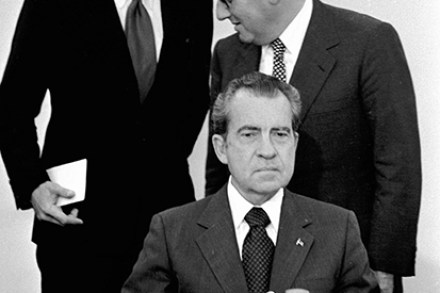
I have met Dr Kissinger, properly, only three times. First, in Cairo, in 1980, when, as a junior diplomat escorting Edward Heath, I had to secure for an almost desperate former British prime minister a meeting with the former US secretary of state, also in town. Once with Kissinger, Heath promptly subsided into a deep slumber. I had the alarming experience of trying to keep the conversation going. The other occasions were more recent, but almost as scary. My hostess at the ‘secret’ (but much publicised) transatlantic talkfests which Kissinger (92 this year) still attends twice summoned me to sit beside the great man at dinner. On each occasion I felt like the luckless passenger in the Economist’s vintage television commercial.

A terrible beauty

From our UK edition

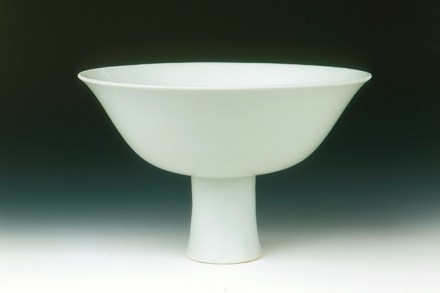
Good pottery appears to be cool and silent — something vulnerable that, with luck, can outlast many human generations. A white porcelain dish seems calm and decorous; one knows that skill went into its evenness, into the exact whiteness, into its lightness. But when I began to think about pots I had no idea of the extreme violence, happenstance and risk that are an intrinsic part of the maker’s art. The chemistry is complex; the potter needs to study it intimately — the composition of different clays, of glazes, of rare and valuable pigments (cobalt for instance), and of the firewood that makes the fire. Pottery-making can be poisonous from fumes, and tasting deadly dyes. The history of the art is littered with terrible disasters.

Diary – 10 September 2015

From our UK edition

During our annual odyssey around the Scottish Highlands, I read Tears of the Rajas, Ferdinand Mount’s eloquent indictment of imperial expansionism in India. One of Ferdy’s themes is that the British lived in the country without ever attempting to make themselves of it. How far is that true of sporting visitors to Scotland? The SNP’s persecution of landowners gains traction from the fact that guests in shooting and fishing lodges encounter only keepers, gillies, stalkers. We disport ourselves within a social archipelago utterly remote from the mainland of the society in which it lies. In our defence, however, that is what tourists do everywhere in the world, much to the advantage of host nations.

Livy on immigration policy

From our UK edition

In the migration crisis, the EU is currently acting just like the ancients, as if border controls did not exist, though the mass, peaceful migration we see today was not a tremendously common occurrence then. The reason is that in the ancient world, every male was a potential warrior. So in conflict they would either fight to defend their land and, if they lost, be killed or sold into slavery, or they would flee, en masse, as Germanic tribes did into the Roman Empire in the 4th century ad, escaping the Hun onslaught. Since this represented a potential threat, Romans fought off some, but welcomed others, giving them land and status in return for service in the army. Many did well out of it.

Monumental heroes

From our UK edition

Leptis Magna was deserted when I last visited — no wonder. Tourists daren’t visit Libya these days and so I had the ruins to myself. I climbed the steps of the vast Roman theatre, looked out to where the Wadi Lebda meets the sea, then stopped. Men with AK-47s. My immediate fear was that they were Islamic State. Isis move closer to Leptis Magna every day and it would make sense for this most spectacular site to be next on their hit list. Their last great coup was on the other side of the Med, when they blew up the Temple of Baal Shamin in Palmyra, known as ‘the Pearl of the Desert’. It’s part of their cultural jihad, but they also do it for the global outrage that follows. No such thing as bad press for Isis.

Forget Chilcot

From our UK edition

[audioplayer src="http://rss.acast.com/viewfrom22/jeremycorbynsbritain/media.mp3" title="Peter Hitchens and Fraser Nelson debate whether the Chilcot report needs to be published" startat=1916] Listen [/audioplayer]It might actually be better if Sir John Chilcot’s report is never published. I for one can no longer be bothered to be annoyed (though I used to be) by the increasingly comical excuses for its non-appearance. We all know the real reason is that the Iraq war was the product of lies, vainglory and creeping to the Americans, but they don’t want to admit it. I suspect Sir John and his colleagues would be more hurt by a patronising acceptance that they are a hopeless embarrassment than by any more anger.

Just how republican is Jeremy Corbyn?

From our UK edition

True to his antique, bearded ideology, guru Corbyn is a ‘republican’, a form of government invented 2,500 years ago. ‘Republic’ derives from the Latin res publica — ‘people’s property, business’ (not politicians’). It defined Rome in contrast to its earliest condition as a monarchy, under the control of kings. Romans dated the republican revolution to 509 bc, when the last king, Tarquinius Superbus (‘arrogant’), was thrown out after his son Sextus raped the noblewoman Lucretia. From then on, at least in theory, the people could always have the last word through the various people’s assemblies. One can be quite sure that Corbyn will welcome popular control of the Labour party — in theory.

These I have loved

From our UK edition

In the preface to his great collection of essays The Dyer’s Hand, W.H. Auden claimed: ‘I prefer a critic’s notebooks to his treatises.’ Auden’s criticism is like that: a passage of insights instead of a single sustained argument, and the same is true of Samuel Johnson, whose works are a pleasure to read for the feeling of the pressure of a great mind at play. Clive James belongs in this company. His new book Latest Readings is a kind of reading diary: a collection of short essays, each prompted by one book or a handful he happens to be reading. They are not in any logical order or sequence, but are given unity by two things: one biographical, the other stylistic.