History

Churchill’s privilege

From our UK edition

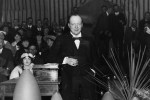
From ‘Mr Churchill’s misfire’, The Spectator, 2 September 1916: There is nothing that democracy so much hates as unfair privilege, and Mr Churchill has enjoyed and has utilised an unfair privilege in getting himself in and out of the Army at his arbitrary will… The public now fully understands that his influence on our political life is almost wholly bad because it is wholly dissociated from any motive except that of personal advancement. He would, indeed, now be powerless either for good or for evil, were it not for the fact — or what appears to be the fact — that he still retains useful friends within the Cabinet who afford to him privileges which are denied to the ordinary man.

Northern brag

From our UK edition

The last thing we need right now, in these divisive times, is a series that spends all its time crowing about how special the North is, that continually insists it’s the fount of English art, faith and civilisation and also the region where our notions of justice and equality have been forged.

Mussolini at Lake Como

From our UK edition

If your destiny is to be shot dead with your mistress, where better than Lake Como, which, in the words of Shelley, ‘exceeds anything I ever beheld in beauty, with the exception of the Arbutus Islands in Killarney’? It was in Giulino di Mezzegra, a tiny village in the mountains above the lake, that a handful of communist partisans executed the Fascist dictator Benito Mussolini and his mistress Claretta Petacci on 28 April 1945. The Duce was 61 and his amante 33 — two years older than his daughter Edda. The partisans loaded their corpses and those of other Fascist leaders — executed separately down by the lake — on to a lorry and drove the 70 miles to Milan where they dumped them in Piazzale Loreto.

A toast to Provence

From our UK edition

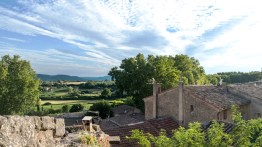
Friends have a house in Provence, near the foot of Mont Ventoux. Even in a region so full of charm and grace, it is an exceptional spot. Although nothing visible dates from earlier than the 18th century, the house is in the midst of olive groves and there has been a farm dwelling for centuries. I suspect that one would find medieval masonry in the foundations. Beginning life as a simple farmhouse, it has been bashed about, added to and poshed up. On the western side, the exterior has pretensions to grandeur. The other elevation is more feminine; you expect to find Fragonard painting a girl on a swing. At this season, the parasols act as the drawing room. There is a pool, and there were expeditions to Nîmes, Orange and Avignon.

No happy endings

From our UK edition

Between agreeing to review this book and receiving it, I got worried. Like many, I adore Doctor Zhivago with its tragic love story between the eponymous doctor-poet and the beautiful Lara, set in post-revolutionary Russia. When in Moscow, I followed the trail of literary pilgrims to Boris Pasternak’s dacha in the writers’ village of Peredelkino. I also had fond memories of Julie Christie and Omar Sharif in David Lean’s epic 1965 film; never underestimate the enhancing effect on romance of fur hats, sparkling snow and long-distance trains. Anna Pasternak, the writer’s great niece, is a journalist and Daily Mail columnist who made her name with Princess in Love.

Doctor who?

From our UK edition

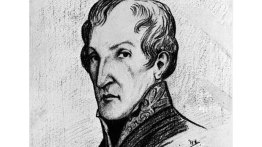
On 25 July 1865, during a heatwave, Dr James Barry died of dysentery in his London lodgings. A charwoman came in to ‘lay out’ the body. She had known the deceased gentleman: a strange-looking fellow, about five feet tall, slight and stooped and with a large nose and dyed red hair. But nothing had prepared her for what she found when she folded back the bedclothes. Barry’s whole body — ‘the genitals, the deflated breast and the hairless face’ — was unmistakably female. And as if that wasn’t shock enough, the charwoman’s eye was drawn to pronounced striations in the skin of the belly. As a mother of nine, she recognised them immediately as the marks of childbearing.

Diary – 18 August 2016

From our UK edition

Throughout our holiday, reports from Rio rippled in — last thing at night, first thing in the morning — a regular golden swoosh of heartwarming news. We are only an averagely sporty family, but these Olympics made us all happier. Across the media, there’s been a mild controversy about whether the remarkable achievements of Team GB say anything bigger about Britain — ‘We always punch above our weight’ — or very little; ‘Sport is sport and only sport, and that’s why we like it.’ But of course there are wider lessons. First, there was real, big long-term investment provided by the National Lottery and the foresight of Sir John Major. Second, the unsentimental and even ‘unfair’ way this money was channelled by Sport UK.

Iron birds

From our UK edition

From ‘News of the Week’, The Spectator, 19 August 1916: The Parliamentary Air Committee having recently inhaled much ozone at giddy heights, during their visits to a R.F.C. park, have breathed some of it forth in a brilliant idea. They propose that the present clumsy and ugly system of designating aircraft by numbers and letters should be replaced by the names of birds. The machines would be grouped in classes, and each class would have a distinctive name. The names of seabirds would be given to seaplanes and the names of land birds to Army aeroplanes.

Rome’s border policy

From our UK edition

Whether the EU commission knows what is good for it or not — always a tricky call — post-Brexit Britain should follow Roman practice in intelligently organising its borders. These were not meant to be barriers, but traversable, under Roman control. Take the Red Sea ports. Travellers to and from Egypt were given trackable passes, at a cost, to access both the roads and the ports. Everyone understood the system, and services sprang up along the routes to keep trade flowing. The very presence of Roman soldiers created mini-markets of their own for clothes, food and sex. An inscription records the hire of a prostitute, Procla, to a military outpost for 60 drachmas plus transaction and goods levy (higher than for women in general).

Holding on

From our UK edition

From ‘Restless politicians’, The Spectator, 12 August 1916: Even those journals which a few months ago were most zealous for a general election without delay now admit that there is no issue which could be presented to the country on which to take a vote… We have got to accept the continuance of the present government, with some slight modifications from time to time, because we have no means of getting a better. People who are disgusted at this admission may be again reminded that a great war is in progress, and that this fact overrides all ordinary constitutional considerations.

The decade of Delia

From our UK edition

Proof that someone has really made it as a TV historian comes, I would suggest, when they join the likes of David Starkey and Simon Schama by getting their name into the programme’s title. So it is that Dominic Sandbrook’s The 70s, from 2012, has now been followed by The 80s with Dominic Sandbrook (BBC2, Thursday), a series that confirms his ability to put across moderately big ideas in a light easy style — and in a parka. Sometimes when watching television, you might be in the mood for a serious history documentary, and sometimes for a show that’ll just wash over you pleasantly. With Sandbrook — and I’m pretty sure I mean this as a compliment — you can have both.

Trees of life and death

From our UK edition

Was it perhaps the landscape historian Oliver Rackham who gave rise to our present preoccupation with old trees through his pioneering works on ancient woodland? He certainly pointed out more than 40 years ago that 10,000 centurion oaks ‘are not a substitute for one 500-year-old oak’. Since then, shelves of books have been written on these veterans, and in The Long, Long Life of Trees Fiona Stafford makes a welcome and entertaining contribution. She draws on material from fields including folklore, natural science, literature, cultural history, European art, ancient mythology and modern medicine to illuminate such trees’ central place in western civilisation. Sometimes all of these are skilfully blended in her accounts of different species. The yew is a good example.

Nothing new under the sun

From our UK edition

Rupert Sheldrake had it coming. In A New Science of Life (1981), he argued that animals and plants have inherited a collective memory from their predecessors, thanks to ‘morphic resonance’. This also explained why animals had telepathic powers. ‘You see, I told you so,’ I said to my wife when reading about this in Steven Poole’s exciting new book, and exchanged a secret glance with our dog. Mothers, one might add, also seem to have such psychic powers and know exactly when their teenage sons are sneaking home late at night. But Sheldrake is not your average ‘new ager’ or dog lover. He is a cell biologist.

The gospel truth

From our UK edition

More brides in Britain go down the aisle to Gloria Gaynor’s ‘I Will Survive’ than to any other tune, Simon Loveday notes. He cannot resist adding that ‘it seems doubtful that they have fully taken in the words of the rest of the song’. That must be true. ‘I’m not that chainedup little person still in love with you,’ yells the defiant narrator in Gloria’s song. ‘You’re not welcome anymore.’ If anything, ‘I Will Survive’ belongs, it seems to me, to a genre of assertive anthems, like ‘My Way’ and ‘Invictus’, that appeal to people who are the imaginary heroes of their own Desert Island Discs and examine their lives as little as the lyrics that make them feel better.

Rich in legend and song

From our UK edition

There is an immediate problem for anyone producing a guide to places in Scotland with literary connections: as Walter Scott wrote in Marmion, ‘Nor hill, nor brook we paced along/ But had its legend or its song.’ Many years ago when the Scottish Borders was marketing itself as the ‘Land of Creativity’ I assembled a database of references which stretched to well over 1,000 entries — for example, the village of Yetholm crops up in a strange extended simile in Malcolm Lowry’s posthumous October Ferry to Gabriola. Then there is Scotland’s propensity for memorialising its own writers. The Scott Monument is only the most obvious example.

Barometer | 21 July 2016

From our UK edition

How Britannia got her trident Parliament voted to renew Trident as Britain’s independent nuclear deterrent. But what about Britannia and her trident? — Unnoticed by some, our coinage was unilaterally disarmed in 2008 when a new 50p was issued, with a crest, not Britannia. — But then Britannia didn’t always bear a trident. When she was first put on coins by the Romans she carried a spear in one hand and an olive branch in the other. — She retained her spear until 1797 when, to celebrate Britain’s naval power, the weapon was replaced by a trident. The inspiration came from Poseidon and Neptune, Greek and Roman deities of the sea. They carried a trident because it was used in the ancient world for fishing.

What wasps do for us

From our UK edition

Dom Perignon, Pimms, Carling Black Label, Coca-Cola — one’s as good as the other, so far as they’re concerned. Even if they don’t manage to drown in the stuff, they spoil the taste for drinkers by creating panic out of all proportion to their size. They destroy the ardour of al-fresco lovers in an instant. They are the joy-killers: the destroyers of summer, determined to prove that the wild world is a plot against humanity. Is there anything good about wasps? Is their sole purpose in life to harass humans seeking the fleeting joys of summer? Does this black-and-yellow air force exist only to ruin the few fine days reluctantly given to us? If you garden, wasps are among your best friends.

She’s another Chamberlain

From our UK edition

One name leapt off the text of Theresa May’s Birmingham speech, which began as the launch of her leadership campaign but morphed instantly into a programme for her government this week. It was that of Joseph Chamberlain, who was listed by the new Tory leader in her apostolic succession of great conservatives. It became clear as May developed the themes of her new Conservatism, moreover, that Chamberlain senior wasn’t being praised just because she happened to be speaking in Birmingham — the city he made into a worldwide symbol of great municipal government. She intended to follow in the footsteps of ‘Radical Joe’. And that could take her along very different paths from those trodden by both David Cameron and Margaret Thatcher.

Never again

From our UK edition

From ‘Terms of peace’, The Spectator, 15 July 1916: As the man in the street might say, ‘The Allies are not going to give the Germans a chance to come at us a second time. Never again! is our motto.’ And if this is the object of the war, it will also be the object of the peace. We shall not dictate peace terms which will lead to the destruction of the German people or any section of them, or to any annexations of true German provinces; but we shall, as far as lies in our power, see to it that such a structure of government as that presented by militarist Germany is an impossibility for the future.

Barometer | 22 June 2016

From our UK edition

Big game hunt Wales beat Russia 3–0 to finish above England in their group at the European Football Championships. Which is bigger in Wales, football or rugby? — The Football Association of Wales was founded in 1876, five years earlier than the Welsh Rugby Union. However, rugby then took off rapidly in south Wales while football remained stronger in the north. — Wales lost their first matches to England in both football (2–1) and rugby (8–0). — Rugby and football matches have both filled Cardiff’s Millennium Stadium (capacity 76,000), though in a recent Wales Online poll, rugby was still reckoned more important, by 56% to 44%.