Max Hastings

Max Hastings Live: D-Day, Trial by Battle

From our UK edition

32 min listen

Sam Leith's guest for this week's Book Club podcast is Max Hastings. Max joined Sam earlier this year for a live recording to discuss his new book Sword: D-Day, trial by battle, which tells the story of the individual stories who risked their lives as part of Operation Overlord. The discussion was arranged to mark the 80th anniversary of D-Day. On the podcast Max tells Sam about why he was drawn to chronicle war, why it is important to remember all victims and not just the ‘traditional heroes’, and whether there was an alternative to D-Day at the time. Plus, how serious a moment does he think we face today, compared with 1945?

Was the Treaty of Versailles really to blame for the rise of the Nazis?

From our UK edition

The 1919 Versailles peace conference that followed the end of the first world war became the most famous, or notorious, diplomatic negotiation in history. Much influenced by John Maynard Keynes, an impassioned sympathiser for the German predicament, it was branded for the rest of the twentieth century as a failure, the injustice of which bore heavy responsibility for the rise of Hitler. Scholarly historical opinion about Versailles has moved MacMillan’s way, since the publication of Peacemakers Then, in 2001, along came Canadian historian Margaret MacMillan, comparatively unknown outside the academic world, and her book Peacemakers.

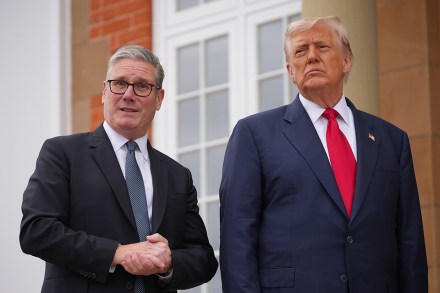
Britain shouldn’t put up with Donald Trump

From our UK edition

History is the march of folly and far too many of my countrymen are hearkening to a drumbeat which would lead us to disaster. On Tuesday several of our newspapers led with variations of the same headline: ‘Trump: cut tax to beat Farage.’ This is idiotic counsel, given the state of Britain’s public finances. I would have thought the way to beat populism was not by emulating its idiocies but by prudent, cautious, sensible management of a nation tired of liars. If Donald Trump teaches us anything, it is how to ruin a great nation. Far more useful than parroting the US President’s delusions would be telling the British people more than they are currently permitted to read about his manic conduct of office.

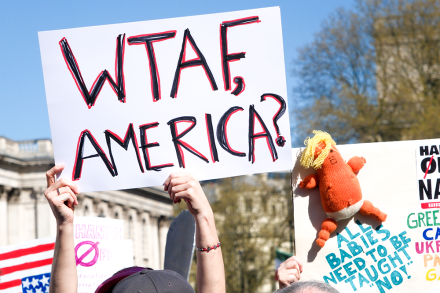
Bring on the Trump protests

From our UK edition

The coming week will see the last major commemoration of a second world war anniversary – 80 years since VE-Day – which a handful of surviving veterans will attend. It is unjust that VJ-Day in August will attract much less attention, but so did the Far East campaigns, much to the contemporary chagrin of the ‘Forgotten Army’ in Burma. One of Bill Slim’s soldiers was George MacDonald Fraser, whom I knew and adored, as did millions of fans of his Flashman books. In his fine memoir Quartered Safe Out Here, George described how one May day in 1945, as his company lined out to attack a Japanese-held village, a green young officer ran out in front of them and cried ecstatically: ‘Men! The war in Europe is over!

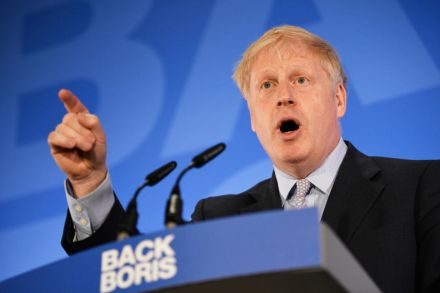
History will wonder how we trusted Boris with Britain

From our UK edition

I am besieged by media folk asking when I shall make good on a four-year-old threat to flee to Buenos Aires should Boris Johnson become prime minister. How can I get on to a flight, I ask, when so many other voters are already waitlisted? In truth, however, we are being served successive courses in a national banquet of self-harm, too grisly to merit jokes. Nobody should blame Johnson for wanting to be prime minister: many unsuitable people do. But there will be infinite historical curiosity about how the Tory parliamentary party could scramble to deliver Britain into the custody of a man whom few of its members would entrust with their wallet, handbag or spouse, save to secure a cabinet seat.

Diary – 20 June 2019

From our UK edition

I am besieged by media folk asking when I shall make good on a four-year-old threat to flee to Buenos Aires should Boris Johnson become prime minister. How can I get on to a flight, I ask, when so many other voters are already wait-listed? In truth, however, we are being served successive courses in a national banquet of self-harm, too grisly to merit jokes. Nobody should blame Johnson for wanting to be prime minister: many unsuitable people do. But there will be infinite historical curiosity about how the Tory parliamentary party could scramble to deliver Britain into the custody of a man whom few of its members would entrust with their wallet, handbag or spouse, save to secure a cabinet seat.

Critical injuries

From our UK edition

A decade ago, a publisher produced a set of short biographies of Britain’s 20th-century prime ministers, which I reviewed unenthusiastically. My wife reproved me: ‘What did you do that for? For a fee of a few hundred pounds you have made a dozen entirely gratuitous new enemies. If you don’t have something good to say about books, don’t write about them.’ Honest reviewing would grind to a halt if all its practitioners deferred to her advice. It is nonetheless true that victims of an unfavourable notice seldom forget or forgive. As authors, we commit our souls as well as our bodies. Memories of the most flattering reviews of my own books fade within hours. Yet wounds from the stinkers fester for years.

Diary – 20 September 2018

From our UK edition

The Hastingses have idyllic lives but, like most seventysomethings, we find ourselves in ever-closer proximity to mortality. We hold season tickets for hospital and care-home visits, funerals and memorial services. Prostates are a staple of dinner-party conversation. We have not got quite as far as the 94-year-old contemporary of the painter Raoul Millais, who quavered in the churchyard after the two had bidden farewell to a friend: ‘Hardly worth you and I going home from here, is it, Raoul?’ But we are mindful of La Rochefoucauld’s observation that compassion represents the intelligent anticipation of one’s own troubles to come.

The great Brexit unsayable

From our UK edition

On Monday, we held a dinner party in the Cavendish Room at Brooks’s, one of the most beautiful spaces in London. Our guest list started with Matthew Parris, whom my wife was panting to meet, observing that she agrees with him about absolutely everything except that she is reluctant to become gay. After that, it was merely a matter of ensuring that we included nobody who might profess enthusiasm for Trump, Brexit or — following their treatment of Dwin Bramall, Edward Heath and now Damian Green — policemen. We discussed the problem that scarcely anyone active in British politics dares to tell voters important truths, foremost among these that Brexit will make them poorer.

Diary – 7 December 2017

From our UK edition

Lunch with the great Sir Michael Howard, 95 last week. During a conversation about BBC1’s Howards End, he said: ‘I met Forster once, at a lunch party in London in 1943, given by Arthur Koestler, just before I went to Italy. We spoke much about Richard Hillary, then just beginning to be canonised. Forster suddenly turned to me and asked: “What do you think about sardines?” I was confounded, and have often since wished that I had produced some appropriately witty riposte.

Brexit is irrelevant to the gravest problems facing Britain

From our UK edition

One entirely foreseeable consequence of Brexit is that although it is irrelevant to the gravest problems facing the nation, the government talks about nothing else. There is a black hole in the defence budget: instead of reshaping policy to address this, starting by mothballing the Royal Navy’s absurd new aircraftless-carrier, ministers merely scrabble to keep the crisis away from the Commons and front pages. My wife Penny says, with her accustomed good sense: ‘People only really care about terrorism and cyber-attacks. They are not interested in the Russian threat to the Baltic states.’ Yet real political leaders, as distinct from placemen, would aspire to inform voters, rather than merely chortle because they can scrap soldiers without losing by-elections.

Diary – 24 August 2017

From our UK edition

It has been a summer of tears, both of joy and sorrow. The latter first: how could stones not weep at the spectacle of this Gadarene government leading us towards the cliff edge with a show of insouciance on the part of Fox, Davis, Johnson that would be thought excessive at a wedding, never mind a funeral? At Daily Telegraph leader conferences 25 years ago, our young turks bewailed John Major’s government as the worst in history. Bill Deedes justly rebuked such hyperbole: ‘Are we really saying that Samuel Hoare was a better foreign secretary than Malcolm Rifkind?’ Today, however, it is hard to name a senior minister, with the possible exception of Philip Hammond, who seems to compare favourably with Hoare.

Is Trump leading America to war?

From our UK edition

Michael Howard (the good one, OM, CH, MC) is 94 and still razor-sharp, but depressed by echoes of the 1930s on both sides of the Atlantic — ‘and I am one of the few people still alive who watched it all happen’. At Wellington he learned, and recites to me from memory, lines from Auden’s 1937 ‘Danse Macabre’: It’s farewell to the drawing-room’s civilised cry, The professor’s sensible whereto and why For the Devil has broken parole and arisen, He has dynamited his way out of prison. Michael believes that President Trump will get his country into a war, and I hear that some of America’s top soldiers share this expectation.

We should worry more about Putin’s Russia than Muslim fanatics

From our UK edition

Last week’s events in London raised a recurrent dilemma for journalists, including me. It is a huge story when a terrorist kills four people then is shot down in Palace Yard, Westminster. Yet dare we say how fortunate we are that since 9/11 Muslim terrorists have proved incapable of mounting an attack remotely as lethal as that on the Twin Towers? An intelligence officer told me recently that he worries far more about Russia than about Muslim suicidalists, and this must be the rational assessment. The public needs awakening to the menace posed by Vladimir Putin’s adventurism. Meanwhile, Khalid Masood’s dreadful deed reflects the flailings of a death cult.

Diary – 30 March 2017

From our UK edition

Last week’s events in London raised a recurrent dilemma for journalists, including me. It is a huge story when a terrorist kills four people then is shot down in Palace Yard, Westminster. Yet dare we say how fortunate we are that since 9/11 Muslim terrorists have proved incapable of mounting an attack remotely as lethal as that on the Twin Towers? An intelligence officer told me recently that he worries far more about Russia than about Muslim suicidalists, and this must be the rational assessment. The public needs awakening to the menace posed by Vladimir Putin’s adventurism. Meanwhile, Khalid Masood’s dreadful deed reflects the flailings of a death cult.

The brutal legacy of the Russian Revolution must never be forgotten

From our UK edition

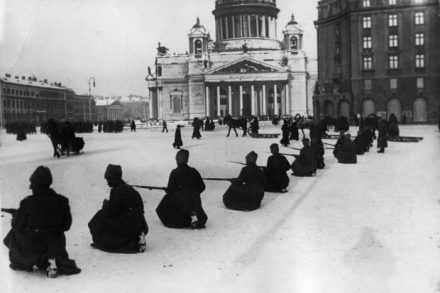
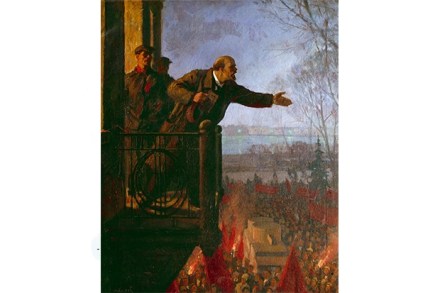
Few 20th-century historians doubted that the 1917 Russian revolution was one of the most influential events of their time, indeed of all time. As the centenary commemoration approaches, however, it seems remarkable how far and how fast the ideology that inspired Lenin and millions of his worldwide followers has receded in significance. Many are the imperfections of capitalism, but almost nobody outside Jeremy Corbyn’s office any longer supposes that communism, least of all the old Soviet brand, offers a credible alternative. This would amaze our grandparents’ generation on both sides of the struggle. The novels of C.P. Snow are indifferent fiction but intriguing middle-class social history.

Red with the people’s blood

From our UK edition

Few 20th-century historians doubted that the 1917 Russian revolution was one of the most influential events of their time, indeed of all time. As the centenary commemoration approaches, however, it seems remarkable how far and how fast the ideology that inspired Lenin and millions of his worldwide followers has receded in significance. Many are the imperfections of capitalism, but almost nobody outside Jeremy Corbyn’s office any longer supposes that communism, least of all the old Soviet brand, offers a credible alternative. This would amaze our grandparents’ generation on both sides of the struggle. The novels of C.P. Snow are indifferent fiction but intriguing middle-class social history.

Diary – 29 September 2016

From our UK edition

Monday night’s US presidential debate should convince a majority of American voters that Hillary Clinton is their only credible choice for the White House. Yet it may well fail to do so, in the new era of ‘post-truth politics’. The historian Sir Michael Howard suggests that on both sides of the Atlantic, we are witnessing a retreat from reason, an attempt to reverse the onset of the 18th-century Age of the Enlightenment, which banished superstition and religious faith as a basis for reaching conclusions. The progress of Donald Trump supports his thesis. I have just spent a fortnight in southern California, researching a book on the Vietnam war, and saw everywhere manifestations of Trumpery.

An age of broken promises

From our UK edition

An intelligent middle-aged, middle-class woman told me the other day that she plans to vote Leave on 23 June because she no longer believes a word that David Cameron says. She cited his pre-election pledges on repatriation of powers from Brussels, repeal of human right legislation and — of course — immigration. I said that, should she get her Brexit, the Prime Minister is likely to be supplanted by Boris Johnson, who conducts one-night stands with truth only on alternate wet Wednesdays. She was unmoved. She has convinced herself that Johnson the outsider, the roly-poly bundle of fun, Mr Feelgood, should be judged by different rules. He is not one of ‘them’, the political class, whom she perceives as having betrayed us all.

Wine Club 11 June

From our UK edition

I never drink before noon or 7 p.m., but find myself ever more often glancing at the sundial and licking my lips as the appointed hours approach. Thereafter at least a bottle of wine a day goes down the pipeline, which distresses government health advisers but gives boundless pleasure to me. It is hard to detach expectations from knowledge of price. On that basis, grand vintages often disappoint: to us barbarians, no liquid can really be worth, say, £400 a bottle. Some generous hosts recently produced for us such masterpieces as Lafite and Pétrus ’82, both of which felt as if they would have been more impressive a few years back. Some very old Haut Brion seemed positively nasty.