History

Gatton Park

From our UK edition

Gatton Park is probably Lancelot ‘Capability’ Brown’s least famous landscape. It is tucked away near Reigate Hill, just beyond the M25, and even in the 300th anniversary year of Brown’s birth it is an unlikely place to visit. Because it shares its plot with a school and stables, you can only go on the first Sunday of the month or if you arrange a tour in advance. A bother, I grant you, when there are so many glorious landscapes to explore elsewhere. But Gatton Park has other attractions, too. For more than 50 years, from 1888, this was the estate of the ‘Mustard King’, Sir Jeremiah Colman.

That glowing feeling

From our UK edition

On the morning of 15 October 1927, a dim, autumn day, a group of men foregathered at the Rosedale cemetery in New Jersey and picked their way through the headstones to the grave of one Amelia — ‘Mollie’ — Maggia. An employee of the United States Radium Corporation (USRC), she had died five years earlier, aged 24. To the dismay of her friends and family the cause of death had been recorded as syphilis, but, as her coffin was exhumed and its lid levered open, Mollie’s corpse was seen to be aglow with a ‘soft luminescence’. Everyone present knew what that meant. ‘My beautiful radium’, Marie Curie called the element she discovered in 1898.

Brodie Castle

From our UK edition

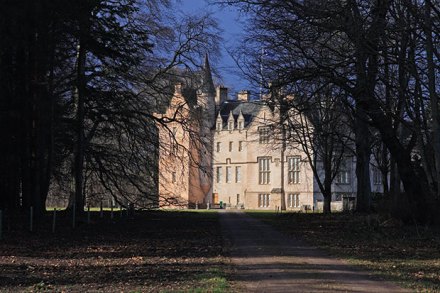
Is there a more forlornly romantic spot in Britain than the moors east of Inverness where the Jacobite dream died? There is surely no more romantic location from which to explore the area than Brodie Castle, a turreted fortress looking out towards the Moray coast. Now owned by the National Trust for Scotland, Brodie Castle allows groups of up to 14 to live like a laird, playing croquet on the lawns, eating in the grand dining room, spotting red squirrels and generally absorbing the dark history that culminated on the moors of Culloden. The adventure has to start at Euston. You could fly to Inverness and arrive with the taste of Gatwick coffee still in your mouth, but what would be the point? The Caledonian Sleeper, especially with kids, is an essential part of the Brodie experience.

Blue plaque blues

From our UK edition

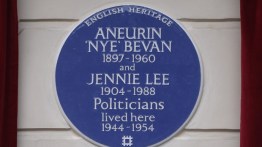
Blue plaque spotting is one of the mind-broadening pleasures of British life. A walk to the dentist can be transformed into a serendipitous encounter with a forgotten genius from the past. ‘Luke Howard, 1772–1864, Namer of Clouds, lived and died here,’ says the blue plaque on 7 Bruce Grove, Tottenham. Even if you’ve never heard of Luke Howard, you instantly take a liking to him — and never again will you hear the word ‘cumulonimbus’ without thinking of him. ‘Lived here’ is the key: you’re passing the very house where the person woke up for breakfast each day, and the intimacy of that is what makes the encounter so much more affecting than merely reading about him or passing a statue of him.

Against armistice

From our UK edition

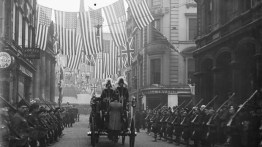
From ‘President Wilson and the Lessons of History’, 2 June 1916: Emphatically it is not a war of what we may call the old eighteenth-century pattern, where any one could step in and say, as if speaking to a couple of duellists: ‘You have had a good honest fight. Honour is satisfied. Now don’t you think the sensible and the humane plan would be to shake hands and try to forget all about your unfortunate quarrel?’ There is nothing whatever of that nature about the present struggle. The peoples of Europe are not arrayed upon what used to be called the field of honour, but engaged in a death-struggle in which one side is fighting for domination, and the other for security that peace, justice, and national independence shall continue on the earth.

Impure thoughts

From our UK edition

Spoiler alerts aren’t normally required for reviews of Shakespeare — but perhaps I’d better issue one before saying that in BBC1’s A Midsummer Night’s Dream (Monday) Theseus dies near the end. Not only that, but Hippolyta and Titania fly off on butterfly wings to become lovers, and the mechanicals’ play goes down a storm. Personally, I’ve never been sure about the existence of that mysterious tribe known as ‘Shakespeare purists’. If they do exist, though, Russell T. Davies’s heavily cut and cheerfully tweaked adaptation seems almost deliberately designed to flush them out.

On Moses’s mountain

From our UK edition

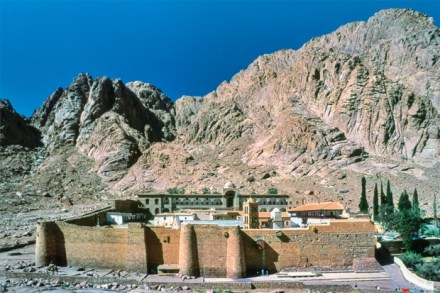
A medieval party of 800 Armenians at the top of Mount Sinai suddenly found themselves surrounded by fire. Their pilgrim staffs shone like candles but, wisely chanting ‘Kyrie Eleison’, they were relieved that after an hour or so the fire abated and not an eyelash of theirs was harmed. The top of Mount Sinai is no place to be stuck in an electrical storm, even less exposed to the fire of God’s presence. A steep mass of weathered granite 7,616 ft high overlooking the Red Sea, it could be climbed on foot (but not on mule-back) with the help of 3,700 steps built into the rock.

An ode to Honour and Fleming’s World History of Art

From our UK edition

The heaviest book on my shelves is Hugh Honour & John Fleming’s A World History of Art. I have just put its 960 pages on the kitchen scales: 8lbs 4oz – the weight of a bonny newborn. If I cradle my copy tenderly today it is because Hugh Honour died last Friday 20 May at the age of 88. A World History of Art is the most famous, certainly the biggest, of his many books. At sixteen, after GCSE exams, my sixth-form history of art teacher sent me away with a copy.  I was not to come back in September unless I’d read it. The book is the scaffolding around which I have built everything I have learnt since of art history. A World History of Art is not like Ernst Gombrich’s Story of Art.

Clumber spaniels

From our UK edition

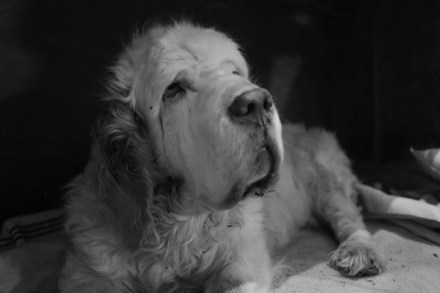
For the first time in more than 30 years we have no Clumber spaniel. We have had five: Henry, Judith, Laurie, Persephone and Wattie. The last of them, Wattie the gentlest and sweetest of dogs, died a few months ago. We feel bereft. Clumbers are special: beautiful, affectionate, wilful, sometimes difficult, never dull. They take their name from Clumber Park in Nottinghamshire, once the seat of the Dukes of Newcastle. Different in appearance from other English spaniels — heavier, low-slung, with large sagacious heads — their origin is uncertain. According to one story, they came from France, being a gift from a French friend, the Duc de Noailles, to his fellow duke.

Henry III vs EU law

From our UK edition

It is no surprise that the laws imposed on the UK by a European parliament in Brussels should so infuriate the ‘Leave’ campaign. England has form here going back 750 years. Roman law has been one of the wonders of the world since its codification in the Twelve Tables (449 BC). But it is not the laws themselves that are the real point. The key lies in the way that laws were later argued over by the ‘jurists’. These started out as private, freelance legal consultants, simply earning respect for the legal advice they offered.

Courting Sultana Isabel

From our UK edition

The idea for a mechanical cock was never going to work. In 1595 the English ambassador to Constantinople, Edward Barton, advised Queen Elizabeth I that the surest way for her to impress Sultan Mehmed III, the new leader of the formidable Ottoman empire, was to send him a ‘clock in the form of a cock’. Knowing that Mehmed had a growing reputation for psychopathy rather than ornithology — he had his 19 brothers circumcised and then strangled to death — Elizabeth demurred and eventually sent him an elaborate clockwork organ instead. The organ was accompanied by its maker, Thomas Dallam, who spent his first month in Constantinople fixing the damage it had suffered in transit before eventually playing it for the Sultan and his retinue at the Topkapi palace.

An electrifying politician

From our UK edition

Just who was Benjamin Franklin? Apart, that is, from journalist, statesman, diplomat, founding father of the United States, inventor of the lightning rod, the Franklin Stove, the milometer, swimming flippers and the flexible catheter, the man who engineered the America postal system, who established the first lending library, who wrote one of the finest autobiographies in the language, and who schooled us in soundbites such as ‘Let all men know thee, but no man know thee thoroughly.’ Amen to that. Despite being the subject of a steady flow of worthy biographies, of which this is the latest, Franklin remains as cunning in heaven as he was on Earth. A master manipulator, people saw in Franklin what he wanted them to see.

What to do with Syria?

From our UK edition

From ‘The future of Syria’, The Spectator, 5 February 1916: We say with all the emphasis at our command, and without the slightest fear of contradiction, official or otherwise, not only that we do not want Syria for ourselves, but that nothing would induce us to take it. Englishmen of all parties; or political schools of thought — as we ought now perhaps to call them — are agreed that the British Empire is quite big enough already, and that at the close of the war the danger will be, not of our getting too little, but of our getting too much — of getting, that is, more territory than we shall have the man-power or financial strength to manage and develop properly.

The Clare Valley

From our UK edition

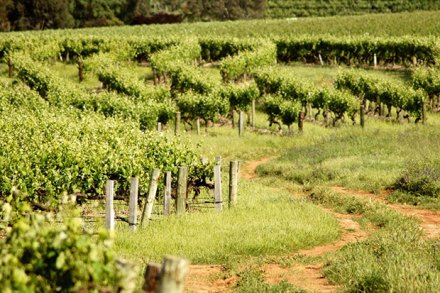
It is a century and a half since The Spectator noted the exceptional qualities of South Australia, a colony of free settlers untainted — unlike the rest of the continent — by the convict stain. ‘Everywhere … the enclosures over miles of plain, the hedged gardens, the well-grown orchards and well-appointed homesteads, proclaim the possession of the land by an industrious and thrifty yeomanry,’ wrote a Mr Wilson in these pages in 1866. ‘It is England in miniature, England without its poverty … with a finer climate, a virgin soil … more liberal institutions and a happier people.

Rhodes’s statue should remain, on one condition

From our UK edition

Lobengula was the second king of the Matabele people in what is now Zimbabwe. He was also the last. Cecil John Rhodes smashed his authority, and broke his tribe. The Matabele (a breakaway people from the Zulu kingdom to the south) had been making their way north, and by the time Rhodes arrived on the scene were in effective control of a vast area of southern Africa, stretching from the Limpopo river to the Zambezi. Matabeleland was rich in -minerals and the tribe were being pestered by white prospectors. Rhodes saw his opportunity. He made an ally of Lobengula, who had been king since 1869, and in 1888 persuaded him to grant Rhodes’s emissaries an exclusive deal known as the Rudd Concession.

One for all

From our UK edition

Mei Fong tells the routine story of a girl who managed to conceal an illegal pregnancy until the baby was almost due, when family planning officials surrounded her hiding place at night. ‘She ran and ran and ran until she came to a pond. Then she ran in, until the water was at her neck. She stood there and began to cry.’ Through her tears she explained that she needed the baby to stop her husband and his parents abusing her for not producing a son. This was the mid 1990s, but the same thing could have happened in rural China at any point in the past 1,000 years, except for the dénouement. Officials dragged the girl from the water, and hauled her off to hospital where the baby was killed.

Plato and think-tanks

From our UK edition

In Living with Difference, a think-tank report on the problems raised by a multi-faith UK, the chair Baroness Butler-Sloss says that the recommendations amount to a ‘new settlement for religion and belief in the UK’ and are aimed at providing space and a role in society for all citizens, ‘regardless of their beliefs or absence of them’. This is what happens when good people decide this messy world needs to be hammered into an intellectually satisfying shape. Plato’s Republic is a very good example of the genre. It is an extraordinarily interesting document, telling one a very great deal about Plato and the ancient Greeks, deeply influential on intellectuals down the millennia, and complete tosh from start to finish. Composed c.

Commanding vintages

From our UK edition

As the bottles flowed, the talk ranged, to a serious vineyard, an awesome Field Marshal and a delightful restauranteur. For years, the late Tom Benham ran Monkeys as a club. He cooked game especially well and his game pudding, made of course with suet, was one of the best dishes that I have eaten. As Tom charged a fixed mark-up for wine, the better the bottle, the better the value. He always found space for his friends, although his way of doing so was often ruthless. One would telephone: ‘Completely full — but wait: there’s a name here I don’t recognise. You can have that table.’ I never actually saw him bar the door to the dispossessed, but I suppose I should have felt guilty. It was unfair. So is life.

Curiosities for Christmas

From our UK edition

There is not, sadly, a dedicated Trivia Books section in your local Waterstones, although at this time of year there really should be. But what would we call it? Trivia sounds too trivial. Loo Books sounds too lavatorial. Books for the Man or Woman who Has Everything, Except this Book is probably closest, but might need editing. Whatever we decide to call them, there is an unusually fine crop this year, and several are historically inclined. Gimson’s Kings and Queens (Square Peg, £10.99) is subtitled Brief Lives of the Monarchs since 1066, and gives us exactly that, in Andrew Gimson’s characteristically elegant and entertaining prose. ‘There are many admirable biographies of individual monarchs.

Corbyn, Nero and the Bomb

From our UK edition

Chief of the Defence Staff Sir Nicholas Houghton is worried that Labour leader Jeremy Corbyn will never use the existing means of defence — Trident — to defend the country. Mr Corbyn is incandescent that a mere Chief of Defence Staff has the sheer effrontery to express a view on a matter that is (apparently) irrelevant to the defence of country but is purely political. One is reminded of the accession of Nero to Rome’s imperial throne in ad 54. According to the Roman historian Tacitus, it was dirty work by the controlling empress Agrippina that did for her husband Claudius, with the result that Nero, her son from an earlier marriage, was installed as emperor, aged 17. At that time there was trouble on Rome’s eastern frontier.