History

A girl in a million

From our UK edition

All readers know that good novels draw us into other worlds. I cannot think of another, however, which so alarmed me as this one, just as events alarmed and frightened its central character. She is Okatsu, a young woman from the samurai Satsuma Clan in mid-19th-century Japan. The country has been ruled by the shogunate, a military caste, since the early 17th century; the emperors were remote figures until their restoration to power in 1868. China is already under attack and exploitation by Britain and the US, and many Japanese fear they may be next. Some urge driving the foreigners off, while others — realists — insist that treaties must be signed that yield some sovereignty to the westerners even while Japan is modernising.

Snow on snow

From our UK edition

Here is William Diaper in 1722, translating Oppian’s Halieuticks (a Greek epic poem on the loves of the fishes): As when soft Snows, brought down by Western Gales, Silent descend and spread on all the Vales . . . Nature bears all one Face, looks coldly bright, And mourns her lost Variety in White. Unlike themselves the Objects glare around, And with false Rays the dazzled Sight confound. Lost variety is the nub: before it is anything else, snow is Nature’s alienation-effect, making all things look the same and ‘unlike themselves’ — even while we watch, or else behind our backs, noiselessly.

Food on the home front

From our UK edition

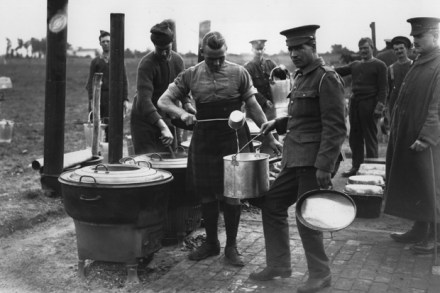
From ‘The food shortage and how to meet it’, The Spectator, 2 December 1916: A rise in prices, if properly understood and properly used, will be our salvation, not our injury. High prices help conservation, and, what is still more important, they help supply… If we artificially cut down prices here, we sterilise instead of stimulating the impulse to feed us from abroad. We are in effect saying to the world: ‘If you are such fools as to send us food, we warn you that you are not going to obtain inflated prices. You will get nothing more here than what we choose to tell you is a fair price. Our people, even if they want to do so, are not going to be allowed to pay you a penny more than we think suitable.

Barometer | 24 November 2016

From our UK edition

Bucks for Bucks Buckingham Palace is to be renovated at a cost of £369m, funded through an increase in the sovereign grant. How much have home improvements to the palace cost over the years? — The original house was built by the Duke of Buckingham in 1706 for £7,000. — In 1761, George III spent £21,000 to buy it, and £73,000 on remodelling it. — In 1826, George IV hired John Nash to remodel the building for £450,000. He was fired in 1828, having spent £496,169. — In 1845, Queen Victoria complained it wasn’t big enough for her growing family and added the east wing, using £53,000 raised by selling Brighton Pavilion.

Thucydides on Donald Trump

From our UK edition

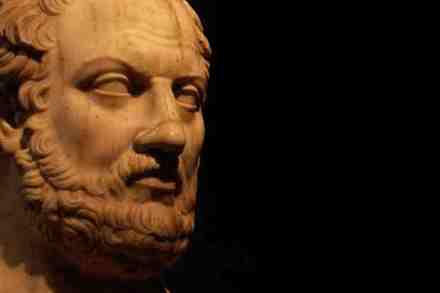
‘America’s journey into the great unknown’, screamed a headline greeting Donald Trump’s election as next President of the United States. Most of us call it the future, which has a long and distinguished tradition of being unknown. In the ancient world there was quite an industry in attempting to foretell the future: oracles, auguries, dream interpreters and so on.

Germany and the City

From our UK edition

From ‘English versus German banking’, The Spectator, 18 November 1916: At the present moment a good many of us are in the mood to feel that we never wish to see any kind of German within our country again; but it is quite certain that this attitude of mind will not endure for ever, and it is equally certain that if we prevent German bankers from establishing themselves in London after the war they will take their business elsewhere, and to that extent London will lose its character as an international banking centre. Mr Pownall well expresses the main proposition: ‘It is the universality of London, its cosmopolitan composition, that creates its character. Deprive it of that character and its pre-eminence dies.

Trump’s inside man

From our UK edition

Let’s take stock. Donald Trump, until last week, had never done a government job or held an elected office. He ran for president as a kind of anti-politician, ignoring the conventional wisdom about how to win. Amazingly, he won. It was, in its way, an impressive feat, overturning much conventional wisdom. Still, there’s no getting around the fact that, as president, he’s got to be political and must surround himself with politicians. Mike Pence, his vice-president, may turn out to be the most important of the lot. The two men did not previously know one another, but have become friends over the past five months, and recognise each other’s merits. They are a study in opposites.

The Marx Memorial Library

From our UK edition

There’s a small corner of Clerkenwell where the communist dream never died. The Marx Memorial Library has been in its big, classical 1738 building — originally a school for children of Welsh artisans living in poverty — for 83 years. The library was set up in 1933, the 50th anniversary of Karl Marx’s death. British Marxism and communism have faded, but the library still has a brigade of staunch supporters. Jeremy Corbyn, whose constituency is just up the road in Islington, is a regular visitor. To tour the library is to return to the 1930s when communism was at its height — when Philby, Burgess, Maclean and Blunt were full of gleaming-eyed optimism about the wonders of Soviet Russia.

Conditions for surrender

From our UK edition

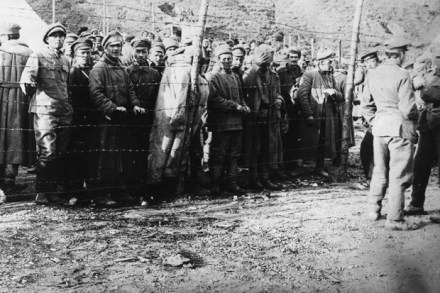
From ‘How to Shorten the War. I. Prisoners’, The Spectator, 11 November 1916: Unless we altogether mistake the mental character of the German military authorities, they will hold that there is only one effective way of dealing with our invitation to a British fireside in a prison camp, and that is by stamping with the utmost ferocity upon any symptom of readiness to surrender… If once we can set one or two plain questions rolling in the German lines, we shall have done what we want to do. ‘Is it worth while to bear this? Are we doing any good by bearing it? Does not the way we are treated give us a right not to bear it?

Love and death

From our UK edition

From ‘Romance’, The Spectator, 4 November 1916: There is indeed a glamour and a pathos about the private soldier, especially when, as so often happens, he is really only a boy… You can’t help loving him. Most of all, when he lies still and white with a red stream trickling from where the sniper’s bullet has made a hole through his head, there comes a lump in your throat that you can’t swallow, and you turn away so that you shan’t have to wipe the tears from your eyes.

Fierce indignation

From our UK edition

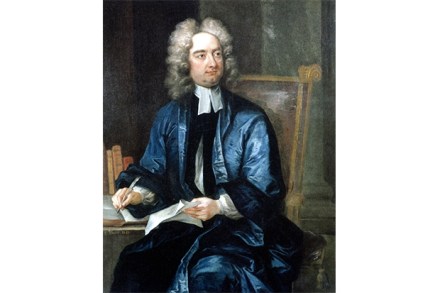
In an autobiographical note written late in his life, Jonathan Swift set down an astonishing anecdote from his childhood. When he was a baby in Dublin, he was put into the care of an English wet nurse, and one day she heard that one of her relatives back in England was close to death. Hoping for an inheritance, the wet nurse jumped on a boat back to Whitehaven in Cumbria, taking the infant Swift with her. ‘When the Matter was discovered,’ Swift wrote, ‘His Mother sent orders by all means not to hazard a second voyage, till he could be better able to bear it.’ So the wet nurse kept Swift in England for two or three years, and by the time he returned home, Swift recalled, he could read the Bible from cover to cover.

The King’s contribution

From our UK edition

From ‘A Royal contribution’, The Spectator, 7 October 1916: His Majesty has passed through troublous times, in the constitutional controversy, in the Irish imbroglio, and in the war, when passion rose to its highest point. The temptation to go behind his Ministers, and to snatch popular favour at their expense, must have been tremendous sometimes. ‘Remember, I am not responsible for this!’ represents the attitude of many sovereigns who have called themselves constitutional. The King never by a hint, a suggestion, a word, or a gesture has taken the stage against his advisers.

In the company of queens

From our UK edition

Steven Runciman, the historian of Byzantium, is a puzzling figure. He was an outrageous snob, once remarking that he would have enjoyed being the widower of a Spanish duchess, which would have made him a dowager duke in Castile. He particularly relished the company of queens (of the female variety), and he took the Queen Mother out to lunch once a year at the Athenaeum. But as Minoo Dinshaw shows in this richly original life, the snobbery was a subtle pose. Runciman was a tease who liked to play games with people, and he made a career out of being enigmatic. His family were wealthy shipbuilders in Northumberland. His parents were both dedicated public servants — his father was a minister in the last Liberal governments.

Mississippi hospitality

From our UK edition

Driving into Greenwood after dark, we pull into a gas station and ask directions to a late-night grocery store. ‘Sir… I have a suggestion,’ says a young man in the queue. ‘I’ll be going that way in this big old box.’ He waves towards a magnificently clapped-out Chrysler at the fuel pumps. ‘Y’all just follow me.’ Our convoy proceeds to the store at 25mph with no turn signals. Then, with another wave, our Good Samaritan turns and rumbles back towards the gas station. He wasn’t really going our way at all. A little later the Crystal Rooms restaurant reopens its just-closed kitchen for our small party. ‘We’ll feed y’all… come right in,’ says the owner Johnny Ballas.

Turning the tide

From our UK edition

From ‘The Battle of the Somme’, The Spectator, 23 September 1916: It may prove to be the fact that the battle of last week was, indeed, the most important fought by British troops in the whole war. For it is possible that just as our men advanced on to the forward slope of the ridge the German moral slipped backwards down the slope, there and then, with the final, if secret, conviction that it could never recover itself… Our losses, of course, have been heavy, but there is not a shadow of evidence that they have been disproportionate to the ends accomplished.

Diary – 15 September 2016

From our UK edition

The borderline between fact and fiction becomes ever hazier, I find. Last February, Daisy Goodwin — the author of the brilliant new Victoria drama on ITV — took me to an aircraft hangar near Leeds. Cold fog hugged the tarmac and grass outside. We stepped over cables and squeezed past screens. A ringletted woman in a severe dress of the 1830s passed us and said, ‘Guten Morgen!’ As we spoke, our breath made clouds in the freezing Yorkshire air. Wasn’t that the Baroness Lehzen, Queen Victoria’s governess, whom we just passed? A moment later, as the dream continued, we saw the Queen’s mother, the Duchess of Kent, another German lady.

Diary – 1 September 2016

From our UK edition

European unions come and go. Back in 1794, one of the more improbable ones was founded when Corsica joined Britain as an autonomous kingdom under the rule of George III. It didn’t last long, and by 1796, after an ignominious Brexit from the island, the Corsicans once again found themselves under French rule. Today, the episode is chiefly remembered for the injury sustained by one particular officer during the initial British capture of the island: it was during the siege of Calvi that Nelson lost the sight in his right eye. ‘Never mind,’ he wrote to his wife, ‘I can see very well with the other.

Taxi

From our UK edition

Old Quentin Letts was on the wireless the other day asking ‘What’s the point of the London black cab?’ Between much shouting from my husband (a sign he is paying attention) I heard an old cabby explain that the word taxi came from its German inventor, whose name was Thurn und Taxis. Really! There is no defeating this blunder, which is all over the internet. In reality taxi came into English from the French taximètre (1905), where the first element represents taxe, ‘tariff’. Taxis are hackney carriages. Autodidact cab-drivers cite an origin from Middle Dutch, in which an ambling horse was called hackeneie. But why did the Dutch call it that?

Bare ruined choirs

From our UK edition

We’re so used to looking at the abbeys smashed up by Henry VIII — particularly Rievaulx and Byland, in north Yorkshire — that we forget quite how odd they are. It’s not just that they’ve been preserved as ruins for 500 years, although that’s odd enough in a country that’s only saved ruins properly for a century. What’s odder is that these vast structures were built in such remote spots. It’s like finding a ruined Westminster Abbey in the middle of nowhere. When the Cistercians left Clairvaux in Burgundy, they were so desperate for peace that they came all the way north to found Rievaulx in 1132, and Byland a few years later.

Club cricketers: Zimbabwe needs you

From our UK edition

Make sure you tell everybody about Zimbabwe,’ said the lady at our block of flats in suburban Harare as we set off on the long journey to the Eastern Highlands and another match, this time at Mutare. We are a ramshackle and elderly cricket team, though we have pulled in a couple of youthful ringers, one an Oxford Blue and another a former Test-match 12th man. But it is a long time since a real England team toured this country — a few ODIs in 2004 I think. Gordon Brown blocked a tour of England by Zim in 2008, and I am told that David Cameron personally made sure that no England side came here. Understandably, perhaps, Cameron felt that a tour would offer some endorsement to Robert Mugabe, though he had no such reservations about doing deals with Saudi Arabia or China.