History

Thucydides on McGuinness

From our UK edition

When Gerry Adams rose to announce at his funeral that Martin McGuinness was no terrorist but a ‘freedom fighter’, the historian Thucydides probably allowed himself a grim smile. He knew all about these sort of people. In 427 BC, Corcyra (ancient Greek Kerkura, now Corfu) was in the grip of a ferocious civil war between oligarchic and democratic factions for control of the state. The feature that stood out for Thucydides was the reversal of all normal, civilised values on both sides of the divide. Most striking of all, ‘men reversed the usual evaluative force of words to suit their own assessment of the situation’.

Lost city of fantasy

From our UK edition

The new film The Lost City of Z is being advertised as based on the true story of one of Britain’s greatest explorers. It is about Lt-Col Percy Fawcett. Greatest explorer? Fawcett? He was a surveyor who never discovered anything, a nutter, a racist, and so incompetent that the only expedition he organised was a five-week disaster. Calling him one of our greatest explorers is like calling Eddie the Eagle one of our greatest sportsmen. It is an insult to the huge roster of true explorers. Had the advertisement been about a soap powder, it would fall foul of the Trade Descriptions Act. Percy Fawcett joined the army immediately after school, with a commission in the artillery in 1886. The next 20 years involved garrison duty in Ceylon and postings in Malta and England.

Theresa May at the Rubicon

From our UK edition

Last week many commentators drew on the Ides (15th) of March, the anniversary of Julius Caesar’s death in 44 BC, to reflect on the signing of Article 50 and Julius Caesar’s famous cry ‘The die is cast’ (iacta alea est) in 49 BC, when he crossed the River Rubicon into Italy and started the civil war against Pompey. But they got it wrong: it does not mean ‘no turning back’. Whatever the rights and wrongs of the Caesar-Pompey power struggle, Caesar knew the consequences of this moment. Our sources describe the build-up. Caesar is camped with his troops in Ravenna. Messages are flying back and forth between him and Pompey in Rome.

Books Podcast: Machiavelli’s lifelong quest for freedom

From our UK edition

In this week’s Books Podcast I talk to Erica Benner about her new Life of Machiavelli, Be Like The Fox. Professor Benner, a Yale expert in political science, offers a new and intriguing reading of the great theorist of statecraft — arguing that in the violent and unstable Florence of his time, he learned to conceal his real meanings in layers of irony and satire. We ask, in essence, just how Machiavellian Machiavelli really was…. You can listen to our conversation here: And if you enjoyed that, please subscribe on iTunes for a new episode every Thursday.

Up the revolution!

From our UK edition

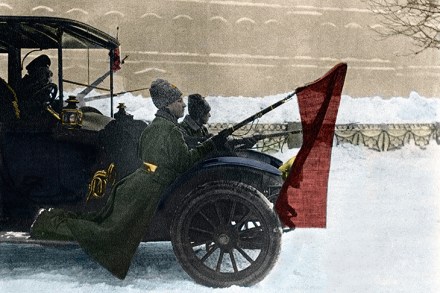
From ‘The Russian revolution’, 24 March 1917: Even now, though the Revolution is young, the Russians have proved that they are fit and worthy to exercise the full benefits of self-government. In the highest spheres of government they had hitherto been always thwarted, but no one who has watched the progress and expanding influence of the Zemstvos and the Municipalities can deny that Russians have long displayed the capacity for local self-government. Such a Revolution as has just occurred was inevitably born in violence, but the violence was much less than might have been expected.

The fall of Paris

From our UK edition

Paris used to be the most self-confident city in the world. Brash, assertive, boastful: Manhattan claimed to be the best. Cool, elegant, sophisticated, supercilious: Paris knew that it was the best. This is no longer true. Paris has lost its élan, and that has created a love-hate relationship with the UK. Everyone seems to know someone who is working in London. The ones left in Paris cannot decide whether to punish us or join us: to hope that Brexit fails — or to fear that Brexit might fail, and keep able young Frenchmen from job opportunities in London. Flics everywhere, tattiness, tension: one is reluctant to acknowledge the successes of evil, but terrorism is at the core of Paris’s problems.

Barometer | 16 March 2017

From our UK edition

Mary Queen of Golf? The vote by the Honourable Company of Edinburgh Golfers to admit women as members has reawakened speculation as to who was the first woman to play golf. —According to legend, Mary Queen of Scots played the game at St Andrews and coined the phrase ‘caddy’ when referring to the cadet who was carrying her clubs. Yet the evidence seems to relate to a charge made by her opponents that she played golf within days of the death of her husband, Lord Darnley. — A more realistic candidate appeared in the Caledonian Mercury, an Edinburgh newspaper, in 1738, which reported two women playing a game at Bruntsfield Links; a ‘charming Sally’ won.

Disaster in the Dardanelles

From our UK edition

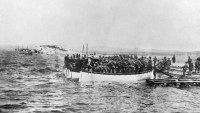
From ‘The Dardanelles report’, 17 March 1917: The plan of the government in the case of the Dardanelles Expedition had the worst fault which any naval or military plan, or naval and military plan combined, can have. It had no real objective… or rather, to put it in another way, it only had a vague and general objective, not one which was clear and specific and could be carried through by a series of definite acts… To say vaguely that Constantinople was its objective was nonsense. A tourist, a mere sightseer, might have Constantinople as his objective, but not a fleet or an army, or even a commercial traveller.

Redemption for the Ripper

From our UK edition

In the autumn of 1888 London was in a state of terrified excitement over Jack the Ripper. There had never been a killer like this in England before, wrote Meredith Townsend and Richard Holt Hutton, the joint editors of The Spectator. They congratulated the British public on not succumbing to the continental habit of lynching (‘In Naples the doctors would have perished, in Berlin the Jews’) but warned that ‘this devil’ might never be caught. By January 1889, Townsend and Hutton were calling for an end to all the ‘morbid interest’ in the Ripper’s crimes.

Lawrence of Arabia

From our UK edition

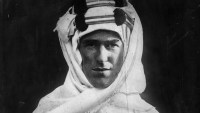
The centenary of General Allenby’s capture of Jerusalem falls later this year. On 11 December 1917, the commander-in-chief of Britain’s Egyptian Expeditionary Force entered the city on foot in recognition of the unique sensitivities surrounding the world’s holiest city. War and farce are never too far removed and, as is so often the case on these extraordinarily important moments, the surrender of Jerusalem almost went hilariously wrong. Mounted on horseback and waving a white flag, the city’s mayor offered to hand over the keys to Private Murch, a British cook who had been sent out to find some eggs for his commanding officer. ‘I don’t want yer city,’ the stalwart Murch told the immaculately-turned-out mayor.

Barometer | 9 March 2017

From our UK edition

Naming the weather Former BBC weatherman Bill Giles has said he’s fed up with storms being named. — The practice of naming storms in the UK began with storm Abigail in October 2015, although some earlier storms, like Bertha in 2014, were the remnants of hurricanes already named in the US. The St Jude’s Day storm of 2013 took its name from the saint’s day on which it fell. — The US National Hurricane Centre first named storms in 1950, when it started calling them by a phonetic alphabet: Able, Baker, Charlie etc. Three years later it switched to women’s names, starting with Alice, a damp squib with winds not exceeding 60mph. Its first male storm was Bob in 1979, a 65mph weakling.

A model village

From our UK edition

From ‘Sir Thomas Acland’s example’, The Spectator, 3 March 1917: In 1912 we discussed the idea — a favourite dream of ours — that some characteristic English village, perfect of its kind but likely to lose its quality in the hugger-mugger expansions of modern enterprise, might be acquired by the National Trust to be kept forever as a specimen, in a changing world, of what used to be… Men freely give pictures and collections of china and plate and furniture to the nation. Why not the grouped architectural works of man? Why, too, should not open pieces of country be given as often as pictures and bronzes and statues?

Islam’s lost Enlightenment

From our UK edition

I am quite used to people smirking into their sleeves when they hear that I’ve just written a book called The Islamic Enlightenment. The really helpful wags say they expect something along the lines of The Wit and Wisdom of Spiro Agnew, which was billed as a collection of all the memorable aphorisms of the former US vice-president, and contained only blank pages. So, the Islamic Enlightenment — good for a laugh. But we’re all familiar with the serious argument that lies behind the jests; that Islam has not been through an Enlightenment, a Reformation, or any of the other rites of passage that have formed our modernity, and that, ergo, Muslims and modernity are strangers.

The Americans are coming

From our UK edition

From ‘What will the United States do?’, The Spectator, 24 February 1917: It may be that the congestion of American shipping may force Mr Wilson’s hand, for a partial paralysis in the docks is temporary evidence that Germany can intimidate the greatest of neutrals. But, on the whole, we expect that some more sudden and violent demonstration of German violence will cause Mr Wilson to summon the American nation to action. When that happens we shall be able to say that Germany, among her other diplomatic achievements, has reunited the Anglo-Saxon world.

Let me take you through the night

From our UK edition

As a child, I used to travel with my mother from London to Cannes, a journey that took slightly under 24 hours. The strangest part of the trip was the three or four hours in Paris, where the train trundled between the Gare du Nord and the Gare de Lyon along the Petite Ceinture, giving us a view of rundown parts of Paris which tourists never normally saw. Sometimes we would cheat and take a cab, giving us a couple of hours off the train, during which we enjoyed a relaxed steak frites in the Train Bleu restaurant with its elaborate belle époque decor. I often wondered why the train meandered so long in Paris, and Andrew Martin now provides the explanation.

From Tacitus to Justin Welby

From our UK edition

Many are still questioning the enthusiasm with which newspapers have implicated Archbishop Justin Welby, as a young man, in the abusive activities of a Christian camp leader for whom he was working. This line from the Daily Telegraph is typical: ‘Archbishop Welby is said to have gained much of his early grounding in Christian doctrine from the Iwerne holiday camps, where boys were recruited for John Smyth’s sadomasochistic cult.’ The Roman historian Tacitus (d. c.

Bye bye, Buller

From our UK edition

RIP the Bullingdon Club, 1780–2017. It isn’t quite dead — but it is down to its last two members. That’s barely enough people to trash each other’s bedrooms, let alone a whole restaurant, as the Bullingdon was wont to do, according to legend — not that we ever did that sort of thing in my time in the club, from 1991 to 1993. The Bullingdon, or Buller, as it is sometimes known, just couldn’t survive 11 years of bad headlines — from 2005 to 2016, when three of its former members, David Cameron, George Osborne and Boris Johnson, were the most powerful Conservatives in the country. For more than a decade the Bullingdon exerted a totemic power so mighty that it spawned several conspiracy theories.

War and law

From our UK edition

From ‘The confiscation of enemy property’, The Spectator, 17 February 1917: It is perfectly possible to remove German influences without confiscating German property. This, as far as can be gathered, is the policy which the French have followed, and in their interest as well as in our own we ought also to follow it. The Germans, to give them in this matter the full credit which is due to them, have been very slow to take any steps against British property held in Germany… We do not wish to give them an excuse for fresh crimes. Our business is to punish them as a nation for the crimes they have already committed. In order to effect this object we have to concentrate all our energies upon beating our enemy in the field and on the sea.

The Spectator’s Notes | 9 February 2017

From our UK edition

As we have been reminded this week, the most famous words (apart from ‘Order, order’) ever uttered by a Speaker of the House of Commons were those of William Lenthall. When King Charles I entered Parliament in search of the ‘five birds’ in 1642, Lenthall knelt to the King but told him, ‘I have neither eyes to see, nor tongue to speak in this place but as the House is pleased to direct me.’ It is only on that basis that the Speaker speaks. As soon as John Bercow said — of the speculative possibility that Donald Trump should address both Houses of Parliament — ‘I feel very strongly that our opposition to racism and sexism’ meant that the speech should not take place, he was out of order.