History

Broken dreams | 19 October 2017

From our UK edition

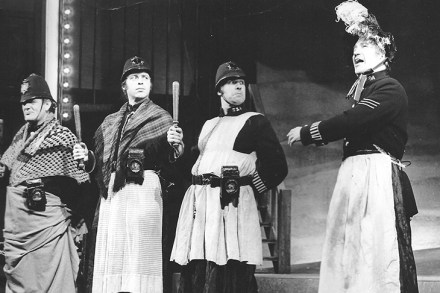
In the expensive realm of musical comedy, it’s impossible to predict what will take off and what will crash and burn. Oliver! ran for 2,618 performances, but no other Dickens adaptation has succeeded— and Oliver! had to overcome a reluctant producer who’d suggested it could be much improved with an ‘all-black cast’. And would Lionel Bart’s plan to cast Elizabeth Taylor as Nancy, Richard Burton as Bill Sikes, and Spike Milligan as Fagin have helped or hindered the longevity of his show?

The magic of maths

From our UK edition

It’s odd, when you think about it, that mathematics ever got going. We have no innate genius for numbers. Drop five stones on the ground, and most of us will see five stones without counting. Six stones are a challenge. Presented with seven stones, we will have to start grouping, tallying and making patterns. This is arithmetic, ‘a kind of “symbol knitting”’ according to the maths researcher and sometime teacher Paul Lockhart, whose Arithmetic explains how counting systems evolved to facilitate communication and trade, and ended up watering (by no very obvious route) the metaphysical gardens of mathematics. Lockhart shamelessly (and successfully) supplements the archeological record with invented number systems of his own.

Pleasure palaces and hidden gems

From our UK edition

Theatre buildings are seriously interesting – as I ought to have appreciated sooner in the course of 25 years writing about theatre and opera. This coffee-table whopper, weighing in at just under a kilo, dazzles: Michael Coveney’s text is even better than Peter Dazeley’s remarkable photographs. And in a luminous foreword, Mark Rylance sets out the not-so-obvious difference between theatre and cinema: ‘In a theatre you need to hear the truth. In a cinema you need to see it.’ Most of the theatre audience can’t see the actor’s eyes, and have to rely on hearing emotion in the voice and, to a lesser extent, detecting emotion in body language. Hence the importance of lighting.

Armageddon averted

From our UK edition

From 1945 to 1992 the Cold War was the climate. Individual weather events stood out — the Korean War, the Cuban missile crisis, the Hungarian and Prague uprisings, the fall of the Berlin wall — but the possibility of nuclear annihilation, the great divide between the broadly capitalist West and the broadly socialist East and the numerous proxy conflicts it spawned, were the background to daily life. In retrospect, it seems stable, almost cosy: you knew where you were. Its ramifications were so many and so all-encompassing that virtually everything you say about it will be true of some part, somewhere.

Mozart’s mischievous muse

From our UK edition

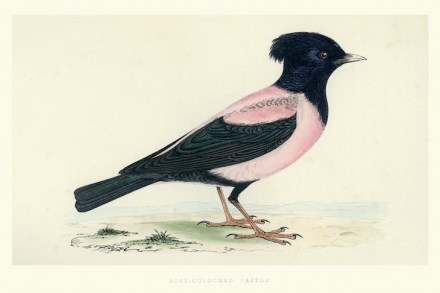
If you were to compare Mozart to a bird it wouldn’t be the starling. Possibly the wood thrush or nightingale, with their beautiful, haunting songs; or maybe the lyrebird with its astonishing ear for imitation; or perhaps the composer would find his match in the exotic rarity of the ivory-billed woodpecker or giant ibis. But the common starling? More pest than pet in its adoptive North American home, this ‘ubiquitous, non-native, invasive species’ seems an unlikely fit for a singular prodigy. So thought the ecophilosopher and naturalist Lyanda Lynn Haupt, when she started work on this book, exploring the composer’s relationship with the bird he bought after hearing it singing one of his piano concertos, and kept as a pet until its death.

A countercultural upheaval

From our UK edition

‘New York stories in a way are always real estate stories,’ says the journalist Alan Light in Lizzy Goodman’s bustling oral history of the city’s music scene at the dawn of the century. The same goes for all music scenes. Talent clusters and thrives only where there are cheap places to live, hang out, play shows and, crucially, fail. New York in 2001 was such a location. The Lower East Side was still affordably sketchy and Brooklyn far from hip. When Dave Sitek from TV on the Radio moved to Williamsburg and invited his Manhattan friends to visit, ‘It was like I was asking them to go to China on a single--engine prop plane.’ Now Williamsburg, like Manhattan, belongs to the well-heeled.

Holidays with Hitler

From our UK edition

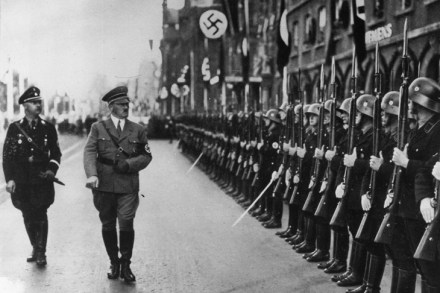
We don’t usually think of Hitler’s hated henchman Heinrich Himmler, architect of the Holocaust of European Jewry, as a comic turn, but the diary of Admiral Sir Barry Domvile, a former chief of British Naval Intelligence and fanatical admirer of Nazi Germany, proves otherwise. Domvile’s description of his visit to Himmler’s ‘hunting box’ high in the Bavarian Alps in 1935, reproduced in Julia Boyd’s fascinating book, is a treasury of thigh-slapping humour, including hearing Himmler wake him at 3.20 a.m. with his rendition of ‘God Save the King’; complaints about the Reichsführer’s primitive ‘bog’ — a deep hole in the ground; and finishing with a ‘regular Bavarian evening...

Flights of fancy | 10 August 2017

From our UK edition

Levitation. We all know what it is: the ‘disregard for gravity’, as Peter Adey puts it in his new book, or as the dust jacket states, ‘the long-standing belief that we could float relatively unaided’. The cover of Levitation has an elegant lady in flowing robes apparently hovering in a bubble over New York. Who could resist a good read about a subject like that? The catch lies in the subtitle: ‘The Science, Myth and Magic of Suspension.’ Suspension: we all know what that is, and it’s not levitation. The excitement of levitation clearly attracted Adey and his editor, but when it came to knocking out the copy, it was evidently impossible to produce an entire book.

Wool, wheat and wet weather

From our UK edition

Englishness is big business in the nation of shopkeepers, and not just in politics and tourism. In literature, the gypsy scholars of Clan Macfarlane range freely across the hills and lexicons in search of old England, the dying and undead. This paperchase confirms that a change in the self-image of the English is afoot too. For centuries, the English poured into their cities. Now, they are trickling back out to the countryside. London excites precisely because it is another country, from a future that at least 54.8 per cent of the English prefer not to live in. But what does the returnee know of England who only London knows? In 1997, Little, Brown published Clive Aslet’s Anyone for England? as ‘A Search for English Identity’.

… and an awesome beak

From our UK edition

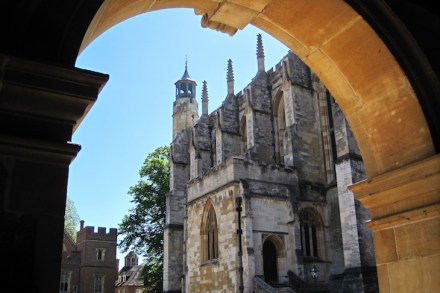
The Enigma of Kidson is a quintessentially Etonian book: narcissistic, complacent, a bit silly and ultimately beguiling. It is the story of Michael George MacDonald Kidson (MGMK, as he was known), who taught history at Eton from 1965 to 1994 and was an influential tutor to hundreds of boys, often the wayward and the damaged. Jamie Blackett, who was taught by him there, has collected Kidsoniana from former pupils, colleagues, friends and acquaintances. What emerges is a portrait of a colourful maverick who bullied and consoled generations of schoolboys into success and happiness.

Out of sorts at the RSC

From our UK edition

The RSC’s summer blockbuster is about Queen Anne. It’s called Queen Anne. It opens at the Inns of Court where drunken wags are satirising the royals with a naughty sketch about boobs and beer guts. Everyone on stage pretended this was hilarious. A few audience members did too, out of politeness. The principal characters arrive with their dramatic goals on display. Queen Anne wants to rule wisely. Her general, Marlborough, wants to conquer widely. His wife, Sarah, wants to help her monarch to rule wisely and her husband to conquer widely. And Sarah’s scheming cousin, Abigail, wants to befriend the Queen so that she can marry a steady salary. These characters are neither very admirable nor very wicked and their objectives don’t cohere into a single narrative.

High flyers

From our UK edition

It is conventional wisdom in the publishing industry that, despite the old adage, readers do indeed judge books by their covers. So, it seems, do passengers on the No. 29 bus. For a middle-aged man reading Clare Mulley’s The Women Who Flew for Hitler, some of the looks I got made me so uncomfortable that I took to hiding the cover behind a newspaper. So let’s get one thing straight from the beginning: this is not a niche book for Third Reich enthusiasts, nor a seedy excuse to fantasise about women in Nazi uniforms. Do not be put off by the awful title: it is in fact a serious double biography of two of the most remarkable women in the history of aviation. The first of Mulley’s subjects, and the more famous of the two, is Hanna Reitsch.

Making history | 15 June 2017

From our UK edition

‘History is not the past,’ says the writer Hilary Mantel in the first of her Reith Lectures on Radio 4 (produced by Jim Frank, Tuesday). ‘It’s the method we’ve evolved of organising our ignorance of the past.’ In Resurrection: The Art and Craft, her series of five talks, Mantel shows her mettle as a novelist (most notably of the award-winning Wolf Hall and its sequel) and as a historian, too, arguing the case for historical fiction, once much-maligned as a literary genre precisely because it twists the facts to create a narrative, usually of a highly romanticised flavour. But facts are not truths, Mantel asserts provocatively. ‘The moment we are deceased we become the subject of stories.

Ever decreasing circles

From our UK edition

‘The area’s isolation has given it a strong sense of community and independence,’ runs the Wikipedia entry on New Addington. The presence of the library, youth clubs, leisure centre, shops, churches and street market enables locals to lead full lives in many ways. The Addington Community Association has provided an important hub for the community. It has been notable for its local gangs. John Grindrod’s illuminating and enjoyable Outskirts is in part a memoir about growing up in New Addington, in part an intimate family history, and in part a history-cum-gazetteer of the green belt, along with a meditation on its uncertain future. My strong suspicion is that most Spectator readers, even if Londoners, barely know where New Addington is, let alone have been there.

The post-truth is out there

From our UK edition

In a political ‘post-truth’ world, currently the subject of a slew of books, emotions and personal belief are said to shape opinion more than ‘objective’ fact. But as Aristotle pointed out in his Art of Rhetoric (4th century bc), there are facts only about the present and past; about the future, politics’ main concern, there are only interests and aspirations.

Too much of everything

From our UK edition

Arundhati Roy has published only one previous novel, but that one, The God of Small Things, won the Booker Prize. That was 20 years ago. Early success did not, however, block Roy into neurotic silence: instead, it offered her a platform for verbally intemperate political activism. She is an impassioned campaigner against globalisation, industrialisation and all forms of the arch-enemy capitalism, and a critic of US foreign policy, Israel and the government of Sri Lanka. Her Booker prize money was donated to the campaign against the Narmada Dam project. To Indian critics who condemn her hyperbole as ‘hysterical’ she retorted: ‘I am hysterical, I’m screaming from the bloody roof tops.

The fount of all knowledge

From our UK edition

Somewhere around the middle of the 17th century our modern concept of the museum began to take shape. Until then the cabinet of curiosities formed by a prince or a dilettante was on show solely to his friends or to scholars deemed worthy of having it unlocked. Nothing in the way of a systematic catalogue existed to help them navigate the gallimaufry of odd objects filling its shelves and cupboards. A Japanese netsuke button, an Arawak headdress and a handkerchief soaked in the blood of Charles I could be found nestling beside a stuffed alligator or a bezoar stone, calculus from an animal’s stomach held to possess magical curative powers.

A brave new world – at gunpoint

From our UK edition

Of the many books published this year to mark the centenary of the Russian revolution, this is perhaps the most curious. China Miéville is best known as an imaginative and entertaining writer of ‘weird’ (his word) science fiction and magic realism. October is a narrative history of the two 1917 revolutions in Russia, written from an ultra-left perspective — with a novelist’s eye for a good story and colourful characters. So it’s an examination of why the communist experiment failed miserably — at the cost of much blood — that is also wonderfully well written: smart, witty and full of fresh insight. But it can also read like an A-level essay, regurgitated from textbooks. Weird indeed.

On the trail of a lost masterpiece

From our UK edition

On 27 May 1939, the German liner St Louis docked in Havana with 937 passengers on board: all but a handful of them were Jews in flight from the Third Reich. After a dismal farrago of diplomatic obstruction, bare-faced corruption among local officials and the incitement by Nazi propaganda of anti-Semitic prejudice ‘even’ (as Leonardo Padura sorrowfully puts it) ‘among the open and happy Cubans’, only a score of refugees could disembark. The US refused entry to the rest. Their ship of despair sailed back to Europe.

In defence of cultural history

From our UK edition

Why study history? It's a question which often gets asked, and the historian R. G. Collingwood's answer - that history should enable us to ‘see more clearly into the situation in which we are compelled to act’- is one of the best responses. The idea that the study of the past should be applicable to the present has directed the career of Niall Ferguson, who was recently bemoaning the degradation of the subject. Discussing the current focus on race, class and gender in history faculties in a recent speech, Ferguson argued that undergraduates are being robbed of the chance to study events of real significance.