Germany

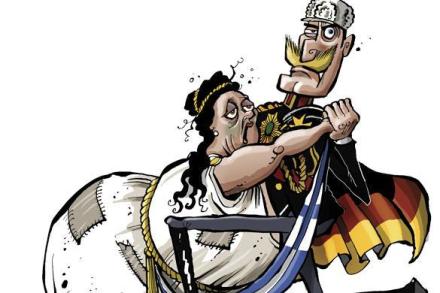
Will Germany let Greece stay in the euro?

The German government is split on the biggest policy question of the day, according to the FT’s German edition. As Open Europe points out, the paper has a senior member of the CDU/CSU group in the Bundestag saying that finance minister Wolfgang Schäuble ‘supports the bankruptcy of Greece, Merkel wants to strictly avoid it… It goes back and forth, which is not very helpful.’ If true, this is a remarkable story. The British Foreign Office has been convinced since the beginning of the year that the Germans are keen to kick the Greeks out of the euro.

Greece is still the word ahead of today’s eurosummit

How about this for a claim by Nicolas Sarkozy, made in a TV appearance yesterday? ‘Europe is no longer at the edge of the cliff.’ It's quite some statement, so let's hear it again: ‘Europe is no longer at the edge of the cliff.’ Of course, Sarkozy has reasons for saying it beyond mere pre-electoral braggadocio: the rates paid on Italian and Spanish 10-year bonds have generally been falling since the the beginning of the year; the euro has been making some tentative progress against other currencies; and so on. But it still constrasts heavily with much else that is being said around the eurozone. Only last week, Angela Merkel was talking of the overall failure to ‘stabilise the situation’ in Greece.

‘Let everyone live happily…’

Created to remember one of the darkest chapters in mankind's history, Holocaust Day is for many people an occasion for unadulterated discomfort. Most of my family perished in the Holocaust and those who survived either hid in occupied Poland, pretending to be Catholics, fled to Uzbekistan in the then-USSR or, like Marcel Rayman, fought the Nazis. Today I re-read a letter Marcel sent to his family the night before he was executed by the Nazis for trying to kill the German commander of Paris: Little mother, When you read this letter, I'm sure it will cause you extreme pain, but I will have been dead for a while, and you'll be consoled by my brother who will live happily with you and give you all the joy I would have liked to give you.

A taxing kind of spin

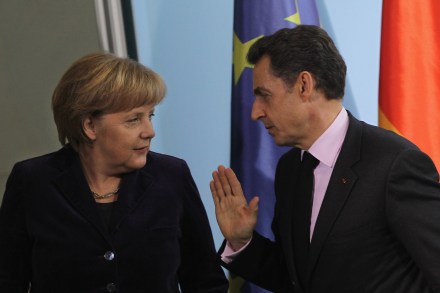
The story being briefed out of the year’s first Franco-German Summit is that President Nicolas Sarkozy won the backing of Chancellor Angela Merkel for a tax on financial transactions, a levy that the British government objects to and that Ernst and Young say would leave a €116bn hole in Europe’s public finances. But before the City begins building barricades and the PM puts on his bulldog mask, it is worth taking another look at the news from Berlin. For no sooner had the agreement been announced than the tax was rejected by Chancellor Merkel's junior coalition partner, the pro-business Free Democrats, who say they will only back a Europe-wide tax scheme. They are not alone. The Netherlands and Ireland feel the same.

The latest act in Europe’s comic opera

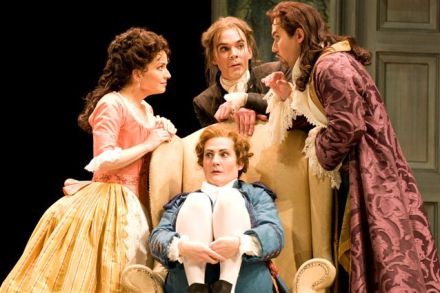
If it was not all so serious, the efforts to save the single currency would be worthy of a comic opera: the Germans could compose the score, the Italians could write the libretto, and the French could take care of the stage directions. The latest IMF-related effort is, perhaps, best described by the website ZeroHedge, which is required reading during these troubled times: “Germany will be responsible for €41.5 bn, France at €31.4 billion, and Italy will need to provide €23.5 billion and Spain another €15 billion.

26 versus 1 — really?

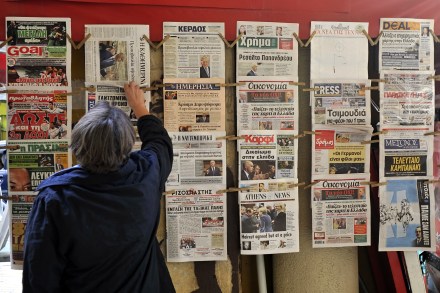
Judging from much of the coverage in UK media, you would be forgiven for thinking that Britain is on the fast track to becoming the North Korea of Europe — eccentric and completely isolated from the rest of the world. Indeed, the media narrative over the past couple of days has largely treated the agreement reached at the summit as concrete, supported in full by everyone apart from Britain. Or ‘27-minus’, as Commission President Jose Manuel Barroso put it. The reality, of course, is quite different. Leaving aside whether Cameron could have played his cards better (he could have), as Gideon Rachman pointed out in yesterday’s FT, ‘the picture of an isolated Britain’ will become blurred as the rest of Europe grapples with the Merkozy deal.

Ten myths about Cameron’s EU veto

The EU veto that Cameron pulled in the early hours of Thursday morning has been widely misunderstood on all sides. Here are the 10 most common myths: 1. Because of Cameron’s veto, Britain lost a seat at the negotiating table. Not true. The UK was never itself going to take part in the Merkozy pact (and potentially be subject to EU sanctions), and therefore not in the monthly, parallel EU meetings that will begin in January, either. Even if he had approved the Treaty changes, Cameron still would not have had a seat at the table. Wider political challenges aside, the veto didn’t change anything structurally in terms of UK influence. 2. Cameron’s veto created a two-tier Europe.

What Cameron can do next

What now? That’s the question. This morning it looks not like 17 versus 10, but like 1 versus 26, which is a cold and lonely place for Britain to be. But it is also the right place to be. David Cameron asked for a little and got less. He had to act as he did and will reap the benefit electorally and among his MPs. Labour’s position is not just politically weak, but also unrealistic: it has been clear for weeks it was not possible to run a ‘periphery strategy’ as the 10 states outside the Euro have different incentives to Britain and different long-term aims. And the idea that the last Labour government had better links to the continent is laughable.

A dozen questions for after the Brussels summit

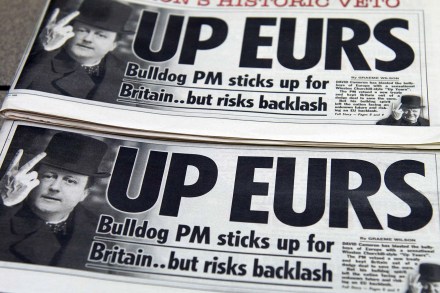
Cameron will be depicted in tomorrow's press as either a Tory Boudicca or an Essex Bulldog (© Tristram Hunt), depending on your point of view. I suspect the truth is somewhere in between. Cameron did not go in swinging a handbag, although it will suit No10 to make out that he did. But Labour's caricature of him storming off and wasting the veto certainly doesn't ring true to me. An EU27 deal was never likely, and EU17 deal always was. Cameron, on their account, just seems to be being blamed for what was going to happen all along. In any case, we are still trying to assemble the pieces of last night's drama, work out the demands and counter-demands, and see what sort of picture they produce. I'm still not sure.

What could Cameron have done differently?

It is hard not to see the results of last night’s European meeting as the first step towards a fundamentally different — and much looser — relationship between Britain and the EU. The UK, which for centuries has fought to keep any one power from dominating the continent, and for decades has sought to prevent a two-speed Europe from emerging, is now going to have to accept both. It also seems that it will have to protect itself from some form of fiscally-shaped missile against the City.   The irony is that the PM did not apparently push for any UK-only protection of the City, but a broader protocol such as the one championed here — which Nicolas Sarkozy and Angela Merkel then rejected.

The Merkozy Plan fails to convince

A day or so ago, the markets were rising in anticipation of what might be achieved at this Brussels summit. But this morning they're mostly either unmoved, or — as in the case of borrowing costs in Italy and Spain — shifting in unpropitious directions. No-one, it seems, has been won over by yet another night of political bargaineering in Brussels. And understandably so. None of the measures mooted this morning are particularly concrete; all have a sogginess about them. More cash will be transferred to the European Financial Stability Facility, but it's still some distance short of the €1 trillion that was, ahem, ‘announced’ at the end of October.

A defining moment

David Cameron’s use of the veto in the early hours of this morning changes the British political landscape. The first thing to stress is that if the euro collapses it will not be because of the British veto. The deal agreed between the 17 eurozone countries and six of those nations who still want to join it does not address the single currency’s fundamental problems.   What is, perhaps, most intriguing about what happened in the early hours of this morning is that Sarkozy and Merkel chose to put Cameron in this position. In truth, Cameron was not asking for that much. But Sarkozy and Merkel were not prepared to take even small steps to accommodate his concerns. They had clearly decided that they were happy to do a deal at the level of 17-plus rather than 27.

Cameron says ‘No’

It looks like Britain could be heading for renegotiation with the EU sooner rather than later. The UK, Hungary, Czechs and Swedes last night stayed out of a 27-member EU Treaty. ‘I don’t want to put it in front of my parliament,’ said Cameron. But in an historic move, the deal is going ahead anyway, with 23 members: the Eurozone, plus the six states who want to join. ‘We will achieve the new fiscal union,’ said Angela Merkel. Nicholas Sarkozy is upbeat saying it has been an ‘historic summit’ which will change the EU ‘radically’.  If so, then Owen Paterson is right in his interview with James Forsyth in the new Spectator: Britain will have to reassess its relationship with this ‘radically’ different EU.

Cameron’s Europlan comes together

The Tory party may not like it, but David Cameron is now finally following a sensible EU policy. As today's summit in Brussels starts, the Prime Minister appears to have decided what really matters to the UK, and realised that he needs to play nice with the Germans and French. At the top of the PM's priority list — a priority voiced by Michael Howard on the Today Programme earlier — is avoiding the collapse of the euro. The consequences of a collapse on Britain's economy are incalculable, but everyone knows they would be profound. Second comes the protection of the City. A Euroland tax on financial transactions would damage the City and thus Britain (as well as the EU) — avoiding it is key.

Fiscal union would hit eurozone credit ratings

There is predictable euro-rage today at Standard and Poor's warning that there's a 50/50 chance that the six AAA eurozone countries could see their credit rating downgraded. But if the eurozone does push ahead with fiscal integration, it will — obviously — have an impact on the credit worthiness of the stronger eurozone economies. One of the reasons that the German bund auction went so badly on November 23 was because of concerns that Germany would end up having to backstop the debts of other European countries. Fiscal union would require Germany to do just that for now and evermore. No 'good solutions' to the eurozone crisis exist. We are in the land of least worst options.

Yes, Virginia, History Matters: Eurozone Edition

Broadly speaking, there are two ways of viewing the eurozone crisis: it's a problem of economics or a problem of politics. Neither explanation quite suffices, of course, since it is both but the emphasis you place on economics vs politics plays a part in how you'll view the situation and how likely you are to think there's any kind of solution that can satisfy the politics and the economics of the situation. Which is by way of suggesting that plenty of American commentators seem to think the problem is easy to solve and the main thing lacking in europe is the political will to do something about it. (Exhibit A: James Surowiecki of the New Yorker).

Club Rules, Brussels Edition

Ben Brogan's latest post offers a revealing glimpse into the oddness of the eurosceptic mind. He begins: To the dismay of many of his colleagues preoccupied by the euro crisis, the Prime Minister has been adept at nurturing strong personal relationships with Angela Merkel and Nicolas Sarkozy. Instead of confrontation he has engaged constructively with them, to the extent that they listen to him and are willing to consider his attempts to press the British interest. The German chancellor was delighted to discover that Mr Cameron was not the swivel-eyed euro loon she had feared, but a charming and reasonable young man. The French president meanwhile bonded with mon ami Dave over Libya and – pace the odd shouty moment – likes doing business with him.

Merkel’s fiscal union won’t solve the euro’s problems

Few people have been as vindicated about the failings of the euro as Marty Feldstein, who was chairman of the Council of Economic Advisers under Reagan. In 1997 he wrote a piece for Foreign Affairs called 'The EMU and International Conflict'. In it, he argued that far from furthering peace and stability in Europe, the Euro would actually endanger it. Watching the events of the past few months, few could disagree with him. Feldstein has now returned to the debate pointing out that none of the current fixes being suggested will solve the single currency's problems.

On the road to break-up?

Before we plunge into the Autumn Statement, we really ought to mention the poison cloud hanging over Brussels today. European finance ministers, including George Osborne, are meeting there later — and it's certainly not going to be good for their collective health. Klaus Regling, the head of the European Financial Stability Facility (EFSF), is expected to tell them that there's basically no chance of them boosting the bailout fund to €1 trillion in the near future, as was promised at the end of last month. Back then, David Cameron urged eurozone leaders to bring a ‘big bazooka’ to the fight. They have barely managed a cap gun. This is far from surprising.