Germany

Land of poets and thinkers

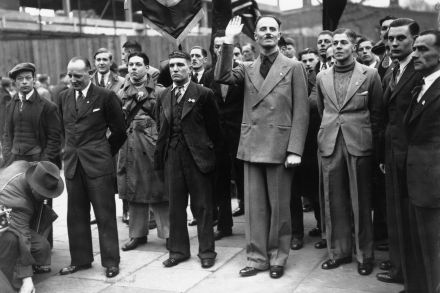
The reason Peter Watson gives for writing this long intellectual history of Germany since 1750 is a convincing one: that British obsession with Nazism has blinded many British people to the achievements of German culture. Watson describes the complaints of German commentators about the emphasis on Nazism even in British schooling, which were borne out by the 2005 report of the Qualification and Curriculum Authority: ‘There has been a gradual narrowing and “Hitlerisation” of post-1914 history.’ Watson also discusses the importance of Nazism to America, and his most intriguing point is that interest in the Holocaust is a comparatively recent phenomenon. A study in the 1950s found that the effect

What we did to them . . .

The perception of war changes, remarked the poet Robert Graves, when ‘your Aunt Fanny, the firewatcher, is as likely to be killed as a soldier in battle’. The perception of war changes, remarked the poet Robert Graves, when ‘your Aunt Fanny, the firewatcher, is as likely to be killed as a soldier in battle’. Scrutinising the home front, checking for evidence of low morale, accounting for that of high, measuring the effect of wartime regulations and deprivations, calculating the long-term impact of continuous bombardment and destruction on civilians, in sum, accounting for the implications of the phrase ‘total war’ to describe the second world war, has been an occupation for

Nick Clegg’s 15% Opportunity

Who would have thought, even a year ago, that the future of the Liberal Democrats would arouse such interest? Perhaps I was too harsh on Nick Clegg’s speech to the party’s conference; certainly Fraser was more impressed by it and the gang at Liberal Vision also seem pleased. Perhaps I was wrong to hope that Clegg would disavow the social democrats in his party in this speech. One should always be wary of criticising politicians simply because they decline to do what you would have them do. Equally, one should not assume that doing what one would want them to do is the path to either political or policy success.

Blow-out in Berlin

D. B. C. Pierre’s Vernon God Little was an unusual Man Booker winner (2003). D. B. C. Pierre’s Vernon God Little was an unusual Man Booker winner (2003). Not only was it brilliant, it was also a first novel, and apparently by an American. Holden Caulfield was invoked, and Liam McIlvanney called it ‘the most vital slice of American vernacular since Huck Finn’. It turned out, though, to have been written by a Brit, ‘on the floor of a box-room in Balham’. D. B. C. Pierre is the nom de plume of Peter Finlay, an evolved childhood nickname — ‘Dirty But Clean’, which is evidently his motto as a writer.

The Liberaltarian Future?

Liberaltarianism is, in case you haven’t been following this mildly esoteric debate in Washington, the notion that rather than hitch their wagons to conservativism American libertarians and libertarian-minded folk should also explore relations with (US) liberals in order to further the libertarian agenda. This has proven an oddly controversial idea and, generally, has been dismissed as a) a joke, b) a fool’s errand or c) simply impossible. Now Brink Lindsey, who first coined the awkward term “liberaltarian” in a now famous-for-DC essay in the New Republic and his colleague Will Wilkinson* are leaving the libertarian Cato Institute. This has tongues wagging. In some circles anyway. See Tim Carney’s Washington Examiner

The threat of holy war

John Buchan’s Greenmantle remains a marvellous read, even if its plot is absurd. John Buchan’s Greenmantle remains a marvellous read, even if its plot is absurd. Who could credit a story about German attempts, headed by the unlovely Kaiser Wilhelm and the glamorous and suitably ruthless Hilda von Einem, to stir up a world-wide Muslim holy war against the Allies during the first world war and ultimately build a vast German empire stretching to India itself? Now Sean McMeekin shows that fiction, after all, was not so far from the truth, and he makes the most of what is a very good story. He starts in the late 19th century

The sound of eternity

The Ninth is not necessarily Beethoven’s greatest symphony. The Ninth is not necessarily Beethoven’s greatest symphony. That honour is surely shared by the Eroica, in which the composer changed the course of orchestral writing after two prentice works (and what works they were!), and the Seventh. Beethoven’s last symphony, known in the English-speaking world as the ‘Choral’, for its unprecedented use of the human voice, is magnificent but flawed. The meditative slow movement may be the greatest Beethoven ever wrote, but the joy that Beethoven strove for in the finale finds finer musical and dramatic expression in the hymn to liberty that closes Fidelio. If it is not his greatest

Karma

Yes, it might well, nay would, have changed the momentum of the game*. No, video technology is not needed (not least because it hasn’t improved any game in which it has been introduced). And anyway, to adapt Wodehouse, what you gain on the roundabouts of 1966 you lose on the swings of 2010. Consider this, then, an open thread to moan about the World Cup:   *I didn’t actually see it since I was playing cricket. Against Langholm. We won. I took, rather astonishingly, two wickets. It should have been three. Or even four. But that would be greedy and massively above and beyond expectations.

The euro crisis is an opportunity for Cameron

Gerard Baker has written the cover piece for this week’s magazine and it’s a must read. In it, he explains why ‘closer fiscal union’, as Rompuy terms it, is not to Germany’s advantage: ‘Any attempted fiscal union might well yield to Germany the biggest single vote in how much to raise in taxes and how to spend it. But it could still be outvoted by an alliance of smaller countries. Such a set-up would become an institutionalised mechanism by which German taxes will be siphoned off permanently to weaker European states. The nightmare for Germans is that an unholy alliance of Spanish, Greeks, Italians and Portuguese will be able to

Of Pigs and Cucumbers

Pleased to be back in Blighty and pleased too to see that the Economist has launched Johnson, a blog about language and politics. From the most recent entry: Germany has a cranky coalition government and garrulous politicians, and so conditions are good for political insults. In one intramural fight a health ministry official from the liberal FDP likened the CSU—Bavarian conservatives—to a Wildsau, or wild pig, for its rough handling of the liberals’ health-reform ideas. But the better insult was the riposte by the CSU man, who called the liberals a Gurkentruppe, literally a troop of cucumbers. Anglophone journalists have been puzzling over how to turn this into recognisable English.

Achtung, Liam

Defence Secretary Liam Fox is used to looking across the Atlantic for military inspiration and across the English Channel to France for the future of defence cooperation. But he might do well to look somewhere else – namely to Germany where the young defence minister, Karl-Theodor zu Guttenberg, has launched one of the Cabinet’s most ambitious cost-cutting programmes. He is planning to cut the number of active-duty soldiers from 250,000 to 150,000 as part of a an effort to find  €1bn (£840m) worth of cuts as part of the government’s €80 billion austerity programme. He is even contemplating an end to compulsory military service — something normally seen as a

Trans-Atlantic  powwow

I’m in Washington DC at a high-level seminar on trans-Atlantic relations with the “who is who” of Europe and the US, talking about issues of common concern. The Germans are here in force, as are the French, with high-ranking officials speaking about topics like Russia and Iran. Interestingly, the Brits are notable in their absence. It is probably a sign that the British government is still in transition mode, unable to explain any new policies, unready to stake out new positions. Or they may not be bothered with unofficial events such as these given the privileged access they have. But it is worth noticing nonetheless. The event is both off

German lessons

Angela Merkel’s fall from favour is something David Cameron ought to bear in mind as he looks for lessons to guide his term in office. The German chancellor could do no wrong when she was first elected. A new “Iron Lady”, she was seen as a giant among pygmees. Tony Blair was leaving the scene, Nicolas Sarkozy had yet to be elected, the newspapers swooned, the voters applauded. Mrs Merkel was respected in the US and Europe. She made her unwieldy coalition with the Social Democrats work, almost singlehandedly picked the NATO secretary-general and ruled over EU meetings. Now, EU commission president Jose Manuel Barrosso is (rightly) calling her “naïve”

Goodbye Euro?

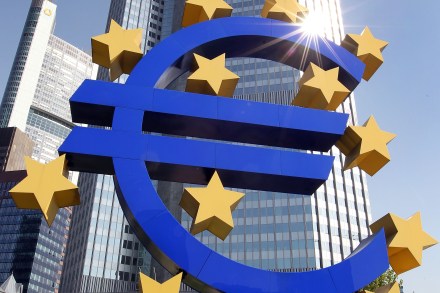
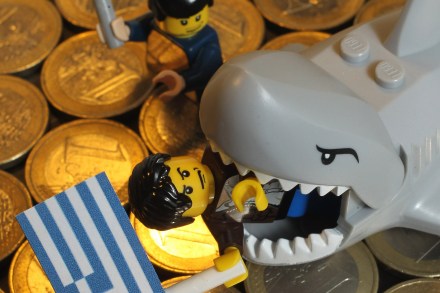
I have just visited the two countries that are making the headlines in the European newspapers – Germany and Greece. During my trip, I met officials, journalists, and key advisers to both Prime Minister Papandréou and Chancellor Merkel. Sitting on the flight back to London I have regrettably come to the conclusion that the Euro is probably done for – or that Greece will default inside the Eurozone. Until now, I have dismissed the pessimists, thinking that the Euro would be saved. But after my trip I have changed my view for a number of reasons. Nothing I saw in Greece has convinced me that the Greek government is able,

Who’s Afraid of a Hung Parliament?

So it seems you have to vote Conservative to accept the party’s invitation to join the government of Great Britain? Who knew? Tory warnings of the dire consequences of a hung parliament are understandable but, I suspect, unfortunate. There is little evidence that the electorate believes that a hung parliament will be a disaster, far less than they can be cajoled into thinking that they’re letting Britain down if they don’t vote Conservative. And that, my friends, is the underlying message sent by the Tories’ blitz against a hung parliament. A hung election might not be ideal but it might also be a fitting end to this exhausted, depressing parliament.

The Euro is so great – let’s have two of them

European leaders have now agreed to bail out Greece in a coordinated affair, involving the IMF and bilateral assistance. The Times has written this up as a grab for more centralisation of policy-making by European Council President Herman Van Rompuy, but even the Tories know that’s not true, as judge by William Hague’s calm remarks. Trying to understand the problems of the euro has sent me back to my undergraduate economic textbooks and Robert Mundell’s work on optimum currency areas. As Spectator readers (many of whom are bankers) will know, the US economist theorised that a group of countries will benefit from a common currency like the euro if three

Germany to the EU: no more integration

A Conservative Party article of faith has been the belief that other Europeans are innately more pro-EU than the British. In the past, this has undoubtedly been the case. Poll after poll has shown that Britons see the EU differently than most other Europeans. But as I have argued before, times are changing on the continent. In an article in the Frankfurter Allgemeine Zeitung (not a Europhile newspaper by any stretch), Germany’s new politics is explained. Nikolas Busse argues that the Greek crisis and failure of EU leaders to cobble together a plausible bail-out is the first major manifestation of Germany’s new role in Europe – that of a country

Germany, where art thou?

It is more than 100 days since Guido Westerwelle became Germany’s foreign minister and the questions about Germany’s diplomatic introspection remain. They may have even grown and are becoming problematic for Berlin’s allies.   Chancellor Schröder appeared to follow a Sonderweg, a philosophy that saw Berlin move away from old notions of peacemaking and away from old alliances, such as that with the United States. At times, he seemed to want a new axis between Paris, Berlin, and Moscow, making Germany a go-between between East and West, a kind of post-modern Tito. Angela Merkel’s first term addressed the worst excesses of the Schröder years, but the vagaries of coalition government

An affable tour guide

In mentioning Heinrich the Fowler, 10th-century King of the Germans and one of the many obscure figures who appears in his book, Simon Winder describes a painting in the Hall of Electors in Frankfurt. A product of the historicising 19th century, it is part of a series of German monarchs stretching from Charlemagne to 1806, the first seven centuries of which are ‘simply fantasy’. Winder writes: I just feel happy not to be a professional historian who really has to stare hard at the reign of Heinrich the Fowler, say, and must ignore his notionally flowing locks and chartreuse cloak, must banish fantasies of mead-halls, damsels and winged helmets, must

Post-election Entene Cordiale?

If there is a strategic thought lurking inside the Tories’ grab bag of foreign policy ideas, it seems to be closer cooperation with France, particularly on defence matters. Should William Hague become Foreign Secretary after the election, he might end up working with a new French counterpart, as rumours persist about Bernard Kouchner’s imminent departure (knowing this, he apparently even floated his own name for the Kabul UN job). A new Parisian counterpart for Hague – for example, the current French Agriculture Minister, Bruno Le Marie – could make a new Entente Cordiale easier. But, even then, would the French be up for closer links with the UK? Angela Merkel