Germany

You realise how little you know of anybody when they die

Whether or not you believe in the afterlife, death remains an impenetrable mystery. One moment a person is making jokes and comments and observations about life; the next he is gone. What has happened to that store of wit and wisdom acquired over a lifetime, to that particular way of understanding and looking at things, to that unique muddle of thoughts and feelings that every individual has? Even if someone has gone to heaven, it is difficult to imagine that he has taken these things with him. If he did, they would hardly be compatible with eternal rest.

Europe’s crisis is Cameron’s opportunity

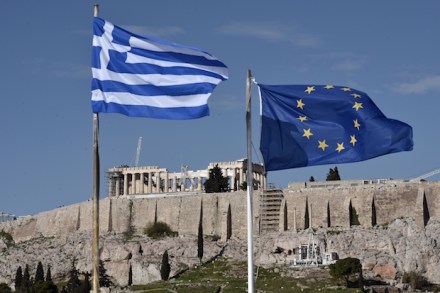
Napoleon notoriously preferred his generals to be lucky — and on that score at least, he would have approved of David Cameron. The triumph of the Syriza party in Greece presents him with a glorious opportunity to solve the European question that has bedevilled the Tories for so long. Europe’s difficulty is Cameron’s opportunity. The European elite has been shaken by the scale of Syriza’s victory. Just a few weeks ago, Cameron was arguing in private that Greek voters, who remain overwhelmingly pro-EU, would ultimately not back a party that was intent on a confrontation with the eurozone authorities.

Confusion, snobbery and Pegida – a letter from Dresden

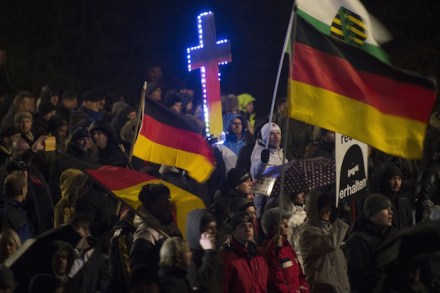
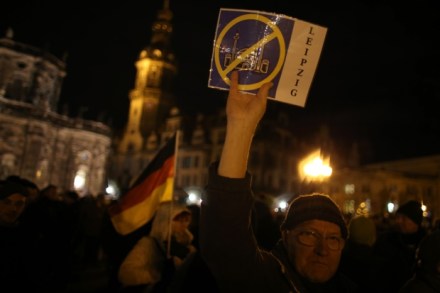
Sachsenschweine — Saxon pigs — said the graffiti as my train moved out of Berlin on its way to Dresden. Germany is not as monolithic as it can seem: not only do some of its ancient kingdoms continue a ghostly existence as states of the Federal Republic, but also their populations nurture historic rivalries, at least on the football pitches. But the new popular movement in Dresden — Pegida, or ‘Patriotic Europeans against the Islamisation of the West’, no less — has thrown into relief keener intra-German divisions: not only those between immigrants and ethnic Germans but also those between many German voters and the country’s mortally politically correct establishment.

A Syriza majority will put Athens and Berlin on a collision course

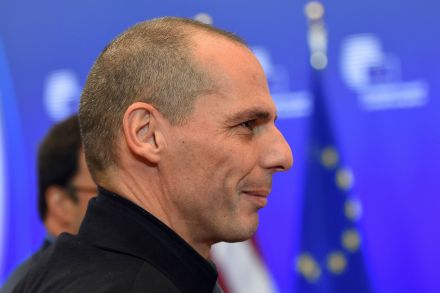
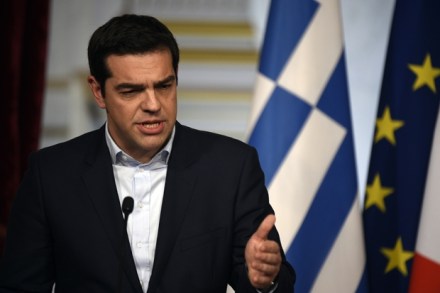
The next set of exit polls are now out from Greece and they, again, show Syriza pulling off a spectacular victory. Their lead might even be just enough to see them win an overall majority; the poll estimates that they will win between 148 and 154 seats in the 300 seat parliament. If Syriza do win outright, they will have no justification to voters for watering down their demands to the rest of the Eurozone. They will have a clear mandate to push for the debt restructuring that they want. But Berlin is not going to be in any mood to grant concessions. Angela Merkel is already deeply unhappy about the European Central Bank’s programme of quantitative easing and the Germans will not agree to any backsliding on structural reforms in Greece or easing of austerity.

The eurozone is strong enough to kick out Greece if Syriza wins

Ever since European Central Bank president Mario Draghi declared himself ready, in July 2012, ‘to do whatever it takes to preserve the euro’, the likely disintegration of the single currency — as predicted by pundits such as yours truly over the preceding years — has all but disappeared from the comment agenda. The combination of a persuasive ECB leader with reform in some bailed-out eurozone states (notably Ireland and Spain) and an easing of bond market pressures, plus the iron will of Germany to see the euro survive, drove the break-up argument into retreat.

Will Merkel throw her diplomatic weight behind Cameron’s renegotiation strategy?

Before today’s awful events in Paris, the meeting between David Cameron and Angela Merkel was going to be the big news of the day. The German Chancellor does not always observe the usual rules of neutrality when it comes to foreign elections. In 2012, she endorsed Nicolas Sarkozy in a joint TV interview, declaring that it was ‘natural’ to back a fellow Conservative. Now, there was no indication that Merkel was going to offer Cameron similar backing today. But senior Tories were keen to talk up what they were calling ‘das snub’, the fact that Merkel is not meeting with Miliband. (It is also worth remembering that in 2012, Miliband was busy attacking Cameron, Sarkozy and Merkel with his warnings about Camerkozy economics).

PEGIDA and the Left’s morality play

Germany is on its feet again, ja, so what can go wrong? This week Good Germans have been taking to the streets to counter-protest the PEGIDA (the Bad Germans) and their ‘anti-Islamisation’ rallies that began in Dresden; Europe’s media is horrified, if also slightly fascinated, with the clear subtext being ‘if the rest of Europe can’t go in for flag-waving there’s no way you lot can’. Not that media hostility will make much difference, I imagine; across western Europe the anti-politics movement is also anti-journalism. Large numbers of people feel that the broadcast and broadsheet media gives an inherently distorted account of multiculturalism, which its journalists view as a tenet of their faith, a faith most Europeans don’t share.

Germany is shackled in the immigration debate. But Britain isn’t so must lead the way

Today Angela Merkel will meet David Cameron in Downing Street. She will tell him what she can do – and what she cannot do – to help keep Britain in the EU. Yet she might like to begin by telling him what she plans to do to keep her own people behind the EU project, for in Germany the Eurofederalist consensus is being challenged like never before. In Germany, as in Britain, the most emotive issue is immigration. In Germany, as in Britain, people are scared to discuss this issue frankly, for fear of being branded racists. And now a new movement has emerged to fill this vacuum: Patriotische Europaer Gegen die Islamisierung des Abendlandes, aka Pegida – Patriotic Europeans Against the Islamisation of the West. Who are Pegida? What do they want?

Germany’s anti-Islamisation sentiment isn’t going to disappear any time soon

Consider the odium Ukip attracts from right-thinking pundits – by which I obviously don’t mean right as in conservative – square it, and you’re getting close to the opprobrium that the anti-Islamisation movement, Pegida (Patriotic Europeans Against the Islamisation of the Occident), is attracting in Germany, not to mention outside it. For a group of demonstrators that number around 17,500 at the most in their most popular Monday gatherings in Dresden, it’s remarkable the breadth of the coalition against them: the churches, Angela Merkel ('there can be no place in Germany for religious hatred'), the employers federation leader, Ulrich Grillo ('we should welcome more refugees') and obviously every anti-racism group on the left.

Kate Chisholm’s radio top five from 2014

1. My top gong would be shared by June Spencer and Patricia Greene for their brilliant character acting on Radio 4’s The Archers, creating in Peggy and Jill two resilient women of their time yet also strong-minded, decisive, fiercely independent and in Jill’s case always game for a laugh. 2. Not far behind is Neil MacGregor for creating another superb series for Radio 4, Germany: Memories of a Nation, encouraging us to think about what the world might look like from a German point of view in 25 bite-sized insights. 3. Radio 3's most heart-stopping moment on air was Zoe Norridge visiting the technical school in Murambi where thousands of Tutsi took refuge during the bloody civil war of 1994. ‘The smell is biting,’ she told us. 4.

The Spectator at war: The picture of guilt

From The Crowning Proof, The Spectator, 12 December 1914: THE crowning proof that German intrigue and cynicism caused the war was provided in the remarkable statement which Signor Giolitti, the ex-Prime Minister, made in the Italian Chamber last Saturday. He said:- "On August 9th, 1913, the Marquis Di San Giuliano, then Foreign Minister, sent me the following telegram: Austria has communicated to us and to Germany her intention of acting against Serbia, and defines such action as defensive, hoping to establish in regard to the Triple Alliance a casus foederis, which I regard as inapplicable.

Europeans no longer fear Germany. But do the Germans still fear themselves?

In the old Death Strip between East and West Berlin, which runs through the centre of the city, there is a graveyard full of German war heroes and a few war criminals too. From the Red Baron to Reinhard Heydrich, the best and worst of the German military are buried here. There’s also a mass grave full of civilians, killed by Allied air raids, and a memorial to the 136 East Berliners who died trying to cross the Berlin Wall — which ran through this cemetery. The Death Strip is still an empty space. Germany has been marking two anniversaries this year — one a celebration, the other a painful duty. The 25th anniversary of the Mauerfall (as Germans call the fall of the Berlin Wall) is one of those rare events in German history about which they can feel unequivocally happy.

The Spectator at war: The waste of war

From The Waste of War, The Spectator, 5 December 1914: The destruction which the Germans have wrought in the towns and villages they have occupied is a net loss to the world. Before the war began these aspects of war had impressed the minds of many writers even more than now appears to be justifiable. We had, for example, the famous book of the Russian writer M. Jean Bloch, who, at the end of the nineteenth century, demonstrated to his own satisfaction that a European war would not take place, because it would involve such wholesale destruction and such a universal increase of prices that normal human life would become impossible. M. Bloch was followed by Mr. Norman Angell. Events have shown the complete unsoundness of these calculations.

How to fight Europe’s demons of deflation

Deflation terrifies economists because once it starts, they have no idea what to do about it. When demand in an economy shrinks, companies cut jobs, and with fewer employed demand shrinks even more. The deflationary spiral is self-reinforcing. Central banks can cut interest rates to near zero and slosh money around like drunken lottery winners, but once hope flickers and dies, there is nothing they can do to persuade anyone to invest in the economy. Deflation took hold in Japan in the early 1990s and despite the government straining every sinew, its economy is still ailing 20 years on. Europe is right, then, to be in a panic. Inflation across the eurozone is just 0.

We know that war is hell. But it doesn’t ever make us stop doing it

There’s a plausible theory — recently rehearsed in the BBC’s excellent two-part documentary The Lion’s Last Roar? — that our war in Afghanistan was largely the creation of the Army, which sorely needed a renewed sense of military purpose after the debacle in Iraq. As a taxpayer, this appals me. As the parent of a boy approaching conscription age it horrifies me. But as an Englishman, it doesn’t half make me proud that we’ll still do anything — up to and including embroiling ourselves in a futile conflict — rather than admit we’re finished as a fighting nation.

What Angela Merkel really wants (it’s not good news for Dave)

Angela Merkel is misunderstood. Last winter, when Russia moved to annex Crimea after the overthrow of Ukraine’s government, American officials put it about that the German Chancellor had described Russia’s leader Vladimir Putin as ‘living in another world’ and ‘out of touch with reality’. No evidence has emerged that she ever said any such thing. Europhiles in the press and in Westminster have now pulled the same trick on David Cameron. The Prime Minister has lately been ruminating about quotas for migrants from certain European Union countries. He complained last month when an unannounced £1.7 billion upward adjustment in Britain’s EU payment turned out to be triple the levy on anyone else.

The bluffing game between Cameron and Merkel begins…

We should all get used to reading stories about how Angela Merkel has warned David Cameron that if he persists with X, Y or Z she’ll no longer be able to support Britain staying in the EU. It is the nature of a negotiation that those involved in it will, at points, suggest that they will walk away if the other party continues to demand something. The skill is, obviously, to know whether the other person is bluffing or not. Now as Mats Persson points out, Merkel’s comments are not as definitive as they are being portrayed as in some places. But there is no getting round the fact that Merkel is determined to protect the principle of free movement while Cameron—ideally—would like to impose limits on it.

The Spectator at war: An accent of prejudice

From The Spectator, 31 October 1914: We regret to record that a gallant and patriotic sailor, Prince Louis of Battenberg, has fallen a victim to the foolish prejudice that people with foreign names and of foreign birth cannot be loyal British subjects. It was announced on Friday that Prince Louis of Battenberg had resigned the office of First Sea Lord in a letter to Mr. Winston Churchill, the candour and simplicity of which do him the greatest credit.

The EU’s gift to Nigel Farage – Brussels demands £1.7 billion more from Britain

With truly dreadful timing, the European Commission has sprung David Cameron with a demand for £1.7 billion in extra British budget payments to the EU. The commission says this amount is due because the British economy has performed better than forecast. But this unexpected demand is for serious money, an almost 20 per cent increase in the British contribution. If Britain pays up, Christmas will have come early for Nigel Farage and Ukip. This explains why all three Westminster parties have been so quick to denounce the demand as unacceptable. There are mutterings of legal challenges and the like. The money is due by December 1. But politically, I don’t think the government can afford to pay.

Fury: the men blow stuff up, then Brad Pitt takes his top off

Fury is a second world war drama that plays with us viscerally and unsparingly — I think I saw a head being blown off; I think I saw a sliced-off face, flopping about — but is still just another second world war drama. That is, Americans good, Nazis bad, and a man doesn’t become a man until he has abandoned all mercy and learned how to kill. ‘It’s Saving Private Ryan, but with tanks,’ I heard someone say as I left the screening, and although I would never steal someone else’s opinion, it is Saving Private Ryan, but with tanks, and also sliced off faces. I added that last bit myself. Written and directed by David Ayer (Training Day, End of Watch), this stars Brad Pitt as battle-hardened Sergeant Don ‘Wardaddy’ Collier who commands a Sherman tank.