France

Europe is being strangled by the Franco-German alliance

David Cameron’s complaints at last night’s EU meeting about the lack of a growth agenda have, in part, been addressed by the new draft conclusions. Cameron — who was supported by the Dutch, Italians and Spanish — seems to have secured promises on the completion of the single market, deregulation and the services directive in the summit’s draft conclusions. This isn't going to turn around the European economy. But it is a step in the right direction and a small, but possibly significant, victory for the PM.   I understand from sources in Brussels that there has been frustration with the extent to which the conclusions presented last night simply echoed the views of the Germans and the French.

Good News for Switzerland!

From France, that is: The Socialist favourite in France's presidential election, Francois Hollande, has said top earners should pay 75% of their income in tax. "Above 1m euros [£847,000; $1.3m], the tax rate should be 75% because it's not possible to have that level of income," he said. Speaking on prime time TV, he promised that if elected, he would undo tax breaks enacted by Nicolas Sarkozy. [...] Mr Hollande himself renewed his call on Tuesday, saying the 75% rate on people earning more than one million euros a year was "a patriotic act". "It's a signal that has been sent, a message of social cohesion, there is an effort to be made," he explained. "It is patriotic to agree to pay a supplementary tax to get the country back on its feet.

How to remain a nation state

Britain out of Brussels' clutches by 2020? It can happen, says David Owen, in a piece for the magazine this week. It's based on a speech to Peterhouse College, Cambridge. Here's the full version: In all the controversy about the eurozone and Greece it is easy to ignore one simple fact: maintaining a core eurozone is creating an unstoppable momentum towards a United States of Europe. On 7 February 2012 the German Chancellor Angela Merkel indicated very clearly her direction of travel. The eurozone crisis for her is to be the springboard to another Treaty to replace the Lisbon Treaty. She said ‘Step-by-step, European politics is merging with domestic politics.

10% of Voters Will Agree With Anything (Except for the Canadian Question)

Almost no belief is so barmy it can't win the approval of at least one in ten voters. The problem for politicians is that the nutty tenth is not fixed. Indeed, perhaps a majority of the population is, on occasion, likely to be a member of the loopy group. The latest evidence that a tenth of the population is utterly unsound on even the simplest questions comes from a Gallup survey of American attitudes to other countries: Perhaps some of those pleased with North Korea thought they were being asked their views on South Korea. Whatever. That one in ten Americans professes to have a positive view of Iran is, all things considered, quite remarkable. To put it another way: for every American who hates Canada there are three who like Iran and four who like North Korea.

From the archives: Why England and France will never be best friends

To mark David Cameron’s get-together with Nicolas Sarkozy today, we’ve dug up this essay from the Spectator archives by Lord Powell. As foreign policy advisor to Lady Thatcher and Sir John Major, Powell provides a first-hand insight into the incompatibilities that separate our two nations. A fundamental incompatibility?, Charles Powell, The Spectator, 3 September 1994 A few summers ago, I accompanied Margaret Thatcher to a meeting with President Mitterrand in Paris. The weather was sunny and the mood equally so. The agenda was rapidly disposed of and the President proposed that we adjourn to the Elysée garden. Once there, he took Mrs Thatcher — as she then was — off for a stroll while Jacques Attali and I subsided on a bench in the sun.

L’entente nucléaire

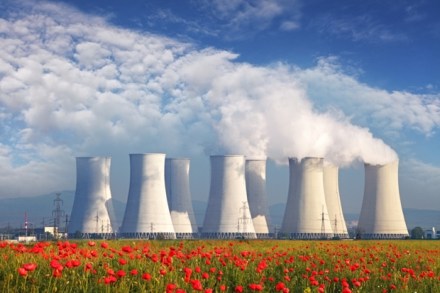
There's no wound that a press conference won't heal, or at least that's the impression that David Cameron and Nicolas Sarkozy created earlier. The pair played down the tensions and grudging handshakes of the past few months to talk up Britain and France's ‘incredibly strong relationship based on shared interests’. And there was more than just talk too: they announced a £500 million deal between French and British companies for nuclear power plants. And they hailed progress towards the creation of a joint ‘command and control centre’ for military operations.

Storm in a wastepaper basket

‘It’s the revenge of Dreyfus,’ came the cry from the dock. The speaker was the veteran right-wing ideologue, Charles Maurras, found guilty of treason in 1945 for his support of the collaborationist Vichy regime. It wasn’t of course that, and yet there is a sense in which Maurras spoke the truth. The Dreyfus case had divided France half a century before Maurras was put on trial in Lyon. The division between what Piers Paul Read, in this masterly and eminently balanced account of the Affair, calls ‘the France of St Louis and the France of Voltaire’ had never been closed. The end of the Third Republic and its replacement by Vichy’s ‘Etat Français’ in 1940 represented the victory of the anti-Dreyfusards.

Greece is still the word ahead of today’s eurosummit

How about this for a claim by Nicolas Sarkozy, made in a TV appearance yesterday? ‘Europe is no longer at the edge of the cliff.’ It's quite some statement, so let's hear it again: ‘Europe is no longer at the edge of the cliff.’ Of course, Sarkozy has reasons for saying it beyond mere pre-electoral braggadocio: the rates paid on Italian and Spanish 10-year bonds have generally been falling since the the beginning of the year; the euro has been making some tentative progress against other currencies; and so on. But it still constrasts heavily with much else that is being said around the eurozone. Only last week, Angela Merkel was talking of the overall failure to ‘stabilise the situation’ in Greece.

‘Let everyone live happily…’

Created to remember one of the darkest chapters in mankind's history, Holocaust Day is for many people an occasion for unadulterated discomfort. Most of my family perished in the Holocaust and those who survived either hid in occupied Poland, pretending to be Catholics, fled to Uzbekistan in the then-USSR or, like Marcel Rayman, fought the Nazis. Today I re-read a letter Marcel sent to his family the night before he was executed by the Nazis for trying to kill the German commander of Paris: Little mother, When you read this letter, I'm sure it will cause you extreme pain, but I will have been dead for a while, and you'll be consoled by my brother who will live happily with you and give you all the joy I would have liked to give you.

S&P to downgrade France and Austria

The word is that France will be downgraded by Standard and Poor’s tonight. AFP is reporting that French officials expect France to drop to a AA+ rating, losing its treasured AAA status and increasing how much it will have to pay to borrow money. 2012 has, so far, been relatively quiet on the euro front. But expect the issue to return to centre stage over the coming weeks. There are the downgrades coming tonight – France is apparently not the only eurozone country that S&P will mark down with Austria set to lose its AAA rating too – and a coercive and chaotic Greek default seems increasingly likely.

A taxing kind of spin

The story being briefed out of the year’s first Franco-German Summit is that President Nicolas Sarkozy won the backing of Chancellor Angela Merkel for a tax on financial transactions, a levy that the British government objects to and that Ernst and Young say would leave a €116bn hole in Europe’s public finances. But before the City begins building barricades and the PM puts on his bulldog mask, it is worth taking another look at the news from Berlin. For no sooner had the agreement been announced than the tax was rejected by Chancellor Merkel's junior coalition partner, the pro-business Free Democrats, who say they will only back a Europe-wide tax scheme. They are not alone. The Netherlands and Ireland feel the same.

Turkish anger, French parochialism, British benefit

The relationship between Turkey and France — which started with the alliance between Francis I and Suleiman the Magnificent — is in precarious territory following the French Parliament's decision to ban denial of the Armenian Genocide. Turkey's moderate Islamist government has taken as hard a line on the issue as previous Kemalist governments did, and has announced, in response to the French move, that Turkey would halt 'all political consultations, joint military activities and manoeuvres.' Not content with a formal rebuke, Turkish Prime Minister Recep Tayyip Erdogan has sought to make the conflict personal; claiming (falsely) that Sarkozy's father served in Algeria in the 1940s and would have direct knowledge of 'massacres' committed there by French troops.

The latest act in Europe’s comic opera

If it was not all so serious, the efforts to save the single currency would be worthy of a comic opera: the Germans could compose the score, the Italians could write the libretto, and the French could take care of the stage directions. The latest IMF-related effort is, perhaps, best described by the website ZeroHedge, which is required reading during these troubled times: “Germany will be responsible for €41.5 bn, France at €31.4 billion, and Italy will need to provide €23.5 billion and Spain another €15 billion.

Another sign of coalition splits over Europe

Coalition tensions over Europe are again threatening to be the story this morning. Nick Clegg has told The Guardian's Patrick Wintour that Britain has 'signalled we are happy for them [the Eurozone plus group of countries] to use EU institutions' to enforce any new treaty they agree between themselves. This is a striking claim given that David Cameron has not publicly said that he would accept this. If the Deputy Prime Minister's summary of the coalition position is accurate, then Cameron will face criticism from eurosceptics that he is backsliding on his veto. But for all Clegg's criticism of Cameron handling off the summit, he remains unconvinced by the plans that the eurozone plus countries are now pursuing.

Clegg rebukes French PM

Normally, 'read-outs' on telephone calls between members of the British government and their counterparts overseas are fairly bland affairs. But today's one on a conversation between Nick Clegg and the French Prime Minister Francois Fillon is an exception to this rule. Clegg, we are told, informed the French PM that 'that recent remarks from members of the French Government about the UK economy were simply unacceptable and that steps should be taken to calm the rhetoric.' To be sure, there is some more diplomatic language before and after this (the full text is at the bottom of this post) but the willingness of the deputy Prime Minister to be quite so sharp with the French is striking especially given the tensions in the coalition over Europe policy these past seven days.

26 versus 1 — really?

Judging from much of the coverage in UK media, you would be forgiven for thinking that Britain is on the fast track to becoming the North Korea of Europe — eccentric and completely isolated from the rest of the world. Indeed, the media narrative over the past couple of days has largely treated the agreement reached at the summit as concrete, supported in full by everyone apart from Britain. Or ‘27-minus’, as Commission President Jose Manuel Barroso put it. The reality, of course, is quite different. Leaving aside whether Cameron could have played his cards better (he could have), as Gideon Rachman pointed out in yesterday’s FT, ‘the picture of an isolated Britain’ will become blurred as the rest of Europe grapples with the Merkozy deal.

The government’s Sarkozy problem (and other euro dilemmas)

This week’s European Council meeting has been analysed by diplomats and commentators alike, but a number of issues have not been brought out as clearly as they need to be. The first is that Britain will now achieve political advantage, at the cost of economic setback, if the euro collapses. Although the government insists both that it is still wedded to the success of the euro and that it will not be isolated in Europe now or in the future, the simple fact is that eurofailure will ensure that efforts to organise among the 26, rather than the full 27, will finish. The economic costs would be considerable — possibly 10 percent of Britain’s GDP — but it would help Britain back into the centre of European decision-making.

Clegg blames the Tory Eurosceptics

Nick Clegg has just given a quite astonishing interview to Andrew Marr in which he accused David Cameron of being incapable of getting a good deal for Britain because of pressures from within the Conservative parliamentary party. When Marr asked him if things would have been different if Lib Dems had been in Brussels, Clegg said they would have been because he is ‘not under the same constraints from my parliamentary party.’ Clegg described Cameron as being trapped between the ‘intransigence’ of the French and Eurosceptics in the Conservative party. Intriguingly, the deputy Prime Minister blamed the French for there being no negotiation about the British asks.

Ten myths about Cameron’s EU veto

The EU veto that Cameron pulled in the early hours of Thursday morning has been widely misunderstood on all sides. Here are the 10 most common myths: 1. Because of Cameron’s veto, Britain lost a seat at the negotiating table. Not true. The UK was never itself going to take part in the Merkozy pact (and potentially be subject to EU sanctions), and therefore not in the monthly, parallel EU meetings that will begin in January, either. Even if he had approved the Treaty changes, Cameron still would not have had a seat at the table. Wider political challenges aside, the veto didn’t change anything structurally in terms of UK influence. 2. Cameron’s veto created a two-tier Europe.