France

Let’s talk about this

What a strange place Britain has become. You sometimes need some time away to realise quite how strange. Take yesterday’s main story: the latest paedophile rape-gang case from the north of England. The judge in the trial told the men, during sentencing, that they had selected their victims ‘because they were not part of your community or religion’. But that is the sort of fact which causes the most terrible contortions in modern Britain. The perpetrators were all Muslim men of Pakistani origin and the victims all underage, white girls. We know exactly how we should think, how loud would be our proclamations and our desire to analyse the ‘root-causes’

Have the Milibands got Hollande fever?

We’ve grown so used to regarding Ed and David Miliband as mutual nemeses that it’s strange to see them operating as a tag team today. The younger brother has delivered a fiery attack on the ‘unfairness and economic failure’ of the coalition, while the elder brother has an article in the Mirror arguing that the government is ‘Wrong about how to grow the economy in the modern world’. There’s also another article by the latter in the Times (£), just in case you haven’t had your fill of MiliCommentary. Much of what they say is unsurprising, but some things do stand out from their twin attacks nonetheless. The first is

Can Merkel and Hollande meet in the middle?

This afternoon, it’s even clearer that the French and Greek elections are a significant moment in the life of the Eurozone. It’s not just the nervous market reaction to yesterday’s results, but also the way how the supranational debate has now changed. More so than ever, there are now two clear oppositional fronts. On one side, broadly speaking, are those who say that austerity is a prerequisite for growth. On the other, those who say that austerity must be relaxed for growth to arrive. It’s a situation dripping with black humour. When David Cameron kept Britain out of Europe’s fiscal pact a few months ago, it was portrayed as a

Hollande, Cameron and the 21st arrondissement

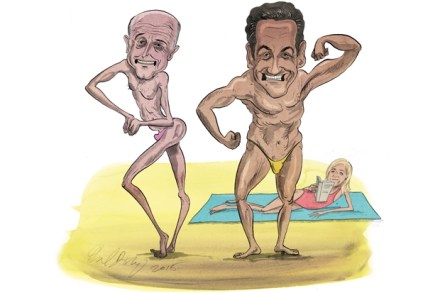
While David Cameron has good cause to be glad of Sarkozy’s defeat, he has even better cause to be nervous about this trend of lefty nerds being elected. Much of the Cameroon’s re-election hopes are pinned on the idea that their boss will trounce the geeky Ed Miliband. Nowadays, the argument goes, these ex-special advisers who have no charisma and alarming leftist policies just don’t win modern elections. But, as Ben Brogan argued in the Telegraph last week, the French may well be about to prove that even dullards can get elected — if the incumbent fails to deliver the change he promised. At least Hollande says he’ll balance the

What Hollande’s victory means

Tonight’s election results mark the next challenge to the euro. In France, the Socialist candidate François Hollande has won. Having campaigned on changes to the fiscal compact, Hollande will have to deliver something on this front. But Angela Merkel, with her own elections next year, will not want to agree to anything that appears to be a watering down of the pact. I doubt, though, that there’ll be that much market reaction to Hollande’s victory. City sources say that it has been priced in for while and that there is an expectation that Hollande will merely accept some window-dressing about growth being added to the agreement. But what could set

May Day, May Day

There was a sense of urgency, even emergency, in many countries on May 1 this year. The goings-on in the UK were muted in comparison: France Presidential incumbent Nicolas Sarkozy staged a rally in front of the Eiffel Tower called ‘The Feast of Real Work’, to counter the traditional show of heft by the left. ‘Put down the red flag and serve France!’ he shouted to the unions. His campaign claims a turnout of 200,000. The left was irritated by Sarkozy’s hijack of their celebration, and his insinuation that they don’t understand what work is. The far right, led by a scornful Marine Le Pen fresh from rejecting an overture

Fears heighten as the Eurocrisis rumbles on

For all the coverage of hacking, pasty tax and the like, the continuing crisis in the eurozone remains the most significant political story. Until it is resolved, it is hard to see how the UK returns to robust economic growth. I suspect that the market reaction to a Hollande victory will be limited as it is already pretty much priced in. Those expecting a degringolade will be disappointed. However, if Hollande does actually try and implement some of his more extreme ideas, the markets could take fright. What is far more worrying than France is Spain. There’s a growing sense of inevitability that the Spanish banks will need a bailout

Le Pen says ‘non’ to Sarkozy

Marine Le Pen didn’t achieve quite the shock result in this year’s French presidential election that some thought she might when a few polls showed her ahead of Nicolas Sarkozy. But, even though she didn’t make it through to this weekend’s run-off, the National Front candidate did win 17.9 per cent of the first round vote. That means there are 6.4 million Le Pen voters for Sarkozy and Francois Hollande to fight over, putting her in a potentially very influential position. Sarkozy — currently trailing Hollande by six to ten points in the polls — has been particularly keen to court those voters, saying in a radio interview today, for

Who’s Afraid of Marine Le Pen?

I suppose one should not be surprised that so much of the reaction to the first round of voting in the French presidential election has concentrated on Marine Le Pen. Fascists (or neo-fascists) are always good copy; far-right parties led by women are even better. Nevertheless, like so many other dramas there is less to this than might appear to be the case if you only read the headlines or listened to the BBC. Granted, Le Pen and FN won 17.9% of the vote in last Sunday’s first round. But what of it? In 2002 Marine Le Pen’s father won 17.8%. If this is the National Front on the march

Britain’s longest downturn

As of today, we now have four years’ worth of GDP figures since the UK first went into recession — and they don’t look pretty. By this point in the 1930s, we’d already fully recovered from the Great Depression. This time, we’re still more than 4 per cent below where we were at the start of 2008: And the international comparison isn’t very flattering either:

The Eurocrisis persists

Holland and Hollande; they’re the non-identical twins that are causing palpitations across Europe today. Holland, because the country’s Prime Minister yesterday resigned after failing to agree a package of cuts for his country’s budget. Hollande, because he’s the socialist candidate set to win the presidential election in France, probably eroding that country’s commitment to fiscal consolidation in the process. The markets quivered in fear at this morning’s headlines — and what they mean for the eurozone — even if they have, in some parts, slightly recovered since. It’s all another reminder that the Eurocrisis just isn’t going away — neither for countries such as France and the Netherlands, nor for

…but Hollande is still the favourite

The best explanation I have seen for why François Hollande should be ranked as the favourite for the French presidency going into the final round comes from the Rue 89 blog. Here, courtesy of a friend who speaks far better French than I, is the key part of the argument: ‘There are no scenarios that lead to a Sarkozy victory. We generously assumed that 50 per cent of Bayrou’s first round votes would go to Sarkozy, with only 20 per cent going to Hollande and 30 per cent abstaining (whereas the latest polls suggest the centrist electorate was divided into three approximately equal parts between these three positions). We also

Why Sarko is worth a punt…

Call me crazy, but I’ve just bet on Nicolas Sarkozy to win the French election. I am not convinced he will — Hollande is rightly the favourite — but at 5/1, Sarko is well worth a punt, I reckon.
 As Gideon Rachman notes, last night’s first round was by no means a disaster for Sarko. In fact, given the extent of anti-Sarko sentiment throughout France, he did remarkably well. In the end, Hollande only beat him by about 1.5 per cent. Yes, no French president has ever failed to win the first round before, and the statistics are all against the incumbent. But that need not stop Sarkozy. He has

Sarkozy shows extremists the door

Who on earth does Nicolas Sarkozy think he is? The answer, of course, is President of the French Republic. And from that position — and propelled by the Toulouse shootings and doubtless by the imminent election — he has chosen to expel a number of people from the Republic whose views, actions and teachings are deemed inimical to the State. Sarkozy gave the order yesterday and a couple of hours later the men were on planes back to their countries of origin. As the Times reports, the Algerian Islamist Ali Belhadad was flown back to Algiers and Almany Baradji, an imam, was sent back to Mali. The French Interior Ministry

A man surrounded — and some assumptions exposed

There was an element of bafflement in the early BBC coverage this morning of the welcome news that police have identified and surrounded the suspected killer of seven people, including Jewish children, in Toulouse. To some people’s surprise, the BBC correspondent remarked in the early reports, the suspect turned out to be a Muslim, Mohammed Merah. So the entire tone of the Corporation’s coverage of the killings turns out to have been misplaced. Ever since the dreadful news that a gunman had attacked a Jewish school in Toulouse after killing three French soldiers, the overriding assumption on the part of the Corporation was that, unless the killer was merely unhinged,

How do you solve a problem like Baroness Ashton?

Baroness Ashton has managed a return to diplomatic form by comparing the murder yesterday of three children and a Rabbi at a Jewish school in Toulouse with ‘what is happening in Gaza.’ Plenty of people have already deplored her comments. But they present an opportunity to address one of the underlying and too infrequently asked questions of our time: if you do not think Ashton is a very good politician, what can you do about it? Ordinarily if a politician says or does something you do not like we, the electorate, are at some point given the opportunity to vote them out. There used to be considerable pride in this

The role of Baroness Ashton

Recent reports have suggested that David Cameron is interested in swapping Cathy Ashton’s job as the EU’s high representative for foreign affairs and security policy for another commission post. But sources close to Number 10 tell me this ain’t happening. Supposedly, Cameron was interested in swapping Ashton’s current role for the post of commissioner for the internal market, currently held by the Frenchman Michel Barnier. But, in reality, this was never on the cards for a whole host of reasons. Foremost of these was that Nicolas Sarkozy was never going to give up the French claim to this job just weeks away from a French presidential election. Secondly, because Ashton

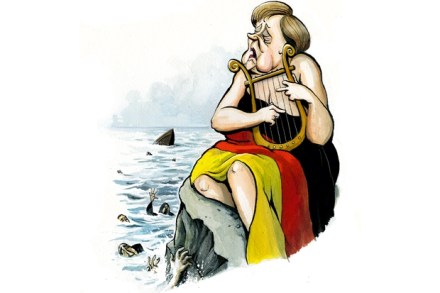
Europe is being strangled by the Franco-German alliance

David Cameron’s complaints at last night’s EU meeting about the lack of a growth agenda have, in part, been addressed by the new draft conclusions. Cameron — who was supported by the Dutch, Italians and Spanish — seems to have secured promises on the completion of the single market, deregulation and the services directive in the summit’s draft conclusions. This isn’t going to turn around the European economy. But it is a step in the right direction and a small, but possibly significant, victory for the PM.   I understand from sources in Brussels that there has been frustration with the extent to which the conclusions presented last night simply

Good News for Switzerland!

From France, that is: The Socialist favourite in France’s presidential election, Francois Hollande, has said top earners should pay 75% of their income in tax. “Above 1m euros [£847,000; $1.3m], the tax rate should be 75% because it’s not possible to have that level of income,” he said. Speaking on prime time TV, he promised that if elected, he would undo tax breaks enacted by Nicolas Sarkozy. […] Mr Hollande himself renewed his call on Tuesday, saying the 75% rate on people earning more than one million euros a year was “a patriotic act”. “It’s a signal that has been sent, a message of social cohesion, there is an effort

How to remain a nation state

Britain out of Brussels’ clutches by 2020? It can happen, says David Owen, in a piece for the magazine this week. It’s based on a speech to Peterhouse College, Cambridge. Here’s the full version: In all the controversy about the eurozone and Greece it is easy to ignore one simple fact: maintaining a core eurozone is creating an unstoppable momentum towards a United States of Europe. On 7 February 2012 the German Chancellor Angela Merkel indicated very clearly her direction of travel. The eurozone crisis for her is to be the springboard to another Treaty to replace the Lisbon Treaty. She said ‘Step-by-step, European politics is merging with domestic politics.’