Food

Japanese food is overrated

After twenty-three years in Japan, I have concluded that the much-lauded, worshipped even, cuisine is overrated. And I am getting a little tired of being told how awe-inspiringly wonderful Japanese food is, often by people whose only experience is high-end sushi or designer tempura in a showpiece Tribeca eatery, a world away from the standard fare available on the backstreets of Shibuya. Part of the problem is that much of what delights the Japanese about their food is unrelated to its actual taste.

Japanese

The Menu serves up clever and tangy social commentary

Several years ago, after I passed the bar exam, my wife and I went to dinner at Pineapple and Pearls — probably Washington, D.C.’s second swankiest restaurant. I recall eating some excellent duck, as well as imbibing a selection of craft cocktails served in ever-more exotic glasses and alembics. But what I remember most was dessert: a single gooseberry lacquered with honey. Yes, a single berry. (We ordered Domino’s when we got home.) The Menu is a lacerating bit of social commentary that doubles as a satire of this kind of fine dining — not all that surprising a blend, given the presence of Adam McKay on the production team.

Lucius Beebe knew how to live

There are some characters who infuse literature and life with disproportionate zest. The nature of their vocations is less relevant than the fervency they bring to the job, which is what makes them stand up off the page and sail through time. Lucius Beebe, who kept a Rolls-Royce and a Bentley, favored bowler hats and evening dress and wrote a column for the old New York Herald Tribune in the 1930s and then for Gourmet until his death in 1966, sits high up on my list of zestful characters who go the distance: militantly old-fashioned, never out-of-date. The association with the estimable, sadly deceased Gourmet justifies talking about Beebe under the food heading as much as any other, even though he did not always write about food as such.

beebe

Serving up a Half Baked Harvest feast

As one of eight children, I feel deep kinship with others who come from big families. Bunk beds, hand-me-down clothes, abject chaos at dinnertime — these are the staples of big-family life. Tieghan Gerard, the author of the food blog and cookbook series Half Baked Harvest, is one such kindred spirit. She comes from a family of ten, and began cooking as a tween to help with frenzied mealtimes. She soon started creating her own recipes for a food blog, which became three bestselling cookbooks and a four-million-follower Instagram. Her big-family backstory blends with her wholesome, rustic aesthetic: feeding a crowd, after all, involves creativity, resourcefulness and well-loved tools. I hoped I’d recognize some high-volume cooking tricks in Half Baked Harvest: Super Simple.

harvest

Keto no-no

I recently got engaged. After the celebratory Champagne and indulgent restaurant meals my fiancé and I enjoyed in our month of post-betrothal bliss, reality set in: soon I must fit into a wedding dress. Of course, dresses come in all shapes and sizes, just like brides. But have you seen the price of a wedding photographer lately? I’d like to look my best. These days, the main weight-loss food trend seems to be the ketogenic diet. Like the Paleo and Atkins diets, eating keto means cutting carbs. Unlike these other diets, keto isn’t high in protein; it’s high in fat. The idea is that depriving yourself of carbs and protein will cause your body to burn fat for energy — starting with the bacon and eggs you ate for breakfast and ending with your thighs.

keto

Are you man enough to eat raw offal?

The dominant wolf gets the liver, at least according to the podcaster Joe Rogan. In one episode, a bodybuilder called “CarnivoreMD” (real name Paul Saladino) tells him: “If you eat liver, you get to be an alpha male... or alpha female.” Offal has taken a markedly macho turn in recent years. No longer consigned to memories of the postwar school cafeteria, organs have become the preferred food of a certain type of gym bro. The word “offal” implies wastage — from the Middle Dutch for offcuts — but it can also be a delicacy. Foie gras is only the most obvious example. For the most part, though, the West has become squeamish about what was once called “variety meat.” But a new wave of offal-lovers is reviving an interest in organs.

offal
cake

Cake for a world turned upside down

My mother, although an excellent cook, never baked. She left that to her Swedish mother, Anna, who lived with my grandfather in an apartment my father built for them over our garage in Weston, Connecticut. Anna, as I’ve written before, was a gifted baker, especially when it came to Swedish breads. I can’t remember when my mother suggested I might make my father’s birthday cake. Or why the task had been handed down to me. I was only nine or ten, but my mother was well aware that I loved to watch Anna bake, and that my curiosity needed constant nourishment. Rural Weston had no bakery in its small-town center, nor did neighboring, cosmopolitan Westport. In the 1950s, powdered cake mixes came to Westport’s Gristedes supermarket.

zucchini

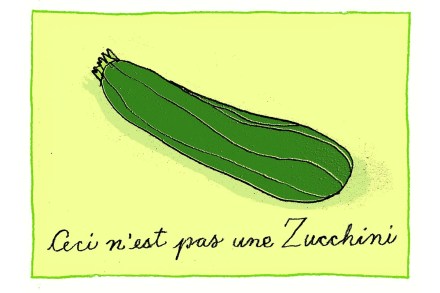
The postmodern horror of zucchini ‘apple’ crumble

There are some very bad people out there. Call me naive, but while I always vaguely knew this to be true, a chance discovery the other day really brought it home. I was scrolling idly through internet recipes and then, suddenly, stark and horrible, there it was — zucchini “apple” crumble, advertised as a method of successfully “tricking your family” into eating vegetables while conveniently using up overgrown zucchinis from the kitchen garden. “If they don’t see you making it, they’ll never know it’s not apple!” urged the author, evidently an agent of the dark side. My eyes widened with horror. My soul curled like a leaf in protest. But then the calming voice of reason intervened.

Eating well at a time of inflation

Inflation having topped 9 percent this summer, Americans are looking for ways to cut their spending. Rising prices at the grocery store are impossible to avoid, but we can learn to adjust. There’s no better inspiration than M.F.K. Fisher. Fisher, a food writer who hung around with Julia Child and James Beard during her lifetime, felt the pain of wartime rationing acutely. Her 1942 book How to Cook a Wolf addressed the problem of hunger — “the wolf on the doorstep” — with a few clever recipes and a great deal of philosophy. Survival of the crisis, she predicted, would require first and foremost an attitude of abundance. Fisher ascribes virtues like honesty, dignity and nobility to simply prepared foods.

garden

On constant gardening

Let nobody sneeze at the horticultural arts. Francis Bacon devoted a moderately famous essay to the topic, beginning by pointing out that the very first garden designer was Almighty God. The garden, Bacon argues in his 1625 treatise, offers the purest of human pleasures. As a civilization approaches its peak, its creative geniuses tend to focus on perfecting architecture before finally, at the apex of its development, turning to the art of the garden. With a name like Bacon, Sir Francis might be pardoned for devoting especial attention to the kitchen garden, whence hail so many excellent pairings for salt-cured pork — roasted cabbage with bacon and pine nuts, for instance, or the inseparable bacon, lettuce and tomato.

The little joys of growing corn in Connecticut

They were neighbors and friends. Harold Loeb, an economist, writer and heir to the Guggenheim and Loeb fortunes, and his wife Vera lived down the Saugatuck River from us on Snake Drive, at the end of Buttonball Lane. Harold was better known as having been betrayed by Ernest Hemingway in Paris in the 1930s — Robert Cohn in The Sun Also Rises was modeled after him. Harold got even in The Way It Was, published in 1959. He asked my father to sketch him for the book’s back cover. Among other things they had in common a gift for gardening. My father, known for his charcoal sketches of celebrated locals of Weston, Connecticut, planted a large, Walden-inspired plot surrounded by a white picket fence, where weeds were allowed as long as they didn’t interfere with the crops.

corn
reykjavik

Thai-celand: how southeast Asian cuisine took over Reykjavik

Last October I flew to Reykjavik for a spa weekend among the volcanic lagoons. It sounded blissful, but the reality was strange and, in some ways, downright alarming. This was back when people still cared about Covid, and no one seemed to care more about Covid than the Icelanders (even though the data suggested that barely anyone there had the virus). You might imagine their reaction when someone collapsed on an incoming plane. That someone was me. I didn’t have Covid and had multiple PCR tests to prove it. What I had was a bout of vertigo so bad that I initially thought the plane was crashing. I managed to tell the Icelandic stewards, “I’m fine, really, it’s just vertigo.” One of them said to the other, “We’ll give her the injection, pull her pants down.

The scoop on homemade ice cream

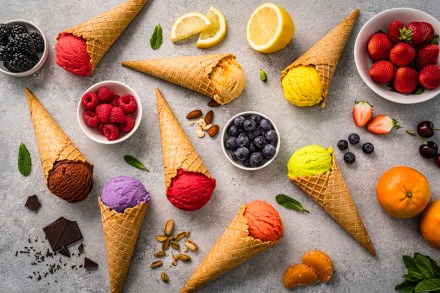
"Gelati, sorbetti e granite,” it said on the cover. We were in a little bookshop off the Piazza Duomo in Verona. Days of consuming Italian gelato in the hot afternoons had worked so wonderfully upon our imaginations that here we were purchasing a recipe book in a language we didn’t even understand, trying to capture a little of the magical glitter of the Italian summer before it slipped through our fingers. I still have the book — and I still don’t understand enough Italian to follow a recipe. But the pictures convey some of the original magic. Gelato al limone peers creamily out of a yellow bowl, garnished with bristling strips of lemon peel. Gelato allo Champagne is pink and melting, snuggled up to a strawberry. Sorbetto d’arancia is spooned into a hollowed-out orange.

ice cream
f'mores

Introducing f’mores

Don’t mess with s’mores, s.v.p... unless it’s for f’mores. They are my Gallic version of the gooey, sinfully rich and highly caloric, all-American dessert that the Girl Scouts invented in the 1920s. Graham crackers are sandwiched together with marshmallows roasted over campfire embers, and chocolate. S’mores are in our genes. I have three half-French grandchildren. Two summers ago, when California closed its schools, Covid sent the family fleeing Los Angeles to Antibes for two years. French schools reopened after six months of Zoom learning while California gave way to the powerful teachers’ unions and remained closed until this past spring. Before leaving, the family came to us.

Zabar’s is still thriving

You might expect Zabar’s, the world-famous “appetizing” store on Manhattan’s Upper West Side, to have become a shadow of its former self. This seems to be the case for most of New York’s other independent specialty shops. Fairway, Balducci’s, H&H Bagels, Dean & Deluca: the food purveyors of my youth have gone kaput. They were bought, leveraged, expanded, overextended and oversold. They expired past their sell-by dates. But somehow Zabar’s survived. For the Upper West Sider, Zabar’s is our Yale College and our Harvard. Like many I make my way down to 80th Street and Broadway most weekends for continuing education. I head to the appetizing counter and take a number.

zabar's
greek horiatiki

Let’s hear it for horiatiki

Time to send your kitchen knives out for sharpening. The hot weather is coming, and you know what that means: Greek salad, or horiatiki as the Greeks call it. Is there any pleasure in life quite like dicing tomatoes, cucumbers and peppers with a knife that balances properly in the palm, whose blade possesses just the right steely flex and strength, and — above all — that is properly sharpened? With the right edged tool, it is hard to stop cutting things up for Greek salad. With the right ingredients, it is hard to stop eating it. This is why Greek salad is the perfect dish to make for a dinner party. As your friends buzz about the kitchen, drinks in hand, you can chop away on autopilot, chatting merrily as your cutting board fills with heaped tomato chunks.

snakes

Swimming with the snakes

Perhaps being a Pisces gives me a natural affinity for water. Not all water, mind you. I’ve never liked to swim where I can’t see what’s beneath me. I prefer to believe that my love of water comes from spending so many early summers in our swimming hole in Weston, Connecticut. When my father was making a barn into our house and the surrounding fields into gardens, lawns and terraces, using boulders and rocks from the notoriously rocky Connecticut soil for foundations and borders, he was intentionally creating an unusual home. When he used more rocks to make a swimming hole for dipping his sweaty body, he unintentionally created a watery playground for the family — a summer haven.

Against the ‘concept restaurant’

My wife and I live in Northern Virginia, in Fairfax County. Whenever we go out to eat, we almost always go somewhere in the suburbs. Fairfax, along with neighboring Montgomery County in Maryland, is home to a wealth of restaurants serving cuisines from all over the world. Just last January, Bon Appétit wrote that “to travel DC’s Beltway is to sample the flavors of the world,” and the New York Times declared that “America’s next great restaurants are in the suburbs.” You could argue that the suburban food scene in the DC metro area surpasses that of the city itself. Nonetheless, DC is widely seen as a “foodie city,” and its restaurants generally get more coverage and hype than their suburban counterparts.

The assorted joys of nasturtiums

It’s still amazing to me how Instagram photos can bring such unexpected responses. And instantly! It happily happened to me last May and my creative juices — green, yellow, orange — started flowing. I had just posted a photo of the nasturtium pesto I’d made from the flowers and leaves in a nod to the exigencies of Covid-19: self-quarantining, fear of food shopping and the constant barrage of advice for oldies like me to not mix or mingle. I was going to forage for food, fool about with flavor and fun. Within minutes, Caroline, the flower girl at my Swiss wedding fifty years ago, commented, “Do you remember that you and Maman would take me foraging in the meadows above Lausanne for wild nasturtiums for salads?

nasturtium
country

In praise of the country store

In our age of branded everything, I suppose it should not surprise that the country store, that artifact of an older rural landscape, should have gotten the treatment too. Play the word-association game with Americans today and for “country store” you’re likely to get “Cracker Barrel™,” the publicly traded chain of folksy restaurants/retail emporia strung along the interstate system and specializing in a long menu of so-called comfort food, clean restrooms and rockers on the porch. Do not be deceived. Lunch at Mosley’s Store in Pintlala, Alabama, sixteen miles south of Montgomery on US Route 31, the old Mobile Road, bespeaks a different reality. It has to do with food, tangentially.