Food

Don’t let science stop you from baking

Sometimes, cooking is art. Other times, it’s science. When it comes to baking, both are involved, which is what can cause problems for those who are otherwise skilled in the kitchen. Whereas throwing together ingredients and tossing them in the slow cooker or on the grill can produce delicious results, baking demands precision. I have experienced great successes when making a host of dishes that don’t require me to get overly scientific A little too much sugar in the dough can cause cookies to flatten, caramelize or end up burned. Setting an oven to the wrong temperature – or failing to preheat – can produce bread or cakes that are unevenly cooked.
baking
Acropolis

In praise of the Acropolis Museum Café and Restaurant

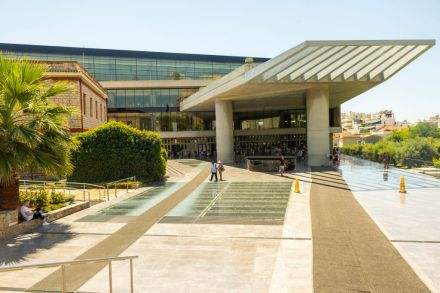
In the global poker game of cultural repatriation – otherwise known as who nicked what from whom – the Greeks seriously upped the ante with the opening of the Acropolis Museum in 2009. This lavish display of archaeological treasures in a light-filled building designed by the Swiss architect Bernard Tschumi is, alongside the recently opened Grand Egyptian Museum in Cairo, an exemplar of such a building’s mission to educate and inspire. In the tradition of polemic buildings, it is also a $200 million plea to return the Elgin Marbles from the British Museum to Greece.

The art of dining

From our UK edition

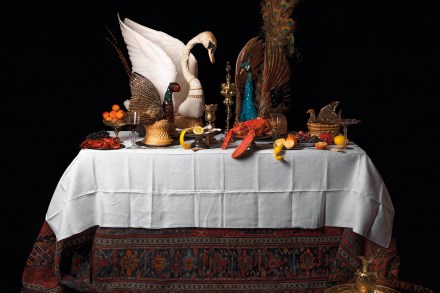
Ivan Day pulls out an old Habsburg cookbook from his library. The 300-year-old volume is so thick it’s almost a perfect cube, and by some miracle the spine remains intact as he opens it. ‘It’s like a big Harry Potter spellbook,’ he jokes while flicking through drawings of pastry baked in the shapes of dolphins, tortoises, pelicans and griffins. I recognise one design from the half-eaten pie in his kitchen: a cross between a soup tureen and an embroidered throw pillow. Ivan is a curator, self-trained cook and Britain’s premier historian of food.

Drink early, drink often

From our UK edition

As readers will be aware, and without sounding too immodest, this column is absolutely committed to diversity. In an earlier era, that might have seemed unnecessary. A British oenophile did not need to search out bottles from great distances. He could merely take his pleasure from the first growths of Bordeaux and the grands crus of Burgundy, with perhaps a little dalliance on the Rhine or the Rhône. Nor was this only a British modus operandi. I covered the French election of 1981 from Burgundy (there were good political reasons for doing so, as well as other ones). The Burgundians knew that wine was made on the banks of the Gironde, but when I assured them the best of it was excellent, there was polite scepticism.

How posh is your supermarket shop?

From our UK edition

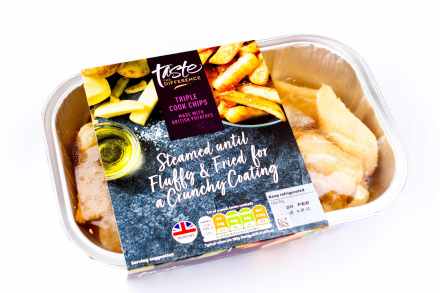
The name can’t help but invite mockery. When Sainsbury’s launched its ‘Taste the Difference’ range 25 years ago this autumn, I wasn’t alone in noting that the phrase almost begged for a question mark at the end. But the British public are (mostly) more concerned with dinner than with sarcasm. The Taste the Difference range now extends to more than 1,200 products, from Pugliese Burrata with Sunsoaked (sic) Tomatoes and Bacon Wrapped Halloumi Sticks with Hot Honey Drizzle to Anya Potatoes and Nocellara Del Belice Olives. I admit to having eaten most of the above products, despite being a keen ‘cook from scratch’ sort who loves to ramble around Electric Avenue in Brixton to buy fish, veg and lamb chops.

I finally ate Sardinia’s maggot cheese

From our UK edition

I’m driving a dirt road in the wilds of central Sardinia. And I mean what I say by ‘wilds’. This rugged region in the sunburned Supramonte mountains was called ‘Barbagia’ by Cicero – i.e. ‘land of the barbarians’ – as even the Romans never quite managed to subdue it. Centuries later it became famous for bandits, kidnaps, local mafias – and casu marzu, the infamous ‘Sardinian maggot cheese’. I turn to my resourceful local guide, driver and interpreter, Viola, as she negotiates the olive groves and goat tracks. ‘Do you really think we will find casu marzu?’ My voice is slightly falsetto with tension. Viola turns: ‘I hope so, there is a pretty good chance. And maybe we will find something even more unusual…’ But first, let’s rewind 30 years.

A Mayfair brasserie for people who work, or at least pretend to: 74 Duke reviewed

From our UK edition

There is an immaculate brasserie called 74 Duke at 74 Duke Street, Mayfair: this is postcode etymology. Duke Street runs from Selfridges to what used to be the American embassy in Grosvenor Square but is now (I assume) a paranoid hotel: the Chancery Rosewood, which has kept the monstrous eagle on the roof. If Duke Street was ever interesting – I like to imagine Mrs Dalloway having a panic attack in the road – it isn’t now. It sells the eternal detritus of the British rich – watches, capes, meat – who I suspect are into crypto these days. It is all a feint anyway: fake London for fake people, and life is at the edges now. A brasserie for the undead, then, and what to say? It’s very nice, but the last restaurant I reviewed near here was Mister Nice, which wasn’t nice at all.

Why Eleven Madison Park had to put meat back on the menu

Eleven Madison Park, perhaps the finest of New York’s fine-dining establishments, is adding select meat dishes back to its prix fixe menu after an ill-fated foray into veganism after the pandemic. Chef Daniel Humm announced the move in the New York Times, citing all the predictable reasons for ditching a plant-based menu. First and foremost: the finances. “It’s hard to get 30 people for a corporate dinner to come to a plant-based restaurant,” Humm told the Times, noting the negative feedback from diners over the years. Still, he framed the move in moral terms, explaining how he didn’t “realize that [the vegan menu] would exclude people.” To this, I can only muster an eye roll.

Eleven Madison Park

Why I was right to ban vegans

I remember the day I heard my culinary hero Daniel Humm had decided to make Eleven Madison Park’s menu plant-based. It was as profound as the day Princess Diana died and as pivotal as the birth of my first child, Lily Elvis. The news tore the joy from my heart as well as all the love and respect I had for Humm. The toil, tenacity and sheer stamina it took him to earn his three Michelin stars is extraordinary. Who am I to criticize one of the greatest chefs alive today? I’m a nobody. Yes, I’ve worked at three-Michelin-starred restaurants, served Queen Elizabeth II and starred in the BBC’s Great British Menu but I’m just a cook: nothing more and nothing less.

vegan

Is ‘carbon butter’ really good for us?

All butter is made from carbon, but not all butter is carbon butter. This is the name being given to a new environmentally friendly, 100 percent ethical lab-made food product. There’s not an udder, churn or milkmaid in sight. Carbon butter is yet another one of those foods of the future we’re told about, with wide-eyed, breathless enthusiasm, that will transform the way we eat as well as our health, save the planet and make sure there are enough calories to go round when the world hits a population of 10 billion, at some point in the next decade or two. A few years ago, it was cockroach milk – four times more nutritious than cow’s milk, said Bloomberg, excitedly – plant-based meat and “cultured oil.” Now, it’s the turn of carbon butter.

butter

My quest for the perfect Christmas broccoli

I adore broccoli, but I despise seeing it shrink-wrapped and kidnapped in the grocery store. The sight of those slightly compressed, yellowing florets sweating under fluorescent morgue lighting is a rude tap on the shoulder from dystopia. That’s why I was in my basement in late August, cleaning out the propagation tent while everyone else was still at the beach. My goal each year is to enjoy homegrown broccoli with Christmas dinner. In this corner of the Mediterranean, that’s about as likely as a French civil servant answering the phone after lunch. But with precision timing and bloody-mindedness you can pull it off. And after years of suffering those supermarket specimens, I’m determined to.

broccoli

The no-choice rural restaurant with just two sittings a week

From our UK edition

Long Compton is in the Cotswolds, but to the east, where there are no boutique hotels or shops selling artisan candles to tourists. Banburyshire and its surrounds are actual countryside. Fields roll away in the manner Germans call Kulturlandschaft, meaning landscape shaped by centuries of human care. This is the sort of country that makes people write poetry about hedgerows and choral music about sheep: lovely to live in but, by long British tradition, a dismal place to dine out. Discovering a truly great restaurant in Long Compton – population 764 – feels like finding in rural Warwickshire one of those bucolic la France profonde dining experiences that seemed nostalgic fantasies even when M.F.K Fisher described them.

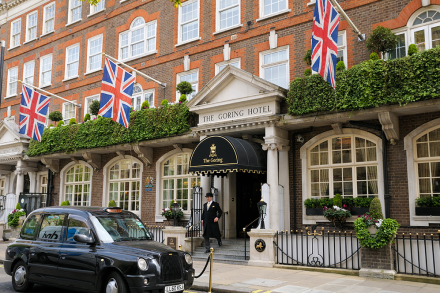
The glory of the Goring

From our UK edition

Last weekend, I was in England: among two very diverse aspects of the nation. In recent months, every Saturday, central London has been plagued by demonstrations. I suppose that there must be a right to protest. But what about the right to mosey around Westminster and Whitehall without blocked roads and with any hope of peace and quiet? Last Saturday saw the largest manifestation of all: less of a protest than an English uprising – a flag-waving two-fingered revolt against the liberal intelligentsia. I kept well clear, having no wish to be caught up or kettled, and later there were attacks on the police. This should lead to jail sentences. Two conclusions could be drawn.

I doubt there’s a better ravioli in London: The Lavery reviewed

From our UK edition

The Lavery in South Kensington is named for Sir John Lavery, official artist of the Great War and designer of the currency of the Irish Free State, who lived here, though he died in Ireland and is buried in Putney. Lavery, of course, would no longer recognise South Kensington as his home, and his white, monumental mid-Victorian house – it’s too cold to be compared to a wedding cake, it’s a power cake – is now a fashionable restaurant and ‘event space’, which I put in quotation marks so you know I didn’t write the words ‘event space’, I just typed them out. In houses like The Lavery, I wonder how tall the Victorians were in their heads.

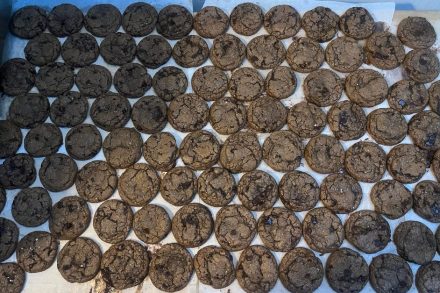
I made the Epstein cookies

Is it wrong to bake cookies from a recipe addressed to a pedophile and sex trafficker? When I found the recipe for chocolate chip cookies on page 169 of Jeffrey Epstein’s birthday book, I read and re-read it expecting there to be some sinister inside joke, perhaps a hidden dash of adrenochrome or instructions to “massage” the dough. The surrounding page contains a woman’s redacted photograph and references Epstein’s “mentorship,” while the other 237 feel like a cross between various expressions of human depravity: part ransom letter, part porn magazine and part teenage girl’s diary. Where does an innocent cookie recipe fit in among this?

epstein cookies

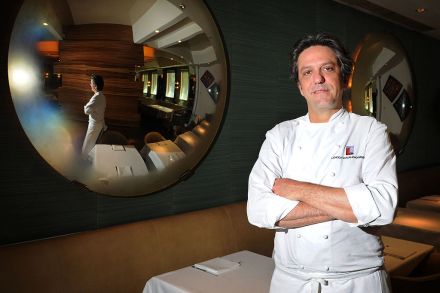
Locatelli has entered the premier league of museum dining

Does your museum feel tired and run down? Is the entrance unwelcoming? The bookshop shabby? The restaurant a mere café? If so, call Annabelle Selldorf, the German-American architect whose talent and sensitivity have made her the go-to person for reviving weary museums. Her recent transformation of the Frick in New York has been widely acclaimed and she will soon start work on the Wallace Collection in London. But the latest masterwork has seen Selldorf sprinkle her fairy dust on the Sainsbury Wing of London’s National Gallery. Those with long architectural memories will recall how in 1984, the then Prince of Wales christened the proposed new wing of the Gallery “a monstrous carbuncle on the face of a much-loved and elegant friend.

Locatelli

The cult of Erewhon

“So naturally the first thing I did when I got to California was go to Erewhon and get their hot bar because I have no self-control. I personally love Erewhon,” says Marianna Moore, a food influencer with nearly one million followers, a beautiful face, slightly gross online recipes and comic flair. She then tucks into a plate of tofu sticks, kelp noodles, Japanese sweet potato and buffalo cauliflower. At the end, she says with a smirk: “Was this worth $28? I don’t know! I couldn’t tell you.” She keeps on munching. I’ve not been able to find the seaweed gel or lion’s mane mushrooms in the form they are sold in Erewhon Having been studiously following food content on Instagram for nearly a year, I am finally finding my feet in the thicket of viral trends.

My gastronomic tour de France

From our UK edition

On holiday in the Dordogne, I face an annual dilemma. My weekly Any Other Business column ruminates on the financial world with occasional restaurant tips to lighten the tone – and many readers tell me they frankly prefer the menus du jour to the boardroom dramas. My difficulty is that in a single page of The Spectator there’s never space to do justice to both. Last week, I ended up cramming seven restaurants into one short paragraph, a paltry snack where I’d like to have offered a banquet. So here’s my 2025 tour de France, as I called it, at somewhat fuller length, perhaps one of these days to be super-sized into an entire guidebook. This set of recommendations, I should explain, come mostly from British readers and friends in other parts of France.

A fictional Edwardian waif’s hungry fantasy: Fortnum & Mason’s food hall reviewed

From our UK edition

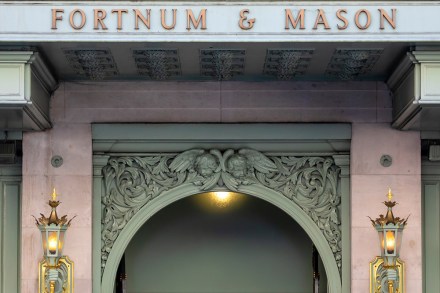
I like a picnic weighted with history and class terror, which means Fortnum & Mason on Piccadilly, which is historical re-enactment with dreaming. I have written about this for years or tried to: food is never just food, only fools say that. You can learn almost everything about people from the food they want. And here is St Narcissus in the form of a department store that works more powerfully as an idea than a mere shop, though it is a very effective shop. Fortnum’s sells a Great Britain that never was, designed for people who no longer exist, if they ever did. It has much to say to Brexiteers and worse, though in biscuit.

What to do with the last of the summer’s apples

From our UK edition

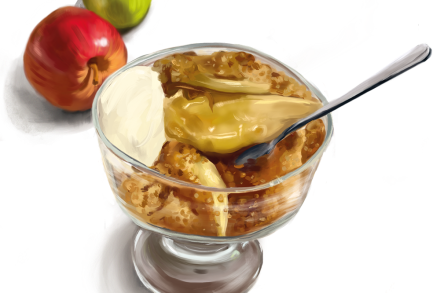
The double-edged sword of eating with the seasons is the glut. A blunt, un-pretty word, which is a joy in theory and delicious in result, but which can feel daunting when you’re facing down a bench full of berries to be picked over, or countless apples to be processed. My husband and I were once given an apple tree as a present. It’s a multi-graft, meaning each of the three branches produces a different type of apple: russets, for storing, bramleys, for cooking, and tart eating apples. This is the first year that it’s thrown up more than three measly apples. Well, it’s made up for lost time; we are, to put it mildly, drowning in apples.