Films

Why are there no good films about Independence Day?

From our US edition

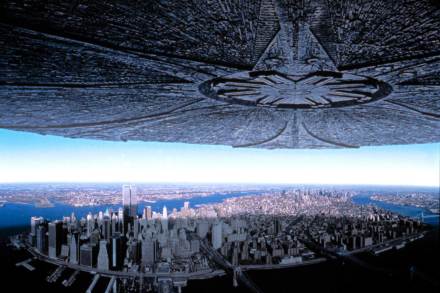
This month marks 30 years since the release of Roland Emmerich’s Independence Day, a science-fiction blockbuster best viewed as the anti-Close Encounters of the Third Kind. Spielberg’s 1977 film suggested we would be better off finding common ground with extraterrestrial visitors; Emmerich’s more bombastic picture stuck to the (surprisingly Trumpian) idea that aliens were evil, wished to destroy our planet and must be resisted at all costs, preferably with nuclear weapons. It is not a subtle film, with the most fondly remembered moment coming in the famous shot when the White House is destroyed by an alien spacecraft.
A life among movie stars can damage your health

Mothers of America             let your kids go to the movies! get them out of the house so they won’t know what you’re up to it’s true that fresh air is good for the body                               but what about the soul that grows in darkness, embossed by silvery             images... So wrote Frank O’Hara in ‘Ave Maria’, in 1964.

The demise of London’s junk shops

‘The place through which he made his way at leisure was one of those receptacles for old and curious things which seem to crouch in odd corners of this town and to hide their musty treasures from the public eye in jealousy and distrust.’ In Dickens’s The Old Curiosity Shop, Nell Trent’s grandfather loses his precious shop to the malicious money-lender Quilp. London’s junk shops have, it seems, always been under some form of threat. But the forces against them today appear unstoppable. The junk shop is increasingly the sole preserve of the city’s ‘odd corners’ – pushed out by hiked rents, the charity-shop boom with its variety of cost dispensations, and the popularity of eBay and Vinted.

‘We are stuck like chicken feathers to tar’: Elizabeth Taylor’s description of the fabled romance

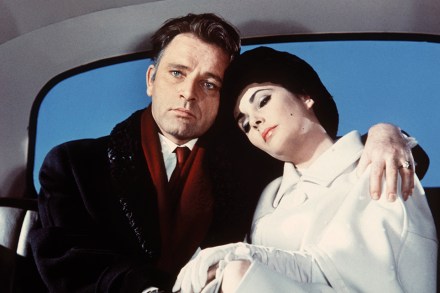
‘To begin at the beginning,’ intones Richard Burton with a voice like warm treacle at the start of the 1971 film Under Milk Wood. It’s hard to imagine an actor more obviously influenced by his own beginnings. The epigraph to this double biography is ‘The damp, dark prison of eternal love’, a line borrowed from Quentin Crisp. And if that’s an accurate assessment of Burton’s on-off-on-again relationship with the actress Elizabeth Taylor, it’s an even better summary of his childhood in Wales. Born Richard Walter Jenkins to a barmaid mother and a coal miner father (a ‘12-pints-a-day man’ who sometimes disappeared for weeks on end to drink and gamble), as a teenager he attempted a fresh start by moving in with a teacher named Philip Burton.

Letters: Stop talking, Rishi – and take action

Sick note Sir: Kate Andrews illuminates how, for us British, the successful diagnosis of a major medical condition is frequently a matter of chance and, even then, usually occurs later than it should (‘Why are the British so anti-doctor?’, 2 September). The near asymptomatic nature of many serious conditions combined with the cultural pressures of stoicism and reluctance to be the bearer of bad news allows many cancers, for example, to run free for years before discovery. In addition, while treatments from the NHS can be brilliant, they vary enormously across the country in terms of accessibility and availability.

Complicated and slightly creepy: the Bogart-Bacall romance

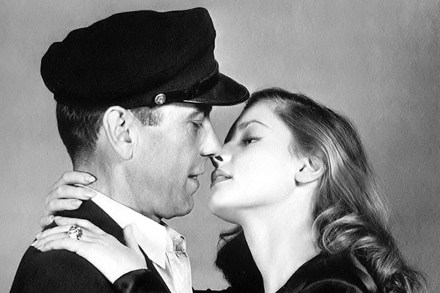
Whenever an actor and an actress begin an affair on the soundstage they like to believe they are the new Burton and Taylor. Actually they’ll be lucky to resemble Christopher Timothy and Carol Drinkwater, who had a fling on that vet programme – and now here are Humphrey Bogart and Lauren Bacall to live up to as well. Of their love story, William J. Mann avers: ‘It was wonderful; it was passionate; it was complicated.’ Also, it was creepy. Bacall was 19, Bogart 45. There was a ‘significant power differential between them’ when they met in 1944 during the filming of To Have and Have Not. Mann is probably pointing the finger at Bogart, the established Hollywood star.

A stunning work of art: Mission: Impossible – Dead Reckoning Part One reviewed

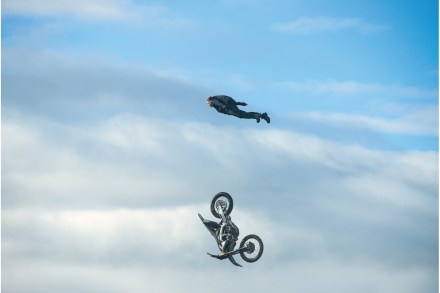
Blockbuster action movies are designed to stun the audience into submissive acceptance. Complexity, humanity, emotion and beauty are reduced to a few flickering lights in the swirling darkness of death and destruction. This is not a criticism. Great art has sometimes been like that and Mission: Impossible – Dead Reckoning Part One is certainly art, though perhaps not great. Anyway, I, for one, was stunned. The film is certainly art, though perhaps not great, and I, for one, was stunned For context, this is the seventh Mission: Impossible movie. The first was in 1996 so the hero Tom Cruise, aka Ethan Hunt, is now in his sixties.

Should we judge a work by the character of its creator?

‘Most of my heroes are monsters, unfortunately,’ Joni Mitchell once said, ‘and they are men.’ The singer-songwriter was able to detach the maker from the made. Should we do the same? Is it ethical? Even possible? These are the questions Claire Dederer deftly considers in Monsters, which puzzles through the problem of what we ought to do about great art by bad men. Ideally, nothing. Early on in her quest, Dederer longs for someone to invent an online calculator: The user would enter the name of an artist, whereupon the calculator would assess the heinousness of the crime versus the greatness of the art and spit out a verdict: you could or could not consume the work of this artist. Alas, said calculator has yet to be programmed, so it’s down to her to do the maths.

Quentin Tarantino’s iconoclastic obsessions

From our US edition

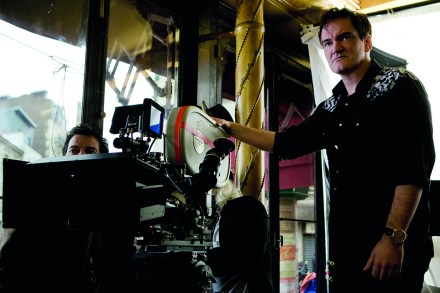
Quentin Tarantino’s inevitable first volume of film writing presents a challenge: how can an established artist, especially one this famous, pivot to criticism? No matter how insightful his opinions, it runs the risk of merely illuminating what he values as a filmmaker. To his credit, Cinema Speculation doesn’t pretend it’s not taking you through a highly personal journey of one man’s cinematic obsessions. The tone isn’t too far off from the hundreds of interviews he’s given for thirty years. References to his own films are common, and unlike serious critics, he can pepper his criticism with quotes from sources he can call at any time — from critics (Elvis Mitchell) to filmmakers (Walter Hill) to miscellaneous others (Robert Wuhl).

tarantino

Why is there no great Thanksgiving movie?

From our US edition

In about a month’s time, one of the most boring conversations in social media discourse will begin (assuming Elon Musk hasn’t taken Twitter away from us out of pique). "X is a Christmas film." "X is not a Christmas film." And so on, as keyboard warriors angrily debate whether the eclectic likes of Die Hard, Lethal Weapon and Love, Actually qualify for this designation, as purists claim on endless Reddit threads that a Christmas movie can only be so-called if the plot and events are entirely driven by the festive season itself. Even for those of us who would argue that Die Hard and It’s A Wonderful Life make the perfect Christmas double bill — wider designations of the term be damned — there is considerably less debate as to what makes a Thanksgiving film.

Queens on screen: a cinematic guide

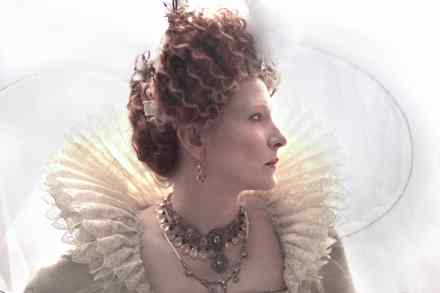
When Queen Elizabeth II (Elizabeth I of Scotland) began her reign on 6 February 1952 (after the premature death of her father George VI) the British Empire was still very much in existence, with more than 70 overseas territories, despite the independence of India/Pakistan (‘The Jewel in The Crown’) in 1947. But, in the words of Harold Macmillan, there was soon an inevitable ‘Wind of Change,’ as the UK relinquished its colonies and embraced the woolly concept of The Commonwealth of Nations (formerly The British Commonwealth). Aside from the United Kingdom, the Queen is Head of State in 14 other nations – although, as recent Royal tours of the Caribbean have demonstrated, this may well decrease in the not-too-distant future.

How to save the Oscars

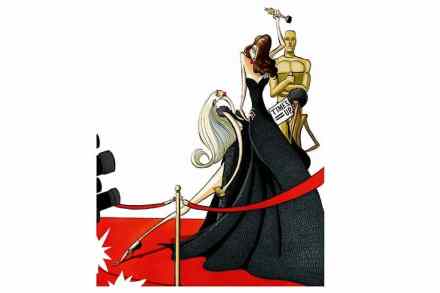
This Sunday’s Academy Awards will be a litmus test of whether Hollywood can uncouple itself from the political agenda of young woke radicals that is proving so unpopular in the US. Joe Biden had a stab at it during his State of the Union address, criticising the ‘defund the police’ movement for fear of a Democrat wipeout in the midterms, and the New York Times did an astonishing volte-face last week, publishing an editorial in defence of free speech. A bit rich from the paper that recently forced out its most distinguished science reporter at the behest of its junior staff for using the n-word in a discussion about the appropriate use of the n-word. But will the luvvies be able to resist trotting out all the usual fashionable platitudes about sex, race and gender?

Ten films set in Russia

With Russia back in the news yet again, it’s interesting to note how comparatively few English language movies set in the country there actually are. Admittedly in TV there’s been an uptick, with two recent series on Catherine The Great in youth/middle age, the Andrew Davies Pass Notes version of War & Peace, McMafia and the multi award-winning Chernobyl.

The time is up for long films

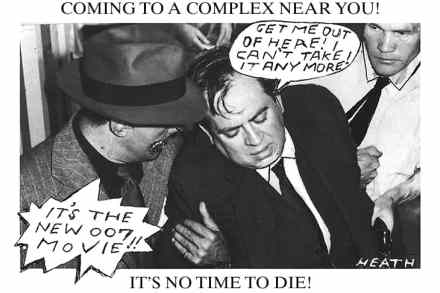
‘Programme starts at 3.45, so the film will start at 4.15, and it’s two hours and 43 minutes long, so we’d be out just before 7 p.m.’ This is the No Time to Die calculation, and I think many of us are doing it and wondering: ‘Can I face it?’ A dark afternoon spent in a state of total surrender to the longueurs imposed on us by a self-indulgent director? Thirsty from too much popcorn, leg muscles seizing up, not allowed to look at your phone, pressure on the bladder, Daniel Craig never smiling and the end nowhere near in sight?

No Time to Die is a compelling mess

Times being what they are, James Bond can no longer just be the main character in the Bond films. He’s also had to become a defiant metaphor for them. Since Daniel Craig took over the role, Bond has regularly been told that he’s badly outdated. Yet, by the closing credits, he’s once again proved how much the world still needs him. That this has been reflected at the box office is, I’d suggest, largely down to one neat trick: Craig’s Bond films have thrown in just enough gruff emoting to get people to go along with the pretence that his Bond is a radical reinterpretation, while still essentially sticking to their trusty old-school methods.

10 football films to get you in the mood for kick off

When many people think of films about ‘The Beautiful Game’, a few, (mainly mediocre) movies tend to spring to mind, usually headed by John Huston’s 1981 folie de grandeur Escape to Victory. As you may recall, the film cast Sly Stallone, a noticeably chubby Michael Caine, Max Von Sydow and real-life football legends Pelé, Osvaldo ‘Ozzy’ Ardiles and Bobby Moore in a ‘soccer’ themed homage to The Great Escape (1963). But there are a surprising variety of other motion pictures about the sport and some are well worth checking out. Of course, there are some real stinkers as well, most recently the Sky Cinema Original Final Score (2018), a lame attempt to repurpose Die Hard in the environs of West Ham’s London Stadium.

Insane and fascinating: BBC World Service’s Lazarus Heist reviewed

The narrative podcast remains a form in search of a genre. The template set by the hit show Serial — enterprising American journalists with janky piano theme tune shed new light on tantalising murder — still predominates seven years on. To this we can add the format pioneered by S-Town (initial murder investigation subsides into rich human detail) and, more recently, the excellent Wind of Change (intriguing what-if maps cultural and macropolitical shifts, with bonus CIA window-dressing). I remain sceptical about the form’s usefulness as a way of breaking hard news. Caliphate, the New York Times jaw-dropper on the Islamic State, is less gripping now its key source has been revealed as a fraud.

Alfred Brendel the Dadaist

How many people are celebrating the fact that, last week, one of Europe’s most inspired writers about music, modern art and aesthetics celebrated his 90th birthday? The answer is relatively few, which might seem surprising. He is a world-renowned authority on the grotesque and the absurd — territory through which he darts mischievously in his poems, originally composed in his native German. But you have to turn to his essays written in English to experience his refined sarcasm, which is either delicious or mortifying, depending on whether you feel incriminated by his strictures against intellectual laziness.

The legend of Marlene Dietrich

How to sum up the legend of Marlene Dietrich? She was an actor, a singer, a style icon, even a war hero. A retrospective is under way at the BFI, where more than a dozen of her films are being shown throughout this month. Many admirers saw only the shimmering legs and forgot the sharp intellect, the wartime gallantry. But it would be wrong to deny that body image was central to her success. It was with this in mind that the critic Robin Wood christened Dietrich ‘the Venus de Marlene’. Like the statue alluded to, Dietrich is a monument of Western culture, her image cast not in stone, but in light (that marble of the modern world, made possible by the newly invented movie camera).

Six spy films to watch this weekend

As Christopher Nolan’s mind-bending, time-travelling espionage extravaganza Tenet finally makes it to British cinemas (America, amusingly, has to wait a while longer) and with the much-delayed release of the new James Bond film No Time To Die apparently just a few months away now, big-budget films dealing with glossy espionage in all its forms are very much in demand. Yet cinema of the past couple of decades has found numerous different ways to portray spying, from the banal to the glossily explosive. It has encompassed literary adaptations, unrecognisable resurrections of Sixties television shows, deconstructed Cold War sagas and even sly updates of classic Seventies films. Here are half a dozen of the very best. Spy Game https://www.youtube.com/watch?