Film

Catching up with Clooney

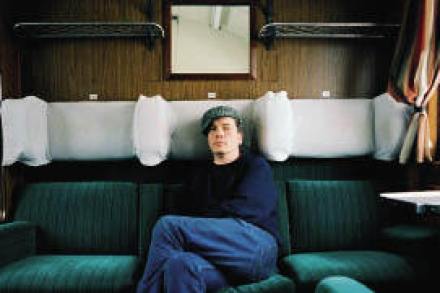
There are quite a few reasons to like The American. It is an action film with almost no action, making it a non-action action film which, I now know, is my favourite kind of action film. It stars George Clooney, and while I have tried to imagine Mr Clooney doing something uncharismatically — rinsing out his pants in the sink, say, or hosing down the car on a Sunday morning — I cannot. I’d buy a ticket for both. And it’s directed by Anton Corbijn, the Dutch photographer turned film-maker who made Control, the excellent film about Joy Division, and who knows how to compose a shot gorgeously. There are quite a few reasons to like The American.

BOOKENDS: Flesh and blood

Flesh. Lots of flesh. That was the simple promise of a Hammer horror film. In this collection of classic Hammer posters (The Art of Hammer by Marcus Hearn, Titan, £24.99) we have cleavages, writhing torsos and shining thighs aplenty. But it’s not just that kind of flesh. Over most of our female subjects leers a monster (usually played by the magisterial Christopher Lee), threatening to butcher their curves and leave behind a carcass. Little wonder that the blood-red acrylic is applied so liberally. More interesting, although generally less striking, are the posters that don’t follow the formula. The horribly sensationalist advert for The Camp on Blood Island (1958) carries the tagline, ‘Jap war crimes exposed!

Interview – Tomas Alfredson: outside the frame

Without warning, Tomas Alfredson jumps up and starts wading about the room like a water bird treading over lily pads. ‘There’s a famous sketch by a Swedish comedian,’ he explains by way of a voiceover, ‘in which he’s walking through a meadow of tall grass. He’s walking, struggling through this grass that reaches up above his waist.’ Alfredson pushes out at imaginary foliage around his midriff. ‘Then he steps out into a road and you realise that — all that time — he wasn’t wearing any trousers. Completely naked from the waist down.’ The mime stops as suddenly as it started. ‘That is the cinema of paranoia!

A certain look

Just as there are people who are their own worst enemies, so there are books that are their own worst reviews. Mark Griffin’s A Hundred or More Hidden Things, a new biography of the Hollywood film-maker Vincente Minnelli, is one such. No review could possibly be as damning as a verbatim reproduction of its irresistibly putrid pages. Minnelli’s achievement certainly does merit attention. In fact, for the auteurist critics of Cahiers du Cinéma, who argued that a film’s distinction derived primarily, even exclusively, from the degree to which it reflected its director’s own personal visual and thematic preoccupations, his was practically an open-and-shut case.

The Animal House Test

There's lots of sense in Matt d'Ancona's most recent column, not least his implied warning that if the Tories tack to the right this will, no matter how much it appeals to the base, be a terrible mistake for Dave and his boys. Whether you like it or not - and plenty of Spectator readers* don't, I fancy - such a move at this stage of the election cycle would delight the Labour party. Because it would prove what some of them really think anyway: the Tories really haven't changed at all. They're the same old nasty, service-cutting, intolerant, weird bunch you've rejected three times in a row. That's a story Labour want to tell and one that might have some merit too.

Cast a long shadow

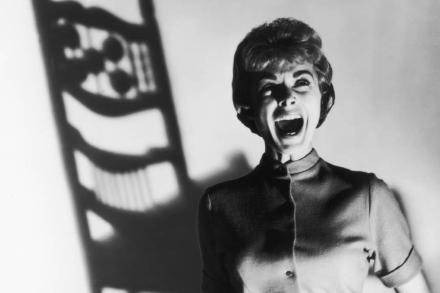
Many years ago I invited a young student of mine to see Psycho, a film of which she had never heard, made by a director (Hitchcock) with whose name she was unfamiliar and shot in a format (black-and-white) whose apparent old-fashionedness so mystifed her she wondered aloud why no one thought to complain to the projectionist. Yet, shrieking on cue at all the spooky moments, she ultimately admitted to having been so bowled over by the film that she asked what other Hitchcocks she ought to see. I recommended North by Northwest — only subsequently to learn, to my stupefaction, that she had found it boring. Boring? The most euphoria-inducing comedy thriller in cinema history? I asked her why. ‘Well,’ she replied. ‘I was under the impression he made horror movies.

A dramatic streak

Late in the 19th century, archaeologists digging in the Roman Forum discovered a lime kiln. It had been built to incinerate marble into an aggregate for the mortar for the new structures of the Middle Ages. Inside were statues of six Vestal Virgins, stashed together like firewood. Their arms had been snapped off. The image came to mind as I read this excellent new book on the artist John Armstrong (1893-1975). In the 1930s he painted a series of ruined streets, with broken statues and broken monuments. They are bare and stark, and there is nothing like them in 20th-century British art. The first Armstrong I saw stopped me short: ‘Phoenix, 1938’, in Leeds City Art Gallery. When the guard turned I took a photograph, and still have the bright blue slide.

The World’s First Suicide-Bomber Comedy

I think Chris Morris's new film Four Lions is probably the (English-speaking) world's first suicide-bomber comedy. So it's all but guaranteed to offend just about everyone. Splendid. Doubtless it's a sign of terrible, even craven decadence to admit to looking forward to seeing it...

The face of a muffin

What was it about post-war British cinema? Our films were lit up by a collection of wonderfully idiosyncratic performers. Think Alistair Sim, Terry-Thomas and Robert Morley. Perhaps the most idiosyncratic of them all was Margaret Rutherford. The drama critic, J. C. Trewin once remarked, ‘When you have seen any performance by Margaret Rutherford you are certain to remember it.’ How right he was. She stole Blithe Spirit with her portrayal of the exuberant bicycling medium, Madame Arcati. She was wonderful as Miss Whitchurch, the domineering headmistress of a girls’ school mistakenly billeted at a boys’ school in The Happiest Days of Your Life. And she was a far more colourful and entertaining Miss Marple than the rather grey character in Agatha Christie.

Burning Issue: Does Hogwarts Have A Drinking Problem?

Lord knows there's almost no idea too dumb to appear in a newspaper, but this recent effort from the New York Times is a cracker: Does Hogwarts have a drinking problem? As Harry Potter fans crowd movie theaters to catch the latest installment in the blockbuster series, parents may be surprised by the starring role given to alcohol. In scene after scene, the young wizards and their adult professors are seen sipping, gulping and pouring various forms of alcohol to calm their nerves, fortify their courage or comfort their sorrows...recreated on the big screen, the images of teenage drinking are jarring. Previous Harry Potter movies have shown drinking, but this one takes it to a new level.

Moving swiftly on

Chaplin’s Girl, by Miranda Seymour Love Child, by Allegra Huston Virginia Cherrill was an exceptionally pretty young woman when she turned up in Los Angeles in the late 1920s, looking for fun and adventure. Here Charlie Chap- lin spotted her, in the front row at a boxing match, and invited her to star in his forthcoming movie, City Lights. Still considered among his greatest films, it gave Cherrill the chance to captivate audiences with her portrayal of the blind flower girl. It wasn’t long before she met the young Cary Grant, who followed her to England, begging her to marry him. ‘Endearing, gorgeous and elegant, the Grants made a magnificent couple’, writes Miranda Seymour. Grant was her second husband, but not her last.

The Taking of Pelham One Two Three: Take Two

Did you know that Tony Scott is filming a remake of Pelham One Two Three? If you think that sounds as though it must be a bad idea wait until you learn that the Robert Shaw part will be played by, yes, John Travolta. Seriously. Obviously. As Ross Douthat says, this is an entirely pointless exercise doomed to failure. You might as well remake Get Carter or The Wicker Man... Ross agrees with Peter Suderman who fears that matters Hollywood are likely to get worse, not better. But I am worried, to an extent, about the way Hollywood is trending towards recycling its properties. Yes, Tinseltown has been peddling recycled goods for a while now, but increasingly, it seems as if most major projects are sequels, adaptations, or reboots.

Perfectly unreliable

Memoirs? No one writes them any more. If you wish to distinguish yourself from the sweaty masses, you are far better off publishing a diary, or notebook, call it what you will (Frederic Raphael naturally calls it a cahier). To publish one, of course, you need to have written one, ideally some years ago, full of gossip and spleen and brutal judgments on your contemporaries, some of whom are now dead, and the rest of whom soon will be when they read it. It may not have the form or the contrivance of a memoir — it may, in truth, ramble a bit — but we will forgive this because, its writer will assure us, it was never written for publication.

The Millers’ tale

Arthur Miller, 1915-1962, by Christopher Bigsby Arthur Miller was born in 1915 in Jewish Harlem, the son of immigrants from the shtetl, enjoying comfortable family wealth until his father’s business collapsed. The key events in forming his political outlook were the Depression, the Spanish Civil War, the Cold War — and the slow-to-dawn truth about Stalinism. The ever-present corollary is ‘New York Jew’. At the outset of a biography encompassing the man and his work, Christopher Bigsby points up Miller’s recurring debt to the classical Greek theatre, ‘where a society could engage with its myths, its animating principles.’ Tall and strong, Miller remarkably was never conscripted during the second world war.

Living the legend

My Judy Garland Life, by Susie Boyt The story of Judy Garland is a magnificent example of the truth that life imitates art. Things would surely have been different had she stuck to being Frances Ethel Gumm of Grand Rapids, Minnesota. As it was, the trajectory of her life under the stage name she assumed at the age of 12, as part of a travelling vaudeville act, had a blighted glamour more appropriate to verismo opera than to the cinema screen. Complete with an abusive father and drunken mother, five marriages, abortion and attempted suicide, the entire scenario transcended the wildest aspirations of melodrama. The irony of a drug overdose carrying off The Wizard of Oz’s cute little Dorothy, mascot of can-do America, offered a final ghastly flourish to the story.

Gruff Justice

James Robertson Justice: What’s the Bleeding Time? by James Hogg, with Robert Sellers and Howard Watson ‘You — what’s the bleeding time?’ Sir Lancelot Spratt, consultant surgeon at St Swithin’s, barks at Dirk Bogarde’s trainee doctor. ‘Ten past ten, sir’ is the sheepish answer. Another cherishable exchange in the long-running series of medical comedies sees a patient complaining about shrapnel up the — ‘rectum?’ offers Spratt. ‘Well,’ comes the plaintive reply, ‘it didn’t do ’em any good.’ Gruff and domineering, Spratt and the actor who indelibly played him were interchangeable — except that James Robertson Justice wasn’t really an actor.

Best British Movies?

Commenting on this post, WPN asks: "What would a list of the Top 10 British films of the last 25 years look like? As an American, British films are not 'foreign' enough for me to think of them as a separate category in my own mental space. I'd be curious what Brits think."Good question! The obvious answer is, natch, "thin". Nonetheless, my own list of Top British Flicks Since Local Hero would include (in no particular order): The Crying Game The Madness of King George My Name is Joe Secrets and Lies Henry V Withnail & I Richard III Mona Lisa 24 Hour Party People Naked Other contenders could include: Small Faces, Land and Freedom, Layer Cake, Sense and Sensibility, Hamlet, A cock and Bull Story, Bright Young Things...

Local Hero: 25 Years On

Until the BBC's Culture Show reminded me of it this evening, I had no idea that it is now 25 years since Local Hero was released. Christ, that makes one feel old. If Bill Forsyth's classic is not the best British movie of the past quarter century, it is certainly the loveliest. And, oddly, timely too these days.

“Third Place is…” Not Bad Actually.

This week's New Yorker carries a profile of Alec Baldwin. The piece is written by Ian Parker and really, it's quite splendid. It begins: Alec Baldwin, who stars in “30 Rock,” the NBC sitcom that has revived his career and done nothing to lift his spirits, has the unbending, straight-armed gait of someone trying to prevent clothes from rubbing against sunburned skin. He is fifty years old, divorced, and lives alone in an old white farmhouse in the Hamptons and an apartment on Central Park West—feeling thwarted, if not quite persecuted.