Film

Spectator Play: The highs and the lows of what’s going on in arts this week | 13 July 2013

Deborah Ross reviews two films for us this week. The first is Pacific Rim, a ‘giant monsters v. giant robots’ film, and to be perfectly honest, that’s about all she has to say on the matter. If you do want to find out more, here’s the trailer: Her second film this week is ‘The Moo Man’, which is almost the opposite of Pacific Rim. ‘Instead of being a big, noisy film with nothing to say, it’s a small, quiet film with quite a lot to say’. A documentary following a dairy farmer around his East Sussex farm, it is ‘beautifully and lovingly and discreetly filmed’, it says everything it has to say about British agriculture, in its own quiet way. The inside of our British palaces used to be almost a state secret, .

Nicolas Roeg interview: ‘I hate the term “sex scene”’

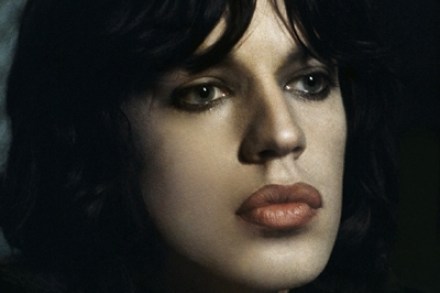
‘Oh, some of my films have been attacked with absolute vitriol!’ said Nicolas Roeg, 85, and still one of the darkest and most innovative of post-war British directors. We were sitting in his study in Notting Hill; nearby in Powis Square is the house Roeg used for his 1968 debut, Performance, starring Mick Jagger as the rock star who entices a gangster (James Fox) into a drug-induced identity crisis. The film was shelved for a year before Warner Brothers dared to release it. ‘The critics didn’t always get it then — but they do seem to now,’ said Roeg. Roeg was born in 1928 in St John’s Wood into a vaguely bohemian background.

Two film stars watch some tennis. World goes mad!

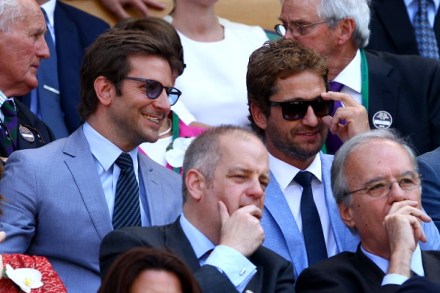
The first Briton in 77 years won the Wimbledon championships on Sunday, but this is perhaps incidental; did you spot the real thing of note? That Bradley Cooper and Gerard Butler were there to watch him, and were actually laughing and talking to each other, like normal human beings? That’s the real story here! From the flurry of online activity about the sighting of the pair, you might be forgiven for thinking they had done something other than, well, just stand there watching the tennis and have a friendly chat, as all the other spectators (or those who weren’t instead scanning the crowd for well-known faces) were doing.

Spectator Play: The highs and the lows of what’s going on in arts this week | 21 June 2013

In this week’s lead feature in the Arts section, Tom Rosenthal explains just why he thinks the Lowry retrospective at Tate Britain is so long overdue. Lowry is one of our most popular artists – and it is exactly this that has been his downfall. ‘Can one disapprove of someone merely because he popular? Clearly one can’, writes Rosenthal. The lack of Lowry in London only highlights ‘the fashionable dislike of Lowry’s art’. But, finally, Lowry has made it to the walls of Tate Britain. Should his work be there? Andrew Lambirth will be reviewing the exhibition in a future issue of The Spectator, but for now you can make your own minds up.

Daniel Radcliffe: why are the leaders of our political parties so uninspiring?

Daniel Radcliffe is wearing the standard rehearsal outfit of T-shirt, black jeans and trainers. ‘Ah, this is for The Spectator. I probably shouldn’t have worn my fake Che Guevara T-shirt.’ It’s the classic Guevara image with a cartoon smiley face substituted. ‘I bought it because I’m so sick of people using him as a fashion icon.’ Radcliffe is 5ft 5in and his head looks slightly big on his body. But it’s the big pale blue eyes that you notice. Under dark, chaotic eyebrows, they give him an air of innocent frankness before he’s said anything. Being cast as Harry Potter aged 11 and spending his teenage years as the lead in the highest-grossing film franchise of all time could have turned his head, but Radcliffe is modest.

Spectator Play: The highs and the lows of what’s going on in arts this week | 14 June 2013

Sir Alfred Munnings lived his life in true bohemian style, ‘carousing with gypsies and horse-trainers, living rough and constantly on the road’. Summer in February is based on his early life living in Cornwall, with Munnings played by Dominic Cooper: ‘Irrepressible as an electric eel, and twice as dangerous’. But does the film live up to Munnings’ art – and, of course, to the hype? The problem with films about artists is, says Andrew Lambirth, the art. But Summer in February is ‘as vivid and visually complex as a Munnings masterpiece’ – in fact, almost as good as the book.

Gemma Arterton’s new vampire flick, Byzantium, is melancholia at its most trying

Neil Jordan’s Byzantium may well be stylish and moody — so moody, in fact, I wanted to send it to its bedroom with the instruction it could only come down again when less sulky — and Gemma Arterton and Saoirse Ronan may well be fine actresses, but yet another vampire film? Really? True, it plays with the tropes a little. There’s a mother and daughter twist. There are no pointy teeth, just pointy thumbnails. But that thing vampires do, after they’ve sucked human blood and then look up, with blood-smeared lips and chin? That’s here, plentifully, and it always makes me wonder why vampires have such bad table manners. Weren’t they taught any, while growing up?

Taki: What’s Cannes all about? Seducing someone important

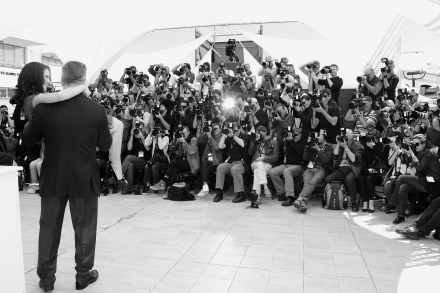
Cannes It’s raining, the stars are hiding, the hacks and paparazzi are waterlogged and frustrated, and the shimmering images of the beautiful people walking up the red carpet are just that, images of glories long gone. The film festival used to be a glamorous affair when I was a young man. I remember the brouhaha when a French wannabe starlet ripped off her bra and showed them to Robert Mitchum, reputed to be by far the most intelligent actor of his time. He raised his eyebrows and congratulated her. He was walking alone on the Croisette without heavies or PR pests clearing his way. No one bothered him. That was then, and this is now, and now stinks.

Spectator Play: what’s worth watching, listening to or going to this weekend | 17 May 2013

It feels like the only film anyone’s been talking about recently is The Great Gatsby. Given that even the release of the films’ multiple trailers created international news stories, it seemed inevitable that not everyone was going to love it. So, what does Deborah Ross say to the film’s critics? ‘You can tell them to go hang’. Gatsby, she says, is ‘fantastically enjoyable, and a blast. It is wild and rampant and thrilling.’ So there you go – listen to our critic, not anyone else's. Desert Island Discs is one of Radio 4’s crowd-pullers but, as Kate Chisholm points out in this week’s radio review, the format ‘ is not best designed for conversational revelations or deep-seated insights’.

Seriously eccentric – Chaplin & Company by Mave Fellowes

Chaplin & Company is an alarming proposition for anyone with a low threshold for the cute and quirky. Its main character, Odeline Milk, is a mime artist. She is serious and eccentric. In bed she lies on her back ‘as if she has been arranged this way and told not to move’. She wears brogues several sizes too big for her feet. When we meet her, she is moving into a canal boat in London. Her mother, with whom she lived in Arundel, West Sussex, has just died. Odeline does not dwell on this. Instead she is thinking about her new life. In London, she thinks, her artistic endeavours will be appreciated at last. Two things work to counteract any offensive cuteness. One is the sureness of the writing; the other is the comedy of Odeline herself. She is brilliantly snooty.

Spectator Play: what’s worth watching, listening to or going to this weekend | 26 April 2013

Perched at number 3 in The Times' ‘30 Richest under 30’ list this week were Fawn and India Rose James, aged just 27 and 21 respectively and with an estimated fortune of £329 million. Who are they, and how did they get on the list? Their grandfather, Paul Raymond, was dubbed the ‘King of Soho’ for buying up swathes of the area, and was infamous for his Raymond Revue Bar strip club and his adult magazine empire. The Look of Love is his biopic and, says Deborah Ross in this week’s film review, is ‘visually fantastic, with more retro kitsch than you can shake a stick at’. The trailer’s below, and you can read what Deborah made of it here.

Spectator Play: what’s worth watching, listening to or going to this weekend

In a week where the news has been filled with stories about a certain ‘strong woman’, Kate Chisholm has found another strong woman to write about. In this week’s radio column, she argues that the radio presenter Sue MacGregor managed to be the only female presenter on the Today programme without the need to deepen her voice or worry about power dressing or pussy-bow blouses. Like Thatcher however, MacGregor ‘has always done things her way’, and her radio programme The Reunion is a prime example of this.

Spectator Play: what’s worth watching, listening to or going to this weekend

When Lara Pulver hit our screens brandishing a whip and wearing little more than a pair of high heels in the BBC’s Sherlock Holmes-influenced drama Sherlock, she became something of a viral hit, with that episode becoming one of the most-watched items on the BBC website. Now she’s back, this time in Da Vinci’s Demons, a big-budget American TV series looking at Da Vinci’s ‘lost years’, and we sent Will Gore along to meet her. Here’s what she had to say on Benedict Cumberbatch, Renaissance rulers and James Bond. From a beautiful woman to beautiful men. This week’s film review stars both Ryan Gosling and Bradley Cooper – which makes Deborah Ross very pleased indeed.

Spectator Play: Audio and video for what we’ve reviewed this week

If you succumbed to Downton fever, then the BBC’s latest period-drama, The Village, might have attracted your attention. But if it was Downton Revisited that you were after, you might have been sorely disappointed, says James Delingpole in his Television column. Set in 1914 Derbyshire, The Village is everything that Downton is not: ‘taut, spare, grown-up, accomplished, dark, strange and poetic, according to the critics’, and according to James, both clichéd and clunky. Here’s a clip from the first episode: Classical quartets seem to be all the rage in Hollywood at the moment, as this week’s Cinema review – Clarissa Tan on ‘A Late Quartet’ – illustrates.

Robot & Frank

Robot & Frank is about a robot, and Frank, and I’d like to say it is as charmingly irresistible as you might suppose from the cute posters all around town, but hand on heart?  I cannot. It’s OK, I guess, as far as it goes, but it doesn’t go far enough, and, in the end, settles for what I most feared it would settle for: sentimentality. A pity, as the set-up is brilliant, and the questions it throws up — are you still you, once your mind starts to fail?; who is going to look after all our old?  — so worth asking, but it never properly gets to grips with any of them.

Could Malcolm Tucker take on Alan Rusbridger?

Sad news has broken. If the online speculation is true, it appears that casting agents for the upcoming Guardian movie have overlooked Daniel Radcliffe for the part of Alan Rusbridger. Given that Harry Potter and AR are dopplegangers, Mr Steerpike reckons that the agents have missed a trick. For those who haven’t heard, the film will chart the paper's stormy relationship with Wikileaks. Benedict Cumberbatch is already getting to grips with the role of Julian Assange; the question now is, who will play Rusbridger? Incongruous rumours are circulating that the softly spoken editor will be portrayed by Scottish actor Peter Capaldi, aka Malcolm Tucker.

The Last Days of Alfred Hitchcock

For the last 40 years it’s been impossible to interview Anthony Hopkins without him doing his Tommy Cooper impression. He’s obsessed with the bloke, constantly interrupting Silence of the Lambs anecdotes to do Cooper’s chuckle and hand flicking and patter. He was, therefore, the absolutely perfect choice to play Alfred Hitchcock. Actually, the new film’s not that bad. It tells a good yarn about the director’s wife Alma rescuing both him and Psycho, not to mention the 800 grand of their own money they’d sunk into the movie. The other actors are so good that most of the time you can almost forget Anthony Hopkins is wandering around in the middle of it all wearing a ridiculous fat-suit, itching to throw in a ‘just like that’.

Murder at the British Library

If you happen to be passing through King’s Cross and can spare 10 minutes, drop by the British Library to see Murder in the Library: An A-Z of Crime Fiction, a small but perfectly formed exhibition about crime writing.

Set down one sentence

Warning: this is a very January 17th sort of thought. It’s meant to be comforting, though you may well find it the exact opposite. Try it on for size, anyway, and see what you think. (You might want to keep hold of the receipt.) The thought concerns something in The Ghost by Robert Harris. The book is as gripping as any of his works, and as if that wasn’t praise enough it also gave us, via a truly woeful film version, the comedic delights of Ewan McGregor’s London accent. Next to that performance Dick van Dyke becomes Ray Winstone. At one point in the novel the unnamed ghostwriter penning the memoirs of ex-Prime Minister Tony Bl-… sorry, Adam Lang, muses on the act of starting a book: A book unwritten is a delightful universe of infinite possibilities.

Jobs for the girls

Unless you're a twenty-something year old woman, you probably have no idea who Lena Dunham is. Well you will soon. Until now Dunham's cult followers have been downloading her HBO series, Girls, illegally but at 10pm tonight viewers will get a chance to see it on UK TV. Lena Dunham is the latest pin up for those of us young women who think Caitlin Moran (a drooling fan of hers) is a little too old, a little too Wolverhampton and a little too successful to be a figurehead for our rudderless ship. Happily married since she was twenty-four, Moran isn't exactly representative. Girls seems to have hit a nerve with young women who are nearer the norm: waiting for their career to kickstart, sleeping with reluctant inappropriate men and all the while still believing the world owes them one.