Film

It will do your head in: Black Bear review

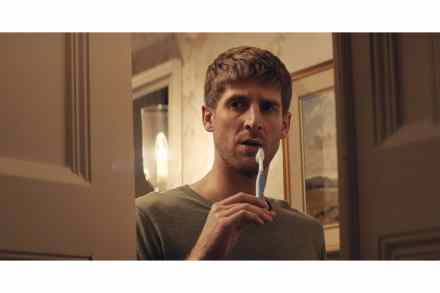
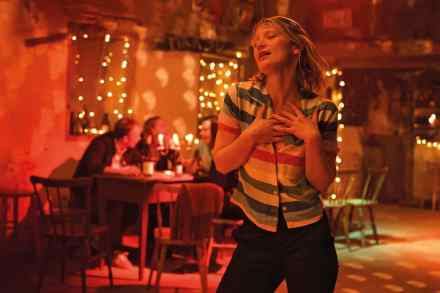
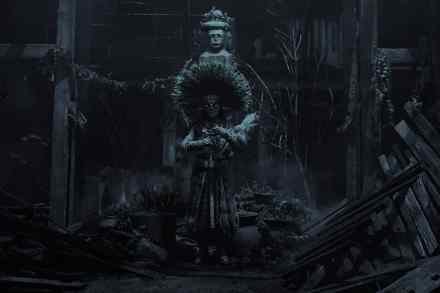
Black Bear is one of those indie dramas that is meta on so many levels you can either sit with it afterwards or, if you’re weak like me, you’ll immediately turn to the internet for an explanation and may even find yourself buried deep in one of those Reddit threads that will make you wish you’d had the strength to just do the sitting. This is a compelling film in its way, and it’s well performed, with a surprising reset midway through, and you don’t have to fully understand a film to enjoy it. But if I’m honest? I do feel a little bit cheated when an interpretation or ending isn’t fully nailed down. My limitation, I’m sure.

Best served cold: 10 films about revenge

The plot of Academy Award nominated Promising Young Woman (finally available to watch on Sky Cinema and NOW TV) centres on Cassie who adopts a novel approach to avenging the rape of her friend. Revenge has featured as a key theme in literature and drama virtually since writing began, from Euripides (Medea) and Seneca (Thyestes) to Shakespeare (Titus Andronicus), Alexandre Dumas (The Count of Monte Cristo) and more recently Gillian Flynn (Gone Girl). The Jacobean era (1603-25) saw an intense interest in retribution as the subject matter for plays, with a fair few still performed to this day, works such as The Duchess of Malfi (John Webster), 'Tis Pity She's a Whore (John Ford) and The Malcontent (John Marston).

Clever, funny and stomach-knotting: Promising Young Woman reviewed

Promising Young Woman is a rape-revenge-thriller that has already proved divisive but is a wonderfully clever, darkly funny, stomach-knotting — my stomach may never unknot — exploration of what #notallmen seem to get: it isn’t OK to have sex with a woman who has had a few too many and isn’t in a position to give consent. Unless, of course, she is also out late at night and wearing a short skirt in which case: asking for it. We all know that. This is written and directed by the extraordinary polymath that is Emerald Fennell, who was head writer for the second series of Killing Eve, has collaborated with Andrew Lloyd Webber on his forthcoming Cinderella, and is a novelist and actress.

Eat. Sleep. Repeat: 10 films that play with time

Over the recent long months of lockdown, many may feel that they are stuck in their own personal Groundhog Day. With working from home and the few opportunities for travel or socialising, life, for some, has become a matter of dull routine. It's somewhat of a surprise, then, that the well-worn genre of the time loop movie, where protagonists are doomed to live one single day time after time, is striking a chord. Recent comedy Palm Springs has had plenty of attention from critics, perhaps because it resonates so strongly with our lockdown experience. On the face of it, this genre is a recipe for monotonous viewing, but it is to the credit of filmmakers that many have played out the concept in ingenious ways.

The necessary politics of Promising Young Woman

Last month there occurred an event so culturally seismic that it made, well, a barely perceptible dent on the news headlines. Not just one but two actual women were nominated for the Best Director Award at the Oscars, a category that has for many years now been open to five nominees. It was the first time that two women have ever made it into contention in the same year and, by their audacious presence at the top table, Emerald Fennell (Promising Young Woman) and Chloé Zhao (Nomadland) have at a stroke increased the number of women the Oscars have ever nominated for this prize from five to seven. (Only one, Kathryn Bigelow, for The Hurt Locker, in 2009, has won).  Given that 2021 will see the 93rd iteration of the Academy Awards, that’s not bad going.

Riveting and heartbreaking: Sound of Metal reviewed

The multi-Oscar-nominated Sound of Metal stars Riz Ahmed as a heavy-metal drummer whose life is in freefall after losing his hearing. Ahmed learned to play drums for the part. And he learned American Sign Language. And he learned to perform with white noise in his ears. However, he did not have to learn how to be riveting because, if you’ve followed his career, you’ll know he’s been that since day one, and he is magnificently, powerfully, heartbreakingly riveting here. If he doesn’t win the Oscar I’ll be furious. That counts for nothing, I know. But it had to be said. It is directed by Darius Marder, who co-wrote the screenplay with his brother, Abraham Marder. At the outset Ruben (Ahmed) plays in a band with his girlfriend, Lou (Olivia Cooke).

The Mozarts of ad music

It’s Christmas 2020 and Kevin the Carrot is on a mission. Snow swirls, ice glistens and roast turkeys and cold cuts wait on the table, bathed in cosy firelight. The visual symbols of Christmas are all present and correct in the big Aldi seasonal advert, but what pulls them together is the music. A hint of John Williams on a solo horn, a burst of swashbuckling rhythm; symphonic strings as our vegetable hero makes it home. It’s all there, sumptuously scored and precisely gauged to make you feel that in 30 seconds, you’ve experienced an epic. And then, of course, to go out and buy parsnips. ‘I was lucky, because the mood had already been chosen,’ says Guy Farley, the composer who wrote that score.

The best cop dramas to rival Line of Duty

As the sixth series of Line of Duty heats up, the good old police procedural drama is clearly back in fashion. If you need an additional fix before the next helping from AC-12, here are our favourite cops on television: Jimmy McNulty, The Wire https://www.youtube.com/watch?v=-otZBORF0JY As a rule of thumb, fictional cops tend to gravitate towards two moral archetypes: rule-breaking mavericks at one end and corrupt cynics at the other. But David Simon’s seminal work about the city of Baltimore blew that spectrum wide open, showing its various police teams as every bit as complex and compromised as the criminals they pursued.

Zippy and stylish, with a glint of mischief: William Forsythe’s The Barre Project reviewed

In the early Noughties there was a Hollywood subgenre (by which I mean a few cult movies, each with terrible sequels) about ballerinas who shake off their classical shackles and liberate the cool girl within. The crown jewel is Center Stage, in which an aspiring prima sticks it to her ballet masters after they affront her with some light criticism of her turnout. She’s not some faceless, uptight swan! She’s a free spirit who dances for fun, as signalled by the presence of not one but two Jamiroquai songs on the soundtrack.

Why is cinema obsessed with remakes?

The game is afoot! Yes, yet again! Hot on the hob-nailed heels of Enola Holmes, the Netflix film about the great detective’s younger sister, comes yet another spin on Sherlock. This time the streaming service brings us The Irregulars, a gaggle of Victorian urchins hired by Dr Watson to investigate crimes with a supernatural element. Elementary, you might say. Though I won’t, because it’s so tired and clichéd. And this convoluted Conan Doyle cash-in isn’t just jumping the shark — the producers of The Irregulars are so far gone, they’ve cleared the wall of the orcas’ tank and have beached themselves in the carpark. ‘Whatever is it like in your funny little brains?’, as Benedict Cumberbatch’s Sherlock said.

What Chariots of Fire can teach us about identity politics

Next week marks the 40th anniversary of Hugh Hudson’s Chariots of Fire, the Oscar-winning true tale of Olympic glory which captured the affections of critics and mass audiences alike. Fondly cited by everyone from Maggie Thatcher to Joe Biden, parodied by Mr. Bean, beloved and bemoaned for its Vangelis score and heightened slow-mo cinematography, Chariots reliably jerks tears from most filmgoers of a certain generation. Yet, four decades on, the film has lost none of its vitality, even for the newcomer. Indeed, so far from being a faded relic of its era, it still crackles with a sharp and nuanced screenplay that offers particularly apt food for thought in a news age dominated by debates over discrimination, both racial and ideological.

10 conspiracy thrillers to watch this weekend

Whilst the genre has never gone out of fashion, the 1970s were seen by many as a Golden Age of the paranoia-thriller, with Watergate, the Vietnam War and speculation about the Kennedy assassination leading to classics such as The Parallax View (1974), Three Days of the Condor (1975), Winter Kills (1979) and others. For this piece, we will look at more recent conspiracy-driven motion pictures, which have all used technological advances and the ‘surveillance society’ as a way of ramping up the paranoia.

The fossil-hunting is more interesting than the sex: Ammonite reviewed

Ammonite is writer-director Francis Lee’s second film after God’s Own Country, one of the best films of 2017, and possibly the best film about a closeted gay Yorkshire sheep farmer falling for a migrant worker ever. This is another unlikely romance, but set in the 19th century between the real-life palaeontologist Mary Anning (Kate Winslet) and real-life Charlotte Murchison (Saoirse Ronan), whose wealthy husband had an interest in geology. Mary and Charlotte were friends yet there is no historical evidence they had an affair. This is all poetic licence but told so poetically you will substantially buy it, albeit with a few reservations. Plus it’s Winslet and Ronan and while I’m not usually a sucker for BOGOF offers, you’d surely be crazy to turn this one down.

Why are the Oscars such a lousy guide to great cinema?

Chloé Zhao’s Nomadland, predicted to win big at this year’s Oscars, is not a terrible film. It’s a slight, sentimental Grapes of Wrath-ish journey through the Discourse, with essential Discourse stop-offs at an Amazon warehouse and the rust belt. It belongs in the New Yorker, not on screen. As with almost every film to win big since No Country for Old Men 13 years ago, you just think: the ‘highest honours in filmmaking’? For that? Amid all the change that’s being trumpeted at this year’s Oscars — more women directors, more ethnic minorities — the one thing missing is any discussion about why the awards are such a lousy guide to great cinema.

Awards season loses its shine when no one can go to the cinema

Here it is again, a couple of months later than usual but back nevertheless. It’s the time of the annual jamboree that is film awards season, a three-month extravaganza that predominantly revolves around three key events: the Golden Globes, the Baftas and the Oscars. All three of these celebrations of artistic excellence and mutual backslapping have been delayed due to Covid. The Globes took place — virtually — three weeks ago, Bafta revealed its shortlist last week and the Oscar nominees were announced on Monday. The starting gun has been fired — while all our cinemas remain closed. Have you seen Nomadland, The Father or Promising Young Woman? Of course you haven’t. No one, apart from the critics, has been afforded the opportunity.

Spellbinding: Preparations to be Together for an Unknown Period of Time reviewed

The premise for the unsnappily titled Preparations to be Together for an Unknown Period of Time is this: a Hungarian neurosurgeon meets a fellow Hungarian neurosurgeon at a medical conference, falls in love, and gives up her shiny life and career in America to be with him in Budapest. They had agreed to meet on one of the city’s bridges. He doesn’t show. She tracks him to the hospital where he works. He says he’s never met her before. And now we are on board. Now we have to know: is he gaslighting her? Is she crazy? How is this going to play out? This is one of those films that has you in the palm of its hand right from the off.

The best film of the year: Judas and the Black Messiah reviewed

Judas and the Black Messiah is a biopic about Black Panther leader Fred Hampton, but it’s not your regular biopic because it’s told as crime thriller, through the eyes of a snitch, who may be found out at any minute. This film says what it has to say — about race, injustice, police brutality — but excitingly, thrillingly and non-formulaically. It’s the best film of the year so far, which may not be saying much, given how few films have been released, but you get the sentiment. (The Bond film No Time to Die has been postponed so many times I fear none of us will see it in our lifetimes.) Directed by Shaka King, and written by King, Will Berson, Kenny Lucas and Keith Lucas, the film is based quite accurately, as far as I can fathom, on true events.

It’ll please small kids, but they’re never to be trusted: Raya and the Last Dragon reviewed

Raya and the Last Dragon has everything you might want nowadays from a major Disney film — feisty kick-ass heroine, non-white representation, a narrative that isn’t hung up on romance — but no one involved appears to have asked themselves: do we have an interesting story? Do we have any fresh ideas? Is it fun? This may please very small kiddies who don’t know any better, and there are plenty of them about, but Raya’s not a classic in the making. It’s gorgeously depicted, needless to say, but disappointingly unanimated in all other ways. While this film may please small kiddies, remember: they are not to be trusted.

Contains nothing you couldn’t get from Wikipedia or YouTube: Netflix’s Pelé reviewed

Pelé is a two-hour documentary about the great Brazilian footballer — the greatest footballer ever, some would say — who played in four World Cups (a record) and was one of the first global sporting superstars. But while there is plenty of footage showing his astonishing talent, if you’re interested in what made him tick, or what his life was like off the pitch, or how adulation might ultimately mess with your head, then move on, nothing to see here. Or, to put it another way, if, like me, you’re the sort of person who goes straight to ‘Personal life’ whenever you look someone up on Wikipedia, it’s as if that section has been excised. However, if you are not that sort of person, you may come away more satisfied and less bored.

Assassins on screen: from Phoebe Waller-Bridge to Samuel L. Jackson

After Killing Eve, Phoebe Waller-Bridge goes back again to the contract killer well with her upcoming TV re-boot of the 2005 Brad Pitt/Angelina actioner Mr & Mrs Smith. Waller-Bridge will write and co-star with Atlanta’s Donald Glover, who also featured with her in the underwhelming Star Wars prequel Solo (2018). Could this be third time lucky for a TV take on the uxorious assassins? We’ve already had a 1996 series that predated the movie (starring Scott Bakula and Maria Bello) and a 2007 show that never went beyond Doug Liman’s (who also directed the 2005 picture) pilot movie – with Martin Henderson and Jordana Brewster as the titular couple.