Film

‘You should see some of the other scripts that come through’: Robert Carlyle interviewed

‘I always feel slightly sick when I hear actors talking politics,’ says Robert Carlyle — that polished Glaswegian burr sounding no less arresting over a slightly patchy Zoom connection. ‘I mean we’re all entitled to an opinion,’ he continues, sounding for a second as though he might be about to opt for a more diplomatic track. ‘I just find that too many actors find it difficult to get theirs across without sounding like a twat.’ It’s a fair point, you might think. But for Carlyle, it’s also been a good professional move. Reflecting on his career, he credits this aversion to mouthing off with inspiring his long-term commitment to keeping his head down.

Hang in there for the gripping final half an hour: The Last Duel reviewed

Ridley Scott’s The Last Duel is set in the 14th century and is a tale of rivalry and rape told from three points of view, when two would probably have been sufficient. The best is saved to last, perhaps unforgivably. It’s the woman’s story, starring Jodie Comer who is sensational, so do hang on in there for that. However, I can’t guarantee that you won’t have severe battle-scene fatigue by then.

If it were any better, it would actually be a terrible pity: Diana – The Musical reviewed

This week, an excellent film (Moving On) and a film that isn’t at all, but is entirely worth it as it’s one of the super bad ones that don’t come along too often. It’s the kind that, if it were any better, it would actually be a terrible pity. (See also: Cats.) It’s Diana: The Musical and it’s two hours of ‘whaaaaaat?’ and pinching yourself that this is really happening. (After two hours I was black and blue, with the pinching.) I don’t know what the best lyric is but ‘Harry, my ginger-haired son, you’ll always be second to none’ has to be up there. (Also: ‘It’s the Thrilla in Manila but with Diana and Camilla’ has to be in the game. The top spot is highly contested.

In blockbuster Britain, the BBC is being left behind

There’s a great revival under way in the British TV and film industry, but it’s not the BBC that’s behind it. Netflix is normally secretive about its figures but this week published a list of its most popular shows and top of the pile is Bridgerton, which imagines Regency London as a racially mixed society. Although funded with US money, it is shot in Yorkshire with a British cast, using British technical know-how, and, thanks to Netflix’s global audience of more than 200 million, this British show has now become the most-watched series in the history of television. Not so long ago, it was argued that subscription television would never work in Britain because we had all the broadcasting we could wish for.

The BBC is being left behind in blockbuster Britain

There’s a great revival under way in the British TV and film industry, but it’s not the BBC that’s behind it. Netflix is normally secretive about its figures but this week published a list of its most popular shows and top of the pile is Bridgerton, which imagines Regency London as a racially mixed society. Although funded with US money, it is shot in Yorkshire with a British cast, using British technical know-how, and, thanks to Netflix’s global audience of more than 200 million, this British show has now become the most-watched series in the history of television. Not so long ago, it was argued that subscription television would never work in Britain because we had all the broadcasting we could wish for.

The secret spy films made by MI6

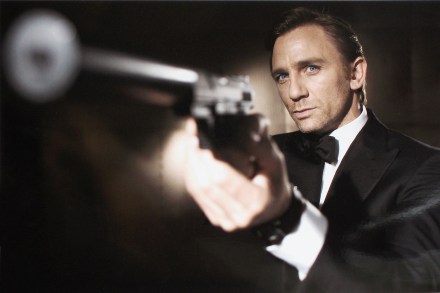
Those attending the premiere of No Time to Die this week would perhaps be surprised to learn that the Bond films were once considered to be a national security threat. In the 1960s, with the image of Cold War espionage increasingly becoming shaped by films like Dr No, and TV series like Danger Man and The Avengers, MI6 feared that campy pulp fiction would drown out the real threat of Communist subversion. ‘The biggest single risk to security at the present time,’ one Whitehall report argued, ‘is probably a general lack of conviction that any substantial threat exists.’ ‘The master spy’, the intelligence services complained, ‘seems as much a part of bad fiction as the master criminal.

Delivers in spades: The Many Saints of Newark reviewed

So how exactly did Tony Soprano become a New Jersey mob boss? It’s 1967 and young Anthony is struggling to find meaning and purpose in his life. Luckily, his doting uncle Dickie Moltisanti (Alessandro Nivola) offers the love and support his feckless parents are incapable of giving. Unluckily, Moltisanti is not quite the role model he’d like to be. Dickie complains about this on a visit to his uncle, Aldo ‘Hollywood Dick’ Moltisanti (Ray Liotta), who is languishing in jail for having killed a made man.

A pep-talk nightmare: Everybody’s Talking About Jamie reviewed

It’s a hard heart that doesn’t warm to the musical drama Everybody’s Talking About Jamie. I don’t have a hard heart, and I was warmed, but I also have an impatient heart and my patience was sometimes tested. There’s a point in this film where you might, for example, be asking yourself: do we really need yet another song about empowerment set in the school canteen? Or: can we not have another a pep talk about being true to yourself? On reflection, I would say my heart was only around 42 per cent warmed, at a guess. The starting point for the whole Jamie phenomenon was a BBC3 documentary about a working-class 16-year-old from Sheffield, Jamie Campbell, who aspired to be a drag queen and wanted to go to his school prom in a dress.

Why The Sopranos remains the greatest gangster drama of all time

The Sopranos is called the greatest television show in history. It is the tale of Anthony ‘Tony’ Soprano, a middle-aged man in psychotherapy who also happens to run a New Jersey crime family. Anthony means ‘priceless’; the choice of name is surely deliberate. The Sopranos is complex — all masterpieces are — but it is fundamentally about greed: for money; for sex (the crew inhabit the Bada Bing! lap-dancing club, where breasts are landscape); for alcohol; for power; for the base drug of food. In the first episode Tony, who is played by James Gandolfini as a human devil, all need and charm (he is defiantly sexy with his fat hands and dachshund’s eyes), is almost human-looking. By the end, he is immense.

Intensely powerful: Herself reviewed

Herself is an intensely powerful film about domestic violence that isn’t Nil By Mouth or The Killer Inside Me or any of the other films that have you begging: ‘Oh, sweet Jesus, please make this stop.’ Actually, it starts like that, but then becomes something else — something that never loses sight of why we’re here but is also an uplifting tale about a woman who wants to rebuild her life by building a home. And now I’ve made it sound like some cheesy, feelgood monstrosity. Trust me, it isn’t. Herself is produced by Sharon Horgan and directed by Phyllida Lloyd (The Iron Lady, the Mamma Mia! franchise) because women make films from top to bottom these days. Get over it. (Below-the-line commenters: I said this just to bait you.

A fantastical fever dream that’s hard to follow or enjoy: Annette reviewed

Leos Carax is the director whose films have always been wilfully odd. Ron and Russell Mael (the brothers from the band Sparks) have also always been wilfully odd. Annette is a collaboration between the three and is therefore wilfully odd in spades. Starring Adam Driver and Marion Cotillard, it is a fantastical, fever-dreamish, sung-through rock opera and I bet you won’t see a more wilfully odd film this year. As regular readers will know, I am generally fond of any film that busts all known Hollywood formats. Yet while I tried with every fibre of my being to like Annette I did not entirely succeed. The original idea came from the Mael brothers who are currently enjoying a moment, having been the subject of a recent Edgar Wright documentary.

My literary heroes have led me astray

Gstaad   Good manners aside, what I miss nowadays is a new, intelligent, finely acted movie. Never have I seen so much garbage as there is on TV: sci-fi trash, superhero rubbish, dystopian crap and junk about ugly, solipsistic youths revolting against overbearing parents. The director Jimmy Toback blames the subject matter for the lousy content, driven as it is by the need for diversity. I think lack of talent is the culprit. The non-stop use of the F-word is a given in Hollywood productions. Combined with constant violence, it makes for a lousy and unwatchable film.

The genius of Basic Instinct

Our occasional series on cinema’s most underrated films arrives at what many have considered the peak of misogynistic trash.  We’re in 1980s America, and a bunch of Hollywood execs are puffing on cigars, sipping scotch. ‘You know, I’ve been hearing a lot about these so-called “liberated women”. What do you think they’re like?’ And thus — or so I imagine — the erotic thriller was born.  Everything we’ve learned from the #MeToo accusations, scandalous trials and casting-couch innuendos suggests powerful men might have been shocked to learn that there were women engaging in sexual activity voluntarily — without having to be coerced or forced.

An intensely quiet and soulful performance from Nicolas Cage: Pig reviewed

What use does a fallen and corrupted world have for a man of integrity? This was not the question I had anticipated walking away with after viewing the new Nicolas Cage indie Pig, but much of the film, from Cage’s intensely quiet and soulful performance to the new ideas it has to offer a very old narrative, was a satisfying surprise. The film is ultimately a story of revenge, but it plays out in unexpected ways. Cage is Robin Feld, a man living off the grid with only a truffle pig and a recording of his deceased wife for companions and a trade in the luxury food item as an income. But when his cabin is invaded and he is attacked and his pig is abducted, he’s forced to con-front his old life as a chef in Portland to get her back.

The best Cold War thriller I’ve seen that I fully understand: The Courier reviewed

The Courier is a Cold War spy thriller and the prospect of a Cold War spy thriller always makes my heart sink. There will be agents. There will be double agents and triple agents and maybe even quadruple agents. Is he working for our side while pretending to work for the Soviets as someone pretending to be working for us? After any Le Carré adaptation, for example, I also need debriefing in a wood-panelled room filled with cigarette smoke and there is still no saying I’ll emerge any the wiser. But The Courier isn’t like that. This is a damn good, explosively tense story that focuses on the friendship that develops between two men on opposite sides. And it is plainly wonderful.

Mesmerising and monstrous: @zola reviewed

The distinction between on and offline life blurred long ago. The greatest spats, sexual self-fashionings and mad soliloquies now unfurl on social media. The splenetic rhythms and fundamental shallowness of this medium make it a questionable source for art, but Janicza Bravo’s @zola — the first film ever released based entirely on a series of viral tweets — makes a tight, original fist of such material. @zola is A’Ziah ‘Zola’ Wells King, who in 2015 as a 19-year-old exotic dancer and stripper living in Detroit unleashed a 148-tweet thread, billed as #thestory, which detailed a chain of nasty but fascinating events during a surreal trip to Tampa.

When family viewing was full of creeping menace

Strange, really, that the scheduled output of traditional broadcasters became known as ‘terrestrial’ television, given that TV is an etheric medium and nowadays exclusively a digital one. Or perhaps it’s not so strange at all. Television is ‘bonded to the earth’, writes Rob Young, whose roving survey of small and silver screen creativity between the 1950s and 1980s seeks to connect those airborne signals to the soil beneath our shoes. Young’s first book, the excellent Electric Eden, rummaged around the untrimmed hedgerows of the British psyche via the medium of folk-related music. The Magic Box has a similar aim.

I laughed quite a lot when I shouldn’t have: Old reviewed

The biggest challenge in reviewing M. Night Shyamalan’s Old lies in describing its central idea without making the film sound considerably cleverer and more interesting than it is, but I’ll give it my best shot. Just remember: if I fail, and Old does sound clever or interesting at any point, it totally isn’t. This is directed and written by Shyamalan who is one of the most consistently inconsistent of film makers (Sixth Sense, good; The Village, so-so; Last Airbender, let’s never talk of it again). The central idea has it that a group of holidaymakers are trapped on a tropical, secluded beach where ageing is accelerated and, as they discover, every 30 minutes there amounts to a year.

Quietly devastating: Nowhere Special reviewed

Off the Rails is one of those gentle ensemble comedies that we do so well (Calendar Girls, The Best Exotic Marigold Hotel, etc.), except when we don’t, and it all falls rather flat, and feels like the B-side of a Richard Curtis film. This comes in, alas, at the flatter, B-side end of the spectrum, even if its heart is in the right place and all the other things you say when a film doesn’t deserve a kicking. But you can’t really say it’s any good. Plot-wise the deal is: to comply with the dying wish of their best friend, Liz (Sally Phillips), Kate (Jenny Seagrove) and Cassie (Kelly Preston) must take her 18-year-old daughter, Maddie (Elizabeth Dormer-Phillips), on the interrailing trip around Europe that they never quite finished when they were young.

Wallace Shawn’s Designated Mourner feels like watching the news

Pity the aesthete, the flâneur and the opera-goer. Those who find the contents of their own heads so dull and mundane they must fill them instead with the fantastical inventions of our most extravagant lunatics. They have been locked out of the theatres and cinemas and public spaces that make them feel at their most alive and abandoned to the content programming of Netflix and whatever Tenet was supposed to be. They’ve been deprived, sheltered, cut off from the only thing that gives their lives meaning. I’m describing me. I’m asking you to feel sorry for me.