Gavin Smith

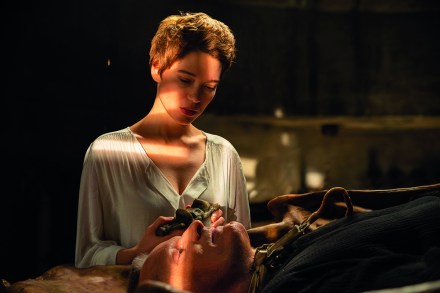
Crimes of the Future is David Cronenberg at his best

Canada’s all-time greatest writer-director has come a long way since his film Videodrome proclaimed “Long live the New Flesh” nearly forty years ago. Because his films are often horrifying, many mistake David Cronenberg for a purveyor of horror films, and to be sure he singlehandedly invented the now-fashionable “body horror” genre. But only a few of his films are horror movies per se, and they are way in the past. The subsequent fifteen aren’t so much scary as disturbing: think the experimental gynecological implements in Dead Ringers. And a couple are unapologetically transgressive: think the death-by-car-accident fetishists in his 1996 adaptation of J.G. Ballard’s Crash.
cronenberg

You had to be there

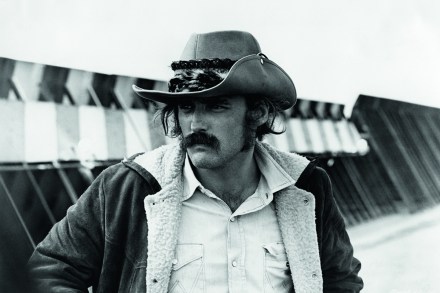
Do you worship Dennis Hopper? Do you get your kicks from sagas dedicated to the lives of the rich and famous? And do you eat up rehashed accounts of the far-out West Coast zeitgeist in the 1960s? If so, Mark Rozzo’s Everybody Thought We Were Crazy is the book you’ve been waiting for. Rozzo starts in medias res: it’s November 1961, and Bel Air is burning. As the firestorm approaches, Hopper and his unlikely wife, blue-blooded poor-little-rich-girl Brooke Hayward, grab her kids and abandon their house — but not before Hopper grabs a Milton Avery painting and throws it in the back of the car.

rozzo

Sundance memories

In 1969 Robert Redford purchased 5,000 acres of land in the mountains of Utah and built a ski resort. In 1981 he founded the nonprofit Sundance Institute to cultivate new voices in American independent film through annual directing and screenwriting labs (alumni include Quentin Tarantino and Paul Thomas Anderson) and to provide financial support for select projects. In 1985 Redford took over the US Film Festival, based in nearby Park City, and brought it under the Sundance umbrella. In 1989, the festival had its breakthrough with Sex, Lies, and Videotape. Sundance became a film-industry fixture for talent scouts, acquisitions executives and journalists, particularly those inclined to go skiing in their downtime.

sundance

Make the audience happy

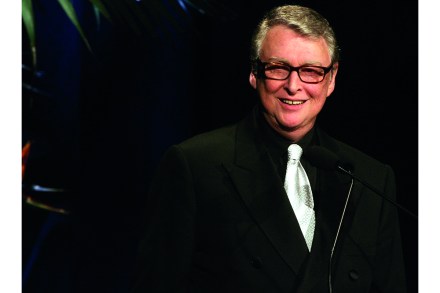
His name was Igor Michael Peschkowsky. When he was five he lost his body hair after an allergic reaction to a whooping cough vaccination and wore a hairpiece and false eyebrows for the rest of his life. In 1939, aged eight, he escaped from Nazi Germany on an ocean liner bound for New York. He never mastered cursive handwriting. He was a cousin of Albert Einstein. Richard Avedon became his social mentor. He dated Gloria Steinem. He passed on directing The Exorcist. In the end he became an EGOT, having won an Emmy, a Grammy, an Oscar and a staggering 10 Tony Awards. In this exhaustive, emphatically chronological biography, Mark Harris recounts Mike Nichols’s rags-to-riches life and professional and personal highs from birth in 1931 to memorial service in 2014.

mike nichols