Fascism

One of history’s saddest chapters

One afternoon in the early 1990s, an elderly gentleman from Alicante told me of the tragedy that had occurred at his city’s port on the last day of the Spanish Civil War. He pointed towards the docks and in a hurried whisper spoke of the many thousands of desperate Republicans who had gathered there at the end of March 1939, their eyes searching the horizon for the promised ships meant to carry them to safety abroad. The rest of their territory had fallen to Franco, his execution squads busy eliminating remnants of the ‘anti-Spain’; Alicante would be the last corner to fall into the caudillo’s hands. Yet as the hours

Bowie once praised Adolf Hitler… but he was always changing his tune

[audioplayer src=”http://rss.acast.com/viewfrom22/projectfear/media.mp3″ title=”Rod Liddle and Kaite Welsh discuss David Bowie’s legacy” startat=678] Listen [/audioplayer]I was desperately worried that you hadn’t read or heard enough platitudinous drivel about David Bowie — and therefore felt compelled to weigh in with my own observations. In all honesty I haven’t heard so much repetitive, imbecilic guff since Mandela shuffled off this mortal coil. It was even worse than the confected sobfest that greeted the passing of the charming and likeable Lou Reed. The eulogies for Lou were simply a case of the BBC telling everybody that they are dead hip and edgy, really enjoyed ‘Perfect Day’ and once knew someone, back in uni, who

Of hearts and heads

Like most trade unionists in the 1970s and 80s I worked with a fair few communists. Men like Dickie Lawlor, Jock Cowan and Maurice Styles, postal workers for whom all events were viewed through the prism of ‘scientific socialism’. Communism gave them a philosophy by which to live their lives, and they were respected as men of principle even by those who abhorred their politics. Marx may have disparaged religion as the opiate of the people (and, in an even more memorable phrase, the sigh of the oppressed), but it was difficult to avoid the term ‘religious zeal’ when describing the way men like Dickie, Jock and Maurice approached their

The continent in crisis

Sir Ian Kershaw won his knight’s spurs as a historian with his much acclaimed two-volume biography of Hitler, Hubris and Nemesis. He is now attempting to repeat the feat with a two-volume history of modern Europe, of which this is the opening shot.Inevitably, the figure of the Führer once again marches across Kershaw’s pages as they chronicle the years dominated by Germany’s malign master. First the Great War that gave Hitler his chance to escape obscurity, and then the greater one he launched himself. Opening with the continent’s catastrophic slide into generalised conflict in 1914, Kershaw apportions blame or the disaster more or less equally to all the combatant nations.

Double thinking, double lives

This hefty volume is misleadingly titled. It is not an escapist sort of travel book, ushering the visitor around the homelands and houses of the Italian literati. It is a selection of the author’s previous literary articles, mostly book reviews for the New York Review of Books and the London Review of Books, and believe me it is hardly a sunshine ramble or a splash in the pool. On the contrary, it is an immensely learned, elegantly written rehearsal of the significance of 23 Italian writers, from Dante in the 13th century to Antonio Tabucchi in our own, and as such it amounts I think to an assessment of the

Common sense suggests Britain's economy doesn’t depend on the EU

They say you have to be nearly 60 to have voted in the 1975 referendum. I voted in that referendum. I was 12. My mum had forgotten her glasses. We were a Labour household and as we left the polling station she said, ‘You did vote “in”, like Harold Wilson suggested?’ ‘No,’ I replied, ‘I’m with Tony Benn. I want “Out”’. Benn wasn’t right about much but he asked three good questions about the Common Market. Who appointed these people? What are the limits to their power? How do we get rid of them? Satisfactory answers are still unforthcoming. And his clear-headed approach may persuade others of the need to quit.

Dedicated follower of fascism?

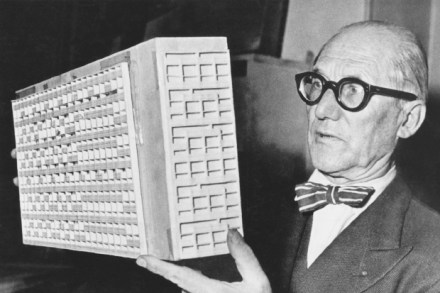
The ‘revelations’, 50 years after he drowned, that Le Corbusier was a ‘fascist’ and an anti-Semite are neither fresh nor startling. Indeed they’re old hat. And it defies credibility that the authors of three recent books about this tainted genius were ignorant of what anyone with even the frailest interest in architects’ foibles and tastes has been aware of for years. Not that this has deterred them; nor has it deterred newspapers from filleting the books for supposedly sensational titbits. What next? The hot news that the cuckold Carlo Gesualdo murdered his wife and her lover? That Jean Genet has been discovered to have been, you know, on the light-fingered

The siege in a kosher shop in Paris proves why Israel needs to exist

As I write a siege is ongoing in a Kosher shop in Paris.  In France, Belgium and across Europe in recent years, Jews have repeatedly been the targets of Islamist attack.  They always are.  Last year saw the largest upsurge of anti-Semitic hate crime on record even in the UK. But it is the continent that has seen the worst and growing litany of attacks.  In 2012 Mohamed Merah killed three Jewish children and a teacher at a Jewish school in Toulouse.  In May last year three people were shot dead by an Islamist gunman at the Jewish museum in Brussels. During the twentieth century Judaism on the continent of Europe

Ezra Pound – the fascist years

‘There are the Alps. What is there to say about them?/ They don’t make sense. Fatal glaciers, crags cranks climb, /Jumbled boulder and weed’, was Basil Bunting’s 1949 opinion of Pound’s Cantos; but as the sometime friend of Pound continued: ‘There they are, you will have to go a long way round / If you want to avoid them.’ This judgment has proved wise. Here we are in 2014, not avoiding one of the most contentious figures in 20th-century literature: poet, midwife of Eliot’s The Waste Land, economist, translator, committed Fascist, anti-Semite, avid supporter of James Joyce and Mussolini, later alleged traitor to the United States of America and —

Hitler’s Valkyrie: Unity Mitford at 100

On 8 August 1914, four days after the declaration of war, Unity Valkyrie Mitford was born, the fifth child and fourth daughter of David and Sydney Freeman-Mitford, who admired the actress Unity Moore. Grandfather Redesdale suggested Valkyrie, after his friend Wagner’s Norse war-maidens. The fact that Unity Valkyrie had been conceived in the town of Swastika, Ontario, where her father was prospecting for gold, made it all the more portentous. A few weeks after her birth, Unity and her mother (‘Muv’) joined ‘Farve’, who was with his regiment in Newcastle. His quarters were so cramped that Unity was laid to sleep in a drawer. But this was nothing to the

Don't tell schoolboys to call themselves feminists

In the Independent this week, Yvette Cooper suggested that British boys should grow up as ‘confident feminists’. They need to have lessons in feminism to help them learn how to treat women, she argued. But school shouldn’t be a place where you indoctrinate pupils to believe a particular ideology. And feminism, for all its admirable achievements in the 20th century, is an ideology. Compulsory sex education in which boys are taught to be feminists is beyond silly. By all means explain that they shouldn’t go round lifting up girls’ skirts for a peek, but it’s possible to do this without telling them they must call themselves feminists. They might not like

A Pole’s view of the Czechs. Who cares? You will

When this extraordinary book was about to come out in French four years ago its author was told by his editor that it was likely to fail miserably. As Mariusz Szczgieł explains, the doubts were reasonable. No one was sure if anybody in the west would be interested in what a Pole had to say about the Czechs: ‘A representative of one marginal nation writing about another marginal nation is unlikely to be a success.’ But in 2009 Gottland won the European Book Prize (a serious award; the late Tony Judt’s Postwar won it the previous year) and it has been well received throughout the continent. There must have been

Why has fascism failed in the United Kingdom?

Because, well, just look at them. These Young Spodes are not quite the Master Race are they? And this is the problem with extremism: it cannot avoid being ridiculous. I know there is never room for complacency but it’s hard to feel threatened by these Pythonesque boobies. Nor is the absurdity limited to the white right. The problem for Muslim extremists in Britain is they swank around the place in their kaftans claiming to be voice of the people (or “their” people) unaware that the people (including “their” people) neither recognise them nor want anything to do with them. In time, thanks to the good sense and humour of the

What would you call these people?

One of the most amusing ideas of the dim (as opposed to decent) left is that fascism is a force from the right at constant risk of re-eruption. So widespread has this idea become that even members of the Conservative party often feel forced to describe themselves as ‘centre right’ just so as to make clear they aren’t ‘right wing’ because ‘right wing’ is just in from ‘far right’ and ‘far right’ basically means fascist. However, one of the strange things about these so-called ‘anti-fascists’ is that their fascist sensors seem completely befuddled whenever they meet anybody who behaves distinctly fascistically yet is thought to come from ‘the left’. For

George Orwell's doublethink

This is the most sensible and systematic interpretation of George Orwell’s books that I have ever read. It generously acknowledges the true stature of the great works — most notably, Animal Farm, Down and Out in Paris and London and The Road to Wigan Pier. It rightly sees the second world war as having brought forth some of Orwell’s finest writing. Yet it does not deify him, and it acknowledges that this strange, drawling, gawky Etonian, who wore common sense like a carapace, was occasionally as capable as the next journalist of writing undiluted tosh. Witness his claim in an article of 1940 that if he thought a victory in

Why are Marxists and Soviet apologists regarded as harmless jokers?

I rather like Ed Miliband, and for what it’s worth I don’t think he has inherited much, if any, of his father’s rancid political views. Nevertheless the fact that Ed Miliband has often referred to his father’s thought makes Miliband Snr fair game in a way that other politicians’ parents might not be. But in the row over the Daily Mail / Ralph Miliband affair two things remain to be pointed out. The first relates to war service. Contra Emily Maitlis (among others) on last night’s Newsnight, it is perfectly possible to fight for a country in a world war and still hold values (then or subsequently) inimical to the country you fought

A great historian with fascist tendencies has died

A great historian has died. He joined the Nazi party in the 1930s, spurred by a fear of the communism which was then spreading through Europe. Although he survived for many decades to see the consequences of the ideology, he nevertheless remained nostalgic for, and loyal to, fascism. He also retained an active interest in the Conservative party and acted as a guru for a time to John Major, though he subsequently expressed disappointment at the direction of his leadership. In a statement the current leader of the Conservative party, David Cameron described the historian as: ‘An extraordinary historian, a man passionate about his politics and a great friend of

Review: In Times of Fading Light by Eugen Ruge – a tale of rebellion and conformity

In Times of Fading Light’s seven narrators exist in an almost permanent state of bewildered disappointment. Given that the narrators are various generations of the same family, what we’re shown is youthful hope turning recurrently to despair. The story begins in Berlin with Alexander, who is dying, visiting his now demented father, Kurt. This is 2001 and Kurt is at the end of his life, speechless and largely uncomprehending. Alexander, meanwhile, plans to elope to Mexico where his grandparents lived in exile almost 50 years previously. Walking his father through the streets of Berlin, he measures everything against the world he’d known before the fall of the Wall: ‘That was

Some anti-fascists are very fascistic

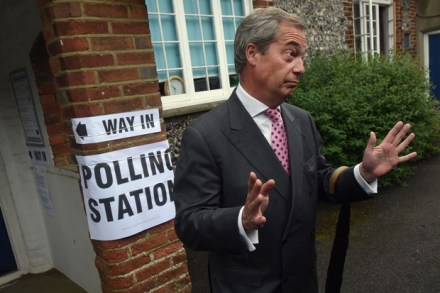
Nigel Farage has just met one of the most fascinating aspects of modern politics. He was surrounded in Edinburgh by left-wing ‘anti-fascists’ shouting ‘Racist scum. Go back to England’. The same mob also screamed ‘scum’ repeatedly at the top of their voice until they made him leave. This is probably the best demonstration so far of something which has gone un-remarked upon for too long. Among the closest thing we have to fascists in modern Britain are people who call themselves ‘anti-fascists’. Not all people who call themselves ‘anti-fascist’, thank goodness. But a sizable portion.  If you ever see these people in action you will notice that they behave in

Beppe Grillo: Italy's new Mussolini

The stand-up comedian Beppe Grillo, like the fascist dictator Benito Mussolini before him, has a craving to take over the piazza and mesmerise the crowd. Where once young Italians chanted the mantra ‘Du-ce! Du-ce!’ now they chant  ‘Bep-pe! Bep-pe!’. But it is not just a shared need to rant and rave at large numbers of complete strangers that hirsute Beppe and bald Benito have in common. Worryingly, for Italy and also for Europe (where democracy seems incapable of solving the existential crisis), there is a lot more to it than that. Beppe Grillo founded the MoVimento 5 Stelle (M5S) in Milan on 4 October 2009. The capital ‘V’ stands for