Fascism

The Venice Ghetto was a landmark in the history of Jewish persecution

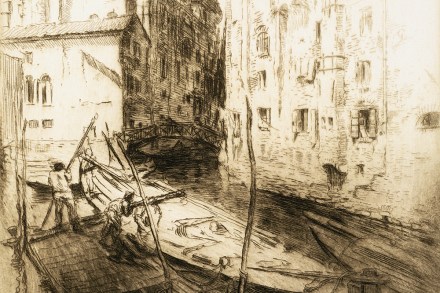
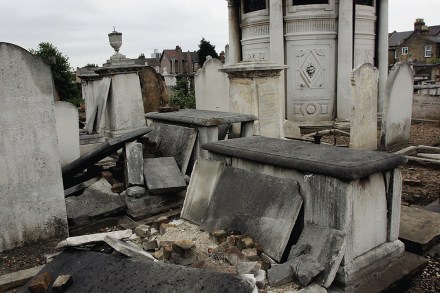
The word ‘ghetto’ is said to derive from the Venetian dialect term for ‘foundry’: ghèto. In the early 16th century, on the orders of the Doge, Jews were herded en masse from the centre of Venice to the Ghetto Nuovo, or New Foundry district, where metal workers had long cast cannon for the Venetian fleet. The Ghetto – the first of its kind on the Italian peninsula and anywhere in the world – became a model for segregated Jewish quarters throughout Europe. It was soon blighted by poverty, malnutrition and disease. The Ghetto Nuovo was a landmark in the history of Jewish persecution. In this fascinating history of the New

Blitz spirits: Nonesuch, by Francis Spufford, reviewed

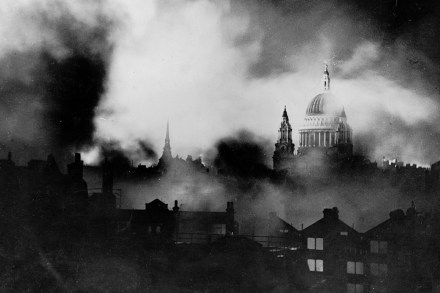
If you read books for a living, the calling probably started with a moment of utter entrancement: a novel you couldn’t bear to set down; a few unforgettable days, as Bleak House, Earthly Powers, The Woman in White or Titus Groan worked its unsuspected magic on its millionth reader. Such books are rarer these days, but they do still happen, and Francis Spufford’s Nonesuch is an absolute corker. Randall Jarrell once wistfully imagined a novel that would ‘bear up under the weight of hundreds of thousands of readers a plot that higher critics could call crude and that bewitched families could pad over in house slippers’. Nonesuch does the trick,

Marvellously conservative: Cable Street reviewed

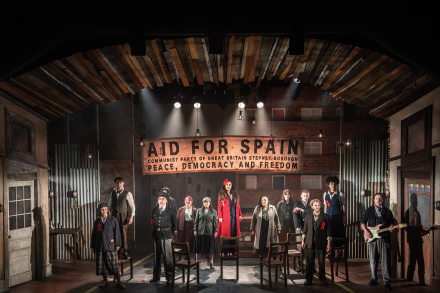
Cable Street is a musical that premièred last year at the Southwark Playhouse and has now migrated to the Marylebone Theatre. Fans of beautiful staging will be instantly smitten by the amazing achievement of the designer, Yoav Segal. The script by Tim Gilvin and Adam Kanefsky tells the story of a violent stand-off in October 1936 between cockney activists and Oswald Mosley’s British Union of Fascists. The authors treat the East End during the depression as a panto or a moral fairy tale. It’s good vs evil. The socialists are hard-working, golden-hearted heroes who rise up against the wicked landlords and their cruel rent hikes. The fascists are angry, misshapen

The key to Giorgia Meloni’s resounding success

Giorgia Meloni has emerged as one of the most significant politicians in Europe since she became Italy’s first female prime minister in October 2022. I Am Giorgia, already a bestseller in Italy, is her account of how a short, fat, sullen, bullied girl – as she describes her young self – from a poor, single-parent family in Rome managed to do it. Her explanation is that she refused to play the victim, and found iron in her soul – even if, as she admits, she has never found happiness. It is an amazing story: how she transformed from an ugly duckling into the swan who is now a familiar figure

Jonathan Bowden: my eccentric school friend who became a far-right hero

When my old school, Presentation College, Reading, was demolished a decade ago, the Labour council desperately searched for famous old boys after whom they could name streets on the housing estate that replaced it. This was a challenge. According to the local newspaper, ‘names rejected include one in recognition of Mike Oldfield, the musician behind ground-breaking prog rock album Tubular Bells’ – rejected by Oldfield, I assume, since he hated the school. They settled on Bowden Row, ‘in honour of political philosopher and Presentation alumnus Jonathan Bowden’. I wonder if the residents of the handsome semi-detached houses know anything about Bowden. The council didn’t. He was a former cultural officer

Has the term ‘racist’ become devalued through overuse?

One of the key charges made by the hard of thinking is that because the devastating accusation ‘racist’ has been thrown around so casually in these days of febrile public discourse, it no longer has meaning. Similarly, ever since Rik called Vyv (and a bank manager and the BBC) a fascist in The Young Ones, that insult has been devalued to the point of meaninglessness. Or has it? One can never truly know the heart of another person, so short of them lighting a crucifix on their front lawn and perpetrating violence exclusively against one racially designated group over another, we are compelled to only assume that if you often

What do we mean when we talk about freedom?

When the Yale historian and bestselling author Timothy Snyder was 14, his parents took him to Costa Rica, a country lauded for its conservation of natural resources that is rated freer and happier than the United States. He recalls feeling liberated and unfettered as he hiked in cloud forests with his brothers, seeing monkeys, sloths and spectacular birds. One day, a local friend led the boys on a mysterious quest to view something special; after walking for three hours through a maze of paths, they arrived at a cascade hiding a cave, where they could gaze out at the green world through curtains of falling water. Trump’s ‘big lie’ over

Nietzsche’s thinking seems destined to be mangled and misunderstood

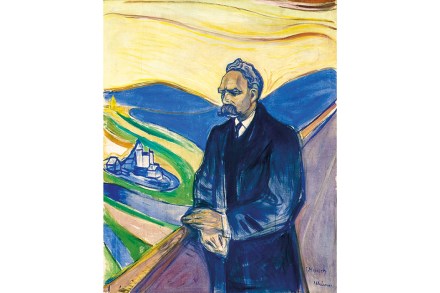
For Mussolini’s 60th birthday, Hitler gave him a de luxe edition of Friedrich Nietzsche’s complete works, bound in blue pigskin. After the war, writers vied to revile the philosopher. Then, in the 1960s, he suddenly became philosophy’s darling. How come? Enter two erotically entangled Italians: Georgio Colli, a philosophy teacher at Lucca from 1942, and his pupil Mazzino Montinari, who in 1943-4 was beaten, interrogated and imprisoned for anti-fascist activism. Both found Nietzsche’s philosophy irreconcilable with fascism. Rumours had been swirling that the Nazifying of Nietzsche emerged from the Nachlass, a mysterious hoard of Nietzsche’s manuscripts suspected to contain forgeries that were the work of his sister Elisabeth and her

From ‘divine Caesar’ to Hitler’s lapdog – the rise and fall of Benito Mussolini

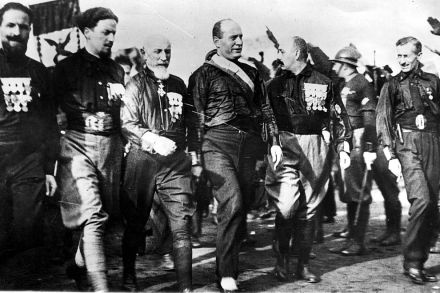
In 1919, an obscure political agitator called Benito Mussolini assembled a ragbag of Blackshirt diehards in the Lombard capital of Milan and launched the movement that was to become, two years later, the National Fascist Party. The party took its name from the classical Roman symbol of authority — an axe bound in rods, or fasces. Once in power, Mussolini introduced the stiff-armed Roman salute after the handshake was considered fey and unhygienic. At times he wore a richly tasselled fez and thrust out his chin pugnaciously for the cameras. For all his posturing and demagoguery, Mussolini was widely admired in pre-war Britain, where Lord Rothermere’s Daily Mail routinely carried

Four dangerous visionary writers

‘The production of souls is more important than the production of tanks… And therefore I raise my glass to you, writers, the engineers of the human soul.’ The quote is usually attributed to Stalin, though the phrase ‘engineers of human souls’ most likely came from someone else. Who’s to argue? Purges, executions, deportations – what’s a little light plagiarism in comparison? Whoever coined the phrase, it certainly struck a chord and indeed continues to ring various alarm bells whenever one comes across writers who deliberately set out to influence politics and ideas – and not just the big beasts, the Nobel Prize winners, say, or the shopfront-filling non-fiction authors hawking

Was Mussolini’s wilful daughter his éminence grise?

In 1930, when she was 19 years old, Edda Mussolini married Galeazzo Ciano. His father was a loyal minister in her father’s government: it was a suitable match. Five hundred wedding invitations went out to the Roman nobility, to diplomats from more than 30 countries and to all the senior fascists, the gerarchi. After the ceremony the newlyweds left for Capri, Edda driving her own white Alfa Romeo, with servants and luggage following in another car and bodyguards in a third. They set off at top speed. Then Edda came to a sudden halt. She had noticed a fourth car behind them. She might have supposed that as a married

What does it mean when Giorgia Meloni quotes G.K. Chesterton?

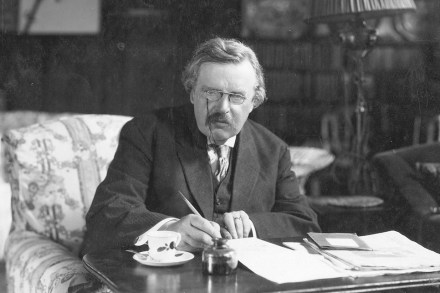
For a UK audience, the most striking moment in the new Italian PM Giorgia Meloni’s victory speech will have been that she anchored its peroration to a quote from G.K. Chesterton. ‘Chesterton wrote, more than a century ago,’ she said, ‘“Fires will be kindled to testify that two and two make four. Swords will be drawn to prove that leaves are green in summer.” That time has arrived. We are ready.’ G.K. Chesterton? The creator of the excellently herbivorous Father Brown mysteries, the Isaac Newton of what we now call ‘cosy crime’? That G.K. Chesterton? The author of a poem, memorised by many a previous generation of English schoolboys, about

Pre-Mussolini, most Italians couldn’t understand each other

Towards the end of Dandelions, Thea Lenarduzzi’s imaginative and deeply affecting memoir, the author quotes her grandmother’s remark that there are tante Italie – many Italys. ‘Mine is different to hers, which is different to my mother’s, which is different to my father’s, and so on down the queue,’ she writes. These Italys – of fascismo, of Garibaldi, of emigrants living in Sheffield and Manchester, of 31 dialects – are not far-flung historical oddities confined to documentaries or textbooks but are, in Lenarduzzi’s account, the patchwork story of one family. Sitting at her Nonna’s (grandmother’s)table with ‘the blinds pulled down against the morning sun and the rest of the family

The rise of the neoclassical reactionaries

A strange new ideology has been growing over the last few years, you might have noticed — amid the day-to-day chaos — the slow, proto-planet-like formation. Currently, it has no name, nor an obvious leader. Its many thousands of proponents do not even seem, yet, to consider each other fellow-travellers. But to the onlooker, they’re clearly marching the same steps to the same tune. We might call it neoclassical reactionism. The central refrain is a familiar one: the modern world is ugly, decadent, sick. But rather than seeking refuge in religion or racial politics, neoclassical reactionaries hark back to Ancient Greece and Rome — in particular, to supposedly lost values like

Was the US involved in neo-fascist Italian terrorism?

Last month, Italy’s Prime Minister Mario Draghi promised to declassify government documents involving two organisations: Gladio, an anti-communist paramilitary group linked to Nato and the CIA, and a masonic lodge known as P2. These two groups are believed by some to have been involved in the darkest moments of post-war Italian history. For much of the latter half of the 20th century, Italy had the unenviable position of being the epicentre of European terrorism. The blast at the Bologna train station in 1980, which left 76 people dead and more than 200 wounded, was at the time the bloodiest terrorist attack ever suffered by a European country. The bombing was pinned on

Churchill did admire Mussolini

In his ruthless demolition of Geoffrey Wheatcroft’s new Churchill biography in last week’s Spectator, the historian Andrew Roberts pours scorn on the ‘insinuation that Churchill had fascist leanings in the 1920s’ as it is not supported by ‘any actual evidence (for there is none)’. Well, however justified his hatchet job of Wheatcroft’s book is in general, Roberts is deeply mistaken about Churchill and fascism. Like so many in the 1920s and well into the 1930s, from all sides of the political divide, Churchill was a fervent admirer of the former revolutionary socialist Benito Mussolini and the fascist movement which he founded in 1919. Fascism was a nationalist rather than internationalist

Fascist, anti-Semite and dupe: the dark side of G.K. Chesterton

The Sins of G.K. Chesterton demands our attention because, as Richard Ingrams notes in his introduction, the literature on this author is (with a few notable exceptions) horribly flawed — littered with misconstruction, omissions of fact and interpretive errors designed to present him as ‘an innocent, uncomplicated man, blessed with almost permanent happiness and having no experience of suffering — hence an ideal candidate for canonisation’. That flourish, appearing in Ingrams’s third to last paragraph, was a bombshell to me, though I understand there exists a sizeable constituency pressing for Chesterton’s beatification, rebuffed in 2019 when Bishop Peter Doyle of Northampton condemned his anti-Semitism. Ingrams’s predecessors are guilty of trying

Spain's growing culture war over General Franco

There are hundreds of mass graves dotted around the Spanish countryside. In roadside ditches, down hillside gullies, dumped in pits and down disused wells lie thousands of bodies: civilians murdered in cold blood by Franco’s death squads during the civil war that convulsed Spain between 1936 and 1939. Over the nearly forty years of Franco’s dictatorship, few spoke of what had happened during the war; silence and selective amnesia were safer. And even when Franco died in 1975, the overriding priority was the transition to democracy. The old Francoist establishment indicated that it would make way for the new era — provided that there was no digging up of the

The forgotten victims of communism

I just read a piece by Scott McConnell in the American Conservative, a magazine we co-founded 18 years ago. He writes about how the victims of communism are less commemorated than those of fascism. The death toll under communism was 100 million (see the Black Book of Communism). And as the mass murders continued, your Cambridge Joseph Needhams and his fellow apologists insisted that Maoism represented mankind’s best hope. Maoism never received the moral obloquy that Nazism did. The United States Holocaust Memorial Museum, which documents the horrific enormity of the Nazi project, has had 40 million visitors since 1993; the victims of communism are marked by a ten-foot statue

It’s still impossible for Horst Wächter to recognise his father as a Nazi war criminal

In 1926, while putting in place the repressive laws and decrees that would define his dictatorship, Mussolini appointed a new chief of police. Arturo Bocchini was 36, a lawyer and former prefect of Brescia, a cynical, vengeful, witty and corpulent Neapolitan. Under his 17-year tenure, fascist Italy became one of the most sinister and efficient police states of the years between the wars, with overlapping and rivalrous legal and illegal police bodies, fed by a vast army of informers and spies. Said to number around 10,000 at their peak, these men and women were to be found in every corner of Italian life, from the civil service to the Vatican,