Fascism

Eric Hobsbawm: A man of Extremes

A few years ago, I wrote a review of Eric Hobsbawm’s last collection of essays and noted  'Hobsbawm is now 94, and although I have no wish to usher the old boy from the room, I can see his obituaries now. Conservative and liberal writers will say that his loyalty to totalitarianism disfigured his writing, most notably, in his whitewashing of Soviet atrocities in The Age of Extremes, his history of the 20th century. Leftists will say he was the greatest Marxist historian of our times, whose sweeping accounts of the world from the Enlightenment to the present have shaped the way we think. Neither will acknowledge that both have a case.' I’ll have to wait for tomorrow’s papers to see if I’m right, but I can defend my argument now.

General Franco’s British foes

David Lomon was one of the lucky ones. While fighting in Aragon in south-west Spain in the spring of 1938, the former salesman from Hackney was captured by one of the 100,000 Italian soldiers sent by Mussolini to fight for General Franco’s forces. Incarcerated in a Francoist concentration camp, his experiences were horrifying — brutal guards, starvation rations, insanitary and verminous conditions and a decidedly uncertain future — but he did at least survive. Many of his compatriots did not. Almost one in five were killed and most were wounded at least once in their fight to defend the Spanish Republic in the civil war of 1936-1939, in what some observers have seen as the opening salvo of the Second World War.

Caught between two great evils

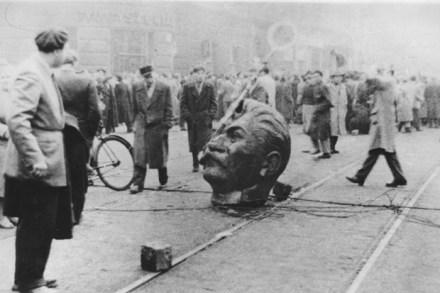
David Brooks, the great New York Times columnist, recommends the best essays of the year every Christmas. His selection this year includes a brilliant essay by Anne Applebaum, of this parish, on Hitler, Stalin and Eastern Europe. It makes you realise quite how bloody the Eastern Front was—‘On any given day in the autumn of 1941, as many Soviet POWs died as did British and American POWs during the entire war’—and think about the effect on these societies of being caught in the middle of these two extremist ideologies. There is always a tendency for us to discuss how the crimes of Hitler and Stalin compare.

Rediscovering Paul Berman

Six years ago I wrote a review for the Observer about Paul Berman's Terror and Liberalism, a quite brilliant polemic about the way the legitimate liberal desire to overturn the conventional or the bourgeois can so often turn to murderous terror. I recognised at the time that it was an extraordinary book, but I couldn't quite accept his final conclusions, which seemed to elide different forms of barbarism so that Palestinian suicide bombers became equated with the genocide of the Nazi death camps. I still think it is important to make distinctions between the geographical, cultural and historical specifics of individual patterns of atrocity. This is not to say there is a hierarchy of such things.

Should John Denham Shut Up About the Extreme Right?

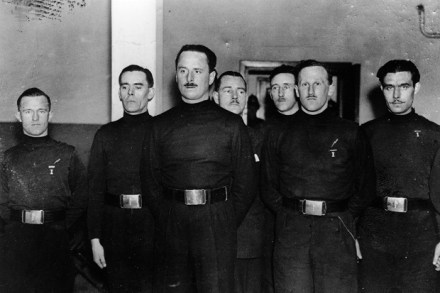
It's the perennial problem: platform or no platform, anti-Nazi campaign versus no oxygen of publicity. You'd have thought we'd have sorted this one out by now. I agree with David Blackburn that John Denham's comments comparing the English Defence League to Mosley's Black Shirts risk overstating the significance of this "organisation". It is always tempting to make a historical fascist comparison and they rarely work. The Communities and Local Government Secretary should probably have resisted. Denham may have been clumsy in this instance, but he is at least recognising that a strategy needs to be developed in response this particular historical instance of the rise of the extreme right.