Exhibitions

The art inspired by the 1924 Paris Olympics was a very mixed bag

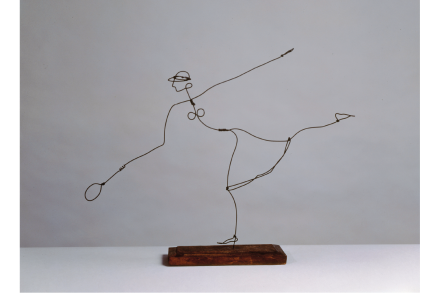
George Orwell took a dim view of competitive sport; he found the idea that ‘running, jumping and kicking a ball are tests of national virtue’ absurd. ‘Serious sport has nothing to do with fair play,’ he wrote in Tribune after scuffles broke out during the Russian Dynamo football team’s 1945 tour. ‘It is bound up with hatred, jealousy, boastfulness, disregard of all rules and sadistic pleasure in witnessing violence: in other words it is war without the shooting.’ Suzanne Lenglen’s loose-fitting knee-length tennis dresses inspired the new ‘style sportif’ of Coco Chanel Baron Pierre de Coubertin, visionary founder of the modern Olympics, took the opposite view: to him the three words ‘Faster, Higher, Stronger’ represented ‘a programme of moral beauty’.

Inside the mind of Vincent Van Gogh

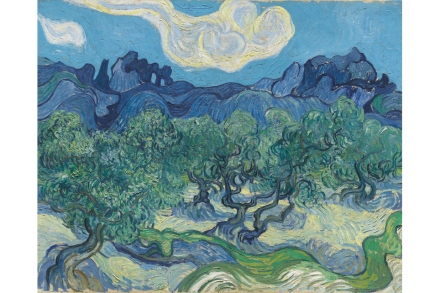
Van Gogh only got one major review in his career, and he was mystified by it. When the critic Albert Aurier described his six paintings in the 1890 Brussels exhibition of Les XX as the product of a ‘terrible and distraught genius’, the artist responded that, far from being a genius, he was ‘very secondary’ and that his sunflowers – now in the National Gallery – were no different ‘from so many pictures of flowers more skilfully painted’. If he were alive today he would probably have protested at the National Gallery making an exhibition of his work the high point of its bicentenary programme, but he would have liked its focus on his inspirations rather than his distress.

How Michael Craig-Martin changed a glass of water into a full-grown oak tree 

‘Of all the things I’ve drawn,’ Michael Craig-Martin reflects, ‘to me chairs are one of the most interesting.’ We are sitting in his light-filled apartment above London, the towers of the City rising around us, and we are discussing a profound question, namely, what makes an object a certain type of thing? Or to put it another way, what makes a chair a chair? Craig-Martin’s career has been characterised by what he calls ‘my object obsession’. There will be chairs on view in the grand retrospective of his work which is about to open at the Royal Academy, but by no means only chairs. The galleries will be filled by a cavalcade of mundane bits and pieces, among them safety pins, filing cabinets, forks, smartphones, pliers, light bulbs and buckets.

Why has Leonora Carrington still not had a big exhibition?

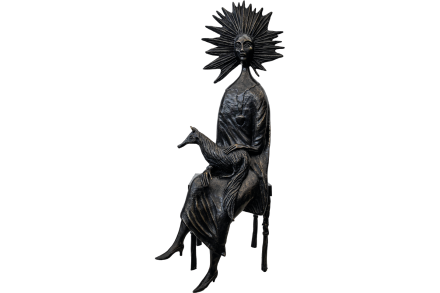
‘It had nothing to endow it with the title of studio at all,’ was Edward James’s first impression of Leonora Carrington’s Mexico City workspace in 1946. ‘The place was combined kitchen, nursery, bedroom, kennel and junk store. The disorder was apocalyptic: the appurtenances of the poorest. My hopes and expectations began to swell.’ Carrington blended Egpytian, Mayan, Mesopotamian and Celtic legends learned at her nanny’s knee Over six decades in the creative chaos of this house on Calle Chihuahua, Carrington would paint some of her best-known works and write her quirky serio-comic novella The Hearing Trumpet, which is narrated by a 92-year-old woman.

The importance of copying

The lunatics were once in charge of the asylum. The first six directors of the National Gallery were all artists: before art history became an academic discipline, artists were the leading authorities on art. Founded more as a teaching resource than a visitor attraction, until the mid-1940s the gallery was reserved for artists two days a week, when other visitors had to pay for entry. This stopped them getting in the way of artists copying from the masters, an essential part of an art education in the days before cheap colour reproduction. There’s something of the altarpiece in this image of an artist’s progenitors flanking a touchstone for his art It’s rare to see artists copying in the galleries now that they are so jam-packed with tourists.

How did we ever come to accept the inhumane excesses of capitalism?

What was neoliberalism? In its most recent iteration, we think of the market seeping into every minute corner of human existence. We think of privatisation, off-shoring and the parcelling out of services to the highest bidder. Neoliberalism takes the proud liberal individual – in pursuit of his or her happiness, rather keen on freedom – and shreds them through a mean-spirited calculator to come up with some sort of shrunken market midget, an efficient risk-evaluating robot. Neoliberalism takes the proud individual and shreds him or her through a mean-spirited calculator Yet even though the market is supposed to be the arbiter of everything, repeated state intervention appears to be necessary to sustain this otherwise perfect economic vision.

Porcelain-painting during the French revolution

People don’t accumulate stuff any more. When the late Victorian houses on our street change hands their interiors are stripped of all decorative features and the walls painted white, unrelieved by pictures: if their Victorian owners returned as ghosts, they would go snow-blind. The Victorians’ passion for accumulating stuff was close to an addiction, and no one accumulated it like the Rothschilds. But the Rothschilds didn’t stop at objects; they also collected exotic animals, especially birds. All the Rothschild chateaux and mansions boasted aviaries – and Baron Ferdinand de Rothschild’s Waddesdon Manor was no exception.

Children have the Proms. Grown-ups head to Salzburg. Snob summer

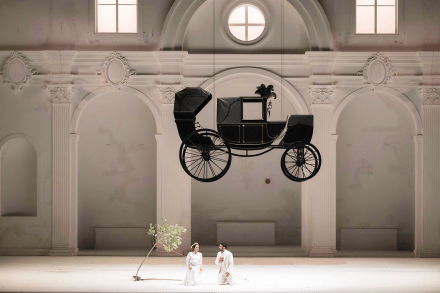
Salzburg Festival doesn’t mess about. The offerings this year include an adaptation of Thomas Mann’s Magic Mountain in Lithuanian, a Soviet-era operatic treatment of Dostoevsky’s The Idiot, and Igor Levit tackling one of the Himalayan peaks of the piano rep. Kiddies, meanwhile, could enjoy the children’s opera Die Kluge (brilliantly done), a Nazi-era allegory on the rise of Hitler by Carl Orff, a composer they love here but whose politics are shall we say, um, complicated. (Pleasingly, I’m not sure the festival understands the concept of cancellation.) People always think Salzburg is pretty and fun. It’s not. It’s dark and primal, with a festival that is far more uncompromising and exhilarating than a global-elite bun-fight in provincial Austria has any right to be.

This British surrealist is a revelation

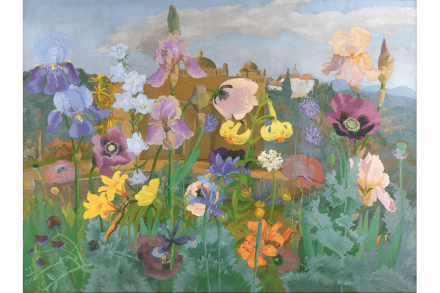
When the 15-year-old Maggi Hambling arrived at Benton End in Hadleigh, Suffolk – home of the East Anglian School of Painting and Drawing – with two paintings to show the school’s founders, Cedric Morris and Arthur Lett-Haines, she was ushered into the dining room where Morris was having dinner. He made some criticisms but was very encouraging, then Lett-Haines came in and made the opposite criticisms but was encouraging too. As teachers, both believed in bringing out a student’s native talent – but as artists and characters, says Hambling: ‘They were polar opposites.

The tragic fate of Ukraine’s avant-garde

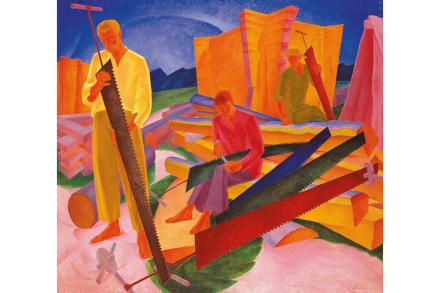
In a recent interview Oleksandr Syrskyi, the new commander-in-chief of the Ukrainian army, said that he spends his time off reading books on the country’s ‘difficult history’. If even he finds it difficult, where do us non-Ukrainians start? In the introduction to its new exhibition, the Royal Academy makes a brave attempt at explaining the political background to Ukrainian modernism, developed in a brief window of creative opportunity before it was slammed shut by Soviet repression.

How a market town in Hampshire shaped Peggy Guggenheim

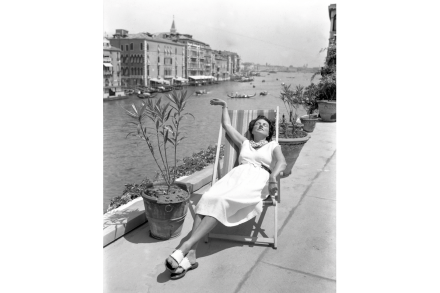
On 24 April 1937 Marguerite Guggenheim – known as Peggy – of Yew Tree Cottage, Hurst was booked by a certain PC Dore for driving an unlicensed vehicle through nearby Petersfield. What was the founder of the famous Venice museum doing in a market town in Hampshire? It’s a long story, vividly told in an exhibition marking the 25th anniversary of the opening of Petersfield Museum on the site of the former police station and courthouse where she paid her £1 fine. ‘Peggy,’ said a friend, ‘is absolutely revolting about sex. Delicacy is unknown to her’ In the 1930s the Jewish-American heiress, who had lost her father Benjamin on the Titanic, was rattling around Europe with a fast crowd of writers and artists.

The beauty of pollution

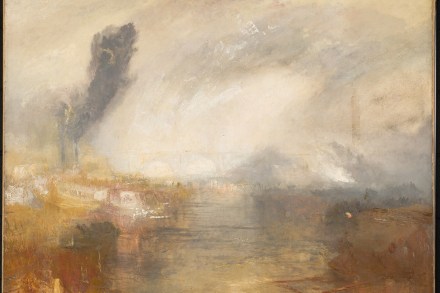
On the back of the British £20 note, J.M.W. Turner appears against the backdrop of his most iconic image. Voted the country’s favourite painting in 2005, ‘The Fighting Temeraire’ (1838) was Turner’s favourite too. It remained in his possession until his death; the 70-year-old artist swore in a letter of 1845 that ‘no consideration of money or favour can induce me to lend my Darling again’. But I suspect he would have approved of his darling’s current loan, along with that letter, to the Laing Art Gallery in Newcastle as part of the National Gallery’s bicentenary programme of loans of national treasures to regional museums.

The mesmerising Olympic posters designed by the likes of Warhol and Whiteread

You could be forgiven for assuming that the citizens of Paris weren’t exactly bursting with joy at the prospect of this summer’s Olympic Games. They’re annoyed at everything: road closures, public transport price hikes and – would you believe it? – the prospect of their country being taken over by extremist cranks before the month is out.  Bref, or indifference towards the Games is the prevailing attitude – and should you need (flimsy, anecdotal) evidence, I offer you the fact that when I visited an exhibition devoted to the Olympics the day before the first round of voting in the election last week, I had the space entirely to myself. Beyond a single wall down by the Seine, you won’t see the artist posters displayed much around Paris It was a shame.

The art of Japanese woodblock printing

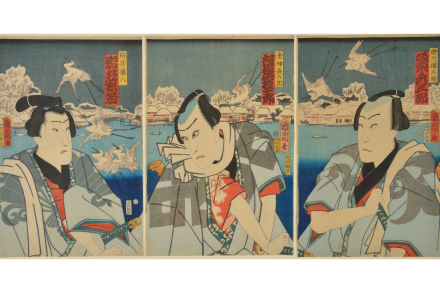
Van Gogh owned a copy of Utagawa Kunisada’s woodblock print of the ‘Yoshiwara Poet Omatsu’ (1861), which is currently on display at the Watts Gallery. It depicts the poetess who rose from humble origins in an elegant kimono at her dressing table and was part of Kunisada’s series of paintings titled Biographies of Famous Women, Ancient and Modern, but Van Gogh may not have known that. By the time he started amassing Japanese prints – he splurged on 600 of them in the winter of 1886 – they had become collectibles sought after by avant-garde artists for their clear lines, bright colours and the immediacy of their cropped figure compositions anticipating photography.

The most original sea painter since Turner? Lowry

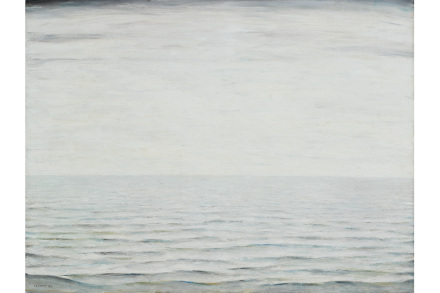
In 1958 an elderly gentleman staying at the Castle Hotel in Berwick-upon-Tweed gave the receptionist a doodle he had made on the hotel’s notepaper. She kept it in a box and 43 years later, on the advice of Antiques Roadshow, sold it at auction for £8,000. ‘I don’t think anyone since Turner has looked at the sea with such an original eye’ A contemporary photograph shows that gentleman in his trademark trilby, dark suit and tie – no casual wear for L.S. Lowry – standing on the pier with Berwick in the background. Lowry (1887-1976) is not best known for his paintings of the sea, but there are 21 – including the receptionist’s sketch – in this interesting little exhibition in the Northumbrian town which he regular visited, and they cast him in an unaccustomed light.

Breathtaking: Mary Cassatt at Work, at the Philadelphia Museum of Art, reviewed

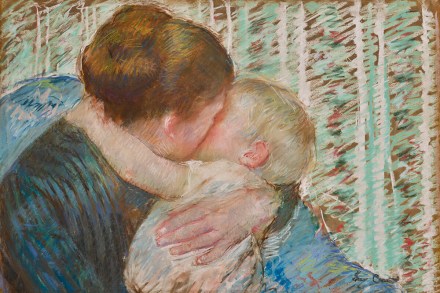
Work – in the sense of toil – is about the last thing a 19th-century painter wished to be associated with. Inspiration and success were gifts bestowed on the lucky few – about as easy to grasp as smoke. For Mary Cassatt, however, art was nothing more than work. ‘Effort upon effort,’ is how she described the process of painting to her friend, the collector Louisine Havemeyer. Pissarro admired her technical skill, Gauguin her charm and strength, but Degas was her true mentor Still, she produced almost 1,000 works in her lifetime, and Mary Cassatt at Work – a new exhibition at the Philadelphia Museum of Art – tells us how. Spoiler: unswerving determination, ambition and, well, work.

Is there still life in British still life?

‘The tyrannical rule of nature morte is, at last, over,’ announced Paul Nash in the Listener in 1931. ‘Apples have had their day.’ Since Cézanne fulfilled his famous boast that he would astonish Paris with an apple, artists had been trying the same trick in London, with limited success. Astonishment, unfortunately, only works once. Nash had had it up to here with them apples: tired of post-impressionism, tired of still life. An electric toothbrush occupied the same place in Hamilton’s heart as Mont Sainte-Victoire in Cézanne’s Continental ghosts haunt the tabletops of Pallant House Gallery’s informative new survey of modern and contemporary British still life.

The woman who revolutionised British fashion: Barbara Hulanicki interviewed

‘I was one of your original customers in Kensington Church Street,’ I tell the founder of Biba when we meet. ‘Are you coming to complain?’ she shoots back. At 87 and fresh off a flight from Miami, Barbara Hulanicki is as sharp as a tack. The designer was in London for the opening of The Biba Story, the Fashion and Textile Museum’s celebration of the revolution she accomplished in 1960s street fashion. Believe me, it was a revolution – I was there and yes, I remember. In fact I can summon a mental inventory of all the items of clothing I bought from Biba over its short life, from the lilac fit-and-flare mini-coat that was my first proud purchase in 1967 to the brown maxi-coat with the power shoulders and the shaggy fake-fur trim that was my last in 1972.

The brilliance of Beryl Cook

Nobody claims Beryl Cook was an artistic genius, least of all the artist herself. ‘I think my work lies somewhere between Donald McGill [the saucy postcard artist that George Orwell wrote so lyrically about] and Stanley Spencer,’ she once told me. ‘But I’m sorry to say I’m probably nearer McGill.’ She was, as ever, being modest. I actually think she’s nearer Spencer – and Hogarth, come to that. Cook’s paintings make us laugh but that doesn’t stop them from being art. (Few would say Shakespeare’s comedies are as profound as his tragedies, but they’re brilliant creations, nevertheless.) Though Victoria Wood dubbed her work ‘Rubens with jokes’, there aren’t actually any jokes in her pictures; they’re all direct observations, not double entendres.

Fascinating insight into the mind of Michelangelo

You’re pushing 60 and an important patron asks you to repeat an artistic feat you accomplished in your thirties. There’s nothing more daunting than having to compete with your younger self, but the patron is the Pope. How can you say no? Besides, it’s an excuse to get away from Florence, where your work for the republicans who expelled the Medici has become an embarrassment since their return. So you tell Pope Clement VII that, yes, you will move to Rome and paint a Last Judgment on the altar wall of the Sistine Chapel.