Europe

Central Europe’s vaccine scepticism problem

Countries around the world are in a race against time to vaccinate their populations against Covid-19. But there is one particular region which appears to have a growing problem with vaccine scepticism: Central and Eastern Europe. As a British expat living in the Czech Republic, I have noticed the lack of eagerness with which many Czechs discuss the vaccine rollout. This may in part be due to the country’s floundering and much-criticised vaccination programme. But it is noticeable that anti-vaccine sentiment is more common – and gets much more attention – here than in the UK. Ex-President Václav Klaus recently told a large anti-lockdown rally in Prague that vaccines are not the solution to the virus.

Vaccine wars: the global battle for a precious resource

Armed guards are patrolling the perimeter fence of a sleek factory. Software experts are fending off hackers. Border officials are checking trucks and ferries, not for weapons or illegal immigrants, but for a mysterious biochemical soup, while spies and spin doctors are feeding social media with scare stories flaming one national champion or another. Welcome to the first great geopolitical battle of the 21st century. It may sound like something ripped from the pages of a dystopian sci-fi novel, but in truth we’re seeing the opening salvos in the vaccine wars. Rather than co-operating with one another to roll out a global vaccination campaign to rid the world of Covid-19, the major powers of the world are instead descending into a fierce, increasingly nationalistic competition.

Is Joe Biden’s administration fit for the 2020s?

Joe Biden’s Cabinet nominees have been warmly received by the massed ranks of anti-Trumpists in Washington. But the warmth stateside is nothing compared with the rave notices the incoming administration is receiving in much of Europe. There is particular delight in the UK, where the special Boris-Donald relationship evaporated within seconds of Biden’s election victory. The enthusiasm derives partly from a sense that, as some have put it, the adults are back in the room. The image of Trump as ‘toddler-in-chief’ was projected on to his whole volatile administration. Now the line-up announced by the incoming President looks and sounds serious, sober and a lot more like US administrations are supposed to be.

The EU has botched its vaccination programme

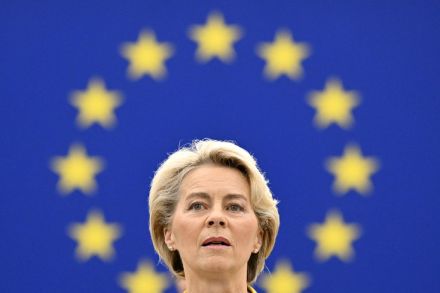
It was the most excruciating moment of Ursula von der Leyen’s short tenure as President of the European Commission. On Friday morning she hastily put together a press conference to counter the growing media storm across Europe over the EU’s handling of vaccine procurement. She doubled down on ‘solidarity’, announcing that the Commission had managed to secure more doses of the BioNTech/Pfizer vaccine, but also that the EU would stick absolutely to buying together. ‘We have all agreed, legally binding, that there will be no parallel negotiations, no parallel contracts,’ she insisted testily. ‘We’re all working together.’ At the same moment, however, her former colleagues in Berlin, where she was never popular, were busily undermining her.

The EU must ditch its deal with China after the arrests in Hong Kong

Earlier this morning, 53 democrats from Hong Kong were arrested. Their crime? Trying to win last September’s elections. As absurd as it sounds, the new reality in Hong Kong is that it is now effectively a criminal offence, under the National Security Law, for the opposition to have the audacity to try and boost its representation in parliament. 'The operation today targets the active elements who are suspected to be involved in the crime of overthrowing, or interfering (with)...the Hong Kong government’s legal execution of duties,' said John Lee, Hong Kong’s security minister. But, as he later suggested, in reality this meant that those who were arrested were simply trying to win a majority of seats in Hong Kong's legislature.

Why Britain chose Brexit

None of us will easily forget the emotional response to the Leave vote in 2016, the national and international lamentation and the angry reproaches and insults, heaped on the majority: they were ignorant losers, white, old, xenophobic and stupid, ‘gammon’ who would be better dead or disfranchised. But leave aside the arrogance and snobbery; more fundamental was the basic ignorance of Europe shown by these zealous Europhiles. They mistook Brexit for a British, or English, aberration. In fact, it was the manifestation of a pan-European disillusionment with the ‘European project’. Popular support for that project peaked 40 years ago, and has been in decline ever since. The French only just voted for the Maastricht Treaty even in 1992, the heyday of integration.

Europe’s cities are becoming a refuge for Islamist extremists

Britain’s terror threat level has been upgraded to ‘severe’ this week, following jihadist attacks in both France and Austria. Raising a terror alert is not enough though to stop more attacks. The government’s security and bureaucratic response to terror is always playing catch-up and constantly on the defensive. And unless we take the time to understand the enemy, we cannot force it into retreat and defeat. We must first of all be honest. Our country and compatriots depend on us getting this right. The threat we currently face is not about racism – which is why Christian Nigerians or Hindu Indians do not become terrorists in the West.

The myth of the ‘stolen country’

Last month, in the middle of the Covid panic, a group of first-year university students at the University of Connecticut were welcomed to their campus via a series of online ‘events’. At one event, students were directed to download an app for their phones. The app allowed students to input their home address, and it would piously inform them from which group of Native Americans their home had been ‘stolen’. ​We all know the interpretation of history on which this app is based. The United States was founded by a monumental act of genocide, accompanied by larceny on the grandest scale. Animated by racism and a sense of civilisational superiority, Columbus and his ilk sailed to the New World.

Why does England have the worst excess deaths in Europe?

On 12 May, the government stopped publishing international comparisons of its Covid-19 death toll in the daily press briefings. The argument was that the data wasn’t helpful, and perhaps even misleading: the way calculations were carried out varied country-by-country, with each nation on a different timescale when experiencing the peak of infections and death. There would be a time for international comparisons, but that time wasn’t now. Today, the ONS picks up where the press briefings left off, comparing excess mortality rates throughout Europe. The data is not specifically calculating Covid-19 deaths, but rather all causes of mortality on a five-year average.

The two faces of Polish rebellion

The narrowness of President Andrzej Duda's victory in this weekend's Polish presidential elections, where he defeated Rafał Trzaskowski, the Mayor of Warsaw, by less than 2 per cent, was God's gift to opinion commentators. What with Brexit, Trump et cetera we can write 800-1200 words about a nation being ‘divided’ and ‘polarised’ in our sleep. Why even write different pieces? Just shift the names around and you are golden. The problem with that kind of article is it often obscures national distinctions. In Poland, for example, President Duda's Law and Justice Party – unlike the Conservatives and the Republicans – is the more redistributionist of the two leading parties.

This pandemic has put politics on fast-forward

‘The normal grease of politics is not there,’ bemoans one sociable cabinet minister. Certainly, the whispered conversations in corridors that make up so much of Westminster life are in abeyance during this period of social distancing. The fact that the backbenches and the cabinet have deep reservations about the government’s approach matters far less than it would in normal times. In the Zoom parliament, there is no such thing as the mood of the House. One Tory grandee pushing for a significant easing of the lockdown complains that the current arrangements ‘make it easier for No. 10 to ignore parliament and cabinet’. But contrary to appearances, politics has actually sped up, rather than stopped, during the pandemic.

Is it ‘speculation’ to say the UK has the most deaths in Europe?

It's a grim news week for the government with Dominic Raab announcing in Tuesday's press conference that the UK coronavirus death toll is now at 29,427 (ONS figures suggest the number of deaths is as high as 32,313). This means that according to official figures from each country, the UK has overtaken Italy in fatalities and currently has the highest death toll in Europe.

Have we been fighting a very different disease to China?

One of the great mysteries of coronavirus is how the epidemic has become much more severe in Europe and North America than in the Far East. A disease which appeared to be on the wane in China, South Korea and elsewhere in mid-February suddenly erupted with a vengeance in Europe in March, with death tolls quickly surpassing those in Wuhan. Various explanations have been offered: from the Chinese lying about the extent of cases and deaths to the difficulties of enforcing lockdowns and launching intrusive tracking and tracing strategies in western democracies. But then have we really been fighting the same disease?

Why the coronavirus crisis is likely to bring Europe together

Solidarity usually suggests physical proximity: goodwill spreading with hugs and cosy chatter. But when you have a crisis with social distancing as an antidote, is that a barrier to comradeship? Far from it. On social media, videos of Italian flash-mobs singing to their neighbours have been shared, as well as petitions to test NHS staff and footage of the ‘Viva los Medicos’ (long live the doctors) mass shout-outs from Spanish windows. Online solidarity overcomes borders, all the more so during a global pandemic. But Europe, which has been described as the ‘epicentre’ of Covid-19, has its own particular flavour of solidarity. It was the growing outbreak in Italy that really brought attention to coronavirus across the continent.

The West is failing to rise to the challenge of coronavirus

Having apparently shaken off the first phase of the coronavirus pandemic, the Chinese Communist Party’s propaganda machine is now in full swing. One of the more preposterous conspiracy theories they are peddling is that the spread of the disease was a deliberate attempt at subterfuge from the American government. As in the middle of the tragic Aids epidemic in the 1980s, geopolitical conspiracy theories are running rife, and overwhelmed national governments are desperate to find someone to blame for the crisis. The notion that the United States somehow contrived to unleash such a contagious and pernicious virus on its economic rival, however, is simply absurd.

How coronavirus derailed the largest Nato exercise in 25 years

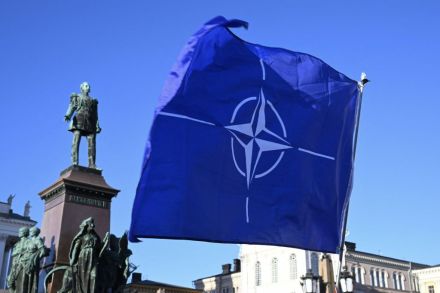
As the coronavirus pandemic continues to spread across Europe, the United States has reduced its participation in a Nato military exercise that was set to be one of the alliance’s largest since the end of the Cold War. In April and May, the Defender-Europe 20 exercise was meant to feature 37,000 troops from 18 countries, including 20,000 soldiers deployed from the United States. It was planned to take place across ten European countries, with the bulk of the drills in Germany, Poland, and the Baltic states. Shortly after the WHO declared that Europe had become the new ‘epicentre of the pandemic’, the Trump administration enacted a travel ban for foreign visitors from the 26 countries in Europe’s Schengen travel zone, and then from the UK and Ireland.

Le crunch: are the Brexit talks doomed before they begin?

When Boris Johnson and the new European Commission President Ursula von der Leyen met in Downing Street last month, they agreed on one thing immediately: that it was time to stop the sniping, animosity and backbiting that had characterised the first round of the Brexit talks. The Prime Minister emphasised that Britain wanted to be the EU’s close friend and ally. Only a few weeks later, and already the Brexit wars are back. The two sides are so far apart that many diplomats think there is a better-than-even chance that the talks will fail. One member state is already planning around the central assumption that there will be no deal by the December deadline. For its part, No. 10 is braced for the talks to collapse sooner rather than later.

The Brexit reshuffle: every great office of state is now held by a Leaver

One of the Tories’ tactical successes has been to push Brexit down the news agenda. But even if it no longer dominates front pages and news bulletins as it once did, the task of sorting out Britain’s future relationship with the European Union remains the government’s biggest challenge. Brexit also provides the best explanation for some of No. 10’s other actions. Last week’s cabinet reshuffle, for instance, can only be properly understood in the context of Brexit. The purpose was to create an all-powerful centre. The three greatest parts of government — No. 10, the Treasury and the Cabinet Office — have now been joined together. There is a combined No. 10 / No.

Letters: How to make a cup of tea

No defence Sir: Jon Stone (Letters, 15 February) recalls the horrors and miseries of being subjected to bombing from the air. How right he is to do so. The deliberate burning and crushing of civilians in their homes is a revolting and indefensible form of warfare. It is no surprise that Hitler used it. What is surprising is that people in this country continue to make excuses for our own use of this method, which was actually far more extensive and deadly than the German bombing of the United Kingdom. There are no such excuses. Those who fall back on utilitarian justifications will also find that these do not work. The bombing of Germany failed on its own terms.

The Tory war over Europe is finally over

Happy Christmas (War Is Over). John Lennon probably didn’t have the decades long Conservative dispute over Europe in mind when he wrote that, but the message seems very apt this year after almost the entire Tory parliamentary party trooped through the lobbies in support of its leader’s plan to take Britain out of the EU. It was back in 1971 that Lennon released his blockbuster Christmas single. At the time, the Conservatives were largely united behind the idea of joining the European Economic Community. So few could have anticipated that an internecine political war lasting almost half a century was taking hold.