Nathan Picarsic and Emily de La Bruyere

Germany’s Faustian entanglement with China

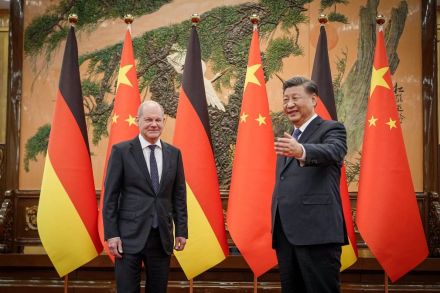
Back in November, German Chancellor Olaf Scholz met with Chinese Communist Party (CCP) chairman Xi Jinping. His visit to China was the first by a G7 leader in three years. Facing heated domestic and international pushback, Scholz framed his visit as an effort to “further develop” economic cooperation between Berlin and Beijing. In this context, such “further development” means further cementing Germany’s Faustian bargain with China, one in which European-based players, like Airbus and Volkswagen, claim immediate revenue — but at their long-term expense and at great strategic cost.
It’s time for the US to revoke China’s ‘normal trade’ status

In April 2022, six weeks after Moscow’s invasion of Ukraine, President Biden signed legislation to suspend Russia’s Permanent Normal Trade Relations (PNTR) status. “Revoking PNTR from Russia,” he said, “is going to make it harder for Russia to do business with the United States… The free world is coming together to defeat Putin.” PNTR status, also known as Most Favored Nation (MFN) status, is a designation granted among World Trade Organization members. Receiving nations are awarded all trade advantages that any other nation receives. Revoking PNTR status from Russia was a strategic move. It opened the door to deliver comprehensive economic strikes against Moscow and sent a clear signal to markets.