Europe

How Turkey is fuelling the Belarus-Poland migrant crisis

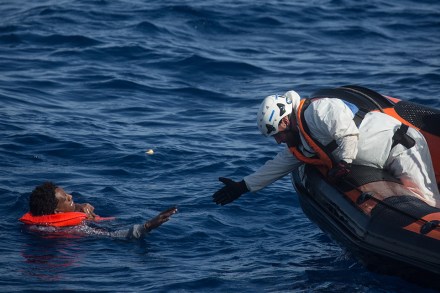
In the cold, damp forest lining the border between Poland and Belarus, thousands of refugees flown over from the Middle East have waiting to cross into the EU for days. Belarusian riot police are shoving them away from their gates and towards Poland, where only more forces await. The Belarusian dictator Alexander Lukashenko has recently been in conflict with the EU, which has imposed sanctions on his regime after last year’s contested elections which many believe to have been rigged. Lukashenko is pushing refugees towards Poland to be pawns in a fight, with the backing of Putin. The refugees find themselves between a rock and a hard place: in front of them, a Polish government who looks good appearing tough against migration and Lukashenko.

Poland’s Belarusian border conflict is becoming violent

The EU’s conflict with Belarus is heating up. The simmering migrant crisis on the Polish border with Belarus exploded into a new level of intensity on Monday, as large groups of migrants marched through Belarus towards Poland before attempting to storm barbed wire fences and force their way into the Schengen zone. https://www.youtube.com/watch?v=Azz6sbIM5lA The Polish government responded to the violation of its border with military force. Twelve thousand troops are now being deployed along the border. When migrants managed to break a section of the fence near Kuznica on Monday, a rank of Polish soldiers filled the gap as a military helicopter flew low overhead in an attempt to deter the febrile group, which was chanting ‘Germany!

Why did neo-Nazis patrol the German border?

Just after midnight last Sunday, around 50 vigilantes gathered in east Germany to ‘patrol’ the country’s border with Poland. They were there to stop illegal immigrants, armed as they did so with batons, a machete, a bayonet and pepper spray. They were discovered by local police forces, but a certain nervousness from the authorities was palpable as they pleaded with residents in the eastern border regions to not take the law into their own hands. While the array of confiscated weapons suggests a well thought out plan, these ‘patrols’ are by no means coherent. The largest single group was reportedly stopped by the police in the border village of Groß Gastrose and contained just 30 people.

How to beat Orbán? Copy him

Opposing Viktor Orbán is a formidable task. Support for his coalition hovers at around the 40 per cent mark while the parliamentary system makes it harder for opposition parties to break through. By 2018, all of the opposition parties, most of which are firmly on the left, realised they were individually incapable of breaking through. They began fielding joint candidates and had some early success when Gergely Karácsony won the mayoralty of Budapest. So they agreed late last year to select a common candidate for the prime ministership at next spring’s elections. Last weekend, a political outsider, Péter Márki-Zay, became the candidate.

Macronism is dead

President Emmanuel Macron was in an expansive mood this week as he presented his vision for France 2030 from the Elysée palace before an audience of business leaders and students. Macron is incapable of brevity. In a slick production that must have cost a fortune, presented to a fawning hand-picked audience, he spoke for two hours. His elocution was framed by a slick, Tik-Tokish video recalling the 30 glorious years of French economic growth and grand projects after the war. Macron is nothing if not busy. He’s just been on a series of pre-election grand tours, dispensing billions of euros in promises like confetti. That includes a proposed repair of a national education system on its knees and of a criminal justice system overwhelmed by extremism and gang warfare.

How will Europe respond to a wave of Afghan refugees?

On Tuesday, Franek Sterczewski made a break for the border. Wearing a long trench coat and carrying a blue plastic bag, he managed to outrun one armed soldier before being stopped by a line of officers. Sterczewski, however, wasn't fleeing his native Poland — he was trying to help those who desperately want to get in. https://twitter.com/jakwojtanowski/status/1430213700464545792?ref_src=twsrc%5Etfw August 24, 2021 Brussels has accused the Belarusian government of actively shipping in would-be refugees The rebellious 33-year old MP had planned to hand out medicine and water to the line of asylum seekers camped out on the eastern frontier with Belarus.

President Barnier would be a disaster for Britain

An arrogant, aloof, wordy, pro-EU centrist drawn from the same narrow elite that has dominated the country for decades. It's not that hard to see how French voters might choose to replace Emmanuel Macron with Michel Barnier. Apart from the fact he is older, his hair is greyer, and his wife is slightly younger, it is quite hard to tell the difference between them.  His hardline stance meant both sides ended up with a far worse deal than was necessary and an atmosphere of mutual mistrust Even so, the veteran politician has this week launched his candidacy for next year’s presidential election, vying to become the centre-right challenger to the incumbent. Who knows, he might even win.

Germany is facing political stagnation

Jamaica, Germany, Kenya or traffic lights? The names of the potential German coalitions — and their corresponding party colours — can be quite exotic. But as the vote has begun to split in the run up to the federal elections next month, the possible combinations that will make up Germany’s government have grown. The race is still wide open. Coalitions were purposefully built into Germany’s post-war democracy — the voting system mixes first-past-the-post with proportional representation to ensure a workable splintering. With one notable exception in 1957, no political party has received the votes of over half of the electorate outright. It usually falls to the party with the most votes to find a coalition partner to form a majority government.

Europe has been a helpless bystander in Afghanistan

America’s allies in Europe understood months before President Joe Biden’s fateful April speech to the American people that a full and complete US troop withdrawal from Afghanistan was a very real possibility. Biden talked about the urgency of getting the United States out of what he termed ‘forever war’ conflicts which required tens of billions of dollars a year (not to mention thousands of US troops on the ground) to maintain.

Who’d want to move to America now?

There’s a biopic released this summer, Roadrunner, about the late great chef, writer, bon viveur and TV presenter Anthony Bourdain. It recounts the many invaluable lessons Bourdain taught, such as: never eat the lower colon of a warthog; never order fish in a restaurant on Monday (it will probably be three days old); and, most of all, the American Dream is over. This last fact may seem jarring. Bourdain was a proudly patriotic American. However, I firmly believe he reveals this truth in the 36th episode of his splendid food-and-travel TV show, No Reservations. In this particular episode Bourdain visits Cleveland, Ohio. In his boyish, enthusiastic way, Bourdain tries all manner of nosh.

Viktor Orbán goes to war on the European parliament

‘Times have changed, and whereas thirty years ago we believed Europe was our future, today we understand that we are Europe’s future’. Hungarian prime minister Viktor Orbán has never been one to shy away from controversy when it comes to the European Union. But on Hungarian Independence Day on Monday, he went a step further by presenting an alternative vision for the bloc.  Orbán's plan involves a major restructuring of the European parliament, which he described as a ‘dead-end’ for democracy. He wants to fix the EU’s democratic deficit by building a ‘democracy of democracies based on European nations’.

European nations are reasserting themselves

All but the most hardened Remainer will admit that the EU’s vaccine rollout has been poor. Up against the UK’s handling of the same feat — and in the face of the European Union’s aggressive response to Britain’s success — many are declaring Brexit a triumph. But the EU’s vaccine debacle demonstrates something more profound and worthy of deeper examination — the continuing importance of the nation state. As Europe’s vaccine rollout has demonstrated, nation state can often do things faster and better in a crisis than a multi-national entity like the EU Commission. Some will say this proves the nation state should be the highest form of governance, and that multi-national entities are doomed to fail.

Now FBPE try to cancel Lionel Barber

It has not been a great nine weeks for the European Union. Readers both inside and outside the supranational bloc will have been horrified at the dithering, disinformation and mixed messages of the commission and its national leaders, now considering an export ban to stop vaccine orders to the UK being honoured. The French position on the Oxford jab for instance has gone from banning it, to allowing it for just those under the age of 65, to allowing it for all, to banning it and now allowing it only for those over 55. Polling now shows 61 per cent of people in that country think the AstraZeneca vaccine is unsafe.  It all seems to have been rather too much for some of Britain's most prominent remainers.

The census is the latest Brexit battleground

The end of the Brexit wars have left some Remainers feeling redundant. A few are now turning their attention to a new target: the census. The small group of voters who are reluctant to accept the result of the referendum are responding to the question asking 'How would you describe your national identity?', not with 'British', or 'English' but, with the answer, 'European'. As a Remainer, this strikes me as somewhat embarrassing. For a start, of course, 'European' is not a nationality. But that small point aside, how is this going to convince Brexit voters that their votes were a mistake?

The EU-AstraZeneca row: a complete timeline

Oh dear. This morning Sweden has become the latest European country to suspend use of the AstraZeneca-Oxford University vaccine. It follows reports that some people have suffered blood clots after being given the jab despite AstraZeneca's data showing there have only been 37 such reports among the 17 million people across Europe who have been given the vaccine. Yet while some European health ministries across the continent are raising concerns about its effectiveness, others are lambasting AstraZeneca for failing to deliver enough jabs. French Europe minister Clement Beaune appeared on Radio Classique this morning and raised the prospect of the EU actually suing the company over breach of contract.

The mask scandal threatening to destroy Merkel’s legacy

In Germany, masks have been one of the least controversial elements of this pandemic. Most people have accepted that they have to be worn in the supermarket or on public transportation. But now these items of PPE are at the centre of a full-throttle political scandal that risks badly damaging Angela Merkel’s Christian Democrats in this important election year. The Christian Democrats Georg Nüßlein and Nikolas Löbel are accused of profiting from government deals to purchase face masks. Löbel is alleged to have received £200,000 in payments as part of a state purchase of masks, while Nüßlein is accused of making £500,000 through a consultancy firm.

Barnier and France fear Brexit Britain’s next moves

Michel Barnier – still officially the EU’s Brexit taskforce leader – gives few interviews. As a Savoyard and keen mountaineer, as he habitually reminds us, he is a cautious man who advances step by step with the long climb firmly in his sights. So it was something of a surprise to see him appear on 16 February before the French Senate Brexit follow-on committee (renamed ‘groupe de suivi de la nouvelle relation euro-britannique’). It is a sign of the importance of how Brexit will play out for the French that the Senate has formed a very senior 20-strong commission to monitor and react to Brexit implementation and next stage negotiations. Of course Barnier and France have an interest in Brexit being implemented as they see fit.

Welcome to Trump’s second term

President Biden’s emphatic assertion that 'America is back' at the Munich Security Conference last month was met with a lukewarm reaction from European leaders. 'Europe has moved', William Galston explained in a Wall Street Journal column pointing to a recent survey by the European Council on Foreign Relations that revealed a persistent distrust of the United States among Europeans and a resistance to taking the US side in America’s competition with China. Yet there is another side to the story. America is not really back. True, president Biden was quick to rejoin the Paris Climate Accord and to extend warm and fuzzy feelings toward our traditional allies.

The EU needs to stop punishing Britain for Brexit

There have always been those on the European side who believe that for the EU project to succeed, Brexit must fail and must be seen to fail. So it is a problem that the first major act of Brexit Britain — going its own way to obtain and approve vaccines — appears to have been a success. For this reason, EU leaders must cast doubt on the achievement. As I say in the magazine this week, look at how Clément Beaune, Macron’s Europe Minister, went out of his way to tweet out his criticisms of the UK approach. (To be fair, there is a Brexiteer version of this hostile sentiment. You can find those on the Tory backbenches who think that Britain’s success requires the EU’s failure.

Why Eastern Europe is looking to Russia and China for vaccines

With Central and Eastern European countries still gripped by Covid-19, the EU’s slow vaccine rollout has offered little solace in the region. The light at the end of the tunnel seems far away, leading many to wonder whether the answer to vaccine shortages lies not in Brussels, but to the East. Interest in Russian and Chinese vaccines is certainly fast becoming a diplomatic issue for the region. Czech Prime Minister Andrej Babiš recently caused a stir with two international visits. The first was to his Visegrád Four ally Hungary, the second to non-EU Serbia, far and away mainland Europe’s vaccine leader: Babiš suggested both trips were made with the intention of working out what these countries’ vaccine programmes got right.