Europe

Much ado about Brussels, bailouts and budgets

The news that the European Union has decreed that its Budget be increased by 4.9 percent in 2012 ties a knot in the stomach, as I ponder an Easter weekend spent in Margate rather than Majorca due to austerity. As Tim Montgomerie notes, the government is taking this opportunity to assert its euroscepticism. Stern communiqués are being worded; stark warnings are being issued. Behind the scenes, the government has joined with the Dutch, its closest ally on the Continent, to confront the avaricious Commission. Patrick Wintour reports that the French will also oppose the proposed Budget, and the Austrians, Danes, Swedes, Finns and Belgians are expected to lend their weight

How the Finns might rock the European boat

Normally, the results of the Finnish elections don’t merit much discussion. But the success of the True Finns, the only party to put on seats in the elections there last week, could have a major impact on this country.   The True Finns ran almost as a single issue party during the final week of the campaign. Their message: we’ll say no to bailing out other Eurozone countries. Seeing as they are almost certainly going to be part of the next Finnish government, this rather throws a spanner in the works of Brussels’ plan to bail out Portugal.   Now, as Dan Hannan notes, if the Finns were to veto

Cameron can make common cause to solve Europe’s immigration concerns

Vince, it seems, is Vince. But Britain is not alone in struggling to arrest immigration. A mass of displaced North Africans is descending on Malta and Italy. The United Nations estimate that more than 20,000 people have already landed this year and many more expected. Neither Malta nor Italy can cope alone. On Monday, Malta called for the EU to invoke a 2001 directive that grants migrants temporary protection in cases of ‘mass influx’. Italy also petitioned Brussels to spread the physical burden. The EU did not acquiesce in either case, which especially outraged the Italian government: both Berlusconi and immigration minister Maroni said that the European Union stands and

Hague's return

William Hague has had a good war. He began poorly, as the FCO struggled to evacuate Britons from Libya. But since then, the Foreign Secretary has showed deft diplomatic skill and leadership. The FCO has been focused on Libya and every able-bodied person has been drafted into duty, with diplomats now running the operation in No 10, and the Cabinet Office. On the Today programme, the Foreign Secretary batted away the idea, much loved by realists and pessimists, that because Britain did not know, with forensic detail, how exactly the intervention would end, it should not have become involved. There are many mountains still to climb. European governments need to

Another fight looms for Cameron over votes for prisoners

Prisoner voting is back on the agenda. The European Court of Human Rights has rejected the British government’s appeal and declared that the coalition has six months to draw up proposals to change the law.   David Cameron now has to decide whether to ignore the Strasbourg Court or go against the will of his MPs, who voted overwhelmingly to oppose giving prisoners the vote in response to the court’s initial decision. In many ways, ignoring the court is the safer option. Tory MPs aren’t inclined to back down on this issue and if Cameron tried to make them he would create a lot of ill-will and take an awful

Going to the Ball Does Not Guarantee A Right to Dance

So Washington will just have to make do with government-as-normal after all. Oh well. The White House appears to have decided that the best way to respond to defeat is to just call it victory and hope no-one notices. Hence President Obama’s speech this evening in which he will take credit for a budget deal he resisted. That’s fine. That’s politics. The numbers, of course, are trivial. A $38bn cut in federal outlays is a fraction of a tiny fraction of the matter. Nevertheless, it’s a political victory for the GOP, not least since spending-restraint is not something this President is interested in. Nor, of course, was his predecessor but

From the archives: Nigel Lawson on the Euro

13 years ago, The Spectator carried an interview with Nigel Lawson in which he gave his views on the EU’s Economic and Monetary Union – views that seem especially prophetic today. ‘It’s going to be very nasty’, Christopher Fildes, The Spectator 2 May 1998 The Nigel Lawson Diet now seems to suit its inventor. Gone are the days when I had to defend him as chancellor against his girthist critics. Then he fell out with Margaret Thatcher – at first, over Europe. He wanted to put the pound into the exchange rate mechanism: she would not hear of it. Now I catch up with him at the House of Lords,

Europe, and the UK, should be much more proactive about Portugal

As Portugal bites the dust – following Ireland and Greece in asking for an EU bail-out – the most important question is still not being asked by EU policy-makers, or by the British government for that matter: will a bail-out actually solve any of Portugal’s problems? The simple answer is, it won’t. Asking the European Central Bank to take on more junk bonds, or piling more taxpayer-backed loans on Portugal’s already heavily indebted economy is not a long term solution. Ireland and Greece have already sought to renegotiate their bail-out terms as they are struggling to grow fast enough to repay their EU/IMF loans (ECB rate increases like the one

A headache made in Lisbon

Developments aplenty on the Portuguese front — the most noteworthy being that Britain is probably in for a €4.8 billion share of the €80 billion tab. Robert Peston explains the numbers here, although it basically comes down to the lending mechanisms that will be deployed. Add up our 13.5 per cent exposure to the European Financial Stabilisation Mechanism (EFSM) with our 4.5 per cent exposure to the IMF’s pot, and it comes to €4.8 billion. Or, rather, £4.2 billion. The politics of the situation are precarious for the coalition. Yet I doubt they’ll be unduly troubled by Ed Balls’s suggestion that “it would be better if this was sorted out

Osborne's credit card fraud

Well, David Cameron is doing his part to boost the Spanish economy — by EasyJetting to the country with SamCam to celebrate her 40th Birthday. But what about Spain’s peninsular cousins, the Portuguese? They were, more or less, the subject of George Osborne’s speech to the British Chambers of Commerce conference earlier — but not how they might have hoped. The chancellor didn’t dwell on the prospect of British help for their stricken economy, but he did cite Portugal as a kind of worst case scenario. “Today of all days we can see the risks that would face Britain,” he said, “if we were not dealing with our debts and

The Portuguese fallout

How much are we in for? That is the question that springs most readily to mind after Portugal’s request for fiscal aid from the EU. And, sadly, the answer is difficult to work out. The figures being spread around range from £3 billion to £6 billion, with valuations in between. But, really, it depends on how much of the €80 billion package is agreed to by European finance ministers, and which lending mechanisms are used. The European Stability Fund, the EU’s emergency fund and the IMF’s pot of gold all have differing levels of UK involvement. If our country does end up making a significant contribution to any bailout package,

Lords: government not championing European single market "strongly"

Tucked away in an old building, where few people knows of its existence, lives one of the most important parliamentary creatures – the House of Lords European Union Committee. Often ignored because it applies analysis to a debate where loudness is the main currency, it has produced a new report on the Single Market. The government would do well to read it. For pushing the Single Market should be what animates the Europe Directorate in the Foreign Office. The Single Market is the main reason for British membership of the EU and the committee implies that successive governments, including the Cameron administration, have dropped the ball in this area. As

Irish banks in a worse state than was thought

Robert Peston called it: the Irish banks are mired. The latest round of stress tests has been conducted and the headline figure is that the Irish banks face a shortfall of 24 billion euros. A major recapitalisation will follow and it’s likely that more institutions will be taken under state control. Ireland is also likely to ask for more cash from the EU. These tests were based on conservative criteria, where the Irish economy contracted by 1.6 percent this year, unemployment peaked at 15.8 percent and there was a cumulative collapse in property prices of 62 percent. It’s grim in Ireland, but not that grim: most forecasters are predicting GNP

Cairo Diary: it's the economy, stupid

Whether revolutions devour their own children often depends on the ability of a post-revolutionary government to deliver political freedom, jobs and services. Egypt is no different. If the economy opens up, then the country’s transition to democracy is likely to continue. If not, then anything can happen. So, which will it be? The stock exchange has reopened and is doing better than many expected. The government is bullish about growth, but it is hard to see where it will come from. Tourists, who account for a major part of the economy, are staying at home. Hotels are empty and BA is cancelling flights due to lack of passengers. The uncertainty

Libya has shown the government the virtue of a multilateral approach

The Libya intervention has already turned the international kaleidoscope, showing new and remarkable patterns. It has seen China acquiesce to a no-fly zone, and the West in alliance with the Arab League. Nobody thought that was likely 6 months ago. It has also changed reputations. Nicolas Sarkozy may win re-election on the back of the war. William Hague, who had a bad revolution, is having a good war.   The government has become more multilateralist, as opposed to the kind of bilateralism it espoused when it took office. Nearly a year ago, it sent a clear message to the FCO — bilateral ties would matter, multilateral ties less so. Now,

Merkel is running out of patience with the eurozone

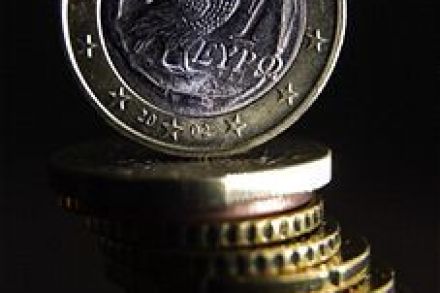
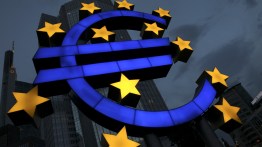
Like an unseasonal Atlantic gale, the Portuguese sovereign debt crisis has blown in to ruin the latest EU summit. This meeting was intended to mark the beginning of the end of the eurozone crisis. Instead, the ponderous European Union has been overtaken by events, with grave consequences. Already speculation about contagion is rife: Spain, Malta* and Italy are now being spoken of in hushed and exasperated tones. The Economist’s Charlemagne correspondent reports that several countries are now wary of the monetary pact that Germany is demanding for delving deeper into its pockets, because they do not want to be accused of surrendering sovereignty. Likewise, the injection into the European Financial

What Portugal means for the UK

Last night, Portugal’s parliament voted to reject its latest measures to deal with its deficit. It was the fourth time that the Portuguese parliament had been asked for more taxes and for more spending cuts. The result has been a further loss of confidence in Portugal’s ability to pay its debts. Market interest rates have risen to over 8 percent. European leaders are meeting this weekend to work out a path forward. The lessons for us here in the UK are starkly clear. First, it is better to set out all the difficult decisions needed to deal with the debt crisis, even if these take place over a number of

Cameron’s €4 billion Portuguese challenge

As if the budget and Libya weren’t enough, the UK Government woke up today with another major challenge on its hands – yet another flare-up in the eurozone debt crisis, which has been continuing to bubble away under the radar.   Yesterday, Portugal’s Prime Minister José Sócrates literally walked out of Parliament, during a debate on EU-backed austerity measures. The austerity package was subsequently voted down and shortly afterwards Sócrates announced his resignation. Portugal is now facing the prospect of being without a government for months, as its electoral rules require a 55 day break between the dissolution of Parliament and new elections.   The episode has increased the already

Scouring the Budget small print

This morning’s newspapers have a feast of analysis on the Budget. I’ve covered 15 of them, and what journalists normally do is spend the day trawling the small print of the Budget document hunting for stories. But this time, the stories seem to have migrated to the Office for Budget Responsibility’s accompanying report, packed with new analyses and metrics — even disaster scenarios — which those with an interest in UK economics will find useful. The OBR document is now released with the Red Book, and speaks with the authority of government economists who (unlike the rest of us) have had weeks to chew over Osborne’s claims. The OBR must

Nuclear hysteria

The above Japanese video – explaining the nuclear accident to children — makes a lot more sense than many of the hysterical reports we have been reading in the last few days. The figures are not out yet, but it’s likely that tens of thousands were killed by the tsunami. Yet the newspapers were all focused on the nuclear meltdown — which injured 15 people. The irony is that, when a tsunami strikes, the local nuclear power station is pretty much the safest place to be. This is the argument advanced in the leading article for the current issue of The Spectator (subscribers, click here; non-subscribers please join us for