Europe

The danger of unbalanced trade with China

The Chinese premier seems to like cars; the Chinese in general seem to like cars. China has bought MG in Britain and Volvo in Sweden, to which it has just added Saab. If the Chinese can make European car companies viable, then what's the problem? Theoretically nothing: trade will help the Chinese and Europeans alike. But, as Robert Peston made clear in his questioning of Wen Jiabao, trade remains unbalanced. For example, European companies are excluded from public procurement contracts in China. It is also worth noting that China’s purchase of Spanish and Greek bonds over the past year, coupled with their promise to buy from Hungary, have made it a bilateral lender of last resort for politicians in indebted countries.

Badgering Spelman

The stars must be crossed for Caroline Spelman. First came the forests, then the bin collection fiasco, then the circus animals and now the FT’s Jim Pickard has news that the Cabinet will meet in mid-July to discuss whether to start a badger cull in the south-west. Badgers are one of those perennial issues of contention. As Pickard says: ‘It’s one of those classic issues where both sides have a highly convincing argument. The farmers (who have, I’m told, offered to underwrite the killing) believe that badgers have caused bovine TB among cattle herds and are pushing hard for the cull. But the animal welfare people want vaccination instead.

How many refugees are actually coming to Europe?

A human wave of refugees is supposedly setting off for Europe from North Africa. But what are the real figures? The first thing to note that refugees from North Africa come at a time when there has been a sharp decrease in the number of asylum applicants in the 27 EU member-states. Eurostat says that in 1992 there were 670,000 applications in the EU-15 and in 2001 there were 424,500 applications in the expanded EU-27. But according to the UN, the 27 EU member-states registered only 247,300 asylum claims in 2009 and 235,900 in 2010, a 5 per cent annual decrease.

Britain makes new senior diplomatic appointments

From the Number 10 website: The Prime Minister is pleased to confirm the following senior appointments: Sir Peter Ricketts, currently the Prime Minister’s National Security Advisor, to become HM Ambassador to France; Sir Jon Cunliffe, currently the Prime Minister’s Advisor on Europe and Global Issues, to become the UK’s Permanent Representative to the European Union in Brussels; Sir Kim Darroch, currently the UK’s Permanent Representative to the EU, to become the Prime Minister’s National Security Adviser; and Sir Peter Westmacott, currently HM Ambassador France, to become HM Ambassador to Washington. These changes will take effect from January 2012.

Cameron: no more bailouts

It’s another of those special Cameron victories in Europe: we’re in for a second Greek bailout, but not quite as much as we might have been. Britain will contribute a sum through the IMF; however, it will not be contributing to EU funds. Cameron has succeeded in ensuring that the European bailout will be conducted under the permanent European Financial Stability Facility (EFSF), to which only eurozone members are signatories. Although it should be noted that some Brussels experts doubt that the European Financial Stabilisation Mechanism (to which Britain has subscribed) could have been used in this instance, which further devalues the government's victory. Anyway, attention now turns to Greece and whether it will default.

Euro-bondage

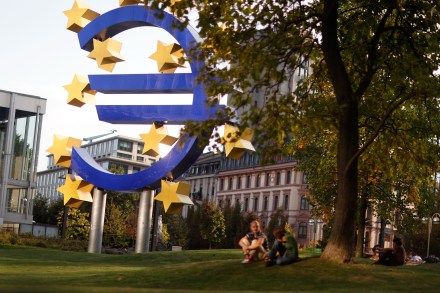
At a time when the Euro is looking so weak, it is a wonder that so many countries are still queuing up to join. Estonia has recently joined, while Hungary and Bulgaria are keen as mustard to join as well. Make no mistake, these countries want to join. They go to lengths to stay for two years in the European Exchange Rate Mechanism, while keeping inflation inline with the EU average. At a meeting this morning, the Hungarian foreign minister capped off his country¹s EU Presidency by declaring that Hungary is still focused on joining. But, even if these countries did not want to join the Euro, or felt perhaps that the Greek crisis was a reason to postpone membership, they would have no choice.

Cameron muscles Clarke off the stage

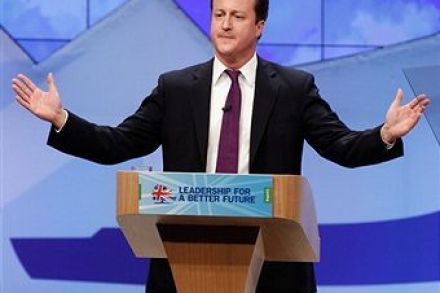
The toughening-up effort continued with David Cameron's press conference just now. There he was, at the prime ministerial lectern, not just announcing a stricter sentencing system than Ken Clarke broached a few weeks ago, but explaining why the government's change of mind was actually "a sign of strength". Out are the 50 per cent sentence reductions for those who plead guilty early. In is a commtiment to jail those caught using a knife threateningly, as well as a bundle of tougher measures all round. "Being strong is about being prepared to admit that you didn't get everything right the first time around," said Mr Cameron, again and again.

Hoban wobbles in the House

Mark Hoban has just turned in a remarkably unconvincing performance at the despatch box. Summoned to the Commons to answer an urgent question from Gisela Stuart, one of the best backbenchers in the House, on what contingency planning the government was doing for a Greek default, Hoban attempted to stonewall.   But Hoban’s stonewalling could only carry him so far. Strikingly, he declined several opportunities to confirm that the British government thinks that the euro will survive in its current form with all its current members.   By contrast, Jack Straw was quite happy to make predictions. He told the House that ‘the euro in its current form is going to collapse.

Boris’s one-two punch against the coalition

Boris, we know, has never had any compunctions about distinguishing his views from those of the coalition government. Take his recent proclamations on the unions or on the economy, for instance. But his latest remarks are still striking in their forthrightness. Exhibit A is the article he has written for today's Sun, which — although it doesn't mention Ken Clarke by name — clearly has the Justice Secretary in mind when it exhorts that "it's time to stop offering shorter sentences and get-out clauses." And Exhibit B is his column for the Telegraph, which waxes condemnatory about Greece and the euro.

How the Tories could capitalise on the eurozone’s woes

With events in Greece moving at pace, next week’s European Council meeting (which was scheduled to be a low-key affair) could be the place where attempts to resolve the crisis in the eurozone take place. I’m told that Number 10 has now woken up to this possibility and is doing some preparatory work on the matter.   But, frustratingly, there’s still no strategy for how David Cameron could use this crisis to advance the British national interest. As I wrote last week, if the eurozone countries decide that a solution will require a treaty change, then Britain has a veto over that — and could use the negotiations to secure various things that Britain wants from the EU.

Greece on the precipice

Europe is a doom-monger's paradise at the moment. Riots in Greece; summary Cabinet reshuffles; meetings between Merkel and Sarkozy to save the single currency — and there's still the potential for things to get worse, much worse. If the Greek government defaults on its debts, then there's no knowing where the contagion will spread, only that it it will spread wide: from Spain and Portugal to markets across the world. Share indices have already been trembling at the prospect, although many of them rallied slightly today. One consolation, however scant, is that all this crystallises just what can happen to governments who operate beyond their means.

Mars and Venus Revisited

Bruce Bartlett offers this chart (via Andrew) demonstrating that the United States is the only NATO country basically to have maintained it's Cold War defence spending. Indeed, the US accounts for roughly 43% of global defence spending. Bartlett is not the only conservative who thinks domestic fiscal concerns - to say nothing of foreign policy matters - mean this kind of spending is unsustainable in the longer-term. No wonder Bob Gates lambasted european allies last week for their failure to spend more on defence (and especially on equipment).

Erdogan’s immediate dilemma

It seems that everyone won the election that was held in Turkey this weekend. Prime Minister Erdogan's Justice and Development Party (AKP) officially won, taking some 50 per cent of the vote, which is enough to secure him a third term in office, but not sufficient to enable his party to make changes to the constitution. As the BBC's Gavin Hewitt notes, ‘Prime Minister Recep Tayyip Erdogan of Turkey stands out. He is genuinely popular. He is socially conservative, but he has tapped into the aspirational mood of Turkey’s middle class.’ But although the opposition party, Republican People's Party (CHP), lost the election they actually polled about a quarter of the votes, the best result it has had for three decades.

Government split over enforcing the Digital Economy Act

The Digital Economy Act (DEA) is to be 'rebooted' before the summer recess, so that it can be brought into force next January. Digital policy expert James Firth explains how the Act is being brought forward by placing it before the European Commission, a process that was overlooked when the Act was passed during the 'wash out' at the end of the last parliament. He also hints at a possible division on this issue within the Department for Culture, Media and Sport (DCMS), suggesting that this new approach is "being driven personally by Jeremy Hunt". So it seems. Some of those who were privy to discussions at the DCMS say that Ed Vaizey, the minister tasked with the digitalisation of Britain, insisted that government should not be regulating the Internet.

Gates: Current state of Nato is ‘unacceptable’

The outgoing US Defense Secretary Robert Gates has delivered a remarkably frank warning to the European members of Nato that if they do not spend more on defence, the United States will be unwilling to maintain the transatlantic alliance. Gates declared that, “The blunt reality is that there will be dwindling appetite and patience in the U.S. Congress – and in the American body politic writ large – to expend increasingly precious funds on behalf of nations that are apparently unwilling to devote the necessary resources or make the necessary changes to be serious and capable partners in their own defense -- nations apparently willing and eager for American taxpayers to assume the growing security burden left by reductions in European defense budgets.

Blair is still a believer

To an extent, British politics is still determined by whether or not you agree with Tony Blair. For more than a year, the coalition and the opposition have been debating whether to continue Blair’s public service reforms; this is a testament to his failure as Prime Minister as much as it to his success. Today, has given an interview to the Times (£), coinciding with the release of his memoirs in paperback. He uses it to question the Labour party’s current journey back into “nostalgia”. He says: “The attraction of a concept like Blue Labour is it allows you to say that there’s a group of voters out there we can’t reach at the moment, so what we should do is really empathise with their plight.

The mystery of modern Turkey

What does Turkey actually think? That's an issue that has been occupying many Europeans, as the vital NATO ally heads to the polls. On the one hand Turkey has in the last 10 years become more like the West: globalised, economically liberal and democratic. Turkey’s economy is now the world’s 16thlargest, the sixth largest in Europe. But, at the same time, questions arise about its recent policies: will it consolidate its democratic achievements, or is it threatened by a populist tyranny or even authoritarian rule? Certainly, many fear that Prime Minister Recyp Erdogan's behaviour is moving Turkey away from the West, both in terms of internal policy and external alignmen.

Why wasn’t Mladic arrested earlier?

How did Ratko Mladic escape arrest for so long? Writing in this week’s issue of the Spectator (buy it here), Charlotte Eager remembers her nervous summers with the azure-eyed butcher, in the course of which she writes: "Why wasn’t Mladic arrested before? After all, British, French and US special forces wandered Bosnia freely for many years after the end of the war and he used to be spotted in restaurants, boils and all. The problem, according to some ex-SAS chums, was that our governments wanted Mladic to be taken alive. ‘That would not have been possible then,’ said one: back then, his thugs were still pumped up enough to die for him. Sixteen years after the war, the adrenalin has ebbed.

From the archives – the Butcher of Belgrade

As Ratko Mladic faces his accusers at the Hague, it’s instructive to revisit the fallout from one of the atrocities he is alleged to have committed. The Srebrenica massacre was both a horrendous tragedy and a horrendous failure of internationalism – a point the Spectator made cautiously as news of the war crime emerged. No End of a Lesson, The Spectator, 22 July 1995 The tragedy in Bosnia is so harrowing, the United Nations’ failure so all-embracing, the West’s humiliation so total that it is difficult as yet to see beyond them. But for the Bosnians themselves, the worst may now be passed. Whether the defeated international powers stage some dramatic military feat before their departure is largely irrelevant to those they were sent to protect.

Cameron’s European opportunity

Jean-Claude Trichet’s speech yesterday proposing a ministry of finance for the eurozone (£) can be taken as setting out how the European Central Bank wants to resolve the eurozone’s problems. It is yet another example of how the European elite use crises to advance integration.   But just as important from a British point of view is Trichet’s admission that the overall package of changes he is talking about “naturally demand a change of the [EU] treaty". This, as Fraser has written previously, presents David Cameron with a glorious opportunity to take advantage of this moment to redefine Britain’s relationship with the European Union.