Europe

Le crunch: are the Brexit talks doomed before they begin?

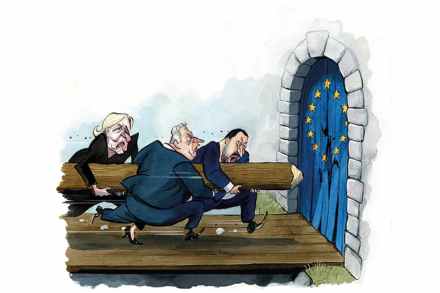
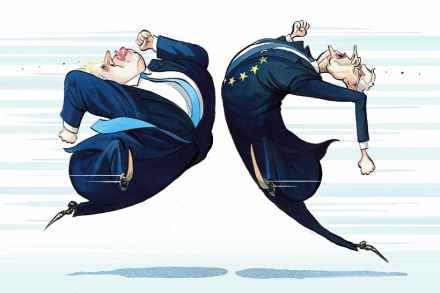
When Boris Johnson and the new European Commission President Ursula von der Leyen met in Downing Street last month, they agreed on one thing immediately: that it was time to stop the sniping, animosity and backbiting that had characterised the first round of the Brexit talks. The Prime Minister emphasised that Britain wanted to be the EU’s close friend and ally. Only a few weeks later, and already the Brexit wars are back. The two sides are so far apart that many diplomats think there is a better-than-even chance that the talks will fail. One member state is already planning around the central assumption that there will be no deal by the December deadline. For its part, No. 10 is braced for the talks to collapse sooner rather than later.
The Brexit reshuffle: every great office of state is now held by a Leaver

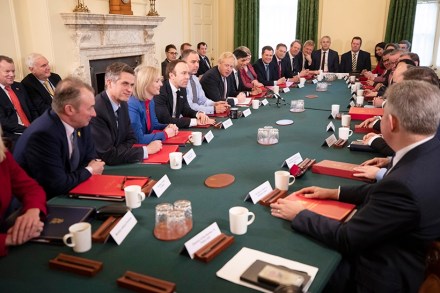
One of the Tories’ tactical successes has been to push Brexit down the news agenda. But even if it no longer dominates front pages and news bulletins as it once did, the task of sorting out Britain’s future relationship with the European Union remains the government’s biggest challenge. Brexit also provides the best explanation for some of No. 10’s other actions. Last week’s cabinet reshuffle, for instance, can only be properly understood in the context of Brexit. The purpose was to create an all-powerful centre. The three greatest parts of government — No. 10, the Treasury and the Cabinet Office — have now been joined together. There is a combined No. 10 / No.

Letters: How to make a cup of tea

No defence Sir: Jon Stone (Letters, 15 February) recalls the horrors and miseries of being subjected to bombing from the air. How right he is to do so. The deliberate burning and crushing of civilians in their homes is a revolting and indefensible form of warfare. It is no surprise that Hitler used it. What is surprising is that people in this country continue to make excuses for our own use of this method, which was actually far more extensive and deadly than the German bombing of the United Kingdom. There are no such excuses. Those who fall back on utilitarian justifications will also find that these do not work. The bombing of Germany failed on its own terms.

‘A system at odds with the Constitution’

From our US edition

This article is in The Spectator’s February 2020 US edition. Subscribe here.How did America’s house divide for a second time in the 1960s? By a tragedy of good intentions and bad-faith actions, Christopher Caldwell argues in his new book, The Age of Entitlement: America Since the Sixties. He talks to our Life & Arts editor about how we got here from there, and how activism inside and outside the courts has refounded American politics on an undemocratic basis. DG: The Age of Entitlement argues that the Civil Rights Act divided the country by establishing what you call a ‘second constitution’. CC: That is a big part of it. The book is about the evolution of American society since the Kennedy assassination.

caldwell lockdown

The Tory war over Europe is finally over

Happy Christmas (War Is Over). John Lennon probably didn’t have the decades long Conservative dispute over Europe in mind when he wrote that, but the message seems very apt this year after almost the entire Tory parliamentary party trooped through the lobbies in support of its leader’s plan to take Britain out of the EU. It was back in 1971 that Lennon released his blockbuster Christmas single. At the time, the Conservatives were largely united behind the idea of joining the European Economic Community. So few could have anticipated that an internecine political war lasting almost half a century was taking hold.

The mysteries of the Corbyn world-view

It is worth fixing for posterity the feelings which, on polling day, swirled in the breasts of many who wanted a Boris victory. Being a journalist, I normally enjoy the electoral scene with some detachment. I cannot claim to be neutral, since I have never, even in Tony Blair’s pinkish dawn of 1997, wanted a Labour government; but I can take it in my stride. This time, however, millions, including myself, were knotted with fear that anything other than a clear Tory victory would destroy Brexit and make Jeremy Corbyn prime minister. The risks were actually frightening. We sought distractions. Listening to the Radio 4 Today programme that morning, I heard the sports presenter admitting he did not know how to pronounce his tipster’s selection for the 2.30 at Newcastle, Calliope.

The Brexit blame game

There will be no last-minute deal. The talks between the UK and the EU have effectively broken down. It isn’t that there’s no light at the end of the tunnel, it’s that there’s no tunnel at all. The blame game is now far more advanced than the negotiations. The diplomatic crockery has been smashed even before Boris Johnson and the leaders of the EU27 have arrived in Brussels for this month’s European Council. The question now is whether the talks can ever be resuscitated at a later date —  or if we are in a world where the only options are no Brexit or no deal. The assumption had long been that as the 31 October deadline neared, one side or the other would blink. That the pressure would produce a compromise.

David Cameron would be a winner in Ancient Greece

David Cameron is convinced he was right to call a referendum and to promise to enact it. Justifiably: there was a huge turnout and a clear winner. That’s democracy. But he has been lashing out because the referendum did not go as he hoped. This whingeing makes him look like a total loser. An ancient Greek in that position would argue he was a winner: he had kept his promise, and therefore reputation, intact. For a Greek, reputation was of the very highest importance because simply doing or being good was not enough: if people did not know about it, what was the point? As a result, Greeks often explained their motive for action in terms of the honour and renown it would bring them.

Portrait of the week: EU negotiations, genderless babies and Brexit in court

Home ‘I will uphold the constitution, I will obey the law, but we will come out on 31 October,’ Boris Johnson told the BBC, adding that the EU ‘have had a bellyful of all this stuff’. After a lunch of chicken and pollock at the Bouquet Garni in Luxembourg with Jean-Claude Juncker, the President of the European Commission, he found noise from British protesters made it impossible for him to join Xavier Bettel, the Prime Minister of Luxembourg, in an open-air press conference, so Mr Bettel continued on his own, gesturing angrily to an empty podium and saying what a ‘nightmare’ of uncertainty Britain had left Europe in.

Brexit has its risks. But staying in the EU is now unthinkable

This is one of the most crucial weeks in modern British history. We have a prime minister and cabinet who understand the stakes in terms of our future independence. But the forces fighting them — some of them sincere, many of them cynical — are fearsome. There are risks in proceeding with Brexit. But there are far greater risks in abandoning it. This endless crisis has led to widespread criticism of British politicians of all hues, some of it justified. I find it deeply distasteful to see very senior Conservatives plotting with the opposition to bring down the Prime Minister. But far less criticism has been levelled at the EU itself — which is odd, because Brussels is the cause of our agonies, past and present.

Letters: civil servants have ruined our trains

Travelling in discomfort Sir: I don’t agree with much of what Matthew Parris says these days, but he was spot on with his piece about train seats (‘Who’s to blame for my terrible journey?’, 17 August). I think his hunch about where the blame lies for such uncomfortable seats is correct. In these parts, our train service provider is GWR, which has introduced new trains with bum-numbingly unforgiving seats that are wholly unsuited to typical journeys of four to five hours. When questioned, the always helpful staff respond that: ‘This is what happens when you get civil servants to design the trains.’ To add insult to injury, the new GWR trains also have no buffet carriages. Instead there is an elusive, poorly stocked trolley.

Matteo Salvini prepares for his big gamble

Italians have had ten prime ministers in the last 20 years. They may soon have another. Matteo Salvini, the interior minister, deputy prime minister, and leader of the League, is ready to pull the plug on a coalition government increasingly pitted against itself. The League and its coalition ally, the Five Star Movement or 5SM, are less ideological brothers-in-arms than sibling rivals forced to live under the same roof. Salvini and Five Star Leader Luigi Di Maio are two strong personalities who were never completely aligned to begin with – Salvini having represented Italy’s industrial north, Di Maio coming onto the national scene as the leader of a grassroots party with significant support in the agricultural south.

View from the EU

The conviction has been spreading among French people in recent days that les Britanniques have just elected Donald Trump. The papers are filled with meditations on British anxieties over lost empire, descriptions of Boris Johnson’s hair and the wildest speculations about what he might do as Prime Minister. Every squib about European overregulation that Johnson wrote during his stint as a Brussels correspondent for the Telegraph in the 1980s and 1990s has by now been vetted, stripped of its humorous intent and found wanting. Johnson exaggerated the threat of European regulations to prawn cocktail-flavoured crisps! Nowhere did he cite a single EU directive banning the large-sized condoms that an Englishman requires!

Who’s afraid of no deal?

How bad would a no-deal Brexit really be? This is now perhaps the most important question in politics, and the one provoking greatest disagreement. The answer will help decide whether parliament allows Brexit to happen, and whether Tory MPs bring down their own government. If they think calamity would follow, patriotic rebels might risk a general election to stop the Tories. But what if it would not be so bad? And is there any way of finding out? Almost everyone accepts it will cause problems, but views range from manageable to ‘national suicide’. It is difficult to predict complex events without historic precedent, but there are other reasons for the divergent views. The first is that there is not a single ‘no deal’, but a whole spectrum.

The moment the European project first went wrong

At a time when the EU is at its least popular and, worse still, least respected, it is worth reflecting on how the idea for a united Europe developed – and where it went wrong. The Spectator’s reprint last week of Christopher Booker’s 2014 article ‘How the first world war inspired the EU’ is a timely reminder of the real genesis of the EU. Yet it was only after the Second World War amid fear of a renascent Germany, that the concept of an 'ever-closer union' became the shibboleth of European construction. It was here that the European project took a mistaken turn. The First World War led to France and Britain's economies becoming closely aligned. This partnership involved inter-allied commissions to oversee the distribution of wheat, sugar, coal and credit.

The enduring power of the Special Relationship

From our US edition

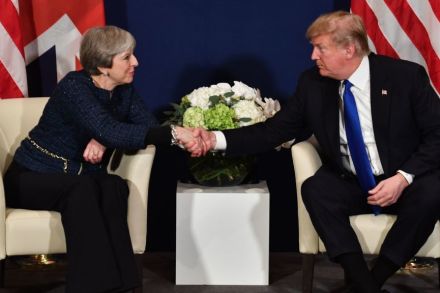
The resignation of Theresa May, continuous Brexit chaos, and probable anti-Trump protests will all present a lively backdrop to President Trump’s upcoming state visit to the UK. Despite the US and the UK appearing to move toward inward-looking foreign policies in recent years, new survey data show that the public in both countries share more of a global outlook than their leaders might realize. Trump was elected on an ‘America First’ platform and has applied tariffs to trading partners, questioned the utility of alliances, and continues to push for more restrictive immigration policies. May was elected on a promise to deliver the UK’s departure from the EU, with cutting back on immigration a key part of that promise.

special relationship

Why the green wave didn’t hit Sweden

The European parliament election campaign in Sweden was unlike any other in its history, characterised by several scandals and conflicts amongst individual candidates – both within and between the major parties. The elections in Sweden – as elsewhere – were also an ideological struggle between parties calling for more or less EU integration. But perhaps surprisingly, the green wave witnessed in other countries around Europe didn't hit Sweden. Swedish voters largely opted for parties who called for the EU to have less influence. Compared to 2014, the results of the election rewarded centre-right parties who expressed soft Euroscepticism – seeking EU reform while remaining firmly in favour of continued membership.

High life | 9 May 2019

New York   Here’s a question for you: if your wife, husband, girlfriend, boyfriend, toy boy even, lied repeatedly to you about a serious matter such as fidelity, would you continue to trust them? I suppose some fools would, but most wouldn’t. So here’s another question: how can the British people even countenance voting for those they entrusted with implementing their 2016 decision to leave the bureaucratic dictatorship that is the EU? Duh! Actually, I’d be in the UK by now and trying to stir things up, but I’m stuck in the Bagel with pneumonia, bronchitis, and all sorts of other bugs that caught up with me while in pursuit of the high life.

Notre-Dame is a sign of the times

From our US edition

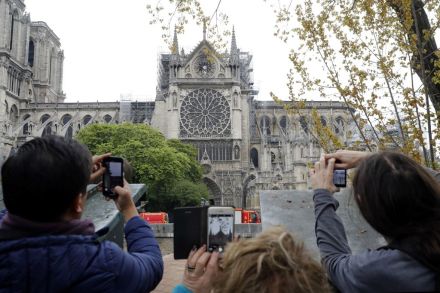
Notre-Dame is the symbolic heart of Paris and France, and a symbol of European Christianity second only to the Vatican in Rome. The apocalyptic destruction of a monument of such beauty and significance would be a sign of the times at any time. In our time, however, no one seems sure of what the sign means. I doubt I was alone in my first response. When I saw footage of the falling, burning spire, I assumed that this was an act of terrorism rather than, as seems most likely, an accident caused by renovation work. This is a sign of the times, even though it would be incautious to admit it in polite society.

notre-dame sign

EU elections could be a golden opportunity for Brexiters

A Brexit delayed until Halloween will be regarded as a nightmare for many. It must seem to the people who voted to leave the EU that escaping the bloc is slipping further and further away. The extension confirms their fears that the government and Brussels are prepared to re-write the rules in order to avoid a no-deal scenario, having previously pledged there would be no extension at all. One of the immediate issues now will surely be the EU elections on the 23 May, which many parties were loath to take part in. But, in some ways, the EU elections could be very helpful for Brexiters. And they could end up with more allies in Brussels than they currently have in Westminster.