Europe

Austria and Italian voters could plunge the EU into crisis

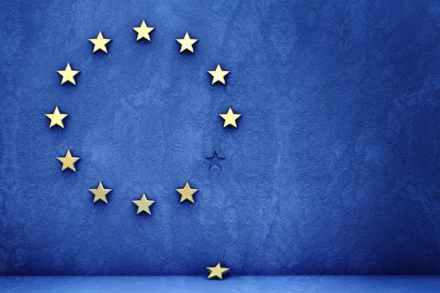
Voters in Austria and Italy head to the polls tomorrow and could plunge the EU into a political and economic crisis, as I say in The Sun today. In Austria, the candidate of a genuinely far-right party—its first leader was a former SS officer—could become president. If the Freedom Party’s Norbert Hofer does win, and the race is too close to predict with any confidence, it’d show that the very extremist forces that the European project was meant to crush are now on the rise—and in part, because of the EU’s own failings. But it is the Italian referendum that could have the more immediate consequences. Italy bans polls just before votes, so we don’t have any up to date polling.

Algerian winter

It is more than possible that before any Brexit deal is discussed, let alone concluded, the EU will have effectively collapsed. And the key factor could be the demise of Algeria’s leader of 17 years. President Abdelaziz Bouteflika is 79 and has needed a wheelchair since having a stroke in 2013. ‘His mind is even more infirm than his body,’ one observer tells me. Bouteflika returned home recently after a week’s stay at a private clinic in France. His prognosis isn’t good. Officially, Bouteflika underwent standard ‘periodic medical tests’ in Grenoble. But no one believes this. Among people who know Algeria well, there is little doubt that he is severely incapacitated and does not have much time left.

Trump and Fillon mean that Britain matters far more to Eastern Europe

By next summer, Britain could be the only one of the three major Western military powers unequivocally opposed to the idea of Russian domination of its near neighbours. For François Fillon, the Republican candidate for the French Presidency and the favourite to win, has -- as UK security sources point out -- pretty much the same view of Russia as Donald Trump does. Fillon favours allying with Russia in Syria and seeking Vladimir Putin’s help to defeat both Islamic State and the broader Islamist terrorist threat. Fillon also wants EU sanctions on Russia, imposed because of its annexation of Crimea and broader interference in Ukraine, lifted. This shift in world affairs has profound implications for Britain.

Tory Brexiteers pressure May to quit EU single market and customs union

Normally, the Saturday before an autumn statement would be dominated by speculation about what is in it. But, as I say in The Sun today, both Number 10 and the Treasury are emphasising that while there’ll be important things on productivity, infrastructure and fiscal rules in Wednesday’s statement, there’ll be no rabbits out of hats. Partly, this is because of  Philip Hammond’s personality: he’s not a political showman. But it is also because he’s not got much room for manoeuvre.  As he has emphasised to Cabinet colleagues, the growth forecasts might not be dramatically lower than they were in March, but cumulatively they have a big effect—limiting what the government can spend.

Theresa May now has some Trumps in her Brexit negotiating hand

Britain’s position heading into its Brexit talks is far stronger than it was a week ago, I argue in The Sun today. Why, because Donald Trump has changed the dynamics of global politics. Brexit’s critics used to claim that this country would be isolated after it left the EU. But it is hard to make that case when the president-elect of the most powerful country in the world is in favour of it. Indeed, the next US President is more enthusiastic about it than the British Prime Minister. He was for it before June 23rd. Theresa May now has a chance to create a strong relationship with Trump before other European leaders even start trying.

Government’s high court defeat sparks election chatter

What worries government ministers, as I say in The Sun this morning, is not the actual vote on the Article 50 bill—voting against the bill as whole would be akin to rejecting the referendum result—but attempts to tie Theresa May’s hands ahead of the negotiation through amendments to the bill. One senior Cabinet Minister tells me that peers and MPs ‘won’t be able to resist’ trying to amend the bill. Though, it is worth noting that because of public concern about free movement there probably isn’t a Commons majority for staying in the single market, post referendum. Downing Street is adamant that they don’t want an early election, and that if they lose their appeal to the supreme court they can get this bill through clean.

Spain’s political deadlock finally ends

After nearly a year of bickering and stalling, Spanish politicians have finally formed their country’s new government. Mariano Rajoy, leader of the conservative Popular Party (PP), returns for a second term as prime minister. This time, Rajoy heads up a coalition made up of the PP, centrist newcomer Ciudadanos (‘Citizens’) and the centre-right Canary Islands Coalition. This is good news for Spain and shows that, at last, pragmatism has trumped ideology. It has ensured that a dreaded third election, which had been looming in December, won't now be needed. Rajoy’s administration won’t have it easy though. The coalition is deeply unpopular with many Spaniards and will face formidable opposition in congress.

Berlin: The return of German pride?

On a windswept square beside the river Spree, across the road from Berlin’s Museum Island, there is a brand new building which epitomises Germany’s shifting attitude to its imperial past. For 500 years this was the site of the Berliner Schloss, seat of Prussia’s royal family. After the second world war it was demolished, and now it’s being rebuilt from scratch. The Berliner Schloss has always been a barometer of German history. It was the residence of Frederick the Great, that daft enlightened despot who put Prussia on the map. In 1914, Kaiser Bill addressed his loyal subjects from its balcony. In 1918, Karl Liebknecht stood on this balcony to proclaim his ‘Free Socialist-Republic’. That balcony has been preserved, cemented into an adjacent building.

What is it with luvvies wanting to be ‘thoroughly European’?

There's always room for one more on the Ship of Fools, and Tom McCarthy has just booked his passage. The English novelist (no, I'd never heard of him, either) has written a column of such fifth-form puerility in the Guardian that it marks him down as a dunce of exceptional plumage. Make way, Hadley Freeman. Step aside, Zoe Williams. There's a chap out there who can give you five yards and still beat you to the tape. McCarthy, of Dulwich College and Oxford (just right for the Guardian), is in a frightful bate because he has been invited to a bash at the Royal Academy to celebrate British art and feels insulted: 'Like all English-language writers, I'm thoroughly European'. To prove it he refers to Shakespeare and Joyce, who, like him, would have voted to remain part of the European Union.

The Spectator’s Notes | 6 October 2016

 Birmingham Checking in to my hotel room on the 18th floor, for the Conservative party conference here, I opened the door and bumped into a workman on a stepladder. ‘Sorry,’ he said, ‘They shouldn’t have let you in. All the water came through from the room upstairs.’ He was painting over the damage. Then he looked at me, recognised me and asked, ‘Hard or soft Brexit, then?’ I burbled slightly, not being happy with the distinction, but eventually said I thought ‘hard’ better described what was needed. The painter told me he read the Guardian and the Telegraph every day to ‘get both sides’. He reckoned ‘hard’, too: ‘It’s got to be divorce.

Let there be light, and at better times of day

We already drive on the left, give road distances in miles and drink pints. So one good feature of Brexit is that Britain will be able to develop a whole series of exciting new idiosyncrasies to annoy continental Europeans. For instance, I am planning to bring a private petition to Parliament demanding that Britain formally adopt the UK tabloid approach to metrication, where all low temperatures are reported in Celsius and highs in Fahrenheit. A colleague of mine, Pete Dyson, has an idea that might raise the eyebrows of our continental chums. He points out to me that the EU sanctioned dates on which we change our clocks for daylight saving time are holding us back. Pete is a human geographer, so he should know, but just to be sure I checked with my brother who is a bona fide astronomer.

May’s Brexit offering

Theresa May’s biggest conference dilemma was what to say about Brexit. She doesn’t want to trigger Article 50 yet, or even say when she will do so. Why, because the government hopes that the longer it waits, the more the rest of the EU will be inclined to have preliminary discussions before the actual negotiations start. But May had to have something to say to conference on Brexit. So, May’s team have come up with an announcement that doesn’t involve Article 50 but does enable her to show ‘momentum’, and to claim she is getting on with things. It is a ‘Great Repeal Bill’ which will repeal the 1972 European Communities Act, but only when Britain actually leaves the EU.

May will have to say more on what Brexit means — and soon

Theresa May will receive a rapturous reception from Tory activists tomorrow. She is not just their new leader, but—as I say in The Sun today—someone they see as one of their own. She joined the party as a teenager, met her husband at a Tory disco and still goes out canvassing most weekends. She’s also much closer to the activists in age than Cameron was when he became leader: she turns 60 today, Cameron was 39 when he became party leader. But May should enjoy the applause on Sunday because her job is about to get harder. She is taking the unusual step of speaking on the opening day of conference to try and get Brexit out of the way.

Migrant benefits

Calm is slowly returning to the debate about Britain and Europe. The shrillness of the referendum campaign, and the hysteria from people who ought to have known better, is giving way to an acceptance that the end is not nigh and that things could be as good, if not better, than before. The idea that the British public had somehow voted for a recession is being steadily abandoned. The next stage is to accept that Brexit was not a populist yawp about protecting our borders. It was not a demand to stop immigration, but to manage it better. So when Theresa May rejected an Australian-style points-based immigration system this week, it did not mean that she had betrayed Brexit or shown her desire to water down the whole process.

Theresa May: We have selection in state schools already, selection by house price

Theresa May received the traditional desk banging reception when she addressed the 1922 Committee of Tory backbenchers. May pleased Tory MPs by emphasising that they  would have more opportunity to feed into policy making process now through George Freeman and the policy board and the green papers that will---once again—precede white papers. But what most excited Tory MPs was what May said about opportunity and grammar schools. May said that she would give a speech on a 21st century education system soon, explaining how selective schools--in other words, grammars--fit into the mix. Strikingly, she defended an ‘element of selection’ arguing that there is selection already in the system, and it is selection by house price.

Wasn’t the ‘March for Europe’ supposed to be about tolerance?

'Get back to the 1930s, you f***ing fascists' was one of the more printable insults screamed at the small group of Brexiteers holding a counter protest at the March for Europe on Saturday. Given the event was intended by the organisers to be a 'huge celebration of peace, tolerance and diversity', it's a shame that no one had told some of those taking part. Let me set the scene for you. The march started as predictably as could be imagined: a sea of blue-clothed, London-types, largely middling in both age and class. Banners, flags, balloons and dance music, pumped out by a bicycle-drawn loudspeaker, filled the air. But this feeling of goodwill didn't last for long. A couple of hundred metres from Parliament Square there was a buzz of commotion. It was the counter protestors.

Eddie Izzard parts ways with his pink beret

During the EU referendum campaign, Eddie Izzard toured the country wearing a pink beret in a bid to convince young people to vote Remain. Alas his efforts failed to have the desired effect, with the Leave result only adding to his growing list of doomed campaigns. While Izzard's kiss of death has since gone on to lose him another election -- failing to win a place on Labour's NEC last month -- he appears not to be put off. This weekend the cross-dressing comedian turned activist took part in the March for Europe where die hard Remain-ers -- seemingly unswayed by the referendum result -- took to the streets to call for the triggering of Article 50 to be delayed indefinitely.

Barometer | 25 August 2016

Golden years How many Olympic events would Team GB have to win before we could earn back the gold reserves sold by Gordon Brown? — Olympic gold medals are in fact gold-plated silver and contain only 6g of gold. Between 1999 and 2002 Gordon Brown sold off 395 tons of gold — enough to mint 64.7m medals. Assuming the number of golds on offer at the summer Olympics remains 812, as at Rio, that would mean winning every event at 79,679 Olympiads, taking us to the games of ad 320736. — It would be a different story if, as last happened in 1912, the medals were solid gold. With 500g of gold in each medal, we could achieve the feat by ad 5848.

High life | 11 August 2016

Gstaad   ‘He flies through the air with the greatest of ease, that daring young man on the flying trapeze.’ As everyone knows, life’s unfair, but this is ridiculous. An American daredevil falls out of an aeroplane at 25,000 feet without a parachute and manages to land on a postage-stamp-size net without a scratch. The poor little Greek boy falls off a balcony ten to 15 feet high, lands on gravel and breaks many bones in his body. Being encased in plaster is similar to living under a strict dictatorship, North Korea, for example. There’s no crime, no muggings, but as far as doing what comes naturally, fuggetaboutit. Self-doubt and cultural pessimism are twinned to physical immobility and pain.

Why an early election would be bad for the Tories

Ten points ahead in the polls, Theresa May regarded as the best Prime Minister by a majority of voters and both Labour and Ukip in disarray. It is little wonder, as I say in The Sun today, that some Tories are beginning to get excited about an early election. But going for an early election would be a massive mistake for the Tories. First, what the public seem to like about Theresa May is that she is a no nonsense politician who gets on with the job in front of her. Voters appear to like her refrain that politics isn’t a game. But calling an early election would destroy all this for it would be game playing on an epic scale, a move designed to take advantage of Labour weakness. Next, you can’t know how long a honeymoon is going to last.