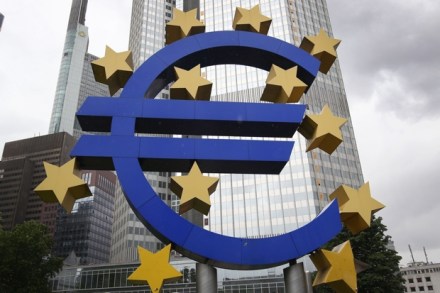
Eu

Greek referendum going ahead as Tsipras again urges No vote

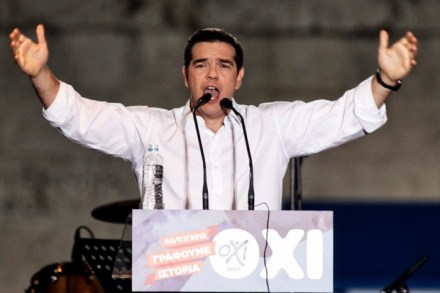
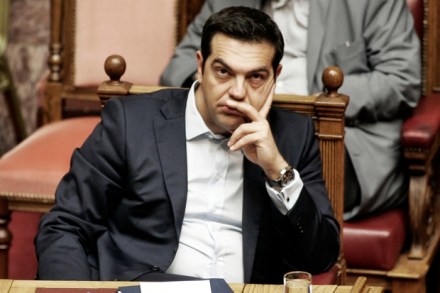
After much speculation that the Greek referendum was about to be cancelled, Alexis Tsipras has just appeared on Greek television to confirm that it is going ahead and to urge people to vote No. He said that those saying a No vote would mean Greece leaving the Euro were telling lies. He argued instead, that a No would strengthen his negotiating hand and allow him to achieve a ‘social deal’ which would be easier on the poor and pensioners. Everything now turns on the result of the referendum. If it is a Yes vote, the Syriza-led government will almost certainly resign and one can see how the country’s creditors could

Why is the FT ordering Greece to do what Germany wants?

‘The Greek people,’ the Financial Times leading article said on Monday, ‘would be well advised to listen closely to the words of Ms Merkel. The plebiscite will be a vote for the euro or the drachma, no less.’ It is interesting how menacing powerful ‘moderate’ institutions can become when popular feeling challenges them. In the eurozone theology to which the FT subscribes, its statement above cannot be true. It is not possible (see last week’s Notes) for a member state to leave the euro, any more than it is for Wales to renounce sterling. Eurozone membership, once achieved, is a condition of EU membership. So the Greeks cannot vote to

The sooner Greece leaves the euro, the better

Ten years ago, the Greek minister Yainnos Papantoniou came to London to give a talk at the London School of Economic on the country’s first four years as a member of the euro. A skilled, pro European technocrat, Papantoniou had, more than anyone else, steered his country through dogged German resistance into the single currency. Papantoniou boasted that a history of weak growth and chaotic government had been swept aside, and that Greece was now the equal of Germany and France. What lay ahead, he argued was ‘a new dynamic phase for the Greek economy, based on knowledge and modern structures’. A ‘bolstering of national self-confidence’ would be the natural

Greeks v Franks – why culture still matters

During the period of the crusades Greeks would refer to western Europeans by the generic term ‘Frank’, derived from the name of the leading barbarian tribe of the west. The word still lives on as a name for white people in Urdu and Hindi – Firangi – as well as Thai and Vietnamese, for whom US soldiers were called Farang (or ‘black Farang’ for African-American troops). According to Norman Stone’s history of Turkey, the word for syphilis in Turkish is likewise derived from Frank (it was also called ‘the French disease’ in 15th century Italy). ‘Frank’ is a useful term that really needs to be brought back to illustrate the

Common sense suggests Britain’s economy doesn’t depend on the EU

They say you have to be nearly 60 to have voted in the 1975 referendum. I voted in that referendum. I was 12. My mum had forgotten her glasses. We were a Labour household and as we left the polling station she said, ‘You did vote “in”, like Harold Wilson suggested?’ ‘No,’ I replied, ‘I’m with Tony Benn. I want “Out”’. Benn wasn’t right about much but he asked three good questions about the Common Market. Who appointed these people? What are the limits to their power? How do we get rid of them? Satisfactory answers are still unforthcoming. And his clear-headed approach may persuade others of the need to quit.

We haven’t had a pan-European war for 70 years. Why is that?

The EU referendum makes me suspect that the grownups don’t know what they’re doing. I can see how we got to this point but it seems absurd that something so fundamental should be up – not just  for debate but possibly even – for reversal. It is doubly absurd because David Cameron has said that he will be campaigning – as you would expect of a conservative – for the status quo. So why are you doing this? I mouth at the television, wishing heartily that he would fight his internal party battles on his own time. Bewilderment is, it seems to me, one of the main forces behind this referendum. Some

The Eurozone’s new strategy: hope for a Yes vote in Greece

The question that will be on the ballot paper in Greece on Sunday is rather wordy, so European leaders have been trying to simplify it for Greek voters today. Their message has been vote Yes to the bailout deal to stay in the Euro and No for a return to the Drachma. Their logic is that however much Greeks may dislike imposed austerity, they don’t actually want to leave the Euro. It has become clear today that the Eurozone’s strategy now is not to try and put together a last minute agreement but to instead rely on a Yes vote on Sunday. This would lead to the fall of the

Jean-Claude Juncker raises the stakes for the Greeks

Jean-Claude Juncker, the president of the European Commission, has suggested that if Greece votes No in the referendum on whether to accept the terms of a bailout, it will be voting not just to leave the Euro but the EU too. Juncker has clearly decided that the best thing to do is to put the pressure on for a Yes vote in the referendum on Sunday. A Yes vote would force the Syriza-led government to resign. At that point, a deal could—potentially—be done with the new Greek government. However, it is worth noting that any new deal would have to get through various Northern European parliaments which could be tricky. Meanwhile, Alexis

If Greece leaves the Euro, Cameron should start the British renegotiation all over again

Tonight, it is still not clear how the Greek situation will be resolved. The European Central Bank–which is desperate to avoid being dragged into the politics of this situation–has chosen a middle way on its emergency assistance to Greek banks. It has neither ended it—which would have crashed the whole Greek banking system—nor extended it, which would have enabled the banks to stay open and eased the pressure on the Syriza-led government. Greek banks will definitely be closed tomorrow and probably until the referendum on Sunday. The next big question is what happens on Tuesday when the bailout programme ends and a payment comes due to the IMF which Athens

Greece: ‘The crisis has commenced’

Alexis Tsipras’ gamble in calling a referendum on the bailout deal has failed in two respects. First, it has not prompted Greece’s creditors to offer the country a better deal. Second, they are not going to extend the bailout until the referendum—so, it will end on Tuesday. This means that without capital controls, the Greek banks will not be able to open on Monday morning. As the Irish Finance Minister put it, ‘The crisis has commenced’. We are now waiting for two things. First, will the Greek parliament and president approve the referendum. Second, will the European Central Bank continue to prop up the Greek banks. But, at the moment,

Greece to hold referendum on bailout deal

The Greek Prime Minister Alexis Tsipras has just announced that there will be a referendum on the proposed bailout deal next Sunday, July 5th. He will ask for the current bailout to be continued until then to allow the Greek people to have their say. The signs from Athens are that Tsipras will campaign for a No vote unless the creditors offer Greece a radically better deal at tomorrow’s meeting. This move from Tsipras will infuriate Greece’s creditors.  It will also, almost certainly lead to the introduction of capital controls for Greek banks until the referendum. If the creditors don’t blink tomorrow and improve the terms they are offering Athens,

Letters | 25 June 2015

Free trade with Africa Sir: Nicholas Farrell suggests that a naval blockade is the only solution to Italy’s immigration crisis (‘The invasion of Italy’, 20 June). Examining the causes of the situation might identify other measures. Since the European Union effectively closed its borders to trade with Africa to protect European farmers from lower food prices, the agricultural economies of most African countries have been in decline. Of course there is another reason for Africa’s decline. About 60 years ago, the Europeans found it convenient to convince themselves that in Africa self-government was better than good government. It followed that aid would be a convenient substitute for the risks or

Hesiod on Grexit anxiety

Why do Greeks want to keep the euro, or remain in the European Union? The combative, creative, competitive, mercantile classical Greeks throve on independence. The farmer-poet Hesiod (c. 700 BC) makes the point about competition by calling it Eris, ‘strife’, which he characterises as painful but also helpful. On the one hand, he said, it creates conflict and discord; on the other, ‘It gets the shiftless working. For when someone whose work does not come up to scratch sees someone else, a rich man, busy himself ploughing and planting and managing his household well, then there is competition between neighbours in the race to riches. This Eris is good for

The Spectator’s notes | 25 June 2015

People write about ‘Grexit’ and ‘Brexit’ as if they were the same, but they need not be. Grexit is about leaving the euro. Brexit is about leaving the EU. It seems, however, that the Greeks fear that leaving the euro would mean leaving the EU, and so feel paralysed. It simply is not clear what the true situation is. Although Britain has a specific opt-out (as does Denmark), for the other member states, euro-membership is, after a preparatory period is completed, an obligation. Does this mean that, once in the euro, an EU member state cannot leave it? If so, then William Hague’s famous phrase likening it to ‘being in

There’s no need for Cameron to rush the renegotiation process

This EU Council has long been marked in Downing Street’s diary as the moment when David Cameron would tell other EU leaders what his renegotiation demands are. But tonight Cameron’s remarks will be a relatively minor part of proceeding as Greece and the situation in the Mediterranean dominate discussion. I understand that the Council President Donald Tusk is not even expected to go round the table asking other EU leaders what they thought after Cameron’s contribution. In some quarters, the fact that the British renegotiation is being treated as a third order issue at this summit is being seen as a snub to Cameron. But those involved in the renegotiation

Some gay people are right-wing. Get over it!

Is being gay ‘left-wing’?  You wouldn’t have thought so.  If being gay is something which some people just are then there is no obvious reason why gays should not be of every political persuasion and none.  Why should the fact that you are attracted to members of the same sex mean that you are in favour of higher taxes?  Or entirely open borders?  Should being gay affect your attitude towards the European Union (in any case hardly a left/right question)? I ask because this weekend the annual ‘Gay Pride’ event happens in London and the organisers have tried to ban Ukip from attending.  The sweeping generalisation – not to mention political

If Merkel shrugs…

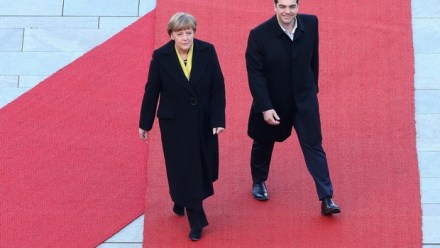
[audioplayer src=”http://rss.acast.com/viewfrom22/angelamerkel-sburden/media.mp3″ title=”Fredrik Erixon and James Forsyth discuss the challenges facing Angela Merkel” startat=36] Listen [/audioplayer]German chancellor Angela Merkel may still be the most formidable politician in Europe, but this week she lost a bit of her reputation as the scourge of Mediterranean debtor nations. Greece’s firebrand leftist premier, Alexis Tsipras, actually gets on well with Merkel, however much his countrymen enjoy burning her in effigy and adorning her portraits with Hitler moustaches. In a recent profile of their relationship in Der Spiegel, Tsipras gushed, ‘She has this East German way of telling you honestly and straightforwardly what she thinks.’ His top adviser Nikos Pappas also admires Merkel, calling her

Europe’s great game

[audioplayer src=”http://rss.acast.com/viewfrom22/angelamerkel-sburden/media.mp3″ title=”Fredrik Erixon and James Forsyth discuss the challenges facing Angela Merkel” startat=36] Listen [/audioplayer]For generations, ambitious politicians have dreamed about having the power to run Europe — but as Angela Merkel can attest, it’s a horrible job. She didn’t want to end up with the continent’s problems on her shoulders, but things have ended up that way. The Greek economic implosion, the seemingly unstoppable wave of immigrants from north Africa, the menace of Russian aggression, the euro crisis — all the multiple, interconnected, crises battering Europe have ended up as Merkel’s problem. The Queen will no doubt leave Germany this week thinking what every other leader in Europe

Ten myths about Brexit

  1. Leaving the EU would hurt the UK’s ability to trade with it.   The fearmonger’s favourite argument. But fear not: the global economy has changed dramatically since Britain joined the EU in 1973, seeking entrance to a common market. The World Trade Organisation has brought down tariff rates around the world; even if we didn’t sign a free-trade deal with the EU, we would have to pay, at most, £7.5 billion a year in tariffs for access to its markets. That’s well below our current membership fee. 2. Three million jobs will disappear.   A bogus figure, heard often from the likes of Nick Clegg. It dates back