Egypt

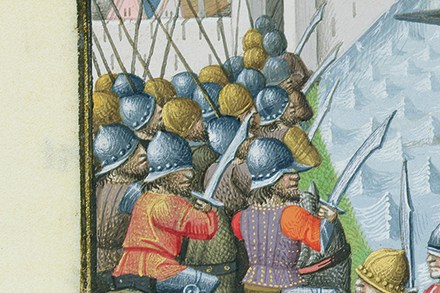
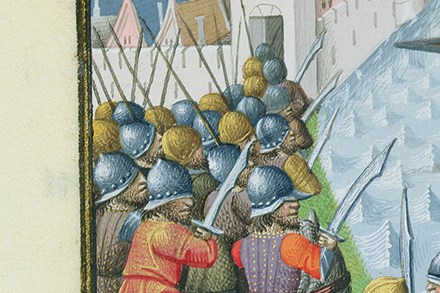
Christian soldiers in retreat – the disastrous Fifth Crusade

The Fifth Crusade, which was fought between 1217 and 1221, marked a new direction for the crusading movement of the Middle Ages. Instead of invading Palestine, as the first three crusades had done, and the Fourth Crusade might have done, the crusaders decided to attack Egypt. That was not the original idea. The formidable Pope Innocent III, who launched the Fifth Crusade, had envisaged a repeat of the old strategy of marching on Jerusalem from the sea. The invasion of Egypt was decided on the initial wave of forces after they had reached the Levant. There was a sort of logic behind the decision. The crusading kingdom of Jerusalem had been destroyed in 1187, when its army had suffered a crushing defeat at the hands of Saladin at the Horns of Hattin above the Sea of Galilee.

The strange death of Islamism

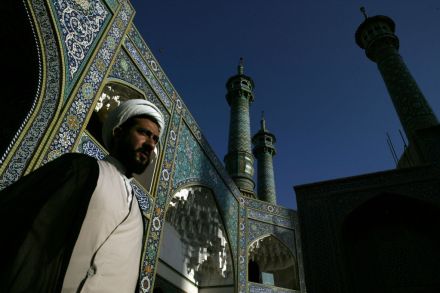
Iranians have adopted a new sport in the past few years: knocking the turban from a passing cleric’s head. There are points for technique and for how high and how far you can get their headgear to go. These are small acts of revenge against a hated religious elite who came to power on a wave of arrests and torture and who, as recently as January, ordered thousands of peaceful protesters to be shot in the streets. It’s also a symptom of something larger. Political Islam is in retreat across the Middle East and the wider Muslim world. “The strange death of political Islam” is an idea that’s in the air at the moment. Rule by clerics, and by others who claim to speak in the name of God, is going out of fashion in the Islamic world.

Christian soldiers in retreat – the disastrous Fifth Crusade

The Fifth Crusade, which was fought between 1217 and 1221, marked a new direction for the crusading movement of the Middle Ages. Instead of invading Palestine, as the first three crusades had done, and the Fourth Crusade might have done, the crusaders decided to attack Egypt. That was not the original idea. The formidable Pope Innocent III, who launched the Fifth Crusade, had envisaged a repeat of the old strategy of marching on Jerusalem from the sea. The invasion of Egypt was decided by the initial wave of forces after they had reached the Levant. There was a sort of logic behind the decision. The crusading kingdom of Jerusalem had been destroyed in 1187, when its army had suffered a crushing defeat at the hands of Saladin at the Horns of Hattin above the Sea of Galilee.

Will FIFA cancel its LGBTQ Pride match for Iran and Egypt?

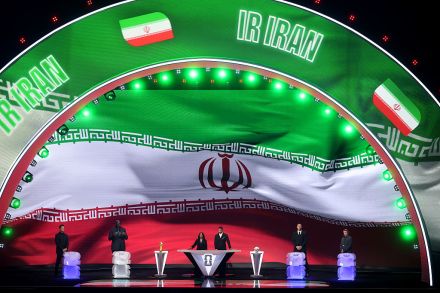
FIFA looks set to face its first major scandal of the 2026 World Cup – if you don’t count the exorbitant cost of the tickets, that is. The Egyptian FA has made a formal request for the cancellation of an LGBTQ+ celebration planned to take place at their Group G game against Iran on June 26 in Seattle. The game roughly coincides with the anniversary of the Stonewall Riots of 1969. The Seattle Pride match committee are planning to combine celebrations of the anniversary with the game.  A Pride match or Pride night is a tradition in American sports going back to around the year 2000 and is now embraced by most professional leagues. These events usually involve a particular game being dedicated to certain communities.

Why Trump’s Muslim Brotherhood crackdown is long overdue

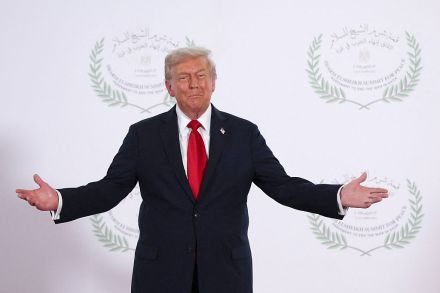
Donald Trump has begun the process of banning the Muslim Brotherhood. The President asked his officials last week to investigate whether certain chapters of the group should be classed as foreign terrorist organizations, which would result in economic and travel sanctions. Some are portraying this as a reckless lurch into Islamophobia. In fact, it is overdue by at least a decade. The Muslim Brotherhood is not a benign religious association. It is a disciplined ideological movement with a century-long record of exploiting political systems. Its explicit objective is to work towards the establishment of a global caliphate – only by gradualist means, rather than the reckless confrontation and brutality favored by its distant offshoot, ISIS.

muslim brotherhood

‘Too bohemian for Bournemouth’: the young Lawrence Durrell

From our UK edition

These legendary lives need the clutter cleared away from them occasionally. Lawrence Durrell and his brother Gerald turned their family’s prewar escape to an untouched Corfu into a myth that supplied millions of fantasies. It still bore retelling and extravagant expansion recently, if the success of ITV’s series The Durrells is any sign. (One indication of that pleasant teatime diversion’s accuracy: the actor playing Larry, Josh O’Connor, is 6ft 2in. Larry himself was a whole foot shorter.) How Louisa Durrell, struggling with life in Britain after returning from India, went in a bundle with her children to a Greek island of cheap Venetian mansions, heat and innocent adventure is always going to have its appeal.

In ambiguity, Tancredi Di Carcaci finds inspiration

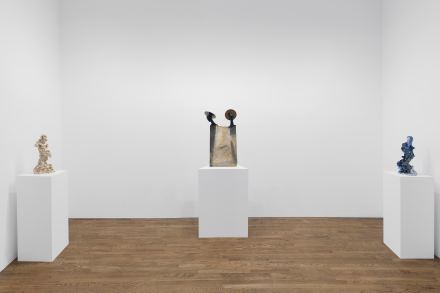
The narratives we tell ourselves about the past are hardly set in stone. It’s in this ambiguity where Tancredi Di Carcaci finds inspiration. Through his practice, the British artist contemplates, and sometimes perpetuates, the blurring of straightforward histories, especially that of art, as traditionally passed down. His sculptures – a mix of ceramic works and assemblages combining cast bronze, ceramic and hunks of marble and stone sourced from Siena, Egypt and elsewhere – have aesthetic and thematic roots spanning the Renaissance, neoclassical revival, Romantic painting and 20th-century modernism.“For me, with art, I don't try and restrict myself.

Palo Gallery

Menendez sentenced to eleven years in prison

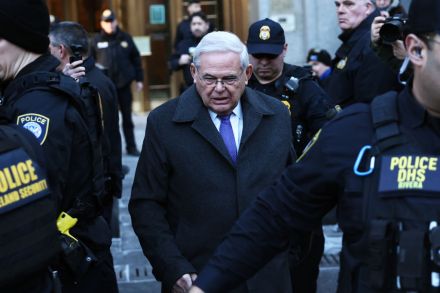
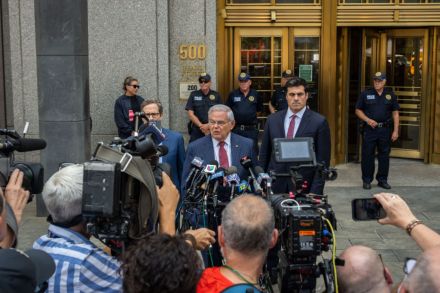
Former senator Bob Menendez was sentenced yesterday to eleven years in prison on charges of bribery, acting as a foreign agent and more. The sentence followed a nine-week jury trial, where it was shown beyond a reasonable doubt that Menendez, a Democrat from New Jersey, accepted bribes of cash, furniture, gold bars and a car to influence his role as a member of the federal legislature and chairman of the Senate Foreign Relations Committee on behalf of Egypt and other parties between 2018 and 2022. Menendez was prosecuted and sentenced alongside Wael Hana and Fred Daibes, who were sentenced to over eight years and seven years, respectively, for bribery and conspiracy.

Israel’s campaign to kill Nasrallah, Hezbollah and Hamas 

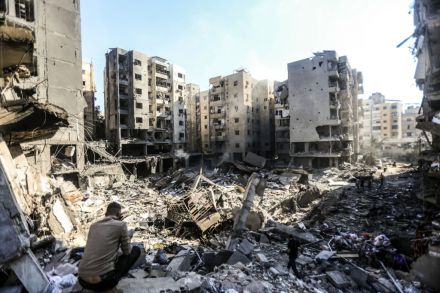
The killing of Hassan Nazrallah is the latest — and most impressive — stage in Israel’s campaign to wipe out Iran’s terrorist proxies on its doorstep. From the Egyptian border to Beirut, the campaign is the most dazzling demonstration of real-time intelligence, high technology and precise military action in the modern era. It will be recounted on screen and studied by military experts for decades to come. James Bond’s gadgets had nothing on the booby-trapped pagers. As the meme put it, “From the liver to the knee.”  The battle started a year ago, when Hamas terrorists in Gaza broke the ceasefire, raped and killed innocent Israelis and took hundreds of hostages for negotiating leverage. It was obvious from the outset that Israel would respond with full force.

israel gaza nasrallah

Bob Menendez found guilty of bribery and extortion

New Jersey senator Bob Menendez was found guilty of all sixteen charges today, including bribery, extortion, acting as a foreign agent, obstruction of justice and several counts of conspiracy. Three businessmen paid bribes to the Democratic senator and his wife in exchange for taking actions to benefit them and the governments of Qatar and Egypt, or so the prosecutors argued. Those bribes included $100,000 in gold bars, a Mercedes-Benz and more than $480,000 in cash. Two of the New Jersey businessmen tried alongside Menendez were also convicted on all counts. Menendez did not plead guilty or testify in his own defense. His team argued that he was acting on behalf of his constituents and that the prosecution couldn’t prove that the gold bars and money were bribes.

bob menendez

The digital Ozymandias: Egyptologist Peter Der Manuelian on his mission to make Giza last forever

The Giza Plateau is perhaps the first location that springs to mind when we think about Ancient Egypt. With its collection of pyramids, temples and monuments, all watched over by the Great Sphinx, the area has fascinated visitors for thousands of years. Its structures, often decorated with magnificent inscriptions, paintings and sculptures, have been around for so long that it’s only natural to assume that they always will be. Yet the years have not always been kind to Giza. The challenge of preservation has become even more critical than back in Percy Bysshe Shelley’s day when he wrote “Ozymandias,” his contemplative poem about the passage of time.

Giza

Nixing BRICS: how to counter the China-led alliance

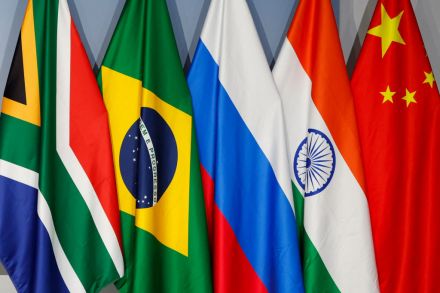
Americans are used to exercising influence through international entities such as NATO, the World Trade Organization or the World Bank. Each of these groups was set up with American leadership or at its instigation; all have been used to advance Washington’s vision of global liberal-democratic capitalism. No comparable international organization or collection of nations has been influential since the Soviet Union’s collapse. That may be changing. The so-called BRICS alliance (its founding countries were Brazil, Russia, India, China and South Africa) recently added new members Iran, Ethiopia, Egypt and the United Arab Emirates.

BRICS

Conrad Black adheres firmly to the ‘great man’ view of history

From our UK edition

George Orwell has a story that when Sir Walter Raleigh published the first volume of his projected history of the world while in prison, he witnessed a brawl outside his rooms in the Bloody Tower which resulted in the death of a workman. Despite diligent enquiries, Raleigh was unable to discover the cause of the quarrel. Reasoning that if he could not even ascertain the facts behind what he had observed he could hardly accurately report what had happened in distant lands centuries earlier, he burned his notes for the second volume and abandoned the entire project. No such doubts assail the 79-year-old Conrad Black, sometime proprietor of The Spectator, who, like Raleigh, has written the first of a projected three-volume global history.

How Egyptians see the Gaza crisis

From our UK edition

I was invited to speak at the memorial service for my colleague and friend, Professor Doris Enright-Clark Shoukri, at the American University in Cairo. It was to be held at the downtown Cairo campus, overlooking Tahrir Square. Doris had worked as a professor of English literature at the university from 1955 to 2017. The same age as the Queen, she too had the aura of a fixed point in the firmament. I live in a new suburb 15 miles west of Tahrir Square. Like Cairo’s other new suburbs, it developed in the Mubarak years without plans for properly connecting it to the overcrowded capital its wealthy citizens sought to escape. But the current President, Abdel Fattah el-Sisi, has been energetically advancing public works projects.

The African exception to the population bust

Earlier this year, New York Times columnist Ross Douthat wrote a provocative piece making the case that there are two kinds of people in the world: “Those who believe the defining challenge of the twenty-first century will be climate change, and those who know it will be the birth dearth, the population bust, the old age of the world.” Douthat made this bold claim not just because he believes the population bust is the more important of the two challenges, but because, in his view, it is being comparatively neglected due to all the attention paid to irrepressible climate doomsayers.

african population
queen cleopatra netflix

Netflix’s Queen Cleopatra girlbosses against historical fact

The most controversial aspect of Netflix’s new drama-documentary Queen Cleopatra — not least in Egypt — was the casting of a black actress, Adele James, in the title role. After all, one of the few things that seems certain about Cleopatra’s early life is that she was a Macedonian Greek. Luckily, though, the show had a powerful counterargument to this awkward and Eurocentric fact. As the African-American professor Shelley P. Haley put it with a QED-style flourish, back when she was girl, her beloved (if uneducated) grandmother once said to her: "I don’t care what they tell you in school, Cleopatra was black.

Don’t expect much from Biden’s Middle East trip

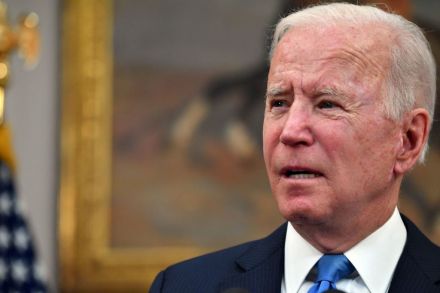
It took Barack Obama less than three months to fly to the Middle East for a visit, landing in Iraq to visit the tens of thousands of US troops stationed there at the time. Donald Trump’s first overseas trip as president was to the Kingdom of Saudi Arabia (also three months into his tenure), where he basked in the limelight, watched in awe as his face was plastered on buildings in Riyadh, and hovered over a glowing orb with King Salman. Now, eighteen months into his presidency, Joe Biden will be spending a few days this week in the region, making stops in Israel, the West Bank, and Jeddah, Saudi Arabia, for a summit of the Gulf Cooperation Council.

The wonder of the wandering life

From our UK edition

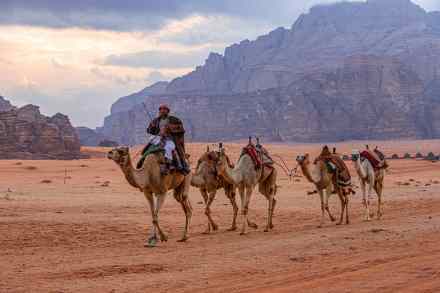
Anthony Sattin begins with a quotation from Bruce Chatwin, who famously tried all his life to produce a book about nomads but never quite succeeded (the nearest he got was Songlines). Hoping to persuade Tom Maschler at Cape of the virtues of the project, Chatwin described nomads as ‘a subject that appeals to irrational instincts’ – perhaps not the best way to sell something to publishers, who tend to pride themselves on their rational ones. But Chatwin’s thesis – that we were all originally nomads and need to recover some of that instinct – is now triumphantly brought to its conclusion in Sattin’s fascinating journey through 12,000 years, from the nomadic ways of prehistoric man to the Bedouin and Maasai of today.

Does knotted string constitute ‘writing’?

From our UK edition

What particularly excites Silvia Ferrara, the author of The Greatest Invention, is not language per se but writing – that is, the specific tool created for recording and conveying language visually. Sound made visible, tangible. The impulse to communicate might be innate, but writing is cultural, and in no way inevitable. It’s a bit of tech, which needed to be developed, and which needs to be learned. Writing has many obvious benefits – allowing communication to survive across time, thus enabling cultural traditions and posterity – unlike purely synchronous conversation, face-to-face, stuck in the present. Yet as a species (and a species with memory, specifically) we could live perfectly well without it, as indeed we did.

Putin’s imperialism in Africa

Last week, at roughly the time that photographs and stories began to filter out of liberated Bucha in Ukraine, the NGO Human Rights Watch published a report of similar massacres which took place contemporaneously in rural Mali. What linked the two was the identity of the perpetrators. In Ukraine and across Africa, these atrocities are committed by Russians. In combination with the Malian military junta, foreign soldiers "summarily executed an estimated 300 civilian men," in the town of Moura in late March. These soldiers did not speak French.