Egypt

Giving the Nobel peace prize to Tunisia’s ‘quartet’ perpetuates a dangerous lie

From our UK edition

Tunisia is preposterously touted as the one success story of the nightmarish revolutions, counter-revolutions, civil wars, jihadist invasions and Islamist terrorist atrocities in the name of an Arab Spring we are still told represents a thirst for Western-style freedom and plurality. The decision to award this year's Nobel Peace Prize to the country’s National Dialogue Quartet, for apparently helping the country's transition to democracy, dangerously perpetuates this myth. The Nobel Committee says that the National Dialogue Quartet was... ...

The Economist under fire over Egypt advertorial

From our UK edition

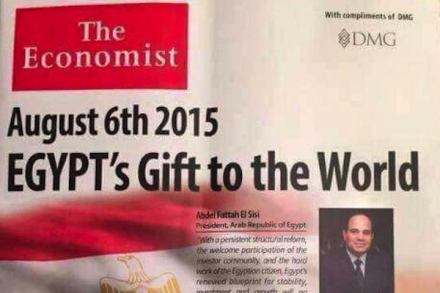
If reports that Pearson will soon sell their stake in the Economist magazine are to be believed, Mr S hopes that the publication's latest 'cover' won't dent the brand's value. Steerpike understands that the usually independent-minded magazine has received a number of complaints from readers after they ran a cover on Egypt's Suez Canal project with the title 'Egypt's gift to the world': https://twitter.com/alwasatengnews/status/629092628852776960 This left some readers puzzled as to why the magazine had taken such an overwhelmingly positive stance on the government development, which has made the news after an Egyptian economist claimed the project's financial predictions are 'totally impossible'. https://twitter.

Why is Michael Fallon cosying up to General al-Sisi?

From our UK edition

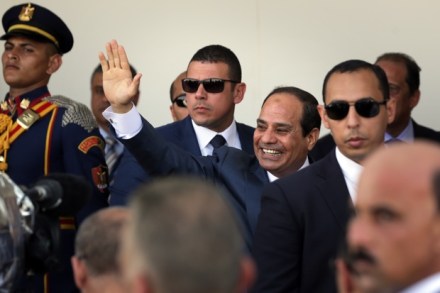
Michael Fallon, the Defence Secretary, was in Egypt this week for the opening of the 'New Suez Canal' (in fact an extension to the old Suez canal elaborately advertised), and took the opportunity to express Britain's support for the military junta that installed itself in Egypt two years ago. The presence of a senior member of the Cabinet at the opening ceremony is in itself a message of support for Abdel Fattah al-Sisi's regime in Egypt that probably ought not be sent, but Fallon didn't stop there. After praising the authorities for building 'a modern wonder', he announced in the largest state-owned newspaper that Britain 'stands shoulder to shoulder' with Egypt and pledged Britain's intentions to keep 'strengthening Egypt's hand against the terrorists'.

Is gay marriage just a fad?

From our UK edition

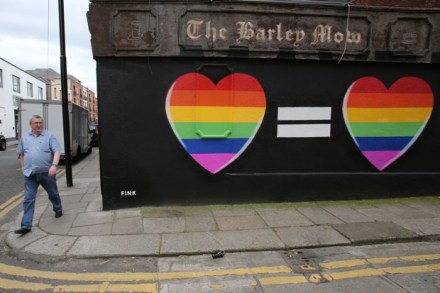
Now that Ireland has voted Yes to same-sex marriage, it will be widely believed that this trend is unstoppable and those who oppose it will end up looking like people who supported the slave trade. It is possible. But in fact history has many examples of admired ideas which look like the future for a bit and then run out of steam — high-rise housing, nationalisation, asbestos, Esperanto, communism. The obsession with gay rights and identity, and especially with homosexual marriage, seems to be characteristic of societies with low birth rates and declining global importance. Rising societies with growing populations see marriage as the key to the future of humanity, so they think it must be between a man and a woman.

Gore blimey

From our UK edition

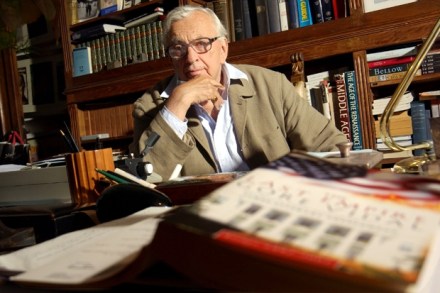
Gore Vidal has form as a crime writer. In the early 1950s, when his sympathetic literary treatment of homosexuality had brought him into critical disfavour, he turned to writing sprightly detective fiction under the name of Edgar Box. It’s much less well-known that he also took a dip in the far murkier waters of the pulp thriller. Thieves Fall Out, originally published in 1953 and then deservedly forgotten, centres on Pete Wells, ex-wildcatter and former war hero, who turns up in King Farouk’s Egypt for no very good reason. Mugged in a Cairo brothel, he’s forced to look for work. Naturally he goes to Shepheard’s hotel (‘where the biggest operators lived’).

Tourists are trickling back to Egypt – to beat the crowds, go now

From our UK edition

Egypt’s revolution of 2011 didn’t just get rid of President Mubarak: it did a pretty good job of clearing out the tourists, too. The political uncertainty since then has made people wary of visiting — meaning more space and lower prices for those who do make the trip. But you’d better be quick if you want to take advantage: this seems to be the year that Egypt is opening up again. BA are resuming their Sharm el-Sheikh flights in September, while Abercrombie and Kent are back up to three boats for their Nile cruises (they had been down to one). I started in Aswan, home to the alarmingly named Hotel Cataract. My guide, Alaa, explained that the word denotes a white water rapid on this stretch of the river: the medical sort sends the eye the same colour, hence the derivation.

Nobody will dare satirise the multiculturalism that allows Islamism to flourish

From our UK edition

So, 'Jihadi John' is Mohammed Emwazi, a young Kuwaiti immigrant from Queen’s Park in north-west London, another first-rate product of the British education system. Queen’s Park is one of those very mixed areas of London; the expensive Victorian properties are filled with people who 10 years ago might have lived in Notting Hill and 10 years before that Kensington. There are also lots of scary housing estates too. It's also part of the greatest Arabian Diaspora that extends out of Edgware Road and into the districts of Westminster and Brent; previous Jihadi John suspect Abdel Bary was an aspiring rapper from nearby Maida Vale who was last seen tweeting a picture of himself holding a head beside the caption 'chillin' with my homie or what's left with him'.

Islamic State will flourish if the West picks sides in Libya

From our UK edition

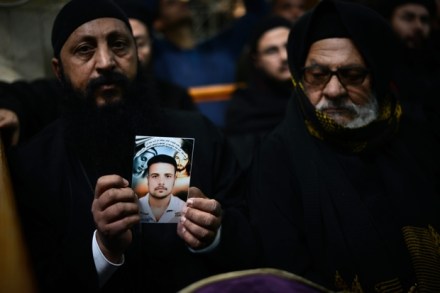
Conventional wisdom suggests that Islamic State and its affiliates have mastered social media. Yet the group's real talent lies in dominating the traditional media cycle and using sensational violence to goad its enemies into overreactions. Hours after Isis released one of its more gruesome videos showing the beheading of 21 Egyptian Coptic Christians on the shores of Sirte, Egyptian fighter jets pummelled several Isis targets in Derna. The Egyptians claim to be fighting the terrorists by propping up General Khalifa Haftar’s anti-Islamist Operation Dignity. However, if the Egyptians want a UN-resolution authorising international military intervention in Libya, this must be resisted.

Portrait of the week | 5 February 2015

From our UK edition

Home MPs voted by 382 to 128 to make Britain the only country to allow genetic modification of embryos to prevent mitochondrial flaws: this could be done by the removal of the nucleus of a donor’s fertilised ovum and its replacement by the nucleus of two parents’ fertilised ovum, thus giving a child three parents. William Hague, the Leader of the House, outlined his plan for resolving the West Lothian question: ‘Before a Bill or parts of a Bill affecting only England was put to its final vote in the House of Commons, the English MPs would meet separately in what would be called the English Grand Committee and decide whether they agreed on it.’ Sir Martin Gilbert, the biographer of Churchill, died, aged 78.

Why BBC Arabic is booming

From our UK edition

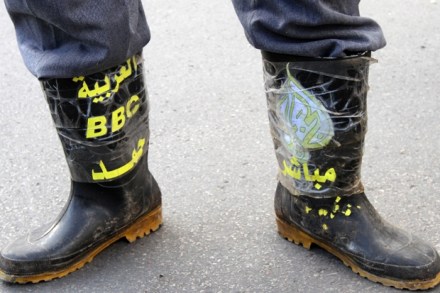
Last weekend BBC Arabic celebrated 77 years since John Reith (as he then was) launched the first foreign-language service of the fledgling BBC Empire Service with an announcement (in English) in which he declared that the programmes would always be ‘reliable, accurate and interesting’, values that have become virtually cast in stone as the Reithian model of broadcasting. ‘You have to remember the BBC was very, very young at this time, but there was no limit to its ambition,’ says Tarik Kafala, the current head of BBC Arabic, which now broadcasts on radio and (since 2008) on TV also, 24 hours each and every day. Reith’s statement was ‘a fabulous declaration of intent’, an intention which has meant 77 years later that BBC Arabic reaches 36.

The price of Egypt’s economic recovery: police brutality, torture and a strangled press

From our UK edition

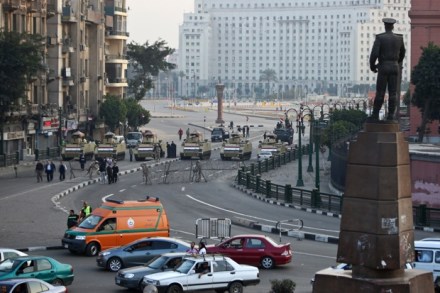
Cairo’s Tahrir Square is turfed and tarmacked. Traffic police bustle about, watched at a distance by the soldiers in their tanks. There are few signs that this used to be more than just an intersection. But four years ago this week, it was at the heart of a revolution. After 18 days of mass protests, Egypt’s longtime dictator Hosni Mubarak resigned and the square exploded. The uprising was meant to signal a new era of freedoms and dignity for the country’s 90-million strong population. But instead, the revolution has soured. Egypt’s first democratically elected president, Mohamed Morsi, managed only one divisive year in office before being overthrown by another strongman, Abdel Fattah al Sisi in July 2013.

If Al Jazeera English was truly fearless it would use the term ‘Islamist’

From our UK edition

Next year Al Jazeera English (AJE) will celebrate its 10th anniversary.  It was launched to great fanfare in 2006 luring across the brightest and best in the industry with a chequebook that compensated for ratings.  Refreshingly, it offered viewers both an alternate global perspective along with ‘fearless reporting’. To a large extent it has fulfilled these promises.  It reports from areas untouched by more western-centric channels, and its journalists haven’t flinched from what this might entail.  Despite the recent release of Peter Greste, two more remain imprisoned in Egypt where they have languished for more than 400 days. Yet there is more to fearless reporting than braving bullets or repressive governments.

How to save Islam from the Islamists

From our UK edition

The terror attack in Paris last week represents Islamism’s most explicit declaration of war on free society. Non-Muslims were slaughtered in a non-Muslim country to avenge a so-called crime against a blasphemy law that is not even Islamic — but merely Islamist. If there’s any blasphemy here, it’s that of Islamism itself against my religion, Islam. At last, on New Year’s Day, the president of Egypt, Abdel Fattah al-Sisi, did what no other leader of the Muslim world has done to date: he named Islam’s real enemy. In a gathering of religious clerics at Cairo’s ancient Al Azhar University, he called for the rescue of Islam from ‘ideology’. His speech was given little coverage in the western press, but it is worth repeating at some length.

Why does Isis slay hostages? To cover up the fact that it’s losing

From our UK edition

At this point in the war between the jihadist group known as the Islamic State and a US-led international coalition, many observers are wondering how Isis keeps winning. Isis is up against western air power and powerful regional opponents, and yet has apparently seized a territory larger than the United Kingdom, and is expanding into Egypt, Libya, Algeria, Yemen, and elsewhere. It seems incredible. But the truth is that it’s difficult to say Isis is winning by any objective measure. In Iraq, the group has been put on the defensive in the provinces of Nineveh, Salahaddin, and Diyala, and may soon face a major offensive on its stronghold of Mosul. It’s true, unfortunately, that Isis is on the offensive in Anbar province, and could potentially capture new territory there.

Why Christians should stick up for atheists

From our UK edition

Christians and Muslims in Egypt are joining forces to address the challenge of atheism, according to this news report. (It reminds me of the old headline from Northern Ireland: 'Catholics and Protestants unite to fight ecumenism'.) Christian churches in Egypt say they are joining forces with Egypt's Al-Azhar, a prominent centre of Sunni Muslim learning, to fight the spread of atheism in the country. 'The Church and the Al-Azhar are drafting a constructive mechanism to address atheism,' Poules Halim, a spokesman for Egypt's Coptic Orthodox Church, told Anadolu Agency.

In Gaza, the siege mentality is helping Hamas

From our UK edition

  Gaza The main entrance to Al-Shifa Hospital was crowded with what seemed to be journalists. This wasn’t unusual. They wait here most days for ambulances ferrying in the dead and wounded from Israeli air strikes; but this time there seemed to be more of them. Getting nearer, I saw that what I had taken to be microphones in their hands were in fact slippers. These weren’t hacks, they were angry Gazans, come to fling shoes (the ultimate insult in the Middle East) at Jawad Awad, the minister of health of the Palestinian Authority, paying a visit from Ramallah. This was an important day in the current round of bloodletting between Israel and Hamas.

How the Westminster hawk became an endangered species

From our UK edition

[audioplayer src="http://traffic.libsyn.com/spectator/TheViewFrom22_19_June_2014.mp3" title="James Forsyth and Isabel Hardman discuss the death of Westminster hawks" startat=726] Listen [/audioplayer]There is a slight whiff of the summer of 1914 to Westminster at the moment. The garden party season is in full swing and the chatter is all about who is up and who is down. In the Commons chamber itself, domestic political argument dominates. You would not know that a vicious sectarian war is raging in the Middle East. At the first Prime Minister’s Questions after the fall of Mosul to the terrorist group ISIS, no one asked David Cameron to explain the government’s policy on Iraq. The situation in Iraq is dire on both a humanitarian and a strategic level.

Portrait of the week | 29 May 2014

From our UK edition

Home David Cameron, the Prime Minister, responded to the triumph of the UK Independence Party in the European elections (which left the Conservatives in third place for the first time ever in a national poll) by having dinner with other European leaders in Brussels, which he said had ‘got too big, too bossy, too interfering’. Ukip secured 4,352,051 votes, increasing the number of its seats by 11 to 24; Labour took 20, an increase of seven; the Conservatives 19, a reduction of seven. The Liberal Democrats plummeted, narrowly capturing one seat (down from 11). Even the Greens did better, increasing their seats from two to three.

If we have to let generals run Egypt, must we pay for them, too?

From our UK edition

The polls have closed, and the result was never in doubt. With a whopping majority, Egyptians have chosen Field Marshal Abdel Fattah al-Sisi to be their next president. Much like his several predecessors going back to 1952 when army officers overthrew King Farouk, the new president brings to office ambitious plans to whip his countrymen into shape. What Egyptians need, Sisi believes, is discipline. He has volunteered for the role of drill sergeant-in-chief. ‘Will you bear it if I make you walk on your own feet? When I wake you up at five in the morning every day? Will you bear cutting back on food, cutting back on air-conditioners?

Investment special: Boom time in Africa

From our UK edition

It’s easy to see why until recently Africa has been a hard sell. It is still regarded as a place for charity rather than investment. But that view is out of date: much of the continent is booming now and investors are wising up. The economy of sub-Saharan Africa is expected to grow by 6 per cent this year. Compare this with the eurozone’s paltry 1 per cent, and you start to see why smart money is moving from the old continent to the dark one. ‘Economists have had to rip up their numbers for how rich African households are — they were too low,’ says Charles Robertson, author of The Fastest Billion, a book about Africa’s economic revolution. ‘And this is just part of a much improved story.