Edmund Fitton-Brown

Edmund Fitton-Brown is a former UK ambassador to Yemen, and former UN coordinator. He is currently a senior fellow at the Foundation for Defense of Democracies.

Why Trump’s Muslim Brotherhood crackdown is long overdue

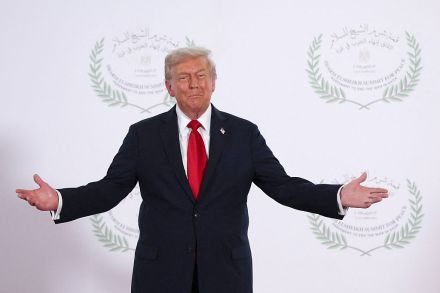
Donald Trump has begun the process of banning the Muslim Brotherhood. The President asked his officials last week to investigate whether certain chapters of the group should be classed as foreign terrorist organizations, which would result in economic and travel sanctions. Some are portraying this as a reckless lurch into Islamophobia. In fact, it is overdue by at least a decade. The Muslim Brotherhood is not a benign religious association. It is a disciplined ideological movement with a century-long record of exploiting political systems. Its explicit objective is to work towards the establishment of a global caliphate – only by gradualist means, rather than the reckless confrontation and brutality favored by its distant offshoot, ISIS.
muslim brotherhood

Trump is right to crack down on the Muslim Brotherhood

From our UK edition

Donald Trump has begun the process of banning the Muslim Brotherhood. The US President asked his officials last week to investigate whether certain chapters of the group should be classed as foreign terrorist organisations, which would result in economic and travel sanctions. Some are portrayed this as a reckless lurch into Islamophobia. In fact, it is overdue by at least a decade. The Muslim Brotherhood is not a benign religious association. It is a disciplined ideological movement with a century-long record of exploiting political systems.Its explicit objective is to work towards the establishment of a global caliphate – only by gradualist means, rather than the reckless confrontation and brutality favoured by its distant offshoot, Isis.

The United Nations is falling apart

From our UK edition

As the world’s leaders and foreign ministers meet in New York for the United Nations General Assembly (UNGA) this week, recognition of a Palestinian state is being paraded as progress towards peace. In reality, it is nothing of the sort. It only confirms what has become increasingly obvious to anyone watching the UN over the past eight years: that the organisation is in a state of malaise and its secretary-general, Antonio Guterres, the embodiment of its decline. The UN is no stranger to dysfunction, which I saw first-hand as a security council counter-terror coordinator for five years. Every secretary-general has faced allegations of irrelevance, hypocrisy or incompetence. But Guterres stands out for having presided over an organisation that is now derided by its own staff.

How an international community of do-gooders made the US lose the plot in Yemen

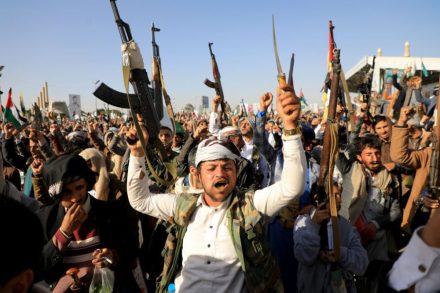
As British Ambassador to Yemen from 2015 to 2017, and later in counterterrorism roles at the UN, I watched with growing frustration as Washington, despite its early clarity, lost the plot in Yemen – with consequences that are now rippling across the Red Sea and into Israel. In 2014, the international community got it right. UN Security Council Resolution 2140 blamed the right culprits: former President Ali Abdullah Saleh and the Houthi leadership. The Houthis, a small sectarian militia allied with Saleh, were trying to hijack Yemen’s democratic transition – and the world recognized that.

Yemen