Education

Truesay! A Motto for Our Times

My friend and colleague Jo Phillips has been roaming the country promoting the must-read book of the forthcoming election. Why Vote? -- which she has co-authored with David Seymour, the former political editor of the Mirror Group, who won't mind me calling him a veteran political commentator. The book is a jaunty affair, designed to appeal to people who have been put off the political process (so just about everybody).  I know she has been struck by the general "what have politicians ever done for anyone?" response as she tours the nation. But when she pointed out to one group of young people the benefits that politicians had brought us (universal health provision and education, for example, and the right to vote itself) they were stopped in their tracks.

Closing the gap between state and independent education

I do hope that Oxford will finally be free from government claims of snobbery soon. We learn today that the proportion of state school pupils it admits has fallen from 55.4 percent to 53.9 percent - but, as the university says, this is in line with the (appallingly low) proportion of state school pupils achieving three As. The problem lies with the schools, not the universities, and it helps no one to pretend otherwise. Here's one figure that you won't read in the ongoing "Oxford snobbery" story: in 1969, only 38 per cent of Oxford's places went to privately-educated children. Why? Because the private schools in those days were not places of educational excellence, but of social preference. The decline of state education, relative to private, is the problem here.

Ed Miliband’s new investment vs cuts battleground

Ed Miliband certainly isn't one for holding back, is he?  In an interview with today's Guardian he discusses what we might expect from the Labour manifesto, and there's some pretty noteworthy stuff in there: a People's Bank based around the network of Post Offices; an increase in the minimum wage; a reduction in the voting age to 16; things like that. But, as Sunder Katwala suggests over at Next Left, the most eye-catching passage is when Miliband discusses Free School Meals for all: "The manifesto could well include a pledge to provide free school meals for all children, Miliband says. 'I think a lot of people would like free school meals.

The Tories’ Second-Best Recruiting Sergeant…

Things have come to a pretty pass when the Secretary of State for Education endorses ignorance and scoffs at knowledge pretending, one is given to understand, that it's just a kind of posh irrelevance favoured only by the terminally stuffy and fuddy-duddy and out-of-touch. Such, however, seems to be the case for you poor English folk, lumbered as you are with the grim Mr Edward Balls. I'd thought Boris must be exaggerrating matters in his Telegraph  column today. As the Mayor puts it: "Speaking on the radio, Spheroids dismissed the idea that Latin could inspire or motivate pupils.

Establishing free schools will be a difficult – but worthwhile – challenge

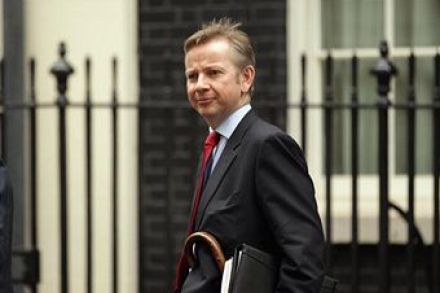
The small crowd of demonstrators from a group calling itself the Anti-Academies Alliance who gathered outside the Spectator conference on The Schools Revolution yesterday gave an indication of the opposition that Michael Gove and the Conservatives would face, were they to win the election and attempt the radical overhaul of which the British education system is so obviously in need. The thing that came across in our brief but passionate debate with the protestors was their opposition to independence, wherever it may raise its head in schools. Choice, to these people, is anathema. Undeterred, Gove’s speech majored on the virtues of independence.

Facing the protesters

Given that school choice will only benefit those who cannot afford it at present, who could be against it? The answer is the Socialist Educational Alliance, who have decided to stage a protest at The Spectator's conference on school liberalisation on Thursday. They have produced a leaflet (see left, and click to enlarge). "Bring your whistles and drums" it says - 8.30am. I wonder if Ed Balls will join them, as he appears to agree with the thrust of their argument. "Defend democratic accountability," says the flier. This is the language which Labour left use: "democratic accountability" is code, of course, for political/bureaucratic control. Perhaps my friend Polly Toynbee will be there too, with a placard saying "what do parents think they know about schools?

Shady characters

A great deal of time in Neel Mukherjee’s A Life Apart and Max Schaefer’s Children of the Sun is spent in gents’ public toilets — cottaging being a key feature of both debuts — and yet such is the elegance and intelligence of their prose, the reader comes away feeling educated rather than soiled. A great deal of time in Neel Mukherjee’s A Life Apart and Max Schaefer’s Children of the Sun is spent in gents’ public toilets — cottaging being a key feature of both debuts — and yet such is the elegance and intelligence of their prose, the reader comes away feeling educated rather than soiled.

Some reasons to be cheerful about Cameron and the Tories

By way of a response to the comments on my post yesterday, here are some reasons to be cheerful about Cameron and the Tories. The poll lead dropping to six points is indeed a wake-up call, and Cameron probably worked out a while ago that things were going a bit Pete Tong. Indeed (Short the UK), there are signs that he has already started to act. Look at last Monday: three strong election videos, without a politician in sight. The perfect remedy to the Tragedy of Cameron's Head poster. The policy of allowing management buy-outs of government departments is bold, radical and entirely in keeping with Cameron's general policy of empowering the many, not the few.

Background politics

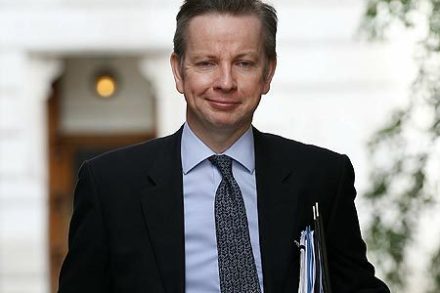
The Conservatives are at pains to emphasise that 'it's not where you're from but where you're going that's important.' A trite but pertinent phrase: background is neither a pre-requisite nor an impediment to a political career, nor should it be. Upbringing is important when it informs values. Many of the Shadow Cabinet have travelled together from the chapel pews of Eton to the Tory front bench; consequently, the Tories are wary of linking politics to background and experience. On the whole that is sensible, the exception is Michael Gove's personal history, which is central to his Swedish market based education reforms.

On our shoulders

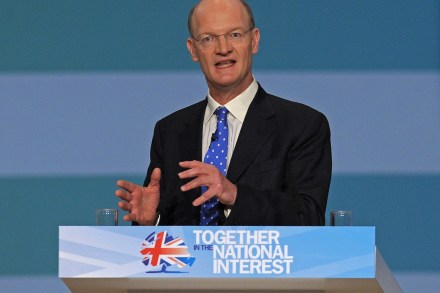
Our politics is such a shallow game that any senior British politician who has read a book is apt to be considered cerebral, and if he has read two, feted as an original thinker. So I had never quite dispelled the suspicion that the nickname ‘Two-Brains’ might have been awarded to David Willetts for no better reason than that he knew his stuff, could talk like an academic, had a lively sense of the complexities of things, and sounded a little vague. I had wondered whether he might be one of those men to whom the learned footnote meant more than the useful conclusion. This book goes a long way towards dispelling such suspicions. The Pinch is a powerful personal credo, a mine of information, and a solid and remorseless argument.

How much attention should politicians pay the competing groups of economists?

The recession has been intellectually thrilling, and I write that without a note of sarcasm. First, politicians argued as to whose understanding of Keynes was greatest; and now they’re in Keynes versus Hayek territory, over the timing and depth of cuts. The Chancellor and his Shadow have marshalled the various authorities who support their respective cases. The science of economics, if it is science, is in its adolescence. Should necessarily equivalent government policy be detirmined by pure intellectual opinions and reputations, especially as those are being forged for posterity by current events? Economics is as much history as science - like Coleridge’s lantern on the stern of the ship; it illuminates the waters through which we have sailed.

The Tories take the fight to Labour over social justice

Statistics about educational inequality in this country always tend to shock and dismay in equal measure.  And this latest piece of research from Michael Gove's office is no exception: "New analysis by the Conservatives shows that just 45 pupils on Free School Meals (FSM) make it to Oxford or Cambridge each year. One top London private school gets an average of 82 Oxbridge admissions a year – almost double the number of FSM admissions. One leading independent girls’ school produces the same number of Oxbridge entrants as the entire FSM cohort.  Just 1 per cent of FSM pupils go on to a Russell Group university." Just to be clear, the overall Oxbridge intake is about 6,000 students a year.  So 45 pupils on FSM represents 0.75 percent of that.

Cameron steps up his game

There’s something about a trip to Scotland that brings out the best in Tories giving speeches, and David Cameron lived up to the occasion the other evening. He reprised his social justice passage – easily the best part of his 2009 conference speech. Listing how Labour has made the rich richer and poor poorer, and how the Tories are the party of Wilberforce etc. Promising a “radical zeal” Conservative party – Amen to that. “Some people will say 'you can't do things like that.  You can't afford to take those risks.' I say with so little money and so much failure we can't afford not to.” That’s the spirit.  “Those cuts are coming: make no mistake they are Gordon Brown’s cuts,” he added.

Parris versus Nelson

Here’s a question: to be a good angel or a bad angel? We know what Fraser thinks; Matthew Parris differs. Writing in the Times today, he asserts that he would give David Cameron the same advice he offered Margaret Thatcher in 1979: agree a gloriously unspecific manifesto. The details of hard-edged manifestos are ambushed well before polling day; discretion is the better part of valour. In the immediate circumstances of the Tory wobble both arguments are commendable. The Tories have unwound when trying to supply detail to flesh out their broadly radical ideas. Recognising marriage in the tax system has been their foremost blunder.

How to set up a school

When the Tories talk about enabling any group that wants to, to set up a school and be paid by the state for every pupil they educate, it is sometimes difficult to imagine how this would work in practice. We have got used to such a top-down education system, where the state provides the schools and determines how many there are in any place, it is hard to imagine how a more organic system would work. But today the New Schools Network, a cross-party charity set up to promote the establishment of new schools, has published a proposed application form for those who want to set up a school.  The form is refreshingly straightforward and free of jargon, the Tories would be well advised to keep it this simple. The next step is to publish model applications to show groups how best to proceed.

The single best reason to vote Tory

There can be fewer more powerful untapped resources in Britain than the desire of parents to place their children in a good school. Every Sunday, pews of school-sponsoring churches are filled with atheist mothers and their kids. You read stories of parents giving up their kids to live with their aunt and uncle just to get a better school.   The single best reason to vote Tory is that they will set up a new system to harness this power, and allow anyone to set up a state school (by themselves or, more likely, in collaboration with the many companies offering to run new schools).  The Times today says that 350 requests have been made through the New Schools Network - an organisation dedicated to explaining the system. You can bet this is just the start.

The Gove agenda goes Hollywood

News reaches me of a surprising meeting in the lobby of Portcullis House today, Goldie Hawn — of Private Benjamin fame — swept in to Westminster wearing big shades and more fur than a member of the Household Division. She was in the Commons to meet with Michael Gove’s chief of staff, Dominic Cummings. Gove’s office won’t be drawn about what was on the agenda. But Hawn has an educational foundation specialising in how neuroscience and social and emotional learning techniques can be used to transform teaching techniques so we can presume that this was the main focus of discussions.

Me? Sleight of hand?

Two weeks ago, Barry Sheerman opened a second front against Brown's premiership by attacking Ed Balls’ appointment of Kathleen Tattersall to Ofqual without a pre-hearing before the Schools select committee. Brown had introduced a requirement that recommended appointments to offices that reported to Parliament be scrutinised by legislators prior to confirmation of their appointment. Sheerman, with characteristic venom, referred to a “sleight of hand”. This afternoon, Balls defended himself and his permanent secretary, arguing that the committee did not object to the appointment when it was made in July 2008, and any rate the pre-hearing was not operational then. I don’t know whose memory is accurate.

The Tories’ simple moral purpose

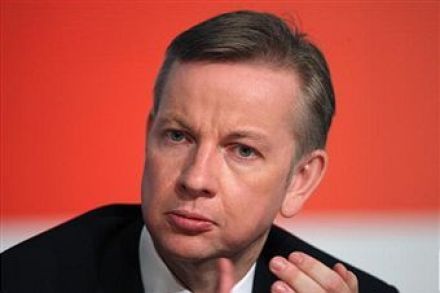
Education is the area where the Cameron agenda inspires most. The supply-side revolution the Tories are planning to enable, will transform education for the better in this country. This morning, the Tories launched the education section of their draft manifesto at the Walworth Academy in south London, one of the ARK schools.  The event was memorable for a compelling performance by Michael Gove. Gove, speaking with the passion of a preacher, set out the ‘simple moral purpose’ of expanding opportunity that lay behind his education reform proposals. He detailed how the gap between rich and poor grows as children spend longer in school and how more boys at Eton get three As a A-level each year than all the boys on free school meals in the country.

At last, a “brazenly elitist” approach to teacher recruitment

The next target for the Tories’ policy blitz is teacher recruitment. Cameron will pledge a “brazenly elitist” system with considerable incentives to lure top graduates from law firms and banks and into state school classrooms. What will this entail? Well, holders of degrees of less than a 2:2 will not receive funding for teacher training. Maths and science graduates with firsts or 2:1s from the 25 top universities will have their student loans paid off if they go into teaching; repayment will be staggered to encourage teachers to remain in the profession. The Tories will scrap graduate teaching programmes and replace them with on the job training, modelled on the hugely successful Teach First scheme.