Education

Lib Dem conference goes from bad to worse for Clegg

After an awful conference so far, the last thing the Lib Dems needed was for another internal row to threaten to overshadow the leader’s speech. But that is what has happened. 18 of the 29 member Federal Policy Committee, which produces the Lib Dem manifesto, have written to The Guardian saying that they will include in it a commitment to scrap tuition fees regardless of what the leadership wants. This is not the only open defiance of Nick Clegg’s authority. Steve Webb, the party’s work and pensions spokesman, has moved on from slapping down Clegg over the possibility of means-testing child benefit to, as The Guardian reports it, ‘saying the

Purnell’s enjoying the freedom of the backbenches

James Purnell has just spoken at The Spectator’s Paths to Prosperity conference, with sideburns bushier than ever after the summer. He was doing an on-stage interview with Andrew Neil and was quite firm on the release of al-Megrahi. “He should have died in jail” said Purnell. “I would have left him in jail.” I suspect the freedom to say such things is one of the reasons that Purnell quit government. He later took questions (quite often rude ones) from the floor. Sir Richard Sykes had been on earlier, talking about the dismal state of British education, and Purnell was asked why he couldn’t just agree that schools had gone downhill

The government’s latest ‘child protection’ idea is positively harmful

Alsadair Palmer neatly sums up the absurdity of the government’s new child protection plans in the Telegraph: “Once it receives your application, the ISA will invite people to submit information about you. The ISA’s officials will be looking for any claim to the effect that you have done something which might have caused “physical, emotional, financial or developmental harm” to a child. Don’t ask for a definition of such “harm”, for there is none – the term will be interpreted in any way the Government’s assessors choose. Those assessors will not be required to ascertain whether or not “harm” actually took place, nor whether you were in fact the cause

Public scepticism about Labour’s record on education

Isn’t it funny how things work out?  I imagine the government once thought they’d get credit for the ever-improving GCSE and A-level pass rates, but now results day just rekindles the debate about slipping standards – and rightly so.  Ed Balls may have tried to divert attention on to the Tories this morning, but he can’t really escape the verdict of this ComRes poll commissioned by Newsnight.  Here are the main results: 67 percent of respondents said Labour hasn’t lived up to Tony Blair’s “education, education, education” vow. 52 percent said Labour hasn’t improved the overall quality of education.  41 percent said they have. 47 percent said the standard of

Exam result shock: Balls fails

You know how it is.  You start reading an article by Ed Balls – in this case, in today’s Guardian – and, before long, you’ve come across so many deceptions, half-truths and tribal slurs that you decide to fisk the whole thing.  So here is Balls’s article, with my supplementary comments in bold: The first group of young people to have been entirely educated under Labour pick up their GCSE results today. No doubt this will provoke some commentators into even greater efforts to do down their achievements – claiming more young people succeeding must mean exams are getting easier. In the early years of David Cameron’s leadership, the Tories

Gove pushes his agenda

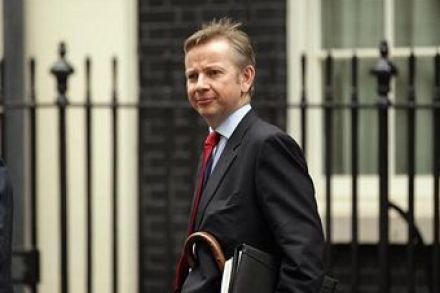
If you can divert your attention away from the Ashes for a second, then I’d recommend you read John Rentoul’s fascinating interview with Michael Gove in today’s Independent on Sunday.  The two most eye-catching passages concern Gove’s “ultra-Blarism” and his thoughts on foreign policy.  The Blairism first: “And when I ask if it is wise to paint himself as a Blairite, given the former prime minister’s latter unpopularity, he says: ‘He’s not as popular as he deserves to be, and he’s emphatically not as popular within Labour as he deserves to be – amazing ingratitude on their part. But if someone were to look at some of the views that

Logic, School Choice, Milton Friedman… And Polly Toynbee

Unsurprisingly, Brother Nelson has a useful primer on some of the latest skirmishing over the Tories plans to introduce (in England) Swedish-style education reform. I’m also pleased he highlighted this Polly Toynbee column since, while she tries to claim, erroneously, that Sweden’s Free Schools are merely middle-class playthings she ends up by arguing that: The only countries where children succeed according to talent and perseverance more than social class are the most equal societies: the Nordics, Japan, the Netherlands. Whatever the school system, Britain’s dysfunctional inequality will usually trump teaching. Japan is a case unto itself for all sorts of reasons, but it’s worth observing that two of her other

Gove stirs up trouble for Balls

I gave it a passing mention in my last post, but it’s worth highlighting Michael Gove’s mischievous comment piece in the the Guardian today.  Why “mischievous”?  Well, because its purpose seems to be to rile Ed Balls and mobilise his internal opponents: ‘In a series of not so subtle signals to the grassroots, Ed has been emphasising, whenever the opportunity arises, that he is the socialist candidate for anyone in the party who wants to move away from the sullied compromises of Blair era. In a recent interview he explained that the battle for the leadership would be a struggle between David Miliband and himself – setting up the contest

Mandy’s class war avoids the real problems

I don’t for a minute believe that Mandelson believes this class war nonsense, brilliantly rubbished by Melanie Phillips today. His decision to reprise the “posh unis don’t let in poor kids” theme is a more a sign that even someone as horribly powerful as Mandy feels the need to kowtow to a certain element of the Labour Party. The Sutton Trust is absolutely correct to point to social segregation as being one of the biggest problems in Britain today – but the problem lies with the schools, not the universities. The suggestion that snobbish admissions tutors are somehow to blame does the working class no favours by deflecting attention from

The human cost of deprivation 

The news that in one Northern city, 15 percent of Neets, those young people not in education, employment or training, are dead within ten years in immensely depressing. It is a reminder of the horrendous toll that drugs and social breakdown take on our society. The director general of schools, who revealed this, stresses that these numbers shouldn’t be taken to be typical of the country as a whole. But seeing as we don’t have numbers for the rest of the country, this was a local study, it is impossible to know how serious the situation is nationally.   One can talk in policy terms about possible solutions to this

A meritocratic private school system

Northern Ireland is trying to decommission its grammar schools. The case against selection is being made with the familiar vehemence: a system that allows an 11-year-old child to fail a test and be branded second-rate is retrograde. This seems to be the official line of all the main political parties in mainland Britain. But none of them quite believes it. The problem with this line is that, if strictly adhered to, it would lead to the banning of private schools. For many middle-class children fail to get into the top private schools, and such failure might come at the tender age of seven. Such selection is part of the daily

Tories move to raise the standard of teachers

Michael Gove’s speech today is another sign that the Tories are serious about raising educational standards. In it, Gove proposes a series of measures to improve the quality of teachers trained by the state. Under a Conservative government, those in state-run teacher training would not be allowed to retake the literacy and numeracy tests multipile times. Primary school teachers would need at least Bs in both English and Maths GCSEs (remember that in the state sector primary school teachers are generalists not specialists). Also, those who do post-graduate teacher training will have to have a 2.2 or better. Personally, I’m sceptical of the whole concept of teacher training. Teach First

Are You Smarter than a French Teenager?

The Bac began today with, as is traditional, the philosophy paper. Via Charles Bremner and Art Goldhammer, here are some of the essay questions our French friends had to answer: For the Literature Stream: 1) Does objectivity in history suppose impartiality in the historian? 2) Does language betray thought ? For the Science Stream: 1) Is it absurd to desire the impossible? 2) Are there questions which no science can answer? Well, is it absurd to desire the impossible? Have at it, Spectator readers…

Teaching Ten Year Olds To Find Terrorists

From the Departments of a) Modern Britain and b) Modern Childhood. The Lancashire Telegraph reports: Primary school pupils are to be shown a film about the dangers of terrorists as part of an organised safety day. More than 2,000 10 and 11-year-olds will see a short film, which urges them to tell the police, their parents or a teacher if they hear anyone expressing extremist views. The film has been made by school liaison officers and Eastern Division’s new Preventing Violent Extremism team, based at Blackburn. It uses cartoon animals to get across safety messages. A lion explains that terrorists can look like anyone, while a cat tells pupils that

Raymond Carr at 90

Dons don’t usually appear to much advantage in fiction. Dons don’t usually appear to much advantage in fiction. Sillery, Samgrass, Cottard, Lucky Jim’s professor, the History Man, all Snow’s Masters: these spring to mind at once. Why are they so disgusting? Perhaps some are false fathers to young people expecting more attention, like the pompous young Gibbon at Magdalen. Perhaps because they are obvious targets to would-be writers at a time of life when the urge to debag and deflate is strong: they seem self-satisfied in ways which cry louder for satire than the ways of more, or less insignificant subjects. The clever students don’t need dons. The dons don’t

Tales out of school

The Old Boys’ Network, by John Rae At Westminster School, under the shadow of Big Ben and at the very centre of national life, 600 of the brightest, quirkiest and most stimulating boys and girls in the country spar with teachers of similar character. Results are spectacular. The difficulty for the headmaster, however, is that by long tradition some of the governors and a great number of those who teach at Westminster have little time for headmasters. So he treads a thorny path, saying to himself, as John Rae confesses to his diary: ‘I am lucky to be here, but my days are numbered.’ Actually Rae survived in the job

Exams good enough for the rich are good enough for the poor too

Here’s an interesting – and, for once, encouraging – development. Motherwell College (soon to be moving to a new campus on the site of the old Ravenscraig steel mill) is going to offer students the chance to study for the International Baccalaureate, rather than Scottish Highers. That’s a small, but significant victory for school choice, as teenagers at high schools in Lanarkshire will now have the chance to apply for one of the places on an IB course that has, until now, only been available in the private sector in Scotland. (Indeed, fewer than 150 schools across Britain offer the IB at present, though that number will grow as A-Levels

In a class of his own

‘Voltaire and the Sun King rolled into one’ is how Elizabeth Longford has described her Oxford tutor Maurice Bowra. As Fellow and then Warden of Wadham College from 1922 to 1970 and successively Professor of Poetry, Vice Chancellor of the University and President of the British Academy, this short, powerfully built, unbeautiful, but magnetic man for years gave the tone to the university. He was a brilliant wit and a challenging and imaginative college tutor. Late in his career, he fought an intelligent rearguard defence of the University’s independence. His biographer, Leslie Mitchell, well-known for his works on Whig history, has drawn on years of local Oxford knowledge and unpublished

Heroes and villains

This book falls into two distinct parts. The first is the author’s account of his own life until he left Oxford in disgrace. John Joll- iffe, the son of Lord Hylton, passed his childhood and youth at Mells, in Somerset, the home of the Asquith family, and at neighbouring Ammerdown, the seat of the Hyltons. Children in large houses were shoved upstairs to the nursery. In his father’s world, Jolliffe writes, the gap between generations ‘was deep in a way that would be unthinkable today, where parents and children live at such close quarters from the start’. This may have been a sea-change in the mores of the upper class,

The Next Labour Manifesto

Taking a cue from Vogue and other glossy mags, the New Statesman has decided to liven things up attract some publicity by inviting a celebrity to be “Guest Editor” for a forthcoming issue. Their choice? Alastair Campbell. Among his ideas? This: As well as the articles I’ve already commissioned, one of the pages will be handed over to ‘LabourListers’ and others to finish the phrase: ‘if I could get one sentence into Labour’s manifesto for the next election, it would say this…’ I want to do this because, for all that the Tories may be ahead in the polls, and taking that position for granted, I think the battle of