Economy

Boris, Biden and the era of big government

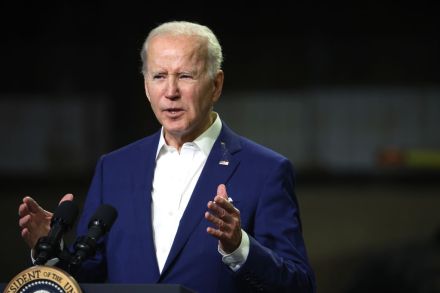
Bill Clinton’s declaration that ‘the era of big government is over’ summed up the late 1990s political zeitgeist. Centre-left political parties could win if they accepted the small state model bequeathed by the Thatcher-Reagan consensus. Now things feel very different, as I say in the Times today. The stimulus Joe Biden signed into law is huge, $1.9 trillion (£1.4 trillion): three times larger than the financial hole created by Covid. Here there has been nothing as dramatic. But it is still telling that Boris Johnson is insistent that the public finances won’t be brought back into order by ‘austerity cuts'. Big government appears to be back. Politics is going to become very scratchy This isn’t just about Covid ether.

The UK economy is suffering worse than most

Last week The Spectator highlighted new data from the OECD that offers a weekly update comparing a country’s current GDP levels to the previous year. It continues to show the UK experiencing some of the highest levels of economic damage. If you factor in lockdown stringency, you can also make out a rough correlation between countries under the strictest lockdowns and countries taking the biggest hits to GDP. Just how reliable are these calculations? A cross-check between the OECD data and the Office for National Statistics' monthly GDP update would suggest it’s pretty spot-on, if not slightly more positive. Today’s update from the ONS shows the economy to be 9.2 per cent below where it was in January 2020.

Are Wall Street’s ‘Spacs’ about to make waves in the City?

This column generally takes a sceptical view of financial novelties and gimmicks. So my antennae have twitched in recent days at frequent mentions of Spacs, or ‘Special Purpose Acquisition Companies’, which are the latest plaything of Wall Street and could be about to go large over here. Also known as a ‘blank cheque’ company, a Spac is a stockmarket-listed cash shell that raises money with a view to merging with a real — usually hi-tech, often relatively early-stage — business seeking a fast route to listed status. Hundreds of Spacs have been created in the US since the craze began last year, many with celebrity names — sports stars, astronauts, rappers — attached to win attention.

Letters: What happens if interest rates rise?

Spinning plates Sir: Kate Andrews is right to highlight the looming risk of inflation (‘Rishi’s nightmare’, 6 March), but to say that the UK has known barely any inflation for almost a generation misses a very painful point. It may be true for consumer prices. Low interest rates and quantitative easing, along with other ill-advised stimuli, have caused huge inflation over the past two decades in the single greatest expense throughout most working people’s lives: the cost of housing.

The weekly cost of lockdown

Lockdown has always been a matter of trade-offs. The impact of suppressing the economy to also suppress a deadly virus has had consequences on every aspect of life, from non-Covid health treatment, to rising unemployment, to the impact on children’s education. But these costs can be calculated in something much closer to real time. New data from the OECD, analysed by The Spectator and unveiled in this week’s magazine, shows the weekly difference between a country’s economic activity now and how it compares with the year before.  First, let's look at change in lockdown stringency — as measured by Oxford University's Blatavnik School of Government. When the second wave struck, Britain ended up with the tightest lockdown in the developed world.

Rishi’s nightmare: will inflation crush the recovery?

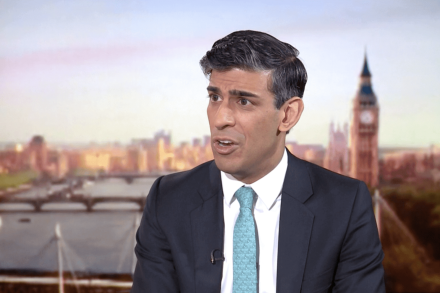
At first, it seems to make no sense. Britain is in the middle of the worst economic crash in recorded history, with a Chancellor who is famously keen on low taxes, spending control and sound money. But Rishi Sunak this week presented a Budget that seems inspired, in parts, by Labour’s last manifesto. Debt surging to £2.8 trillion. Public spending up by a quarter in a year. And taxes: soon going up. Corporation tax, freezes to the personal tax threshold. The explanation most Tories comfort themselves with is that Sunak wants to explain to a high-spending Prime Minister that today’s cash splurge is tomorrow’s tax rise. But in truth, Sunak is motivated by something else.

What Rishi Sunak could learn from the vaccine rollout

Barely a year has passed since Rishi Sunak’s first Budget. Its centrepiece was a £30 billion stimulus designed to calm nerves about Covid-19 even though barely 500 cases had been diagnosed in the country. The Commons chamber was packed, with not a mask in sight. Few that day would have thought that in a year’s time the country would be in its third national lockdown and the economy would have suffered its worst slump since the Great Frost of 1709. The pandemic has made a mockery of nearly every optimistic prediction. The government is now moving with extreme caution. Even though vaccines have a greater effect with every passing day, restrictions won’t finally be removed until 21 June.

Up Crash: why are markets soaring as the economy tanks?

Shops are boarded up. More than four million people are on furlough with little idea of whether they will have jobs to go back to. Global trade has hit levels last seen a decade ago, and government deficits are soaring, while most developed economies have seen output shrink by 10 per cent, a collapse not seen since the Great Depression of the 1930s. On just about every measure imaginable, the global economy has never been in worse shape, and we are all a lot poorer. And yet here is a puzzle. Why can’t we see any evidence for that in the financial markets? Instead we are witnessing a series of extraordinary, epic bull markets. Crypto-currencies finally took a dive this week, but Bitcoin has quadrupled in value in recent months. Tesla is worth more than Toyota.

Starmer’s fundamental economic mistake

Keir Starmer’s speech on economic recovery, delivered at Labour’s Southside HQ on Thursday, was hyped as one of the most pivotal moments of his leadership so far. A Labour insider told Politico it had been 'six months in the making with a huge amount of work going into it’. It was designed to establish a clear ‘fork in the road’ between the Conservatives’ and Labour’s economic visions, both in the short term — leading up to the Budget next month — but also in the future, as Starmer pledged to shape the economy ‘to look utterly unlike the past’. But for a speech that was supposedly months in the making, there was surprisingly little substance.

Will freedom always be just over the horizon?

We should talk about horizons, and the setting of desirable ones. A newspaper gave it a go the other day with the front-page news that it is possible pubs may reopen in April rather than May. Given that we read elsewhere that when pubs do reopen, they may not be allowed to serve alcohol, the thrill from this news was limited. This cannot be our best hope: that if everybody behaves themselves and everything goes according to plan then we might be allowed to drink an orange juice in public sometime after Easter. This horizon is not sufficiently motivating. And societies, like the people within them, need motivation. There can’t be a person who hasn’t spent at least part of the past year feeling listless or even hopeless.

Will the economy really rebound after lockdown?

Bank of England chief economist Andy Haldane last week described the UK economy as a ‘coiled spring’ waiting to rebound just as soon as lockdown restrictions are eased. But is it a spring like the one on which Zebedee from the Magic Roundabout used to bounce around, or is it like a Slinky – the toy you place at the top of the stairs and watch, fixated, as it furls and unfurls itself right down to the bottom? Haldane, it is fair to say, sees it much like the former. He describes the economy as full of 'pent-up financial energy'. While the bank sees lockdown number three causing output to fall by 4.2 per cent in the first quarter of 2021, thereafter it sees a steady recovery.

What a record GDP slump means for economic recovery

It’s been no mystery that the UK economy took a severe beating in 2020: two lockdowns, a host of circuit-breakers and fire-breakers, Christmas cancelled for millions of people. The experience of an economy forced to hibernate for months on end last year is reflected in today’s GDP update from the Office for National Statistics, showing the economy contracted 9.9 per cent last year — the ‘largest yearly fall on record’ and biggest contraction in 300 years. The fall isn’t quite as stark as the Office for Budget Responsibility forecast alongside the Chancellor’s spending review last November (an estimated 11.3 per cent), but it still represents one of the largest economic hits among the big economies.

Why it’s a good time to invest in a pub

It’s obvious from the body language of Bank of England Governor Andrew Bailey that negative interest rates — much talked about this week — are the last device he ever wants to use. Deployed with mixed success in Europe, this monetary equivalent of Pulp Fiction’s adrenaline jab in the heart is a desperate remedy against deflation, recession and banks’ reluctance to lend. UK banks have been given six months to prepare for the possibility, while Bailey has been talking up the likelihood of rapid recovery as vaccinations advance and Brexit trade disruptions fade.

Capital punishment: why wealth taxes don’t work

No new year would be complete without the traditional Oxfam survey showing that a few of the richest people on the planet own more assets than the poorest 50 per cent of the world’s population combined. The figures change, but the gist is the same. January is usually a slow month, and it makes for startling headlines, intended to get us thinking about capitalism’s shortcomings. It’s also been tradition, for those of us more positive about free markets, to offer a retort: before Covid, global poverty was falling at the fastest rate in history. Global inequality was narrowing because of capitalism, not despite it.

Business rebirth is always possible – with the right help

The online fashion retailer Boohoo is buying Debenhams without its stores and staff, confirming the demise of the high street. Airlines face quarantine rules that could kill international travel for many months ahead, while the cross--Channel Eurostar rail service cries out for state rescue. The travel and hospitality sectors, alongside what’s left of bricks-and--mortar retail, watch their survival chances evaporating. Amid unremitting economic mayhem, new milestones are easily taken for gravestones. But here’s an optimistic parable from half a century ago.

‘Inessential’ workers have helped keep the country afloat

A common sight across Britain these past ten months has been those rainbow flags fluttering in urban and village streets: ‘Thank you NHS.’ Many add an afterthought: ‘And other key workers.’ And who would dispute either sentiment? To these expressions of gratitude are added ministers’ and their medical advisers’ thanks to everyone who just ‘stays home’. We are saving granny. We are, if only by inaction, doing our bit in a great national effort, pulling together with the team. We join the ranks of the public-spirited, the selfless, the just. And again, who would cavil? Prudence, caution, carefulness… in a pandemic these are needed qualities.

The rise of the super pessimist

Covid isn’t the only thing to have developed a dangerous strain in the UK; pessimism has also mutated and is on the rise. BBC news recently reported in horrified tones that the economy had contracted 2.6 per cent in November, barely mentioning the fact that this was largely down to the nation being in lockdown. I don’t know what our national broadcaster has up its sleeve next but I’m expecting a dambing connection between home schooling and black market valium. That kind of contraction during lockdown is actually something to be proud of. The resilience of British consumerism during this last year has been this generation’s Dunkirk. Instead of hopping in tiny boats we’re resolutely buying tiny dresses for parties we’ll never attend.

Are there any mountains left unclimbed?

Bad service Economic growth fell by 2.6% in November, the month of the second lockdown, compared with falls of 7.3% in March and 18.8% in April. The pandemic has achieved what has eluded recent governments, in rebalancing the economy away from services. Since February: — Services have contracted 9.9%— Manufacturing has fallen 4.9% — Construction is up 0.6% The most affected sectors of the service economy were: — Hair and beauty: 24.4% of businesses reported zero turnover— Pubs: 27.4% reported zero turnover Source: ONS Unclimbed peaks A team of Sherpas made the first winter ascent of K2, the world’s second-highest mountain. Are there any mountains left to climb?

Could the Australian approach to Covid work in Britain?

The government’s most important economic policy is its vaccination programme. The speed at which people are immunised will determine when — and how quickly — the economy can reopen. If all goes to plan, Britain will be the first country in Europe to get rid of restrictions and start the job of social repair. Three factors give grounds for hope. First, there is remarkably little ‘anti-vax’ sentiment in the UK. More than 70 per cent of the population ‘would definitely get’ a Covid vaccine if it were made available to them this week. In Germany, it’s just 41 per cent; in France, 30 per cent. The willingness of the British to have the jab means that there will be no major problems with take-up.

Has the economy developed lockdown immunity?

This morning’s update from the Office for National Statistics has boosted optimism about the prospect of the UK’s economic recovery. GDP fell 2.6 per cent in November last year, reversing the trend of six consecutive months of increases since April’s significant contraction. This takes GDP back down to 8.5 per cent below last February’s levels — wiping out the recovery gains made between roughly the end of July and November. Not, on the surface, good news — but there is a case for optimism. Cast your mind back to the economic conditions in November: England’s second lockdown had just been announced and there was a host of fire-breakers and circuit-breaks throughout the UK.