Economy

France’s latest fiscal trade-off

France’s deficit is set to reach 9.4 per cent of GDP this year, more than last year, even though France's first lockdown was more severe and lasted for a longer time. This may relate to accounting issues, as some spending is only reported this year even if it is related to last year. But these are details – the main issue is something else entirely. The journalist Dominique Seux wonders whether France has maxed out its spending capacity at the moment when environmental challenges require extraordinary efforts. Were France's spending choices last year done with full awareness of how they would compromise future fiscal room for manoeuvre? France was always amongst the high deficit countries in the EU.

Who wants Biden’s massive budget?

From our US edition

President Joe Biden just proposed the largest budget (as a percentage of America’s economy) since the country was fighting Nazi Germany, Imperial Japan and Fascist Italy. He’s doing it when there is no emergency, only an overweening desire to pass progressive programs quickly, before they lose their legislative majority. The best historical analogue to his proposed budget increase is Lyndon Johnson’s cradle-to-grave Great Society Program. It has the same flaws. In fact, Biden’s program is best understood as the next step in a long political arc, extending from Franklin Roosevelt to LBJ to Obamacare. All of them proposed centralized government solutions to almost every social problem, particularly endemic problems among the poor.

joe sentiments

Is Biden’s inflated presidency about to burst?

From our US edition

Is President Joe Biden living up to expectations? It’s hard to say, since the expectations generated on his campaign trail were so murky. Biden made plenty of promises on the stump but only one thing was ever clear: he wasn’t Donald Trump. Beyond that, no one was really certain what iteration of Biden would enter the Oval Office on Inauguration Day. A pragmatic moderate or a progressive ideologue? A return-to-normal steady hand or a malarkey-scourging bomb thrower? The law-and-order author of the PATRIOT Act or the 'Black Lives Matter' anti-racist he suddenly morphed into last summer? Biden was so defined by who he wasn’t that no one ever quite worked out who he was. Now we have our answer. Whatever moderation was once attributed to him has been quickly abandoned.

inflation

Is Farrow & Ball’s business model flaking?

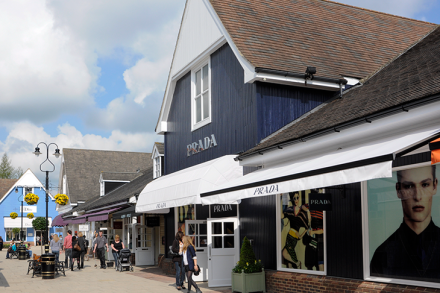
The happiest thing that happens in May is the coming into leaf of my long beech hedge. The shift from brown to green symbolises, for me, an annual economic revival — of openings, reopenings and entrepreneurial optimism. This year, after April’s frosts on the end of a dismal winter, it was especially welcome. And as revival collides with new fears of ‘the Indian variant’, I’m clinging to optimism while watching for new-season winners and losers. In that spirit, I’ll make this column a collage of consumer themes. First — though I’m not sure what this symbolises — a friend tells me he celebrated relative freedom by driving to Bicester Village to buy ten pairs of Y-fronts.

Joe Biden and the magic money nightmare

From our US edition

‘We have nothing to fear but fear itself,’ said Franklin D. Roosevelt famously, at his first inauguration in the depths of the Great Depression in 1933. What he didn’t allow for was the danger of overconfidence. Yes, a country can talk its way into recession, but it can also print and spend its way into an inflationary nightmare. That is the worrying prospect now facing America as Joe Biden, a president often compared to FDR, tries to tempt the country into a post-Covid spending spree courtesy of magic money. It has become deeply unfashionable to worry about inflation. According to proponents of modern monetary theory, what happened in Weimar Germany and more recently in Mugabe’s Zimbabwe somehow is not relevant to developed economies.

inflation

The pandemic’s transatlantic divide in executive salaries

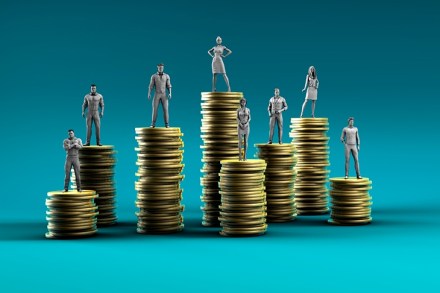
‘Consider a temporary cut in executive salaries’ was the Confederation of British Industry’s advice to members at the start of the pandemic. Back then I was gripped by fears of a backlash against capitalism: top pay cuts would indeed be wise, I wrote, not least because ‘sacrifice now is sensible insurance’. Looking at last week’s election results, I needn’t have been concerned about a second coming of socialism. But I’m one of many advocates for responsible capitalism who have long worried about growing disparities between executive and average pay — the key multiple having risen from 50 to 120 over the past two decades — that rarely reflect underlying performance.

When will the economy recover to pre-pandemic levels?

New growth figures were released this morning show that the economy contracted 1.5 per cent in Q1 this year and remains 8.7 per cent smaller than it was in Q4 2019 (the last quarter not to be impacted by the pandemic). Alongside this update, the Office for National Statistics also released its latest set of monthly figures, which saw GDP rise by 2.1 per cent in March — the biggest boost since August last year — taking the economy to 5.9 per cent below pre-pandemic levels. That GDP fell by just 1.5 per cent overall once again illustrates the extent to which businesses have developed a resilience to lockdowns. The first quarter of this year saw much economic activity either wildly distorted or banned outright.

Sturgeon can’t hide the economic costs of Scexit

Might the 2020s be the seismic decade in which the post-war consensus, that liberal democracies do not and should not break apart, is broken? Scotland's First Minister Nicola Sturgeon certainly thinks so. Her lifelong quest to break up Britain must feel closer than ever after winning last week's Holyrood elections. But there are hurdles yet to be cleared. Sturgeon insists on an exact repeat of the process that took place after Alex Salmond won an SNP majority in 2011 – even though she did not manage to replicate his success, achieving instead another minority administration. As in the 2011 to 2014 period, she wants the referendum booked and in the diary before presenting an updated economic case for Scexit. This will not hold.

Will Britain’s economic recovery break records?

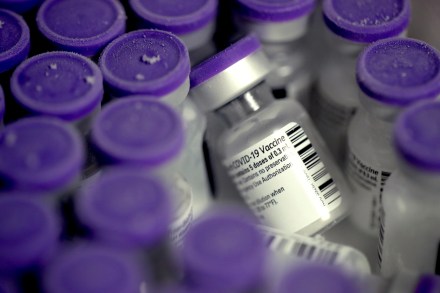
It’s been a good week for seeing the vaccine factor at work. We’ve had multiple real-world updates on the Pfizer vaccine’s effectiveness against new variants of Covid-19 (this bodes well for the UK, which was the first country in the world to use the vaccine to protect its most vulnerable residents). And today we’ve had a revised economic forecast from the Bank of England, suggesting the UK’s impressive vaccine rollout could translate into the strongest growth since records began in 1949. The Bank of England now predicts that the economy will expand by more than 7 per cent in 2021, up from its forecast of 5 per cent in February.

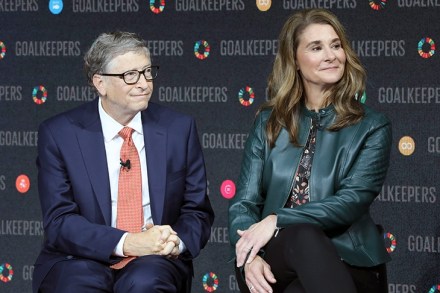
Can Melinda still keep Bill Gates in check?

‘We are seeing very substantial inflation,’ the great investor Warren Buffett told shareholders in his master company Berkshire Hathaway at their online annual meeting last weekend. He was talking chiefly about the housebuilding businesses in his port-folio, hit by rising material costs in what he called a ‘red hot’ economic recovery. But his remarks align him on a broader front with jittery bond investors and big-name economists, such as Larry Summers of Harvard, who have fuelled the US ‘inflation scare’. And if it’s coming over there — pessimists whisper — surely it’s coming over here? Maybe, but let’s keep this in perspective. Headline US inflation is 2.

Have we reached herd immunity?

When the Office for National Statistics released the last antibody survey a fortnight ago, the results were underwhelming. After watching prevalence in the population shoot upwards for months, the figure had plateaued at 55 per cent. There were several reasons suggested for the stall, including the move to giving second doses and difficulties detecting fading antibodies (which the ONS is quick to point out does not necessarily mean a person no longer has immunity). But, regardless, it raised concerns that it might take longer to reach high antibody prevalence rates than previously hoped. Thankfully, today’s update has provided plenty of cheer. In the two weeks following the last update (taking us up to the week ending 11 April), antibody prevalence has risen across the UK.

When will vaccines begin boosting the economy?

Britain may be about to go from one economic extreme to another. This winter the OECD calculated Britain suffered one of the highest levels of economic damage in the developed world, compared with the year before, due to its stringent lockdown. Fast forward to spring and the UK’s trajectory for economic recovery is now being revised, with forecasts only moving in one direction: up. Today alone, two heavy hitters boosted their predictions. This morning EY Item Club revised its 2021 growth forecast from 5 per cent to 6.8 per cent – which, if accurate, would see the UK grow at its fastest rate on record, recovering to pre-pandemic levels months earlier than originally anticipated.

Money to burn: shoppers, not the state, will lead our recovery

Compared with the United States, the UK has so far been relatively cautious about launching stimulus programmes to kick-start the economy. And yet perhaps it doesn’t need to. People are paying off their credit cards, putting some money into the stock market, buying new houses, as well as finally booking a restaurant and getting back to the shops. A lot of money is about to be unleashed on the economy, even if this stimulus is largely invisible now. The interesting question is this: where will all the money go, and which sectors will be the big winners? It may at times seem as if Rishi Sunak is spending like crazy. By global standards, however, he is far from exceptional.

Can the ‘next Bicester Village’ take off without tourists?

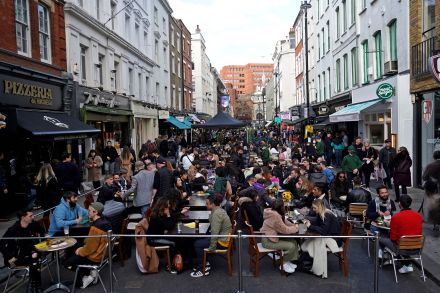
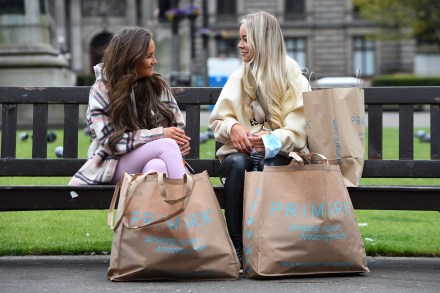
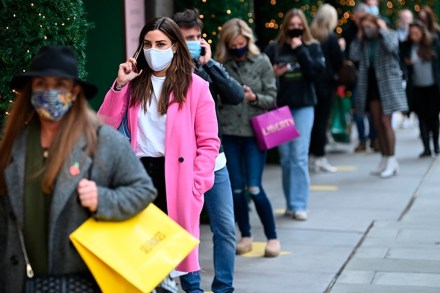
Retail footfall will be the first measure of recovery this spring. Everywhere I look, from central London to small-town Yorkshire, shopkeepers who survived the winter cull have been dusting their counters, cleaning their windows — and waiting in their doorways for the crowd of customers who have accumulated £150 billion of savings during lockdown and, despite the cornucopia of online offerings, can’t wait to start browsing and shopping for real again. Indications were mixed at the beginning of the week, with numbers still down on pre-pandemic levels, but at least the stock market is buying the theory.

Why the West should stop investing in China

The Prime Minister has called for an international coalition of free countries to oppose the growing influence of China’s authoritarian dictatorship. But it needs to be a lot bolder. The wheels of international diplomacy turn slowly and the government should make full and immediate use of the powers it already has. Three decisive steps are already possible. Companies from Western liberal democracies are bolstering an authoritarian dictatorship First, we should stop entities under the control or influence of the Chinese Communist Party (CCP) from buying up our companies, especially infrastructure firms. A Chinese company, for example, controls about 25 per cent of North Sea oil and other companies own gas, water and electricity suppliers in the UK.

Can Rishi Sunak get people back into the office?

To what extent do workers want to return to the office? It’s a question on everyone’s mind – none more so than Rishi Sunak. If Covid working habits stick post-lockdown, with a majority of people continuing to work from their living room, it’s not just the working day that will be fundamentally altered, but the wider economy too. The economic implications for the shops and services designed to cater to the office worker will be drastic: large parts of city centres and high streets may find themselves without customers, or enough business to turn a profit. But these were not the main points the Chancellor made in his interview with the Daily Telegraph and the Sun, as part of a Conservative fringe event hosted by iNHouse Communications.

Will Covid cost less than expected?

It’s no surprise that the bill for Covid-19 keeps racking up. The Office for Budget Responsibility's latest forecast predicts borrowing will reach £355 billion for the financial year: decisions to extend furlough, boosting public sector spending and supporting businesses that have been closed for months at a time all come with a price tag attached. But that doesn’t stop the sums from creating shock and awe each time they’re announced. Today’s update from the Office for National Statistics shows that government borrowing hit £19 billion last month — more than £17 billion from the previous year and the highest borrowing recorded for February since records began in 1993.  Source: ONS.

Boris, Biden and the era of big government

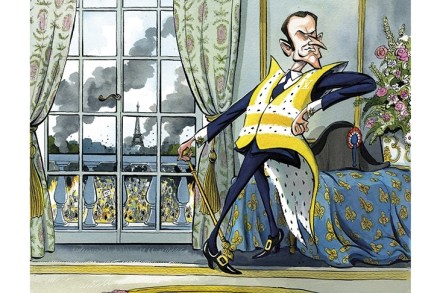
Bill Clinton’s declaration that ‘the era of big government is over’ summed up the late 1990s political zeitgeist. Centre-left political parties could win if they accepted the small state model bequeathed by the Thatcher-Reagan consensus. Now things feel very different, as I say in the Times today. The stimulus Joe Biden signed into law is huge, $1.9 trillion (£1.4 trillion): three times larger than the financial hole created by Covid. Here there has been nothing as dramatic. But it is still telling that Boris Johnson is insistent that the public finances won’t be brought back into order by ‘austerity cuts'. Big government appears to be back. Politics is going to become very scratchy This isn’t just about Covid ether.

The UK economy is suffering worse than most

Last week The Spectator highlighted new data from the OECD that offers a weekly update comparing a country’s current GDP levels to the previous year. It continues to show the UK experiencing some of the highest levels of economic damage. If you factor in lockdown stringency, you can also make out a rough correlation between countries under the strictest lockdowns and countries taking the biggest hits to GDP. Just how reliable are these calculations? A cross-check between the OECD data and the Office for National Statistics' monthly GDP update would suggest it’s pretty spot-on, if not slightly more positive. Today’s update from the ONS shows the economy to be 9.2 per cent below where it was in January 2020.

Are Wall Street’s ‘Spacs’ about to make waves in the City?

This column generally takes a sceptical view of financial novelties and gimmicks. So my antennae have twitched in recent days at frequent mentions of Spacs, or ‘Special Purpose Acquisition Companies’, which are the latest plaything of Wall Street and could be about to go large over here. Also known as a ‘blank cheque’ company, a Spac is a stockmarket-listed cash shell that raises money with a view to merging with a real — usually hi-tech, often relatively early-stage — business seeking a fast route to listed status. Hundreds of Spacs have been created in the US since the craze began last year, many with celebrity names — sports stars, astronauts, rappers — attached to win attention.