Economy

The Biden team’s ‘0 percent inflation’ lie

From our US edition

To all of the bitter skeptics who doubted President Joe Biden, Treasury secretary Janet Yellen and the Federal Reserve, I have a message for you: come forth now with your most heartfelt apologies. For a few months the Ivy League know-it-alls had to back-pedal their claims that inflation was transitory. But that changed this week. After months of ridicule, it is Joe Biden and his team of Nobel Laureates (all seventeen of them) who are getting the last laugh. Inflation changed faster than anyone could have imagined. In fact, according to the White House, we went from 9.1 percent inflation in June to 0 percent inflation in July. Joe Biden — as pleased with himself as ever — couldn’t wait to break the news to the American people.

How to save money: switch to cash and reprogram your boiler

We’ll find out shortly whether official statistics agree with economists surveyed by Bloomberg who say UK GDP probably shrank by 0.2 per cent in the second quarter. But at an uncomfortable moment when we know things can only get worse, looking backwards doesn’t help and nor does holding out hope for a miraculous ‘emergency budget’ in September. As for forecasting beyond that, it’s almost too scary to contemplate. Better to shun economists and politicians and focus instead on facts that tell us what’s happening now – such as data from Barclaycard – and things we can do keep our own budgets in balance.

A strange kind of recession

It’s possible that I owe Joe Biden some sort of an apology, however mealy-mouthed it might be. Last week I mentioned here the weird prevarication from the US government and its supporters over whether or not the US is technically in a recession. It arose from the news that the US had two successive quarters of negative GDP growth. Biden’s critics – myself included – leapt to declare the US in recession. According to the Bank of England, the UK is heading for a recession too, so there should be no especial shame in accepting the fact and then trying to deal with it. But then last Friday the US jobs figures landed and it became clear that the situation in the country is curiouser than we might have predicted. Everybody was expecting a contraction in the economy.

Is Britain really ‘on the brink?’

From our US edition

There’s a macabre joke in Britain these days that my friends and family also play. We compete to see who has had to wait the longest for medical treatment. It starts relatively innocuously. People talk of the ordinary things: like having to wait days to get an appointment with a doctor. They call up in the morning at 8 a.m., only to be told that all of the slots are gone. Best of luck tomorrow. Then someone will say that they’re waiting for minor surgery. Perhaps a small corrective procedure. It was put off first for the pandemic, and now is lost amid a sea of backlogged work. They wonder if someone has lost their details in the slush. Normally I win, although not always. My old general practitioner retired before the pandemic, and his practice was transferred over to another doctor.

Why British Gas’s owner is right to restore its dividend

‘What’s worse, they’re paying the profits to shareholders,’ said a grey-haired woman ahead of me in the Co-op queue. ‘Bloody shareholders,’ her friend of similar age and class spat back. I guessed they were talking about Centrica, parent of British Gas, which at a time when domestic energy bills are rising 23 times faster than wages (as Frances O’Grady of the TUC puts it) has announced half-year operating profits of £1.3 billion, up from £262 million last year – and the restoration of a penny-per-share interim dividend after a three-year gap. Both ladies looked likely to be beneficiaries of pensions nourished by dividends from the likes of Centrica, Shell and BP.

China delayed its 2008 financial crisis until 2022

From our US edition

The year 2008 was consequential by many measures. The collapse of the US investment bank Lehman Brothers sparked a worldwide financial crisis. Yet China appeared to emerge out of it relatively unscratched after Beijing introduced a massive stimulus package in the world, about three times the size of the United States government's rescue program. Thanks to this expansionary fiscal policy and the easy credit that came with it, the Chinese economy quickly returned to its robust growth by growing 8.7 percent in 2009 and 10.4 percent in 2010. After 2008, the Chinese Communist Party leaders concluded that China "escaped" the financial crisis because of its outstanding leadership and the superiority of the Chinese political system over deeply flawed western democracies.

The real difference between Sunak and Truss’s tax policies

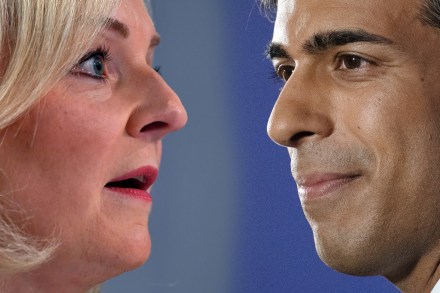
The Tory leadership race is becoming a test of patience. Today Rishi Sunak has laid out his plan to slash tax: not in a matter of days or weeks, as Liz Truss has pledged to do, but by the end of the next parliament. He’s promised to reduce the base rate of income tax by 20 per cent, by taking 1p off income tax in 2024 (as already pledged) and an additional 3p over the next parliament. As Fraser Nelson notes on Coffee House, the timing of this announcement is working against him: it’s easily characterised as a u-turn on tax cuts, when in truth the former Chancellor is far more interested in reducing the tax burden than perhaps his time in the Treasury conveyed. Team Sunak was always planning to hold back his bigger policy announcements for later in the campaign.

Is the US in recession or not?

There's an almighty debate ongoing in the US about what exactly a 'recession' is. Treasury secretary Janet Yellen said the US economy is not shrinking, saying it is in a state of 'transition', not recession. But in a clip from 2000 being circulated on Twitter that is comically apt, Bill Clinton said 'a recession is two quarters in a row of negative growth'. https://twitter.com/DailyCaller/status/1552720121445105666?ref_src=twsrc%5Etfw Regardless of who's right, the US is currently in Bill Clinton's definition of a recession. Figures show that the economy shrank by 0.2 per cent in the second quarter of this year, following a 1.6 per cent fall in the first quarter. Over the year, the US economy is now 0.9 per cent smaller than it was a year ago.

Trussonomics doesn’t add up

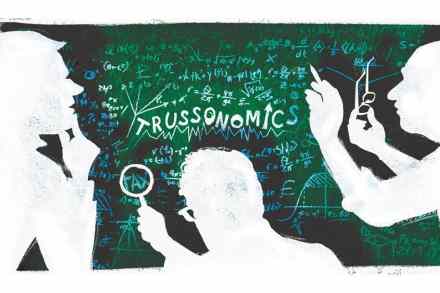
I’ve been lucky enough in my working life so far to hold a string of jobs that have allowed me – if not actively encouraged me – to be critical of government. Coming up through Westminster thinktanks in my twenties, I had great fun putting out press releases that tore apart bad public policy. When I had the opportunity to speak to MPs, they’d remind me of the ‘political realities’ that tied their hands and prevented change. In other words, check your policy privilege. Thinktank wonks, commentators and journalists can make all the punchy points they want; they don’t face re-election.

‘You can’t have your cake and eat it’: Rishi Sunak talks to Charles Moore

The morning after the first one-on-one Tory leadership debate, Rishi Sunak came to 22 Old Queen Street to speak to Charles Moore for SpectatorTV. This is an edited transcript of their conversation. CHARLES MOORE: Rishi Sunak, welcome to the offices of The Spectator. Just a preliminary – because you mentioned it first in the debate last night [Monday] – David Trimble died and you paid tribute to him. Almost the last thing he intervened on in public life was on the Northern Ireland Protocol. He was worried because he said it threatened the Belfast Agreement. Do you agree? RISHI SUNAK: David Trimble was someone who did an enormous amount to support the Union and bring peace to Northern Ireland, and we’ll miss him dearly for that.

The future of the Tories is at stake

To govern is to choose. So leadership contests for a party in government tend to come down to a key policy question. In 2019 it was how to break the Brexit deadlock; this time it is what to do about the economy. Should the new prime minister prioritise tackling inflation or delivering immediate tax cuts? The candidates have been divided on this issue. Rishi Sunak, the former chancellor, who I have been friends with for years, argues inflation makes everybody poorer and so getting control of it must be the primary objective. On the other side is Liz Truss. The Foreign Secretary wants, as she tells Isabel Hardman in this issue, to introduce £30 billion of tax cuts straight away.

My Tory leadership race fantasy game

‘Black swan’ theory, developed by the writer Nassim Nicholas Taleb, refers to unexpected events that have extreme consequences but are rationalised afterwards by pundits who say ‘That was always going to happen.’ Covid was a big one; Putin’s war on Ukraine another. It’s in the nature of global events that there’s always a dark-feathered disruptor lurking somewhere, waiting to make its presence felt. Right now, it just might be hidden in reports of protestors in Zhengzhou, capital of China’s Henan province, demanding their money back from four local banks that suspended withdrawals in April. Runs on small banks are not unknown in China; nor is embezzlement by corrupt managers.

‘Rescinded’: LinkedIn users are listing their retracted job offers

From our US edition

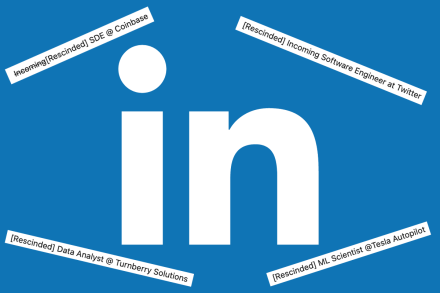
Cockburn was on one of his regular jaunts through LinkedIn this week, on the lookout for more gainful employment than the Speccie currently offers him. During his perusal, one word kept catching his eye on the profiles of other users: “Rescinded.” Prospective employees are deciding to denote when a company had made them a job offer — and then changed their mind after a change in corporate hiring plans. The cryptocurrency wallet company Coinbase appears to be one of the biggest offenders. Ashutosh, a software engineer, posted the following: After considering several factors, I had chosen to join Coinbase over pursuing a PhD.

rescinded linkedin

The rail strikes could be the end of the line for Boris

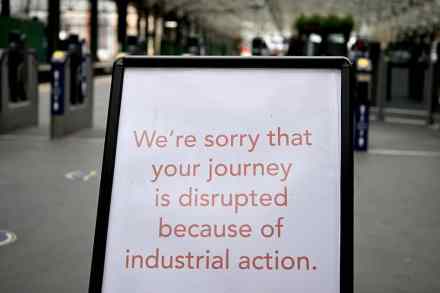
Here I go again, in my occasional role as your intrepid transport correspondent. Last week I reported on airport chaos, last month on the opening of the Elizabeth line. Now here I am boldly defying the rail strike on a Grand Central train from York to King’s Cross. To be honest, on a perfect sunny morning, it feels less stressful than my regular journeys on this crowded and often disrupted line. The RMT pickets at the station entrance were less aggressive than the pigeons on the platform trying to steal a bite of my bacon roll.

The real plan for inflation? To let it rip

Check out these hyperventilating headlines from last week: ‘What the Fed’s largest interest rate hike in decades means for you’ (PBS.org). ‘Federal Reserve interest rate hike opens new era for economy’ (Washington Post). ‘The Fed delivers biggest rate hike in decades to fight inflation’ (National Public Radio). ‘Fed goes for inflation’s jugular with 75bps rate hike’ (Schwab). While it’s true that the US Federal Reserve has not hiked its funds rate by 0.75 percentage points in one go since 1994, the figure prominently missing from those bug-eyed bulletins, and bizarrely unmentioned in all the television news coverage of this ostensibly bold move that I encountered, is what the Fed raised its interest rate to: a miserable 1.

Is stagflation in America’s future?

From our US edition

All is not well with the economy. It’s true that 390,000 jobs were added last month, exceeding estimates, while hourly income is up 5.2 percent since May 2021. However, analysts guessed unemployment would drop a tenth of a percent, which didn’t happen. Gas prices keep rising, as GasBuddy.com reports a 43 cent jump over this time last month. It’s enough of a problem that OPEC has agreed to increase production in July and August. The economy remains stricken by inflation, with Treasury Secretary Janet Yellen issuing a mea maxima culpa earlier this week. “I think I was wrong then about the path that inflation would take," she told CNN on Tuesday.

Who’s to blame for the air travel crisis?

I sincerely hope you’re not reading this on a holiday flight that’s sitting on the tarmac with no indication as to when it might take off – or a sad train home after your flight was suddenly cancelled. Brace for three-hour delays at security, we’re told; don’t even try checking bags in, and at worst, as happened to Tui passengers at Manchester who thought they were going to Kos, watch out for a text after you’ve boarded telling you you’re going nowhere at all. How and why? When the pandemic set in, airlines and airports – thinking, not unreasonably, that their industry was doomed – made mass redundancies rather than keeping sufficient staff on furlough.

Is the Elizabeth line worth the cost?

It’s 8.16 on Tuesday morning and I’m actually writing this on a moving Elizabeth line train. Moving in the sense that we’ve just zipped from Paddington to Liverpool Street in 13 minutes – which if nothing else will be a boon for City commuters from west of London. Moving also in the sense that I’ve been writing about the project formerly known as Crossrail, first in optimism but later in frustration and rage, since its then chairman Terry Morgan gave me a personal tour of the Bond Street diggings back in June 2013.

Tinkering with the energy price cap won’t fix it

In principle, the UK’s energy price cap is supposed to provide a buffer for consumers who might otherwise see their energy bills go through the roof. But governments can’t control international energy prices: a lesson that has been learned the hard way over the past six months, as dozens of energy companies have gone bust, unable to raise prices for customers to reflect increasing wholesale costs. Meanwhile the cap has not stopped bills from skyrocketing: Ofgem’s last price cap went up by 54 per cent, taking the total cost for an average household to just under £2,000 per year.

The one thing Netflix could do to keep me subscribing

Anecdotes and statistics should never be confused, but let’s do just that to build a composite picture of today’s UK economy. As the ‘cost of living crisis’ – barely out of its starting blocks – began to eat spending power and erode confidence, high street sales fell 1.4 per cent in March while non-store retail (largely online) dropped 7.9 per cent. Office occupancy, blighted by working from home, is stuck below 30 per cent of capacity. The City of London is a ghost town on Mondays and Fridays, while West End footfall remains a fifth below 2019 levels. But in case you’re planning a resumed commute or an in-town shopping binge any time soon, be aware that rail workers are threatening ‘the biggest rail strike in modern history’.