Economy

Coronomics: Ordinary remedies won’t be enough for a surreal crash

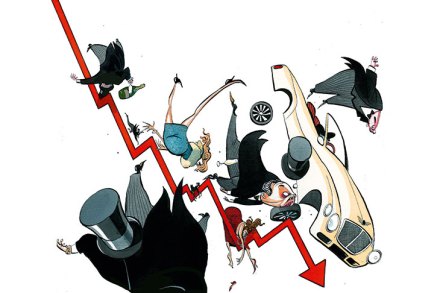
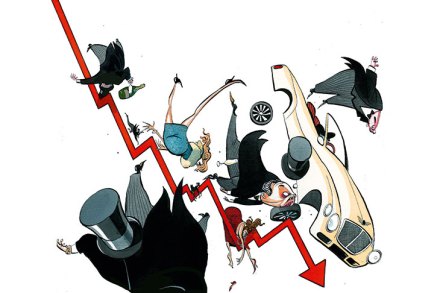
We have seen crashes before, recessions and depressions, but nothing like this. Our fear of coronavirus has hindered and halted every aspect of daily life. We look out of our windows and barely recognise the country we’re in: police film dog-walkers and pour black dye into lagoons to deter swimmers. We wait in queues for empty-shelved supermarkets. The stock market collapses, surges, then collapses again. None of the old rules make sense. Welcome to the world of Coronomics. If this were a normal recession, the remedy would be simple: encourage people to go out, spend money and boost the economy. But today’s public health concerns require the government to repress the economy, while trying to keep it afloat at the same time.

Are people really panic buying?

We have, of course, been transformed into a nation of hoarders and panic buyers. We know this because everyone keeps telling us. There are the queues around the block, waiting for Asda to open; the tearful nurse on Twitter who couldn’t get any food after a 48-hour shift; anecdotes galore about people loading loo rolls into their trolleys by the tree trunk-load, fighting over each consignment as it arrives. How much more civilised we all were – it has been claimed – during wartime. I’m sure there are people panic-buying and hoarding vast quantities of tinned foods, but is it all quite so bad as being made out?

Rishi Sunak’s wartime economy

At least no one can say it isn’t bold. The United States is fiddling around with some possible cuts to payroll taxes. Most of Europe is stuck with some printed money from the ECB. But the UK is embarking on one of the most radical experiments in modern economic theory, and one that will no doubt be studied for decades to come. With his latest announcement today, a whole 48 hours after his last intervention, the Chancellor Rishi Sunak has effectively turned the UK into a wartime economy.

Oxford Economics predicts a quick post-virus recovery – with one big caveat

Britain is midway through a deep recession: of that there is no doubt. But what next? Oxford Economics has today been one of the first to offer an answer, predicting a V-shaped economic recovery (sharp economic downturn and sharp economic revival) and near-complete economic repair. It is, of course, a guess: all forecasts are. But it’s one worth looking into in a bit more detail. All published economic forecasts pre-Covid-19 (including those accompanying the Chancellor’s Budget last week) are defunct, so this is an early test - one that factors in the Government's policy of ‘social distancing’ and the profound impact this has on business as usual. Oxford Economics has replaced its estimate of modest GDP growth of one per cent to a prediction of a fall of 1.

Could freeports help ‘level up’ the north?

It’s hard to think of a place more deserving of a post-Brexit boom than Grimsby. In the 1950s it had the largest trawler fleet in the world, brought in hundreds of tonnes of cod a day, and you could cross its harbour by walking over ships in the dock. But the Cod Wars were lost and the EU’s Common Fisheries Policy began to bite. Now Grimsby is one of the most deprived areas in the country, and its long road down to the docks is littered with shuttered shops. Simply put, it’s exactly the kind of place the Tories are hoping to ‘level up’ and win over before the next election. In 2016, along with Hull and much of the rest of the Humber, it voted to leave the EU and it elected its first Tory MP in 75 years in December.

Coronavirus could cost Britain as much as the 2008 crash

UK and Scottish government modelling shows that the economic and fiscal costs of a Covid-19 epidemic could be on a par with the costs of the 2008 banking crisis. According to a senior government source: ‘that is what our modelling shows’. If millions were unable to work and significant numbers of businesses unable to trade – as usual during an epidemic – there would be a huge automatic rise in Universal Credit and other welfare payments to those quarantined. Further costs would be incurred from whatever schemes are put in place to shelter otherwise viable businesses from collapse, coupled with any emergency top ups to health and social care spending.

The post-Brexit bounce seems to have stuck, for now

The post-election economic bounce appears to be more than a fluke. Positive news came in waves this week, as data for employment figures, weekly wages and economic activity painted a good picture for newly-Brexited Britain. People are in work and wages are finally back on track. Employment has hit a new record high (76.5 per cent) while unemployment has dropped to a new 44-year low, at 3.8 per cent. Most notably, weekly wages are (finally) back to their pre-financial crash levels ie, the highest since March 2008. And yes, it has taken a very long time get here – it has been the slowest wages recovery in economic history – but the pre-crisis target has been surpassed years before forecasters like the Institute for Fiscal Studies predicted.

Is a double-barrelled surname still posh?

Lock, stock and double barrels In Rebecca Long Bailey, who sometimes hyphenates her name and sometimes doesn’t, the Labour party may soon have a leader with a double-barrelled surname. Is such a name still an indication of elevated social class? — According to an Opinium poll in 2017, 11 per cent of couples now use a double-barrelled name on marriage. — The changing social connotations of double-barrelled surnames can be seen in the England football squad. Three of the 24 current members listed by the FA have double-barrelled names. — By contrast, none of the 23 members of the Conservative cabinet does, although the wider body of 33 ministers attending cabinet includes Jacob Rees-Mogg.

We’ve just had the best decade in human history. Seriously

Let nobody tell you that the second decade of the 21st century has been a bad time. We are living through the greatest improvement in human living standards in history. Extreme poverty has fallen below 10 per cent of the world’s population for the first time. It was 60 per cent when I was born. Global inequality has been plunging as Africa and Asia experience faster economic growth than Europe and North America; child mortality has fallen to record low levels; famine virtually went extinct; malaria, polio and heart disease are all in decline. Little of this made the news, because good news is no news. But I’ve been watching it all closely.

Letting China join the WTO was the worst decision the West ever made

It’s not often that you come across a book that completely transforms your understanding of the world. Just recently I’ve read two. One, Tom Holland’s Dominion concerns the debt we all owe — not just vicars and popes but atheists and social justice warriors — to Christianity’s revolutionary (and frankly still shocking) message that the last shall be first and the first shall be last. The other, China, Trade and Power by Stewart Paterson, is about a seismic event in 2001, three months to the day after 9/11, which shook the world to a degree few remotely comprehend.

Brexit is already changing the British economy – for the better

The government has lost its majority. The constitution has fallen apart. The country no longer has any idea whether it is leaving the European Union or not. Historians and political commentators are queuing up to tell us this is the lowest point in the country's history since the Suez Crisis/Civil War/Dissolution of the Monasteries (delete as applicable). And yet, amid all this chaos and confusion, something else is happening. The economy, slightly surprisingly, is purring along quite smoothly. The explanation? In truth, the EU doesn't make much difference to the economy anymore. And insofar as it does, leaving is a marginal improvement. The City expected the economic data released this week to make grim reading.

Sajid Javid’s free-spending spending review

Close your eyes, and you could have been listening to Gordon Brown in his pomp. Seven billion for schools. Six billion for the NHS. Money for youth centres, the police, and social care with overall spending rising at the fastest rate for fifteen years. If Chancellors were measured simply by their ability to spend more of other people’s money than any of their rivals – and in truth plenty of them see that as their main goal – then Sajid Javid would have already got off to a great start. But will it be enough to win the looming election? Sure, it will help – but he will need to do a lot more to command a majority for his Prime Minister. It is a long time since we have seen a Chancellor as free-spending as this.

Is Britain really heading for a Brexit recession?

The sense of excitement among some Remainers is almost palpable. Finally – after three years of waiting – a quarter of negative growth has materialised following all the grim warnings of Brexit-related economic turmoil. The Office of National Statistics (ONS) this morning released its first estimate for economic growth for the second quarter of this year, which has come out at minus 0.2 per cent. That counteracts unexpectedly strong growth in the first quarter of 0.5 per cent. Manufacturing, which shrank by 2.3 per cent, was the worst-performing sector of the economy. The dominant services sector expanded but only just, at 0.1 per cent.

A weak pound is nothing to fear

Ed Conway, Sky News’s economics editor, tweets this morning that sterling has notched up a dubious record – it stands out as the worst-performer of all major currencies over the past 24 hours, month, three months and 12 months. But does that matter? Yes, if you are about to go on a foreign holiday. Take a longer view, however, and you might conclude that a weak pound might be rather a good thing. The most obvious point about a sinking currency is that it makes the country’s exports cheaper in global markets and makes imports more expensive. It thus helps to boost production while simultaneously helping to switch consumers towards home-produced goods.

Could a recession be next?

How can a new incumbent of No. 10 survive without a majority and with Brexit to solve? It defies the imagination. Yet if they do survive Brexit, against all odds, there could be an even bigger horror waiting around the corner: global recession. For three years the economy has defied doom-laden predictions by aggrieved remainers. Suddenly, though, the economic news is looking ominous. In May, retail sales fell by 2.7 per cent compared with a year earlier. The manufacturing Purchasing Managers’ Index (PMI), an indicator which runs a month ahead of Office for National Statistics data, plunged from 53.1 in April to 49.4 in May, where any figure below 50 denotes shrinking activity. It was inevitably blamed by many on Brexit, but the gathering downturn is global.

The flawed logic behind Brokenshire’s landlord bashing

In what Communities Secretary James Brokenshire described as 'the biggest change to the private rental sector in a generation', the government has announced a ban on so-called 'no-fault evictions' of tenants by their landlords. 'By abolishing unfair evictions, every single person living in the private rental sector will be empowered', Brokenshire claimed. The Prime Minister said that 'Millions of responsible tenants could still be uprooted by their landlord with little notice, and often little justification […] This important step will not only protect tenants from unethical behaviour, but also give them the long-term certainty and the peace of mind they deserve.

Sterling has a spring in its step (and so should you)

IN ASSOCIATION WITH The “era of austerity is over,” the Chancellor proudly declared in his Autumn Budget on 29th October 2018. In the increasingly labyrinthine world of British politics, a lot has changed since this bold pronouncement: the Government has been defeated on critical legislative votes by margins of historically significant proportions; the Prime Minister has survived a vote of confidence in her leadership; 16 ministers have resigned; and MPs from both Labour and the Tories have formed the breakaway “Independent Group.” Needless to say, this has all occurred against a backdrop of profound uncertainty over the ultimate outcome of the negotiations over the UK’s departure from the European Union.

Britain: you’ve been placed on hold

IN ASSOCIATION WITH Given the United Kingdom’s forthcoming departure from the European Union, few of us who follow the Chancellor’s Budget announcement closely were expecting 2018’s offering to be anything other than cautious, and so it came as little surprise that, once again, Philip Hammond has steered away from making any grand gestures. The unconventional timing of the speech – it was moved from the usual 12:30 slot on a Wednesday, after PMQs, to 15:30 on a Monday – meant that the day’s stock market session had closed when Hammond finished speaking, and so there is little to say about the reaction of the financial markets.

What can Monday’s Budget do to make business feel better?

‘Uncertainty is draining investment from the UK, with Brexit having a negative impact on eight in ten businesses,’ says Carolyn Fairbairn of the CBI. OK, let’s pause for a chorus of ‘She would say that, wouldn’t she?’ But even if we shade off for ‘scaremongering’, her survey (of 236 firms) is bleak: ‘44 per cent of businesses with contingency plans intend to stockpile goods… 30 per cent intend to relocate production and services overseas… 15 per cent intend to move jobs…’ And I’ve seen no rival surveys that contradict the gist of it. So what can Monday’s Budget do to make business feel better?

The Tories are wrong to ditch austerity

Schools will finally get a bit more money. Nurses and policemen may at last get a proper pay rise. Local councils can stop scratching around to see if there are any services left they can still cut and the Chancellor may even be able to lighten up budget day with a minor tax cut or two. As Theresa May used her speech at the Conservative party conference to announce the ‘end of austerity’, departments all over Whitehall were no doubt busy thinking of new ways they could spend the money that is about to be released. The politics of that decision might well be fine. A decade after the financial crash, and the huge deficits that came with it, the process of relentlessly cutting public spending has become exhausting. The economics are okay as well.