Economics

London house prices are a better guide to how the world sees us than Moody’s ratings

‘There are two superpowers in the world today,’ said the American columnist Thomas Friedman in 1996. ‘There’s the United States and there’s Moody’s bond rating service. The US can destroy you by dropping bombs, and Moody’s can destroy you by downgrading your bonds.’ Well, not any more. Last Friday’s removal of triple-A status from British government debt may have made for a tense weekend chez Osborne and provoked short-selling of sterling by traders who thought it an obvious bet at a time when the Bank of England would clearly prefer a cheaper pound to boost exports.

Osborne’s coup: Mark Carney is the new Bank of England Governor

Hiring Mark Carney may just be George Osborne’s best move since becoming Chancellor. Britain badly needed a break from the failed economic consensus which still hangs around the Bank of England like a bad smell. In August, The Spectator implored the Chancellor to mount a global search. When Carney ruled himself out, I gave up hope and resigned myself to Paul Tucker, who would be likely to keep Britain on its current Faustian monetary path paved with freshly-minted banknotes. Instead, Osborne has succeeded in hiring one of the best-qualified of all the Queen’s 137 million subjects — from a country that knows a thing or two about economic crises and how to handle them.

Why George Osborne’s ‘Plan A’ has failed – and what to do next

Does George Osborne need to adopt a Plan B? This will be the topic for a Spectator debate a week on Monday. But the argument is pretty clear to everyone with even a passing interest in the trials of George Osborne. Let’s look at the story so far. His Plan A - accelerated fiscal consolidation - was based on two key premises:  there was no alternative to cutting the deficit much more sharply than previously planned, because otherwise the markets would panic and long-term interest rates would rise sharply.  As one Treasury Minister put it: 'Britain’s AAA credit rating was under threat...George Osborne had no choice but to come up with a comprehensive deficit reduction plan—not to merely halve the deficit over four years, but eliminate it.

The poverty of economics

The IMF's growth downgrades will make tomorrow’s newspaper headlines but the more striking point is its decision to massively rewrite British economic history. As Citi's Michael Saunders notes (PDF), the IMF now believes that UK economy was massively overheating in the boom. What we had thought was normal growth was, in fact, crazy exuberance.  Britain's economy was more overheated by any in the G7, the IMF now tells us. Things were worse in 2007 than in the ‘Lawson boom’. Had we known about this overheating, of course, it ought to have been remedied by an interest rate rise. The asset bubble might never have been blown and the cheap debt party (in which the bankers were bartenders, not organisers) might never have got so out of hand.

Africa’s growth spurt

When South African police opened fire on striking miners at Lonmin’s Marikana platinum mine, it had all of the hallmarks of the bad old days of the continent - the tangled and violent business of pulling metal from the ground in the “Dark Continent”. The events at Marikana were symptomatic of the fractious politics of labour in South Africa, the uncomfortable alliances forged in the anti-apartheid struggle that have not resolved themselves in peacetime. However, at their root they have the simmering tension caused by the unequal distribution of economic opportunity that is not restricted to South Africa. The mining sector there, and elsewhere in the developing world, is nearly always a lightning rod for criticism and unrest.

Coffee House interview: Roger Bootle

Roger Bootle is managing director of Capital Economics, and winner of the Wolfson Economics Prize. As the government launches another attempt at boosting UK growth, the economist, who describes himself as a 'rare right-wing Keynesian' shares his thoughts on ministers' economic prowess with Coffee House readers. Do you think the government will be able to fight the next general election on the issue of the economy? 'I think it's too early to tell, but if the economy is completely flatlining and the deficit does not go down - which seems to me to be perfectly possible, there are strong signs things are going to look bad for them.

Sir John Cowperthwaite and the wisdom of positive non-intervention – Spectator Blogs

In a recent piece Stephanie Flanders, the BBC's economics editor, pondered how the UK economy could be adding jobs while, according to the figures, shrinking by 0.7% during the second quarter of this year. As she put it, this is a conundrum that "Britain's finest economic brains simply cannot explain". Well, I can't explain it either. But, perhaps because I'm not any kind of economic brain, I wonder if all this measuring and collecting of information now does as much harm as good. In one sense, of course, it seems obviously good that government collect data so it knows what's going on. But that comes at a price: it encourages governments to tinker and interfere even more than they might already be predisposed to tinker and interfere.

Who will rule the 21st century?

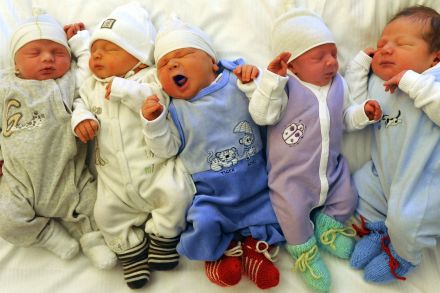
This is a nice big question to ponder on the holiday beach or in the rented villa. A vast amount has already been written on the rise of China and whether the US will be replaced as the global superpower. And where exactly does Europe fit into all this? It is easy to make a case for American weakness. The twin deficits of the balance of payments and the massive public sector gap between expenditure and income, the increasingly divided and embittered nature of policy discourse in the country, growing cultural fragmentation. The image of a divided nation appears to be supported by what has happened to the choice of baby names. This may seem rather trivial, but it is a very important aspect of the culture of a society.

Osborne needs to give the Lib Dems sleepless nights on supply-side reform

Ed Balls is doing very well out of the GDP figures that were released on Wednesday. The Shadow Chancellor is right to say that George Osborne is not yet doing the right thing with the economy. But that doesn't mean Balls' solution is the right one. Cuts should have been only one side of the deal, but as Iain Martin points out in today's Sunday Telegraph, the other side which should have kickstarted growth - supply-side reform - is not forthcoming because Osborne and Cameron are afraid of offending the Lib Dems. Similarly, James says in his column today that too often attempts to strike a balance between the supply-side reform that the Tories want and the demand-management favoured by Vince Cable means nothing is achieved at all.

A tale of two economies

While our economy was contracting by 0.7 per cent, America's was growing by 0.4 per cent, according to the first estimate just released by the US Bureau of Economic Analysis. But, as the graph below shows, those 2012 Q2 figures just represent a continuation of the divergent economic paths the two countries have been on since 2010. In America: steady if unspectacular growth. In the UK: stagnation followed by a second recession. P.S. The Americans report GDP figures as 'annualised growth rates' — that is, the percentage GDP would grow by if it grew for a whole year at the same rate as it did in the quarter — which is why you'll see a figure of 1.5 per cent in US reports today. On that metric, the British economy contracted at an annualised rate of 2.8 per cent in Q2.

GDP figures show the economy needs fundamental reform

Today’s GDP figures are far worse than expected. They mean that the economy has now shrunk for three consecutive quarters. The figures have destroyed the optimism created by the fact that employment and tax revenues are rising. Politically, these figures are undoubtedly a blow to the coalition. Labour is out trying to pin the blame for the continuing recession on the government’s economic policy. The Treasury is countering that the figures confirm that ‘the country has deep rooted economic problems’. In a sign, though, of how serious the GDP fall is, the government is conspicuously avoiding suggesting any external reasons for it — such as the Eurozone crisis, the weather etc. What is clear is that the economy needs fundamental reform.

GDP down 0.7% in Q2

The ONS's first estimate of GDP in Q2 of 2012 shows a 0.7 per cent fall on Q1. It's worth remembering that this is just a preliminary estimate and subject to revision later, but that's a very big drop — the largest since the beginning of 2009 — driven largely by a big 5.2 per cent contraction in the construction sector. The ONS does point out that the extra Jubilee bank holiday will have hurt the economy, as will the record rainfall in April and June — but don't expect Osborne to highlight this, for fear of a repeat of the ridicule he experienced for pointing to snow and the royal wedding in the past. The latest drop means that GDP has fallen by a total of around 1.

Across the literary pages | 16 July 2012

Any idea what an Ouroboros is? It's not the name of the cloud hanging over London at the moment but, according to Will Wilkinson, in his review of Joseph Stiglitz's The Price of Inequality on the Economist blog, a perfect symbol for the ‘progressive master narrative’ championed by a new technocratic coterie (which also counts Paul Krugman among its members). An ancient image of a snake consuming its own extremity, the Ouroboros is a fitting symbol for ‘progressives dizzy from chasing their tails’.

Friedman’s genius

Milton Friedman would have been 100 later this month, and there is likely to be much commemoration - much of it nostalgia for an era where the right had a clear idea about how to get out of the mess the left had left. I always believed that Friedman's ability to articulate - his gift for aphorisms and jokes - was his greatest single talent. The arguments for the basics of human liberty are made all the time, but no one has quite made them with as much force and effectiveness as Friedman. His 1970s series Free to Choose remains, in my view, the most powerful TV documentary ever filmed - and the episode about school choice is horribly relevant to the mess we're in now.

Shelf Life special: The Skidelskys

Robert and Edward Skidelsky have written a new book for our times, How Much Is Enough? The Love of Money, and the Case for the Good Life, which is published today. In their own words: ‘it is the story of… how we came to be ensnared by the dream of progress with purpose, riches without end.’ But what have this father son combination been reading while penning this and their other books? The answer is: rather more than just John Maynard Keynes. Robert Skidelsky 1) What are you reading at the moment? Laurent Binet, HHhH 2) As a child, what did you read under the covers? J.B.Priestley, The Good Companions Somerset Maugham, Of Human Bondage 3) Has a book ever made you cry, and if so which one? As a child, F.W. Farrar, Eric, or Little by Little — uncontrollably.

There are economic reasons to cut the state, irrespective of the deficit

Treasury Select Committee Chairman Andrew Tyrie recently explained he would support cutting back the size of the state even if our public finances were in balance. I doubt whether the leadership of the Conservative party agrees. Cameron and Osborne seemed settled on the Brownite consensus until the financial crisis threw them a curved ball. This, in many ways, makes the so-called ‘austerity’ programme more difficult for them to implement. Without the argument that they genuinely believe in smaller government for economic or moral reasons, the party has had to adopt the ‘we wish we weren’t doing this but we have to’ line.

Eurozone v Facebook — which is the economic model of our time?

Even as our attention is gripped by a crumbling eurozone, another huge economic entity is emerging in the marketplace — Facebook, which has just upsized its number of IPO shares by a quarter before its $100 billion flotation tomorrow. Providing the crisis in Europe does not blow out into a huge political standoff (and just stays the gigantic economic mess it currently is), which entity would future historians regard as the defining business model of our age? Both the eurozone and Facebook, in a way, try to deal with the problems of geography — how to connect people from different places and cultures.

A plan that could change the face of future Budgets

‘I’ve never seen a government document with a Laffer curve in it before’, declared Ed Balls last week. Well it looks like he might be seeing a lot more of them, if George Osborne gets his way. Yesterday, as James noted, the Chancellor told the Treasury select committee that: ‘I think the Treasury can now, and I've asked this to happen, start undertaking some real research into dynamic scoring, and what the broader economy effects are of changes to taxation’. Now, it’s hard to get all that excited about something with a name like ‘dynamic scoring’. It was never going to make the front pages, especially when there’s a ‘pasty tax’ to get worked up about.

The time for Osborne to shed Brown’s 50p rate is now

Will George Osborne have a better chance to abolish the 50p tax than this month’s Budget? It would be unpopular, so it’s the kind of move he’d be unlikely to make before an election. The Lib Dems have something they want to trade: permission to raise the tax threshold towards £10,000. And two recent reports, by the CEBR (pdf) and IFS (pdf), have reinforced that this tax is losing money. At the heart of the 50p tax is a deeper question: is Osborne a transformative Chancellor who will change the terms of debate? Or is he doomed to operate within parameters set by Gordon Brown? I look at this in my Telegraph column today. Here are my main points:   1.

Greece is still the word ahead of today’s eurosummit

How about this for a claim by Nicolas Sarkozy, made in a TV appearance yesterday? ‘Europe is no longer at the edge of the cliff.’ It's quite some statement, so let's hear it again: ‘Europe is no longer at the edge of the cliff.’ Of course, Sarkozy has reasons for saying it beyond mere pre-electoral braggadocio: the rates paid on Italian and Spanish 10-year bonds have generally been falling since the the beginning of the year; the euro has been making some tentative progress against other currencies; and so on. But it still constrasts heavily with much else that is being said around the eurozone. Only last week, Angela Merkel was talking of the overall failure to ‘stabilise the situation’ in Greece.