Cyprus

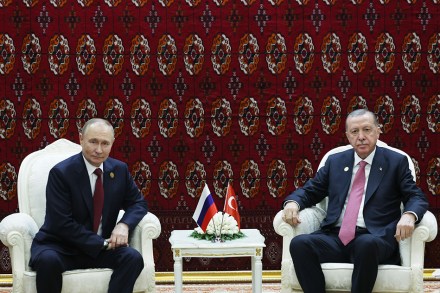
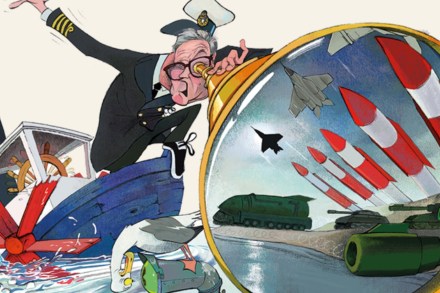
Putin and Erdogan are playing with fire in the Balkans and the Caucasus

There are 34 disputed territories in and around Europe. In some cases, two or more nations claim the same patch of land. In others, separatist governments demand their own sovereignty. Many of these disputes have a quaint, eccentric interest: Italy and France struggling over the summit of Mont Blanc; or Britain, Ireland, Denmark and Iceland arguing over the barren islet of Rockall. But a few of them – such as Cyprus, Kosovo, Nagorno-Karabakh and Transnistria – provide more urgent political challenges. As Hannah Lucinda Smith argues, these places are Petri dishes – experiments in populism, nationalism and covert conflict that are being repeated across the continent. Her book Hinterlands explores several of these blind spots in most people’s mental map of Europe.

All good holidays start with a border checkpoint

What a treat it was to escape to Cyprus for some sun and a last-minute mini-break. I left the builder boyfriend and the cleaner with strict instructions about a booking for a honeymooning couple, and they promised to put flowers in the room. ‘Go, get some sun,’ said the BB, for I was becoming peevish in the Irish rain. I chose Northern Cyprus because it was cheap and because all good holidays surely start with a border checkpoint. It was an hour’s drive from Larnaca, but I sailed into the Turkish republic no problem, in a taxi with disco lights on the ceiling. The hotel was just my thing, not too luxurious because luxury makes me nervous.

The Akrotiri attack has weakened Britain’s position in Cyprus

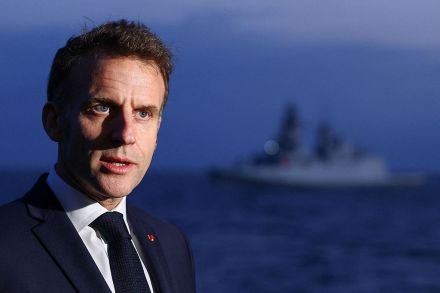
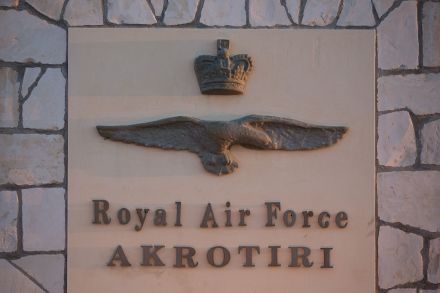
When RAF Akrotiri in Cyprus was targeted in an attempted drone attack on Monday, it didn’t just leave the British government open to accusations that it was slow to respond to events in the Middle East. It also led to criticism from those who would like to see the British overseas territory returned to the Republic of Cyprus.  The drone attack caused minor damage and no one was injured, but in the initial aftermath it was unclear whether it had been shot down by British forces on Cyprus, by Cypriot air defences or by an American warship in the area. The attack has led the UK government to send the warship HMS Dragon to Cyprus, although it will take at least a week to arrive there.

Iran: has Starmer alienated Britain’s allies?

21 min listen

As the conflict in the Middle East escalates, the British government continues to face questions about its response. Was the UK too slow to act, and if so – why? Tim Shipman reveals in the Spectator today that Keir Starmer was initially minded to approve American use of British bases but was persuaded not to by other figures, including Ed Miliband. How much damage has this done with the Americans and also wider European allies? Defence Secretary John Healey has landed in Cyprus today on a damage-limitation mission – or in a show of strength, depending on your viewpoint. Has Starmer been weakened by these events? Plus – Home Secretary Shabana Mahmood has revealed further asylum reforms. Will the reforms neutralise the issue of immigration for voters?

Iran: has Starmer alienated Britain's allies?

The roots of conflict: The Island of Missing Trees, by Elif Shafak, reviewed

The Island of Missing Trees feels like a strange title until you realise how hard Elif Shafak makes trees work in her latest novel, an epic tale about love, grief and memory set in Cyprus and London between 1974 and the ‘late 2010s’. One tree, a fig or ficus carica, narrates half the story, tipping Shafak’s 12th novel into myth territory. The others — the missing trees — are stand-ins for those killed in the 1974 Cypriot civil war, metaphors labouring as hard as plants for the British-Turkish author who fled Turkey after being prosecuted for ‘insulting Turkishness’ in her 2006 novel The Bastard of Istanbul.

Strewn with foreign bodies

Ghosts of the Past by Marco Vichi (Hodder, £18.99) is unashamedly nostalgic in tone. The title could not be more apposite. The action takes place in 1967, when Inspector Bordelli of the Florence police force is called to a house where a wealthy industrialist has been run through with a sword. Each member of the family is acting suspiciously, as are the various colleagues and associates of the deceased. Bordelli’s life is further complicated when an old friend, Colonel Arcieri, turns up in dire trouble and needing protection. The case unfolds in a slow haze of interviews and recollections. Vichi takes his time to explore Bordelli’s mind, his thoughts and his feelings, especially concerning the past and love lost. The book yearns for a bygone age.

Letters | 23 March 2017

Speaking for Scotland Sir: I wonder if it is wise of Charles Moore (Notes, 18 March) to assume — as so many do — that because they lost the independence referendum back in 2014, the Nationalists do not speak for Scotland? In the following general election Scottish voting virtually wiped out every political party north of the border, other than the SNP. Might it not be wiser to assume that the Scots had thought again? Ian Olson Aberdeen Birds, gangs and economics Sir: Simon Barnes is correct in his implication that the trapping and harvesting of small birds by criminal gangs in Cyprus is enough to make the average Briton squeamish (‘Little birds, big trouble’, 18 March). However, while this may be so, the current system of enforcement is clearly failing.

The Spectator podcast: Double trouble

On this week's edition of The Spectator Podcast, we discuss Theresa May's double bind in Edinburgh and Brussels, Milton's cultural relevance in 2017, and the slaughter of Cypriot songbirds. First, Lara Prendergast spoke to James Forsyth about his cover piece in this week's magazine. Have Theresa May's negotations with the European Union been hamstrung by this latest intervention from Holyrood? And will she be able to find a version of Brexit that soothes the fears of pro-Remain Scots? Time will, of course, tell, but in the meantime James joins the podcast along with the Spectator's Scotland Editor, Alex Massie. As James writes in his piece this week: "Theresa May is a cautious politician.

Little birds, big trouble

A British military base is being used for a multi-million-quid criminal enterprise, possibly involving the Russian mafia — and Britain seems powerless to prevent it. Last year they had a crack at enforcement and had to give up. Mafia 1, British army 0. It’s happening in Cyprus, in the British Sovereign Base Areas. The situation in Cyprus is a bit like the Schleswig-Holstein Question, but with more complex problems of nationality, culture and power. It has let this criminal enterprise thrive and prosper on the fringes, with the result that Britain is providing the infrastructure for a major illegal business with suspected links to Russian criminal organisations. Which is a touch embarrassing. And it’s all about little birds.

Portrait of the week | 17 March 2016

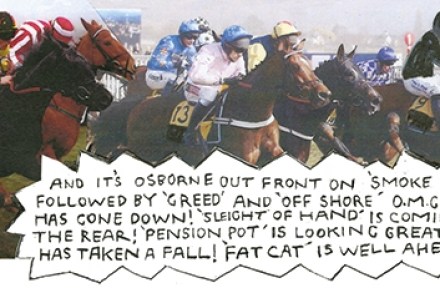
Home In the Budget, George Osborne, the Chancellor of the Exchequer, kept talking of the ‘next generation’. He outlined cuts of £3.5 billion in public spending by 2020, to be ‘on course’ to balance the books. Personal allowances edged up for lower taxpayers, with the higher-rate threshold rising to £45,000. A ‘lifetime Isa’ for under-40s would be introduced. Corporation tax would go down to 17 per cent by 2020. Small-business rate relief was raised: a ‘hairdresser in Leeds’ would pay none. Fuel, beer, cider and whisky duty would be frozen. To turn all state schools into academies (removing local authorities from education), he earmarked £1.5 billion.

Sixty years on

The book of the year has long been a favoured genre in popular history, and is a commonplace today. While a book of hours endlessly recycles, the point of the book of the year is change, the more the better. There is an implied contest between years — you say 1917 is the most important; I trump you with 1940, or 1968 or 1979…. It is at once a rather silly genre, potentially nothing more than a dreary compendium of novelties, and one with distinct possibilities, as illustrated by both these books taking on 1956, one globally, one for Britain. Simon Hall’s approach is to write the story of a year in global history, by moving through the Americas, Africa and Europe, taking up the story of particular events as they happen at the rate of over one a month.

Portrait of the week | 5 November 2015

Home The all-party Foreign Affairs Committee urged David Cameron, the Prime Minister, not to press ahead with a Commons vote on British air strikes against Islamic State positions in Syria. At its conference, Scottish Labour adopted a policy of opposition to Trident renewal, though Kezia Dugdale, its leader, remained in favour, while the Labour party in the United Kingdom as a whole favoured retaining the nuclear deterrent, though its leader, Jeremy Corbyn, opposes it. Britain was smothered in fog, except in Wales, where temperatures on 1 November reached a record 22˚C. A man had his ear bitten off in a pub in Aberystwyth on Halloween.

Coming up for air

The thing that the photojournalist Don McCullin likes best of all now, he tells me, is to stand on Hadrian’s Wall in Northumberland in a blizzard. He made his name in conflicts in Vietnam, Cambodia, Biafra, Uganda — hot places full of fury, panic and death — but these days he finds his greatest solace in the English landscape. I can see why he is drawn to that wild part of Britain: its isolated beauty, the feeling of being roughed up by the elements but not destroyed by them. Clean air, too: you must get a cool, fresh lungful up there. He’s 80 years old in October: talking to him at home in Somerset, I get the sense he’s been coming up for air all his life.

The Spectator at war: News of the week

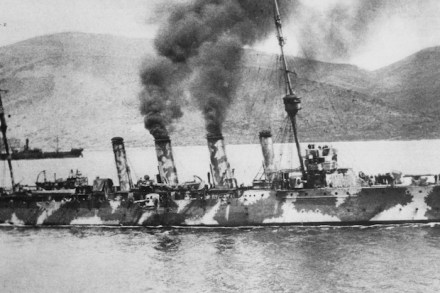
From The Spectator, 7 November 1914: THE most important event of the week has been the declaration of war on Turkey by Britain. In the words of the London Gazette of Thursday: "Owing to hostile acts committed by Turkish forces under German officers, a state of war exists between Great Britain and Turkey as from to-day. Foreign Office, November 5th, 1914." The Gazette also contains an Order in Council annexing the island of Cyprus. The Order points out that the outbreak of hostilities annuls the Convention, Annexe, and Agreement made between us and the Turks in 1878. In addition, the British Fleet during the past week has been busily bombarding the forts at the mouth of the Dardanelles, apparently with good results.

Matthew Parris: I’ve been living with a miracle for 60 years

This is probably the most self-indulgent column I’ve written. I hope not to make a habit of it. It’s an ode to — and something of a lament for — my own right arm. I was six when I fell off a small cliff above a disused railway embankment in Nicosia, Cyprus. The blue bicycle I was wheeling was new: a birthday present and my first bike. A novice, I let the back wheel slip over the edge — and if you’re holding the handlebars and the back wheel slides, a bicycle moves in counter-intuitive ways. Mine pulled me with it. I refused to let go. I came to in a heap, in the dust, bicycle beside me and blood everywhere. Two small Greek boys were staring at me in horror. I struggled to my feet.

Investment: Why does so much always go wrong in August?

The weather might not be what it once was, and the football season might start so quickly it feels like it has hardly been away, but there is one thing everyone can surely agree on about August. Nothing of any importance happens. As we head into the dog days of summer, everyone can sling their feet up on the desk and relax. All the people who really matter — the ones running the big corporations, the banks or the government — are off sunning themselves by a pool somewhere. As for the office, it’s about as busy as a job centre in downtown Athens. The only people left are the post boy and the interns busy updating their Facebook pages. It’s impossible to imagine anything of significance happening.

Angela Merkel’s domestic imperative

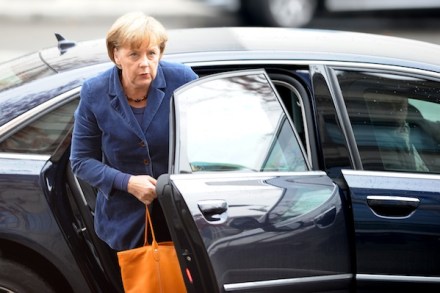
The Cyprus situation has demonstrated that until the elections in the autumn, Angela Merkel’s primary focus is on a domestic audience. She clearly wanted to show that Germany is now prepared to take a far tougher line. As Open Europe notes the need for this is fast becoming the consensus view in Germany. So, the question now for the Eurozone is will we see any more crunch moments this side of the German election? If we do, then I think we could see the end of the Euro. The Cypriot parliament’s rejection of the initial bailout deal, at the insistence of the voters, shows that there is a limit to the pain that the weaker Eurozone economies are prepared to take for economic and monetary union.

The Cyprus drama has only just begun

Analysts today are talking about the GDP of Cyprus falling by 20 per cent over the next four years, and stressing that this is a conservative estimate. This, and the attitude of the Church there, does make me wonder if the Cypriots might not reject the bailout again, revert back to the Cypriot pound and try and devalue their way to recovery. This could hardly be more painful than a bailout that will make credit nigh-on-impossible to obtain in Cyprus. The second thing is surely any company or institution with large cash reserves is moving them out of any bank in the Eurozone periphery. If, as the head of the Eurogroup has said, Cyprus is a template for dealing with failing banks, then no one should want to have more than €100,000 in anything but the strongest banks.

How long will capital restrictions last in Cyprus? ‘Can’t say’

To the European Commission headquarters this morning for a briefing with Michel Barnier, the Frenchman who is commissioner in charge of banking. The press pack wanted to talk about – what else? – Cyprus. But Barnier wanted to talk about his green paper on the long term financing of the European economy.  Which made for the usual pantomime: the journalists sat and scrolled through emails while Barnier read out his plans on how to finance the EU economy without depending so much on banking (good luck there, commissioner). When he finished, the reporters looked up and started the questions about the banks in Cyprus. Reuters asked how long capital restrictions would last in Cyprus.

A generation of Cypriots are about to be badly hurt. It’s all unravelling – badly.

This picture is from a website for Cypriot homes:  you can buy a three bedroom apartment for £1.6mn.  Whoever owns that — property developer or individual and whichever bank lent them the money to develop or buy it — now risks being wiped out. And this is just the beginning. Here are a few thoughts on this situation. 1. The downfall. Cyprus was a problem amplified by political incompetence, a disaster that never should have happened.  The outlook is exceeding bleak for this small economy and the economic pain coming to the 800,000 inhabitants will be severe.  Why? Because the banking industry got so giant – at seven times the economy - and it is about to shrink rapidly.