Culture

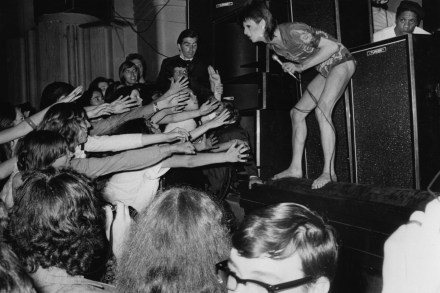
David Bowie had sex with underage girls. Is that creepy or cool?

Though I adored David Bowie as a teenybopper, I felt that one would have had to have a heart of stone not to laugh at the lush smorgasbord of lachrymosity that accompanied his death earlier this week. I said as much in a short blog on these very pages. Soon I was trending on Twitter, and from the comments you’d have thought that I’d shot, cooked and eaten Shergar the Racehorse. But I stand by what I said. Like Princess Diana and Nookie the Bear before him, Bowie was not some selfless saint; he was a sharp-eyed, ambitious creature who once floated himself on the Stock Market in the 1990s, and sold himself for the advertising shilling - when already a millionaire many times over - in 2006 to a bottled water company.

Gay marriage isn’t splitting the Anglican Communion – it’s holding it together

My line on the Anglican crisis is a bit eccentric. I think there are now grounds for hope that the Communion can survive – and the reason is the recent rise of gay marriage as the central issue. Lazy punditry says that gay marriage is the bone of contention. But it’s actually a new issue – it wasn’t being discussed a decade ago, when Rowan Williams was holding these summits. The real bone of contention is whether actively gay priests and bishops should be allowed. On this the two sides are obviously adamantly opposed. The arrival of gay marriage as a big issue seems to make the crisis worse than ever – but this is a superficial view. It is actually a blessing in disguise. For it allows a compromise position to emerge.

An adult has finally intervened in the childish Cecil Rhodes debate

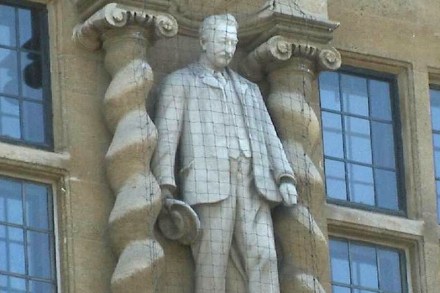
I’ve never had much time for Chris Patten, generally disliking the Tory Europhile and late Roy Jenkins impersonator.  But the whirligig of time brings in strange revenges and none is odder than Chris Patten emerging as the only adult in the room.  In the great Cecil Rhodes debate at Oxford – a debate which like all such ‘safe-space’ debates has been crying out for the intervention of an adult – Chancellor of the University of Oxford Chris Patten has intervened. For anyone fortunate enough not to know about this embarrassing episode, it relates to a campaign by certain ‘Rhodes scholars’ at Oxford who will not rest until all memorials to the munificence of Cecil Rhodes are removed.

Is this feminist porn ‘artist’ really the best advert for western values?

There was something inevitable about Milo Moire's naked protest in response to the New Year's Eve sex attacks in Cologne in the name of feminism. Moire stood in the square outside Cologne's Cathedral, utterly clothesless except for a pair of red trainers. She held a placard that said 'Respect us! We are not fair game even when we are naked!' Moire is of course just another attention-craving narcissist, although in her defence it should be said that she does have an impressive pair of (fake?) breasts. According to her Wikipedia entry, Moire places 'herself at the interface of art and pornography'. Judging from her saucy Twitter account, I would say she tends more towards the porn than the art, but I could be wrong.

Why are feminists refusing to discuss the Cologne sex attacks?

Regardless of the background of the men who carried out the attacks in Cologne on New Year's Eve, it is a pretty horrific story. A series of sexual attacks took place in the city centre by a group of around 1,000 men. More than 150 women have filed criminal complaints, three-quarters of them for sexual assault. Two cases of rape have been reported. It is the kind of story that should make headlines - and should provide ample fodder for writers who like to tackle feminist topics head on. After all, surely this is the very definition of 'rape culture'? And if the actual attacks aren't enough to merit a reaction, then how about the suggestion by Cologne's female mayor that women should adopt a 'code of conduct' to prevent future assault.

I hate to break it to feminists, but ‘white male privilege’ is a myth

How’s this for dark irony: throughout 2015, ‘white male privilege’ was the buzzphrase on every rad tweeter and liberal hack’s lips, as they fumed against the easy, pampered lives allegedly enjoyed by human beings who had the fortune to be born with a penis and pale skin. Railing against ‘white men’ and their cushy existences has become the stock-in-trade of many feminists. Yet towards the end of 2015 it was revealed that there’s a social group in Britain more derided and less successful than pretty much every other social group. Guess who? Yep, young white men. Especially young working-class white men.

Plato and think-tanks

In Living with Difference, a think-tank report on the problems raised by a multi-faith UK, the chair Baroness Butler-Sloss says that the recommendations amount to a ‘new settlement for religion and belief in the UK’ and are aimed at providing space and a role in society for all citizens, ‘regardless of their beliefs or absence of them’. This is what happens when good people decide this messy world needs to be hammered into an intellectually satisfying shape. Plato’s Republic is a very good example of the genre. It is an extraordinarily interesting document, telling one a very great deal about Plato and the ancient Greeks, deeply influential on intellectuals down the millennia, and complete tosh from start to finish. Composed c.

I love the commercialisation of Christmas

I was in Toys R Us in Brent Cross the other day with my kids, pondering the true miracle of Christmas -- that thanks to capitalism, global poverty has halved in just a generation, and we are now able to feed, clothe and shelter record numbers of people -- and buy them lots of presents. [datawrapper chart="http://static.spectator.co.uk/7PcxR/index.html"] My two-year-old was screaming because he wanted some toy cars, just a handful of fun things among an awesome display of toys that are far better, and cheaper, than they were when I was a child -- and available to more people, not just in Britain but across the world.

There’s one very good reason why space travel isn’t a waste of money

Why is it that the sight of a huge, thrusting rocket ploughing through virgin space at 25,000 kmph makes me feel so good? As for seeing a real astronaut with a Union Jack on his arm, how can anyone not be moved? Englishman Tim Peake launched into space just after 11 AM yesterday, alongside Russian Yuri Malenchenko and American Tim Kopra, the three men heading for the International Space Station. Peake is the first official UK astronaut, although the seventh Briton in space, the first being Helen Sharman in 1991. There are many people who consider this all a bit of a waste of money; Rev Giles Fraser, for one, was mulling over the expense involved yesterday morning.

Pastoral scene of the gallant South

During the first ten pages of this long work Paul Theroux, on a journey through the American South, meets two citizens of Alabama. The first, encountered in Tuscaloosa when he asked the way to the Cornerstone Full Gospel Baptist Church, was named Lucille, called him ‘Mr Paul’, said ‘Ain’t no strangers here, Baby’, took him to the church and said ‘Be Blessed’ when they parted. The second, a citizen of Gadsden, was named Wendell, called him ‘Sir’, clamped him on the shoulder, said ‘Kin Ah he’p you in inny way?’ and before they parted suggested they meet again for ‘a sandwich, peanuts or anything’.

I’m no Katie Hopkins!

I’ve been accused of many things since I ventured on to Twitter. Appearing on shows like Question Time and Have I Got News For You, you learn to expect a certain amount of criticism and name-calling. For a woman in the public eye it goes with the territory. According to the good folk of Twitter I am, variously, a Tory lickspittle (despite having no party affiliation), a harridan, a snob, snotty, posh, gobby, fat and ugly (of course) and — my own personal favourite — a rape-apologist. There’s also a fair smattering of B-words and C-words which are all par for the course for women who dare to — gasp, shock, horror — voice their own opinion.

Modern media makes the world smaller – and that’s no bad thing

It’s not that often you get the low business of journalism put into its proper social and spiritual context but that’s what happened courtesy of the Oxford Dominicans on Saturday. Its conference on 'Truth-telling and the Media' – yep, that well known oxymoron – included a contribution by the Goethe expert, Nicholas Boyle. Not a sausage about any current issues relating to the press, thank God. Just a context to put it all in. And that context is that journalists turn the big society into the small society in the way we write; we make the individual reader feel they can relate to the big stuff.

Is a ‘Transgender Day Of Remembrance’ really necessary?

On hearing that a ‘transgendered flag of remembrance’ was being flown by a government department for the first time (the Department of Education, on November 20th, the Transgender Day Of Remembrance) I was reminded of that old line about prison food - ‘It’s rubbish, and there’s not enough of it!’ It seems the height of duplicity that the sort of people who would mock a flag being flown to support our war dead (indeed, they might well use it as an excuse to break out the DIE TORY SCUM spray-paints) suddenly approve of running a bit of flimsy tat (which looks unpleasingly as if an Argie flag got put in a washing machine with a job-lot of red bedding) up a flagpole to celebrate a man’s right to tuck his tail between his legs and call himself Linda.

I have no sympathy for people who complain about ‘sharia Uber drivers’

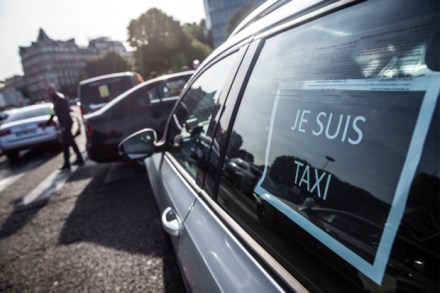
Actress Frances Barber has complained about her taxi driver after a night out in town, tweeting: https://twitter.com/francesbarber13/status/668598758473654272 The man had allegedly told her she was ‘disgustingly dressed’ and that ‘women should not be out at night’. This was after she had remarked about the weather being cold. That’s the problem with liberalising the taxi market to let any random person drive you around – it reduces the level of trust. As Rory Sutherland explained in this magazine a couple of years ago, trust is extremely important to capitalism and that’s why having hurdles such as the Knowledge is necessary: ‘Reciprocation, reputation and pre-commitment are the three big mechanisms which add to trust.

C’est magnifique, mais ce n’est pas le journalisme

Andrew Neil is the best political interviewer in Britain. I am not just saying that because he is so high up here at The Spectator, although that helps. I am not saying it because he once bought me lunch, although he did his cause no harm there either. I am saying it because he is one of the few broadcasters who makes me stop what I am doing and listen. God help the interviewee who goes on his programme unprepared. If he or she has not thought through every flaw in their argument, they will find that Neil has done their thinking for them. He will expose their contradictions on live television. He will have a list of the inconvenient facts they forgot or never took the trouble to find in the first place, and will broadcast them to the nation.

Nobody will ever forgive the right if they destroy the BBC

Nowhere does the right show its isolation from its own country more vividly than when it demands the destruction of the BBC. The corporation is not like the telephone system, which you can pass into private ownership without anyone noticing. It is as integral to Britain as the monarchy and the NHS, which is why Scottish nationalists devote so much energy to denouncing it. We are a small country, which is becoming smaller. In the world that is coming, Asian and African countries will have huge populations beside which Britain’s market of 70 million will seem puny.  Hence we subsidise culture that simply would not be produced in the private sector.

The Uber generation won’t stand for the BBC – but it’s still a national treasure

Watching the increasingly bleak and depressing Peep Show the other night I was pleased to note that my on-screen alter ego Mark Corrigan is a big fan of Kenneth Clark’s Civilisation, which is I think my all-time favourite documentary. To me Civilisation, and the then controller of BBC2 who commissioned it, David Attenborough, represent what the BBC should be, and is at its best: a strangely Freudian father figure to the nation, erudite, intelligent, open-minded and very British. The BBC was a product of a strong national culture, but it also helped to further cement it, making events like the Proms or FA Cup final part of our collective experience.

There’s absolutely nothing polite about political correctness

I hope anyone who sees footage of the two shrieking women at Yale and Missouri will finally concede that political correctness is not ‘all about politeness’. It’s about power, and always has been. The Yale hoo-ha started because the authorities failed to take seriously a letter from the university’s ‘Intercultural Affairs Committee’ warning about Halloween fancy dress costumes being offensive. People wonder how one of the most high-ranking universities in the world can be embarrassed by an argument over adults wearing fancy dress, but that is exactly the point; if the row was over something that mattered, there could be little kudos in winning it. This is about displaying power.

Who defines what is so traumatic that someone shouldn’t speak to students?

That students are becoming rather hardline about speakers they disagree with visiting their campuses is now well described. Brendan O'Neill first explained the 'Stepford Student' phenomenon in the Spectator, and in today's Times David Aaronovitch described his own encounter with a student leader who believes speakers who may upset students should be banned from campuses. What was particularly interesting about Aaronovitch's Newsnight discussion last week was that Toke Dahler, his opponent, seemed quite concerned that students shouldn't suffer 'trauma' as a result of a speaker being on their premises. Aside from all the arguments about the importance of a clash of ideas, especially when some of those ideas are foolish and not persuasive, the concept of 'trauma' is interesting.

Lord Leveson’s legacy could be the death of investigative journalism

Later this year, or more probably in the spring of 2016, the following scene may play out on the steps of the High Court in London. An editor will appear before the cameras and say: 'I am instructing my reporters stop investigative journalism until the law is changed.' The naïve who have failed to educate themselves on the assault on press freedom in Britain will be more confused than outraged. How can this be, they will ask. They will be enlightened by the editor of – well, let’s say it’s my editor here at The Spectator, but it could just as easily be the editor of the Guardian, Observer, Private Eye or any other national or local newspaper or magazine. The court had vindicated the paper, he or she will explain.