Culture

Is a ‘Transgender Day Of Remembrance’ really necessary?

On hearing that a ‘transgendered flag of remembrance’ was being flown by a government department for the first time (the Department of Education, on November 20th, the Transgender Day Of Remembrance) I was reminded of that old line about prison food – ‘It’s rubbish, and there’s not enough of it!’ It seems the height of duplicity that the sort of people who would mock a flag being flown to support our war dead (indeed, they might well use it as an excuse to break out the DIE TORY SCUM spray-paints) suddenly approve of running a bit of flimsy tat (which looks unpleasingly as if an Argie flag got put in

I have no sympathy for people who complain about ‘sharia Uber drivers’

Actress Frances Barber has complained about her taxi driver after a night out in town, tweeting: https://twitter.com/francesbarber13/status/668598758473654272 The man had allegedly told her she was ‘disgustingly dressed’ and that ‘women should not be out at night’. This was after she had remarked about the weather being cold. That’s the problem with liberalising the taxi market to let any random person drive you around – it reduces the level of trust. As Rory Sutherland explained in this magazine a couple of years ago, trust is extremely important to capitalism and that’s why having hurdles such as the Knowledge is necessary: ‘Reciprocation, reputation and pre-commitment are the three big mechanisms which add

C’est magnifique, mais ce n’est pas le journalisme

Andrew Neil is the best political interviewer in Britain. I am not just saying that because he is so high up here at The Spectator, although that helps. I am not saying it because he once bought me lunch, although he did his cause no harm there either. I am saying it because he is one of the few broadcasters who makes me stop what I am doing and listen. God help the interviewee who goes on his programme unprepared. If he or she has not thought through every flaw in their argument, they will find that Neil has done their thinking for them. He will expose their contradictions on

Nobody will ever forgive the right if they destroy the BBC

Nowhere does the right show its isolation from its own country more vividly than when it demands the destruction of the BBC. The corporation is not like the telephone system, which you can pass into private ownership without anyone noticing. It is as integral to Britain as the monarchy and the NHS, which is why Scottish nationalists devote so much energy to denouncing it. We are a small country, which is becoming smaller. In the world that is coming, Asian and African countries will have huge populations beside which Britain’s market of 70 million will seem puny.  Hence we subsidise culture that simply would not be produced in the private sector.

The Uber generation won’t stand for the BBC – but it’s still a national treasure

Watching the increasingly bleak and depressing Peep Show the other night I was pleased to note that my on-screen alter ego Mark Corrigan is a big fan of Kenneth Clark’s Civilisation, which is I think my all-time favourite documentary. To me Civilisation, and the then controller of BBC2 who commissioned it, David Attenborough, represent what the BBC should be, and is at its best: a strangely Freudian father figure to the nation, erudite, intelligent, open-minded and very British. The BBC was a product of a strong national culture, but it also helped to further cement it, making events like the Proms or FA Cup final part of our collective experience.

There’s absolutely nothing polite about political correctness

I hope anyone who sees footage of the two shrieking women at Yale and Missouri will finally concede that political correctness is not ‘all about politeness’. It’s about power, and always has been. The Yale hoo-ha started because the authorities failed to take seriously a letter from the university’s ‘Intercultural Affairs Committee’ warning about Halloween fancy dress costumes being offensive. People wonder how one of the most high-ranking universities in the world can be embarrassed by an argument over adults wearing fancy dress, but that is exactly the point; if the row was over something that mattered, there could be little kudos in winning it. This is about displaying power. You can be very

Who defines what is so traumatic that someone shouldn’t speak to students?

That students are becoming rather hardline about speakers they disagree with visiting their campuses is now well described. Brendan O’Neill first explained the ‘Stepford Student’ phenomenon in the Spectator, and in today’s Times David Aaronovitch described his own encounter with a student leader who believes speakers who may upset students should be banned from campuses. What was particularly interesting about Aaronovitch’s Newsnight discussion last week was that Toke Dahler, his opponent, seemed quite concerned that students shouldn’t suffer ‘trauma’ as a result of a speaker being on their premises. Aside from all the arguments about the importance of a clash of ideas, especially when some of those ideas are foolish

Lord Leveson’s legacy could be the death of investigative journalism

Later this year, or more probably in the spring of 2016, the following scene may play out on the steps of the High Court in London. An editor will appear before the cameras and say: ‘I am instructing my reporters stop investigative journalism until the law is changed.’ The naïve who have failed to educate themselves on the assault on press freedom in Britain will be more confused than outraged. How can this be, they will ask. They will be enlightened by the editor of – well, let’s say it’s my editor here at The Spectator, but it could just as easily be the editor of the Guardian, Observer, Private Eye

How to defend the arts using liberal values

This is a version of a speech I made to the No Boundaries conference at the Bristol Watershed Theatre on how censorship affects the arts, museums and libraries. The organisers asked me to talk about political correctness and the arts; a touchy subject which requires enormous sensitivity to the feelings of others, and long, thoughtful discussions of whether we should use the term ‘political correctness’ at all. Unfortunately, they continued, you have only 10 minutes and there will be no time for any of that. You will just have to get on with it. So forgive me if I belt out arguments like a machine gun, but I must get

Eton’s recipe for success

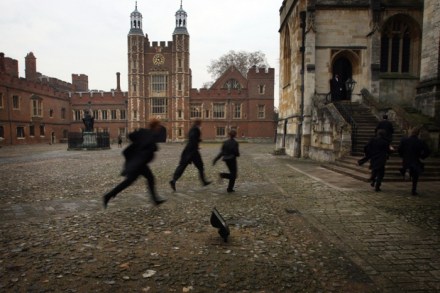
One of the first things you realise on arriving at Eton is that while you may be at arguably the best school in the world, you’re also possibly among Britain’s most hated. It’s great being surrounded by 15th-century quadrangles and Georgian boarding houses, and your uniform is as dapper as it gets (so long as you don’t mind dressing like a penguin). But you can’t walk into Windsor wearing a college crest, for fear of being mugged, and the papers are filled with stories claiming you’re overprivileged or not actually that clever. It’s a double-edged sword. You have the advantage of a brilliant education, but bear a stigma that can’t

How cool is Britannia?

Is it true that, having lost an empire, we reinvented ourselves as an island of entertainers? Do we channel the same rigour and vigour into film and music and literature as once went into conquering continents? Is there a residual colonialist bias in our arts, seen, for instance, in our cinematic penchant for creating patriotic period dramas such as Henry V or The King’s Speech? How much of our cultural success depends on the US market and the accident of a shared language? To what extent does our cultural expression reflect not our idea of ourselves but an American distortion? Do international smash hits such as Julian Fellowes’s languid TV

Amnesty International has pimped itself out

There is no argument fiercer in feminism than the argument about prostitution. Say you want to ban it and the libertarian feminists denounce you as a ‘whorephobe’. Say you want to legalise it, and radical feminists denounce you as the tool of the patriarchy. Inevitably, Amnesty International felt it had to intervene. And, this week, with an equal inevitability, it plumped for the apparently left-wing position of decriminalisation. I say ‘apparently’ because many on the left disagree. My sister paper the Guardian made the telling point that Amnesty’s leftism concealed rich-world prejudices. [Its]suggestion that the trade be decriminalised but not then regulated is particularly far off-beam. Since when did unregulated

Reducing poetry to a science

Is it possible to tell a good poem from a bad one? To put the question another way: are there objective, even scientific, standards for evaluating literature? Helen Vendler has no doubts. Her spiky new collection of essays begins with the insistence that it is possible to prove how one poem is ‘superior’ to another, and ‘those who suppose there are no criteria for such judgments merely expose their own incapacity’. That’s a bold claim, but in her hands, literary criticism is a science, and anyone who disagrees with her judgments is put sharply in their place. I should know: my observation, in a book I recently edited, that the

What does the Tim Hunt saga tell us about the future of democracy?

A friend of mine, who attends a top UK University, recently attended a generic debate on feminism and sexual violence. He made a point from the floor that, contrary to his colleague who argued that unless consent is enthusiastic it constitutes rape, legally speaking consent needn’t be enthusiastic in order to be legitimate. What followed is simply astounding. The next day he was called in to a meeting with a student union official, who informed him that a group of female students had made a joint complaint about him, raising concerns about their safety on campus. They had been going around warning other students that he is, apparently, a potential

The Olympic movement follows Fifa into the gutter

No line has been repeated more often during the Fifa scandal than the instruction that football should follow the example of the International Olympic Committee. In 1998, the received wisdom goes, artful Mormons offered all kinds of bribes in cash and kind to committee members. An Olympic official revealed their plan to buy the right to host the 2002 Winter Olympics in Salt Lake City, and the movement purged itself of corruption. ‘We also know that putting everything on the desk can be a painful experience,’ said the International Olympic Committee president, Thomas Bach, as he advised Fifa yesterday. ‘But it is absolutely necessary to do this as we have

Charlie Hebdo: The literary indulgence of murder

I suppose it is asking too much of a writer called Francine Prose that she write prose anyone would want to read. But on the principle you can only track down terrible ideas by wading through terrible writing you have to endure Prose’s prose. She attempted to deploy her prosaic talent to explain why PEN, an organisation dedicated to protecting the free speech of writers, should not honour the writers and artists of Charlie Hebdo – murdered by Islamists for exercising their right to free speech. The narrative of the Charlie Hebdo murders – white Europeans killed in their offices by Muslim extremists – is one that feeds neatly into the cultural

Gunning for freedom

Like the documentary journalist Iain Overton, author of this book, I was taught to shoot and maintain a gun as a boy. As an adult I joined a campaign to monitor, curb and limit the arms trade. I taught my children good gun protocols and how to shoot. There is an undeniable pleasure in shooting. When I moved to Texas I immediately bought a black powder Navy Colt with which to practise the cowboy spins, rolls and shifts I had learned as a boy. The thing Bible-belt Baptists, Bedouin tribesmen, Brazilian drug-barons and Boer farmers have in common is a love of guns. Guns are in our DNA. Yet statistics

If universities censor, they can’t complain when the state censors them

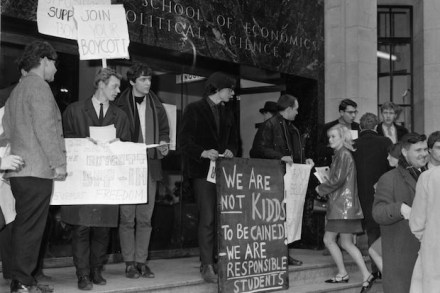
I spoke at a Guardian debate on free speech before an audience of students at King’s College London last night. I’ve argued with racists and Putinists in my time and – to put it as mildly as I can – these little bastions of academia were up there with them in their contempt for basic freedoms. Contempt is perhaps not quite the right word. Most simply did not understand what freedom was, and could not grasp the need for universal human rights. They could not see themselves as others saw them, or understand that by giving up on basic principles, because they are difficult to live with, they had left

Meet the Cry-Bully: a hideous hybrid of victim and victor

In the 1970s, there was a big difference between bullies and cry-babies. Your mum would have preferred you to hang around with the latter, but sometimes the former had a twisted charisma so strong that you found yourself joining in the taunts of ‘Onion Head! ’ at some poor unfortunate creature sporting a cranium of a somewhat allium caste. After a bit, of course, if you had anything about you, you realized what a knob you were being and went off to sample the more solitary, civilized pleasures of shoplifting and reading Oscar Wilde with the bedroom curtains closed. But you could be certain, as you festered in your pilfered

Jeremy Clarkson and the Political Correctness of the Right

One of the many delusions of the Right is the myth of conservative robustness. Conservatives don’t play the victim card, they say. They tell it like it is, and don’t care who knows it. They stand on their own two feet, and take it on the chin. They have guts and backbone too. It’s easy to mock the anatomical clichés, but middle-class leftists should worry. Millions of people are about to vote for Ukip, in part because they resent a modern version of Victorian prudery that has stopped robust debate, and allowed sharp-eared heresy hunters to patrol the nation’s language. If fellow citizens are prejudiced, then there is indeed a